Jasper Sikken
-
AEMLIC can also charge 4.0V and 4.2V LICs
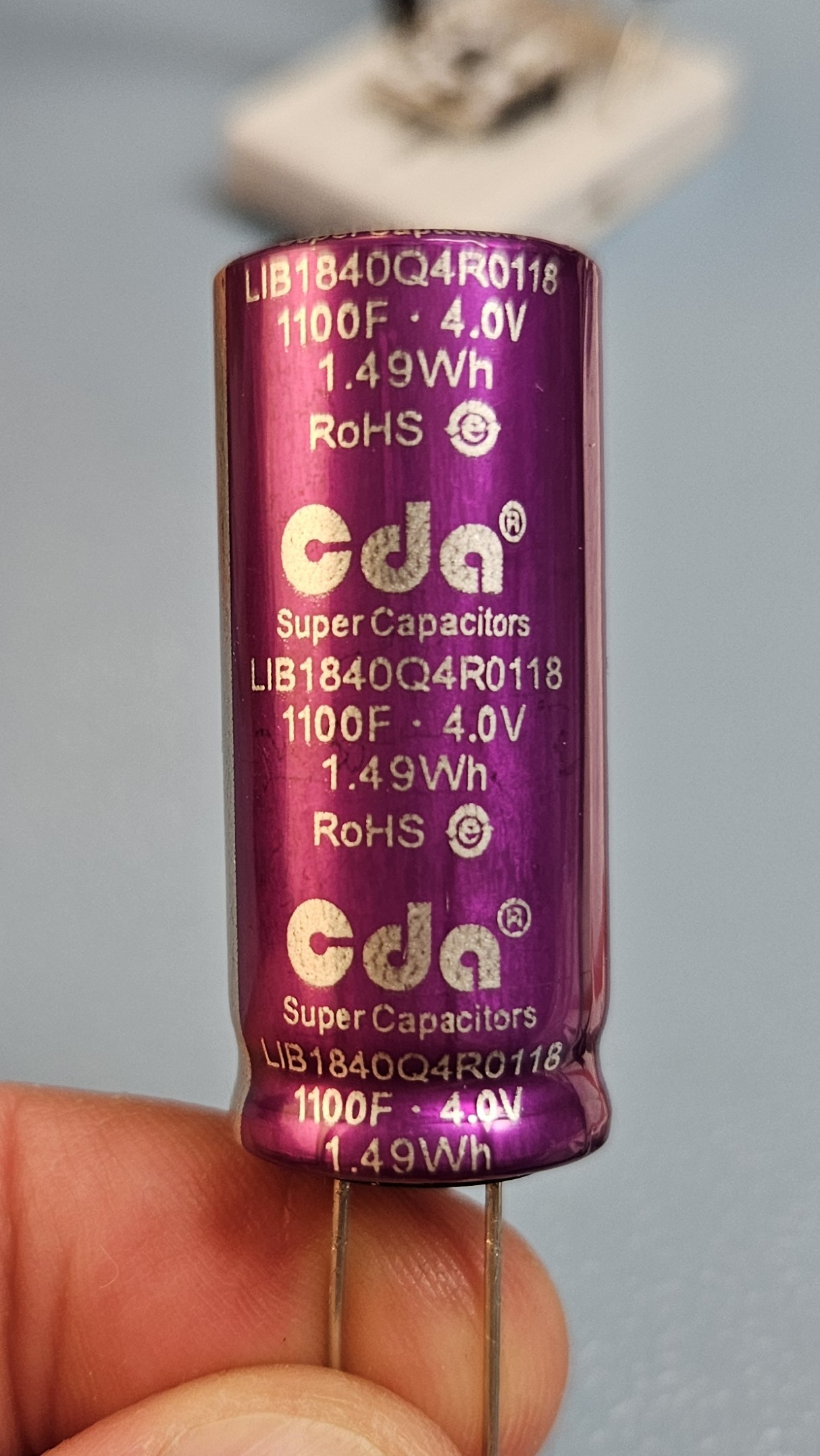
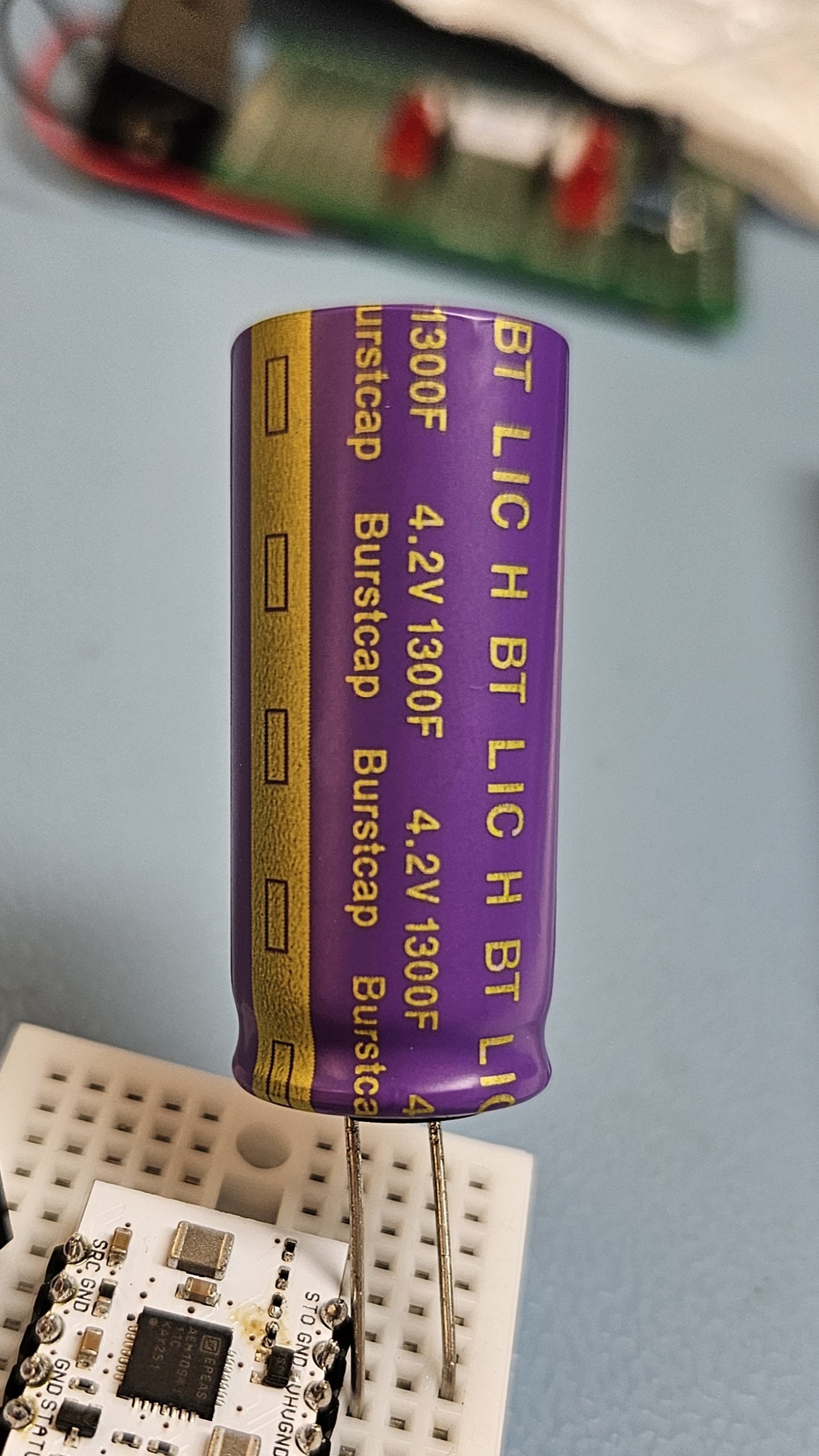
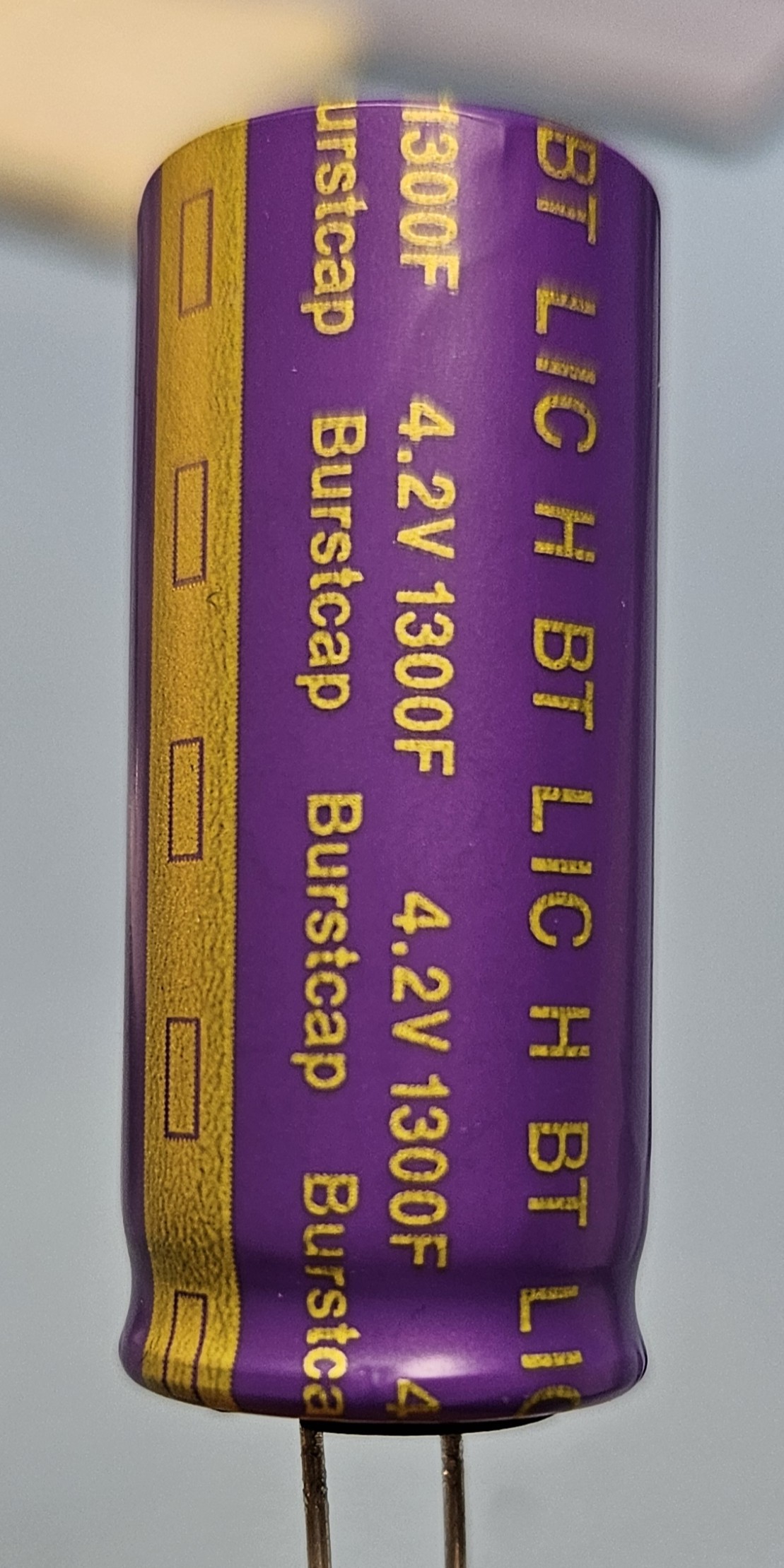
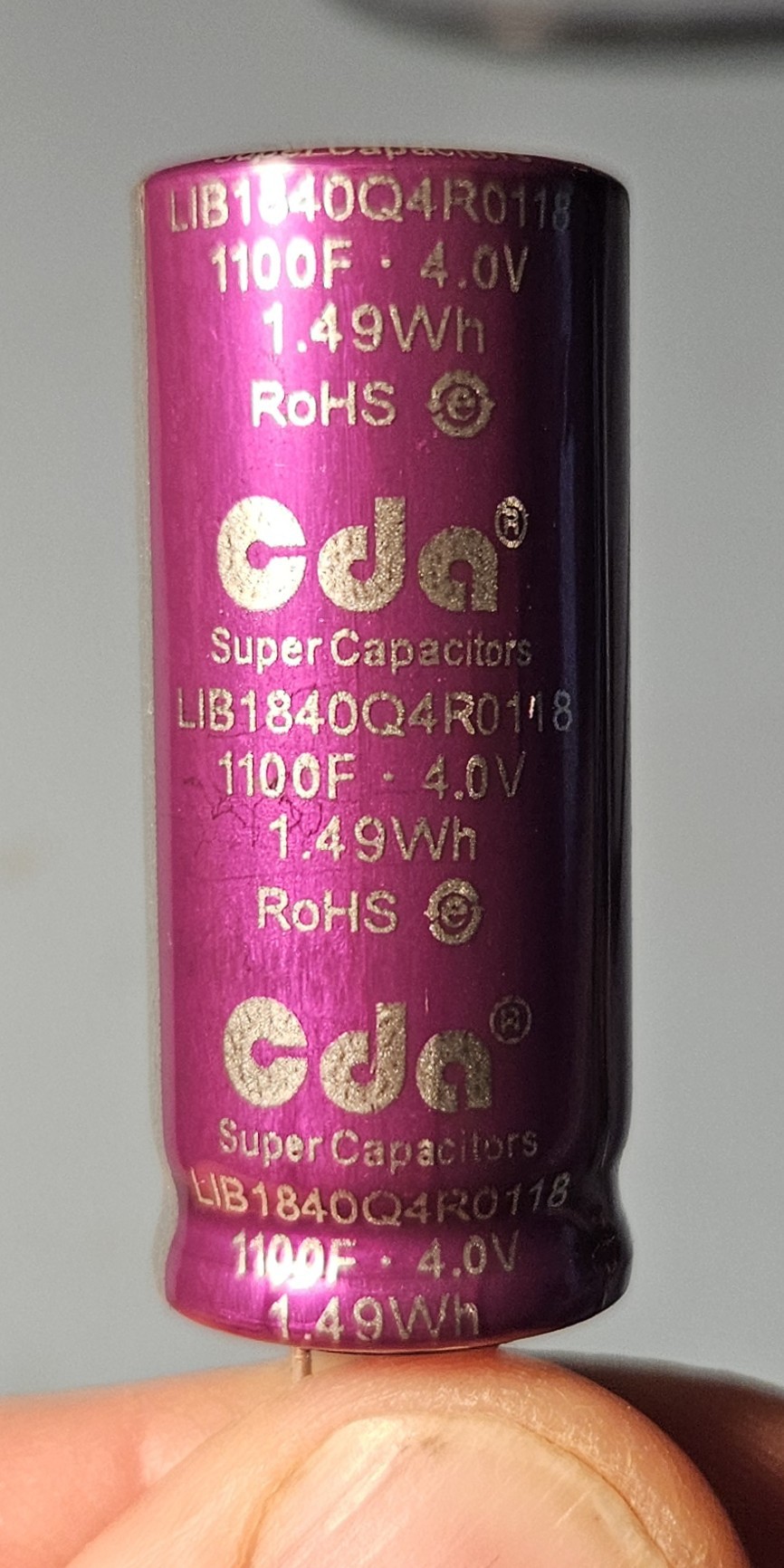
05/13/2025 at 18:25 • 0 commentsPreviously Lithium Ion Capacitors (LICs) were 3.8V, however recently there are 4.0V and 4.2V LICs, and they have huge capacitance 1100F and 1300F. In another log I have tested capacitance and leakage of these huge LICs.
![]() Cda LIB1840Q4R0118 1100F 4.0V
Cda LIB1840Q4R0118 1100F 4.0V![]() BT LIC1840H4R2C1300 1300F 4.2V
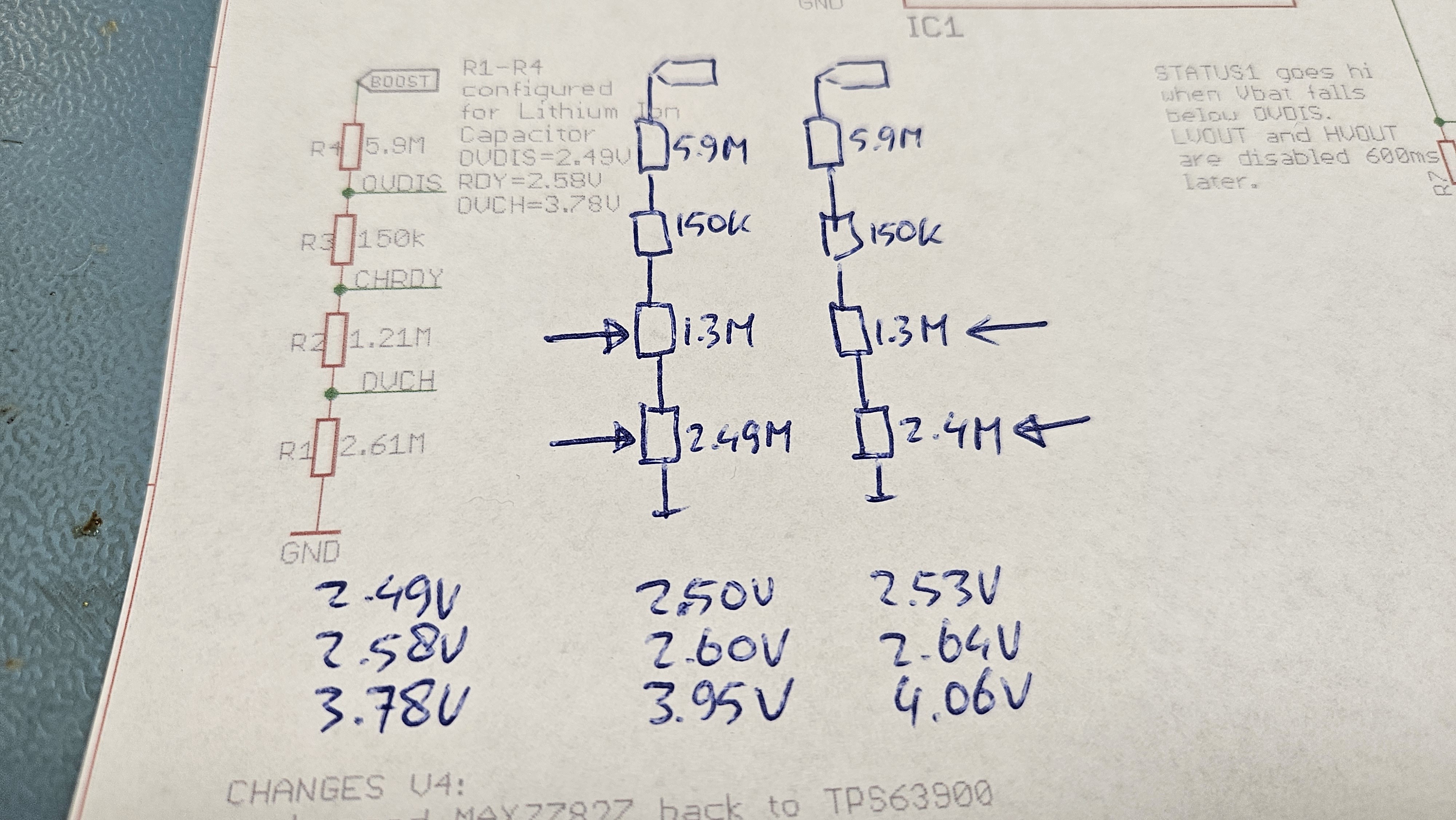
BT LIC1840H4R2C1300 1300F 4.2VIn AEMLIC the charge voltage is set using 4 resistors and the values can be calculated using a spreadsheet found on E-peas AEM10941 product page. To test charging to a higher voltage I have adjusted a AEMLIC resistors R1 and R2.
![]()
to following values
![]()
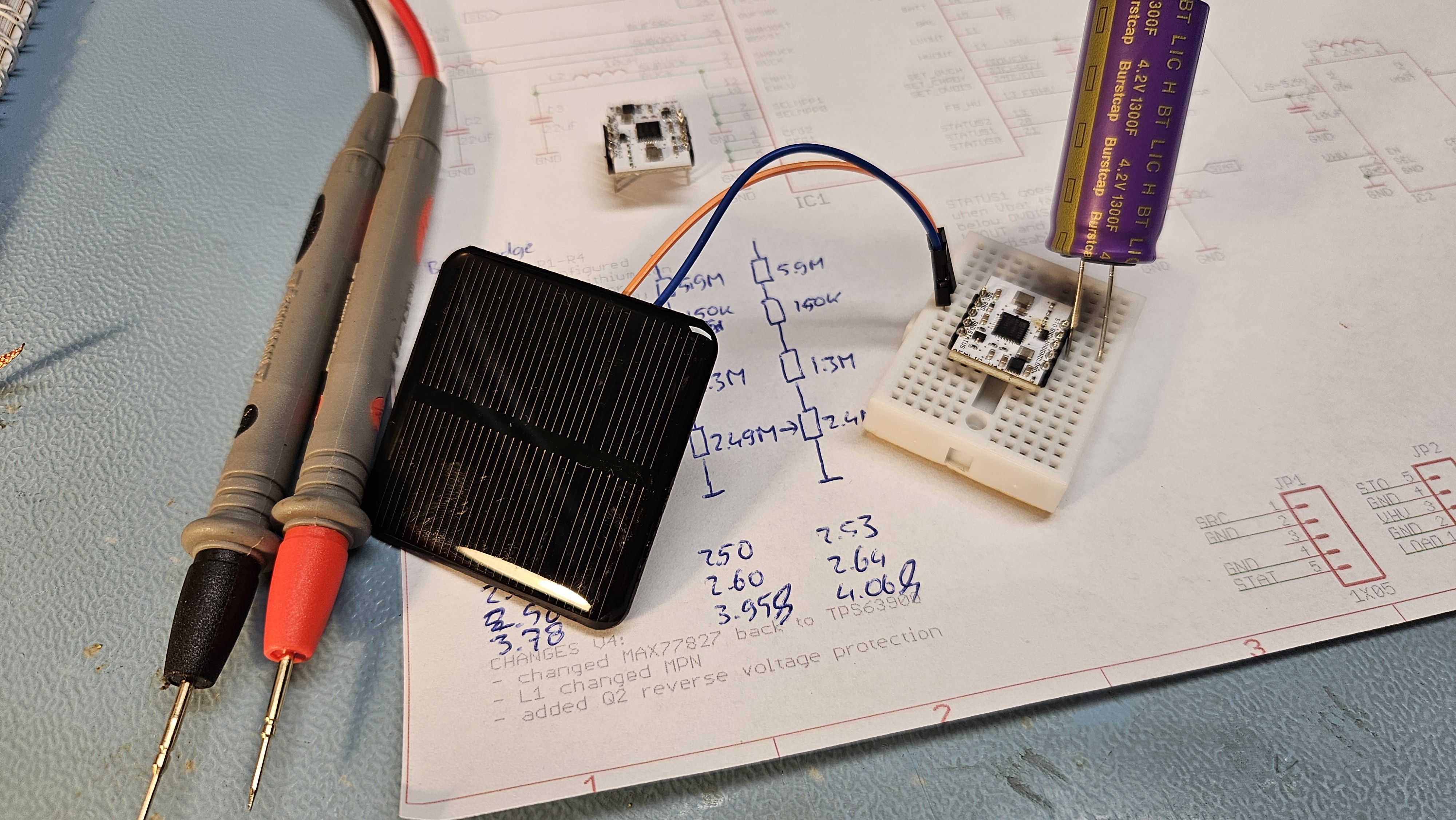
In picture above) you see the disable voltage (~2.50), the enable voltage (~2.6V) and the charge voltage (~3.8V or ~4.0V or ~4.2V) and the resistor values. Always use 1% resistors. I have tested and confirmed AEMLIC is able to charge to these voltage levels. I do not recommend changing these resistors because you need serious soldering skills for these 0402 size resistors. I don't support questions about changing these resistors.
![]()
-
Testing larger Lithium Ion Capacitors
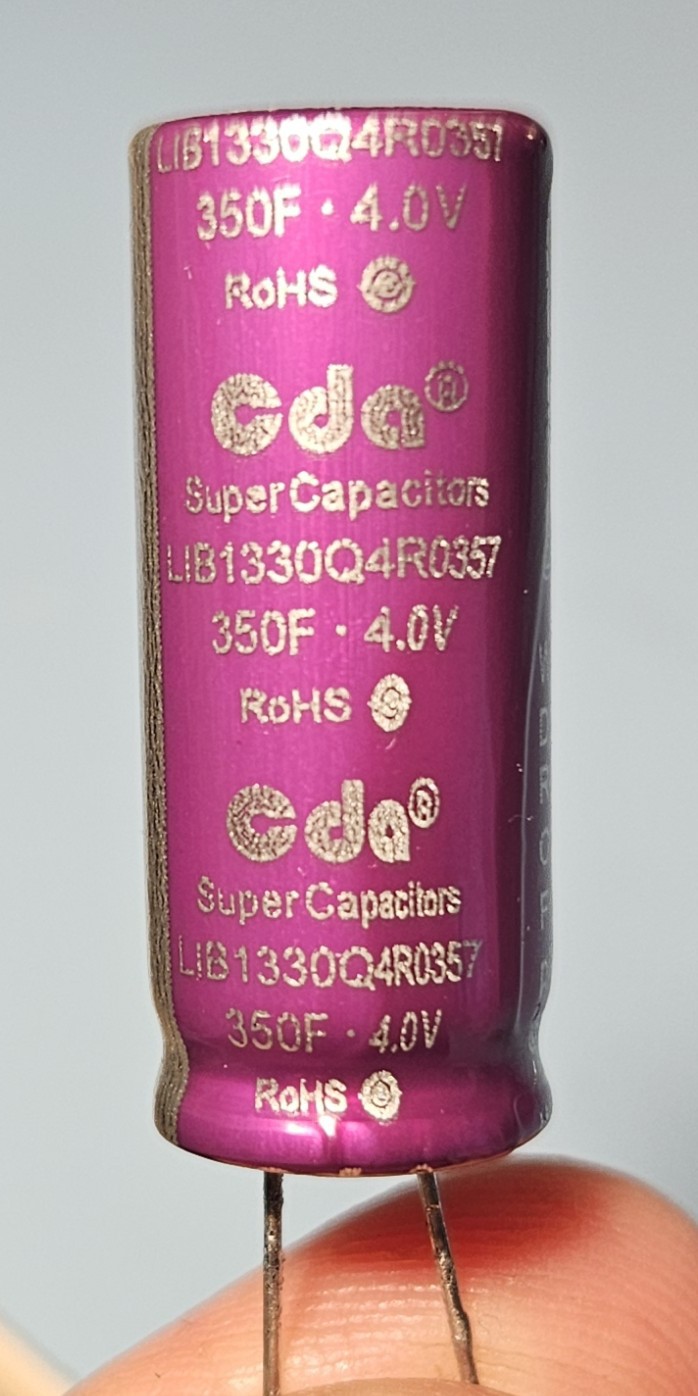
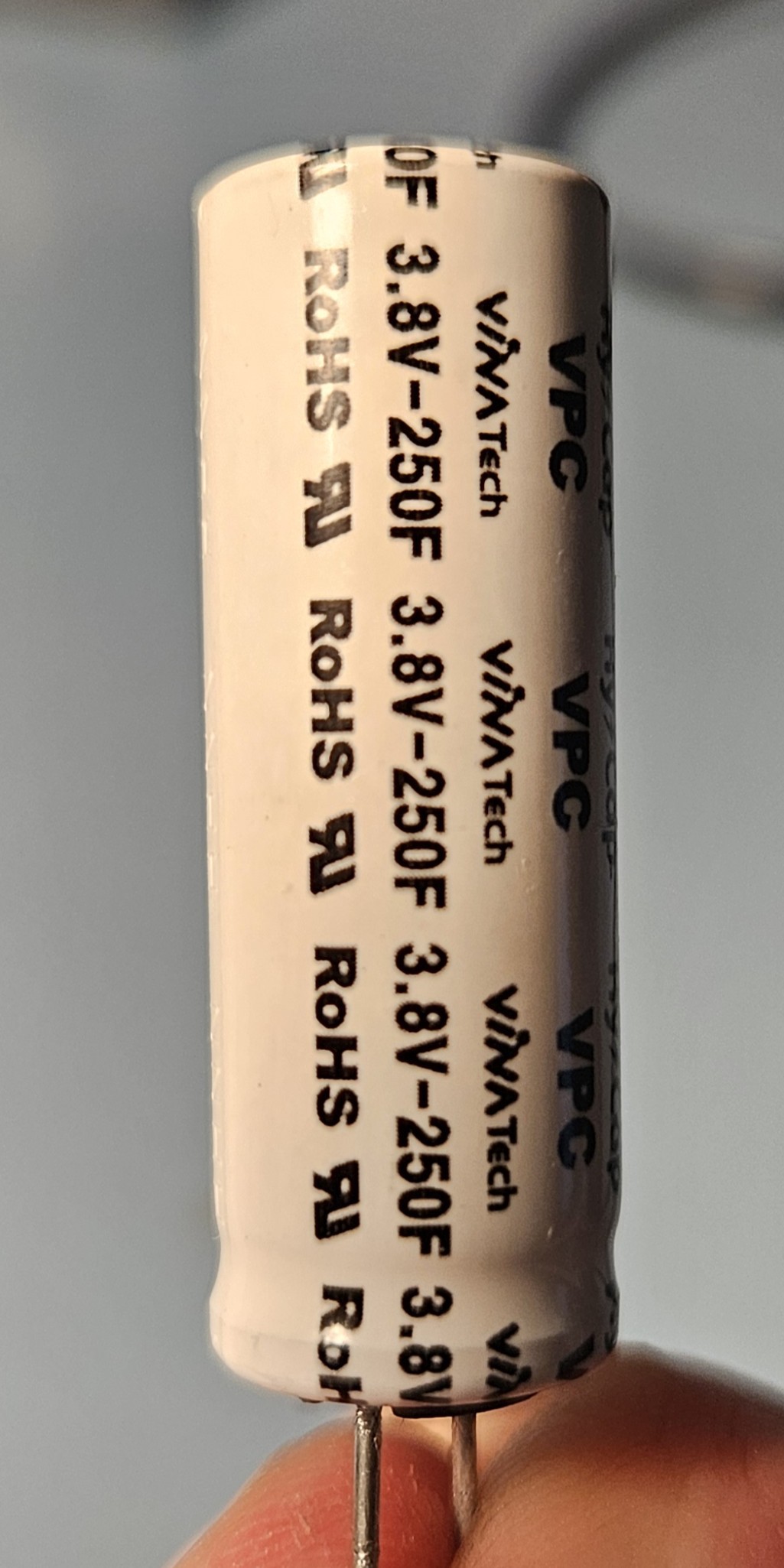
03/11/2025 at 20:17 • 0 commentsThere are newer Lithium Ion Capacitor (LICs), with higher voltage than the 3.8V LICs I had tested before. Manufacturer Cda calls the 4V variant the LIB series and it ranges from 200 to 1100F. And I recently ordered 4.2V LICs that are 350F and an 1300F. I compared capacity, ESR and leakage current of 5 large LICs. To test capacitance I used my electronic load to discharge them at a constant 750mA down to 2.5V and I could read the capacity (mAh) from the display. I converted LIC specified capacitance (farad) to capacity (mAh) using the formula Q= C * V / 3.6.
To measure the leakage I measured the voltage decay over the days with a bench multimeter. After 72 hours I calculated leakage using the formula I(A)=C(farad)*(yesterdaysvoltage[V]-todaysvoltage[V])/t[s]
BT LIC-H-1840 Cda LIB1840Q4R0118 Cda LIB1330Q4R0357 Cda LIC1840Q3R8757 Vinatech VEL13353R8257G ![]()
![]()
![]()
![]()
![]()
Capacitance specified (F) 1300F 4.2V 1100F 4.0V 350F 4.0V 750F 3.8V 250F 3.8V Calculated capacity (mAh) 613mAh 458 mAh 145 mAh 270 mAh 90 mAh Measured capacity (mAh) 668 mAh 550 mAh 136 mAh 273 mAh 96 mAh diameter, length (mm) 18,40 18,40 13,30 18,40 13,35 ESR specified 90 milliohm 65 milliohm 100 milliohm 60 milliohm 100 milliohm leakage specified - 23 uA 4uA 23 uA 5 uA leakage measured >72h 31uA 11uA 4uA 13uA 5uA Price €10.29 qty1 €8.61 qty1 €5.67 qty1 €8.46 qty1 €6.76 qty1 Conclusion: The capacitance is amazing and the leakage of the Cda and Vinatech is low enough for very low power applications. I definitely recommend using these.
-
Testing few big Lithium Ion Capacitors
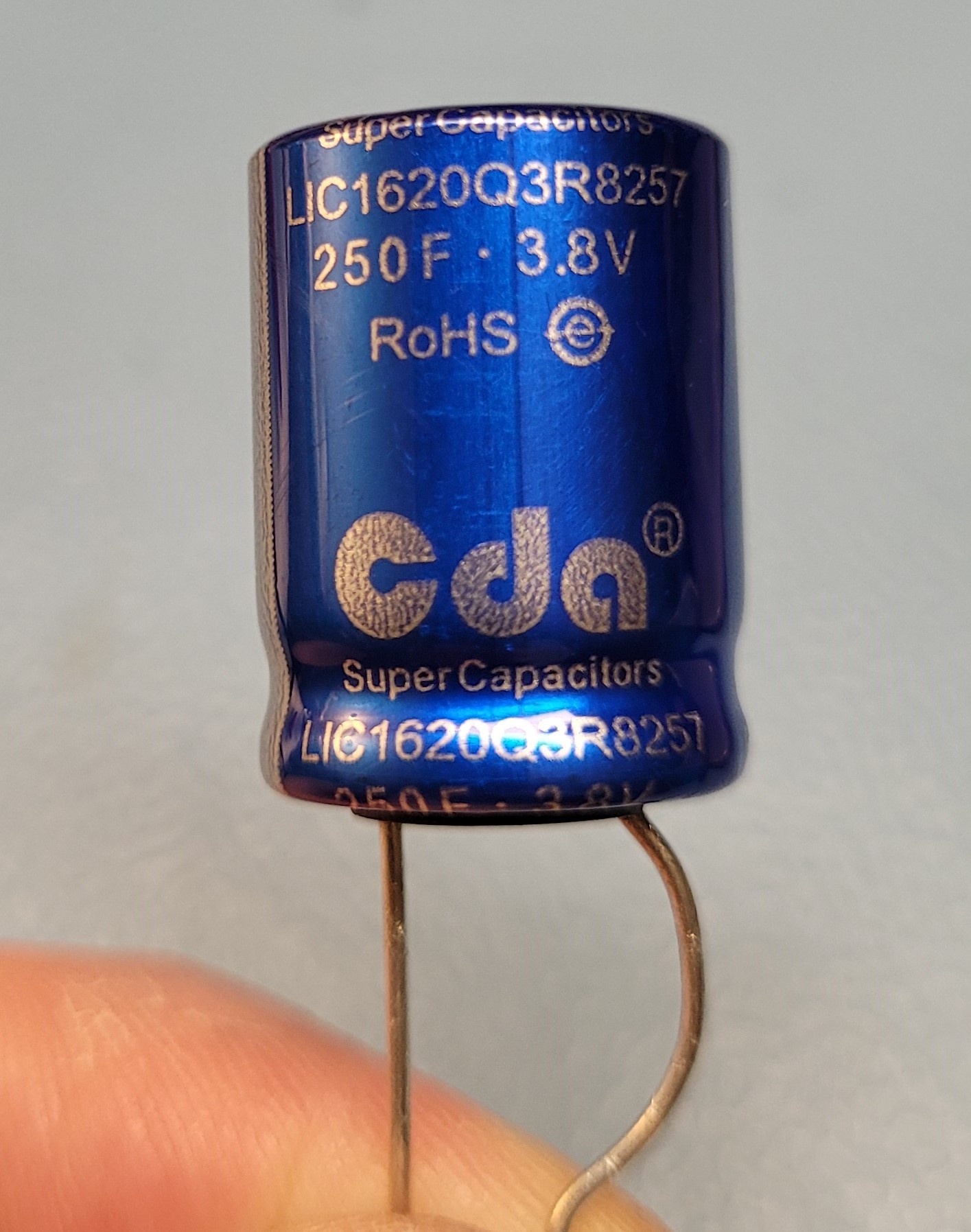
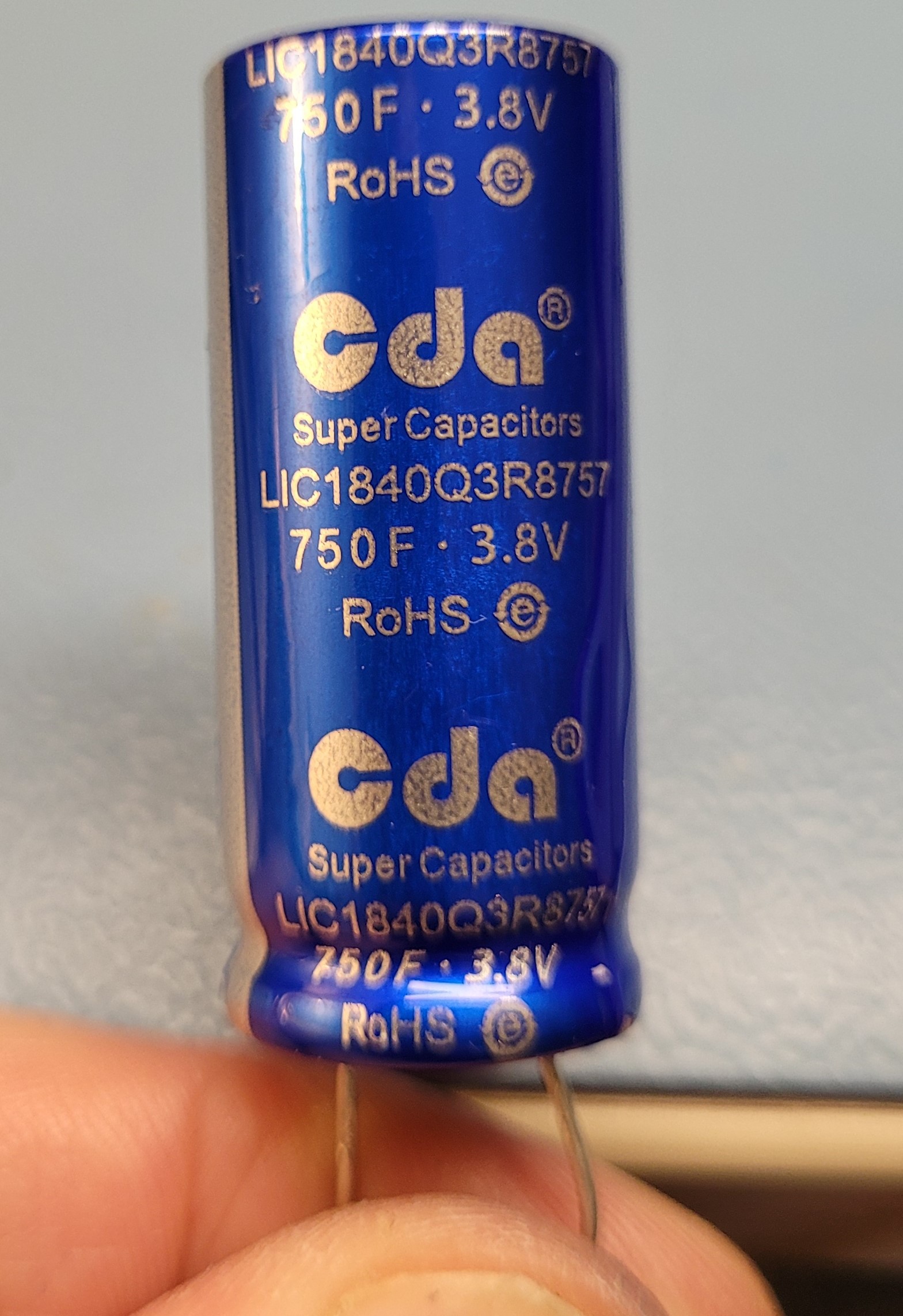
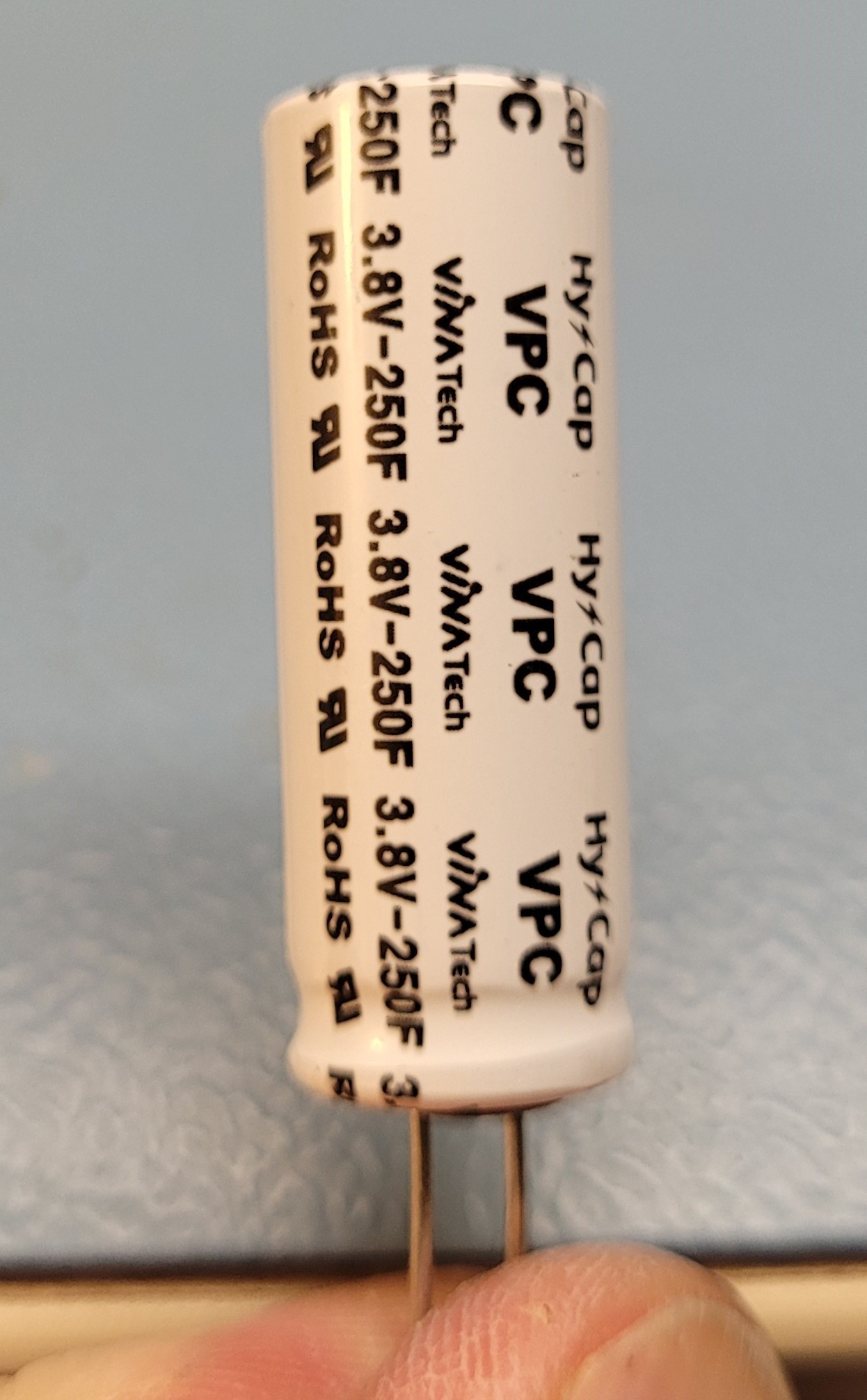
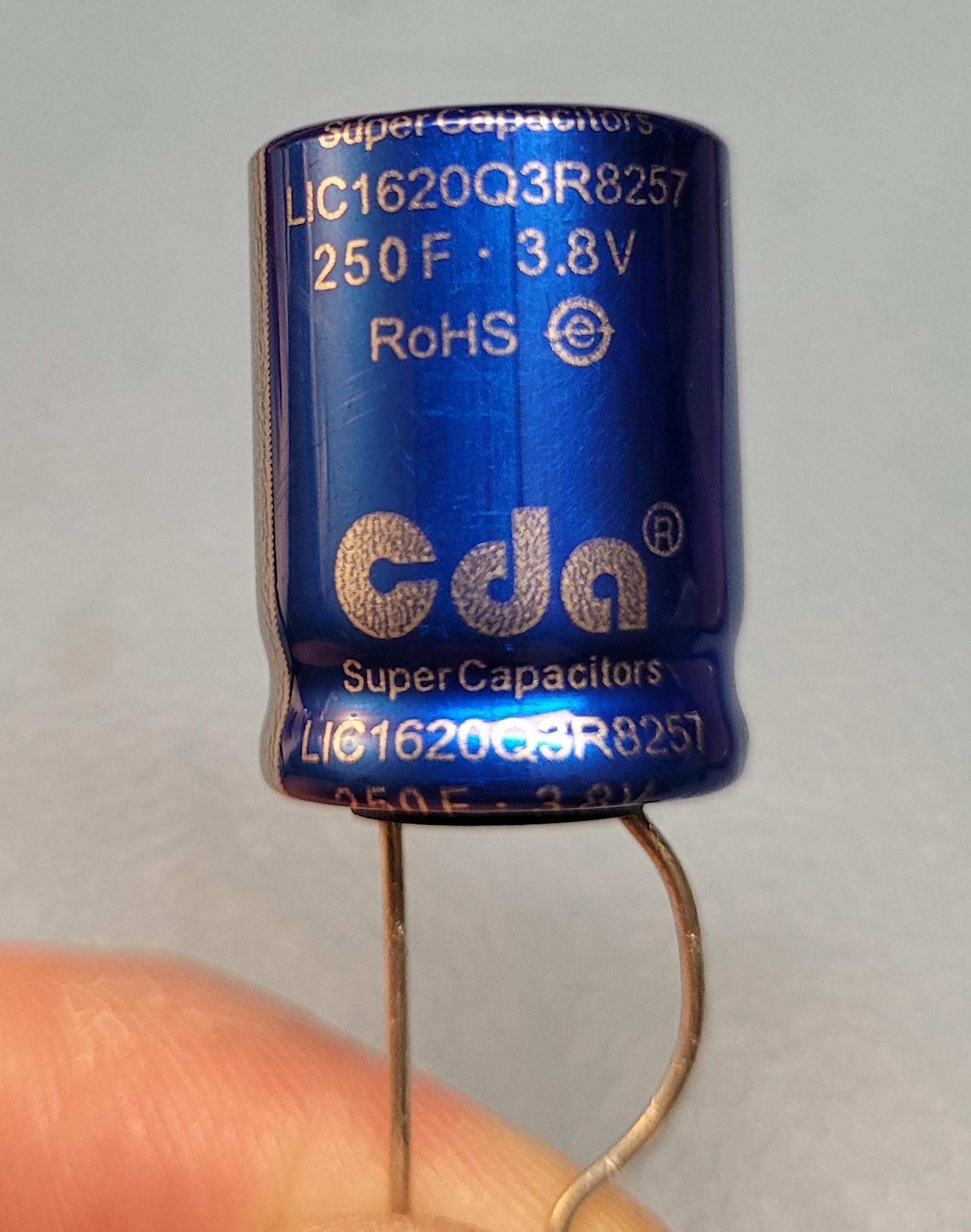
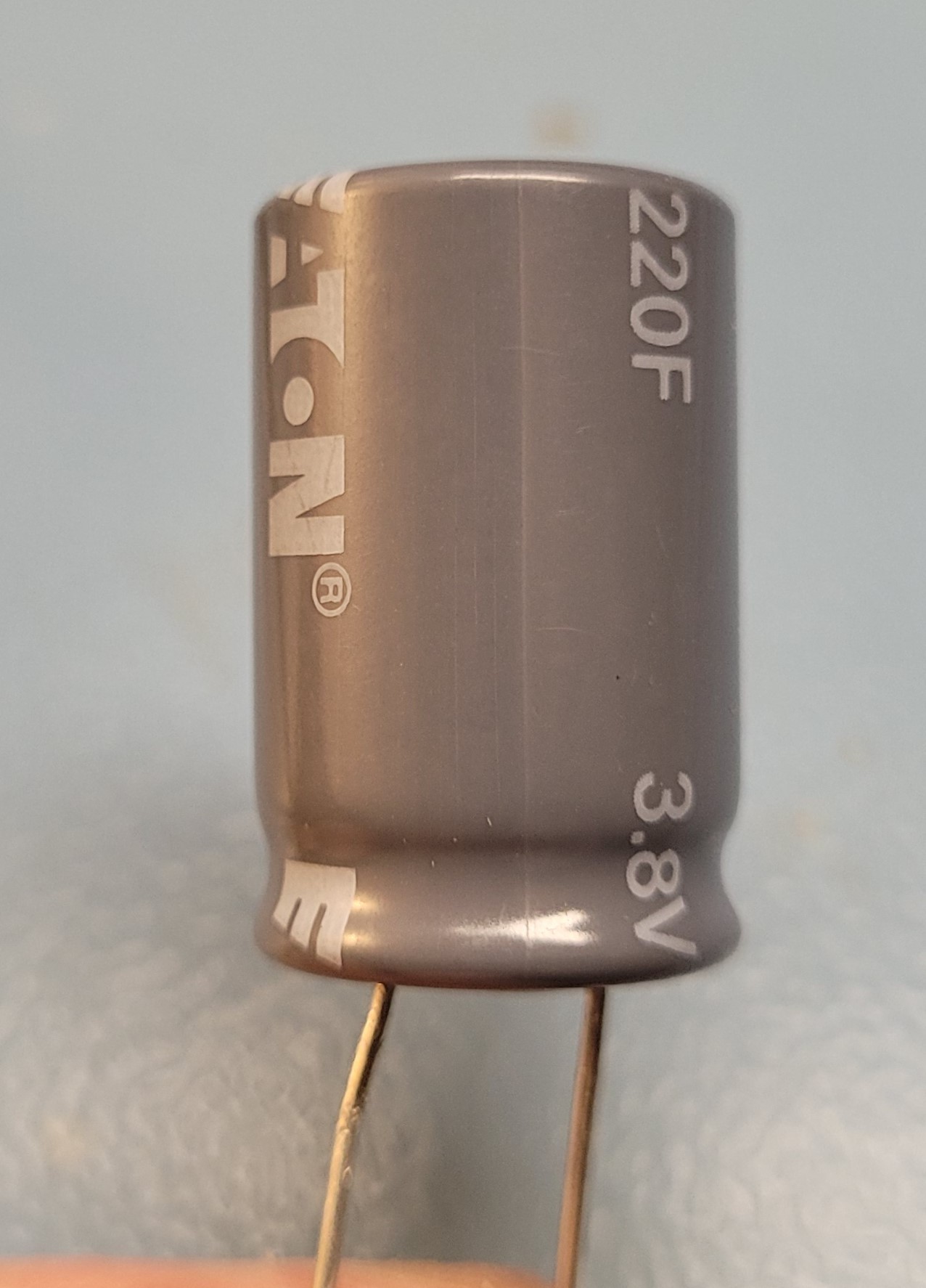
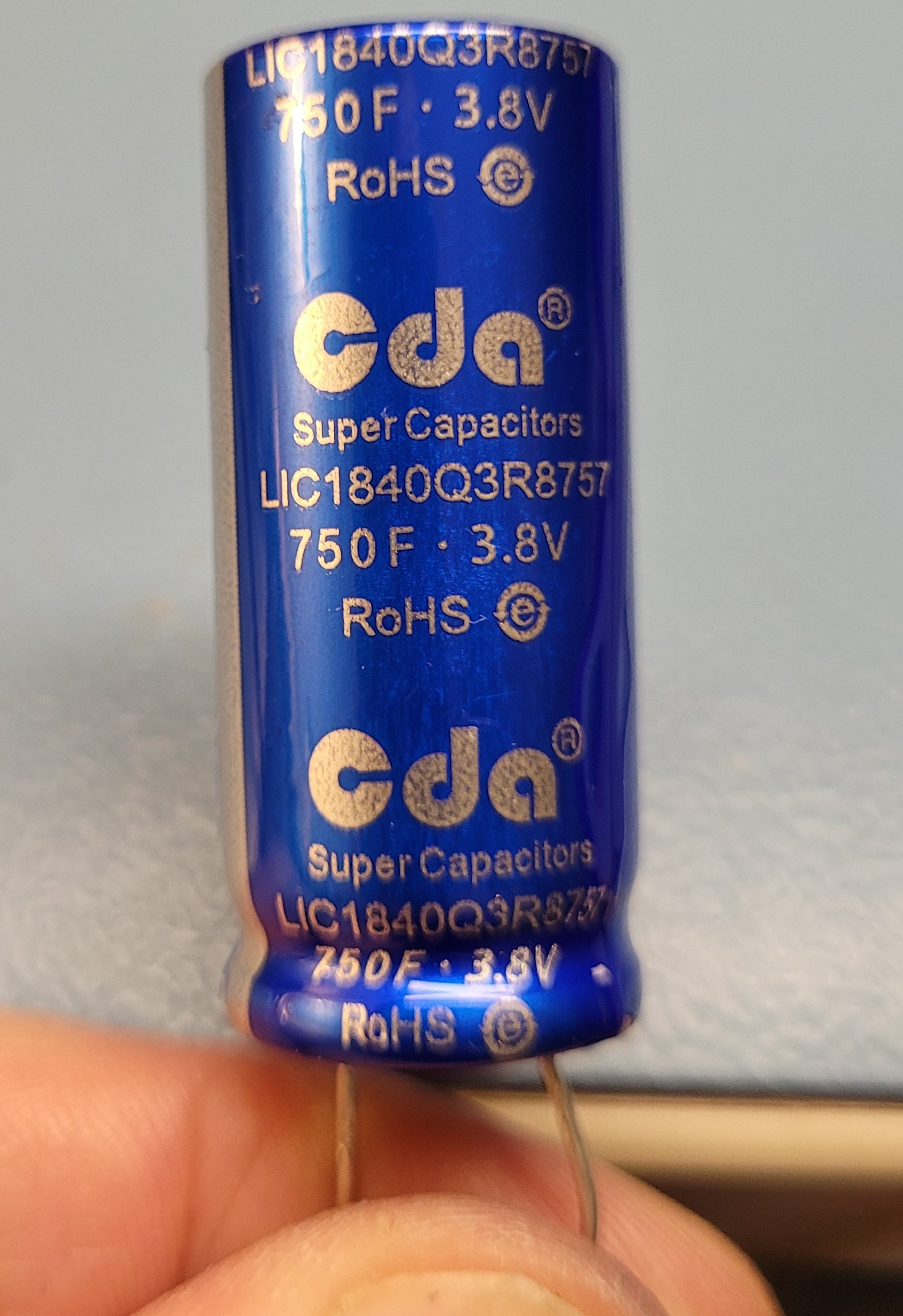
11/07/2022 at 21:02 • 5 commentsRecently I bought a 250F and a 750F 3.8V Lithium Ion Capacitor from Aliexpress, it is manufactured by Cda. Are they good?
![]()
250F 3.8V
![]()
750F 3.8
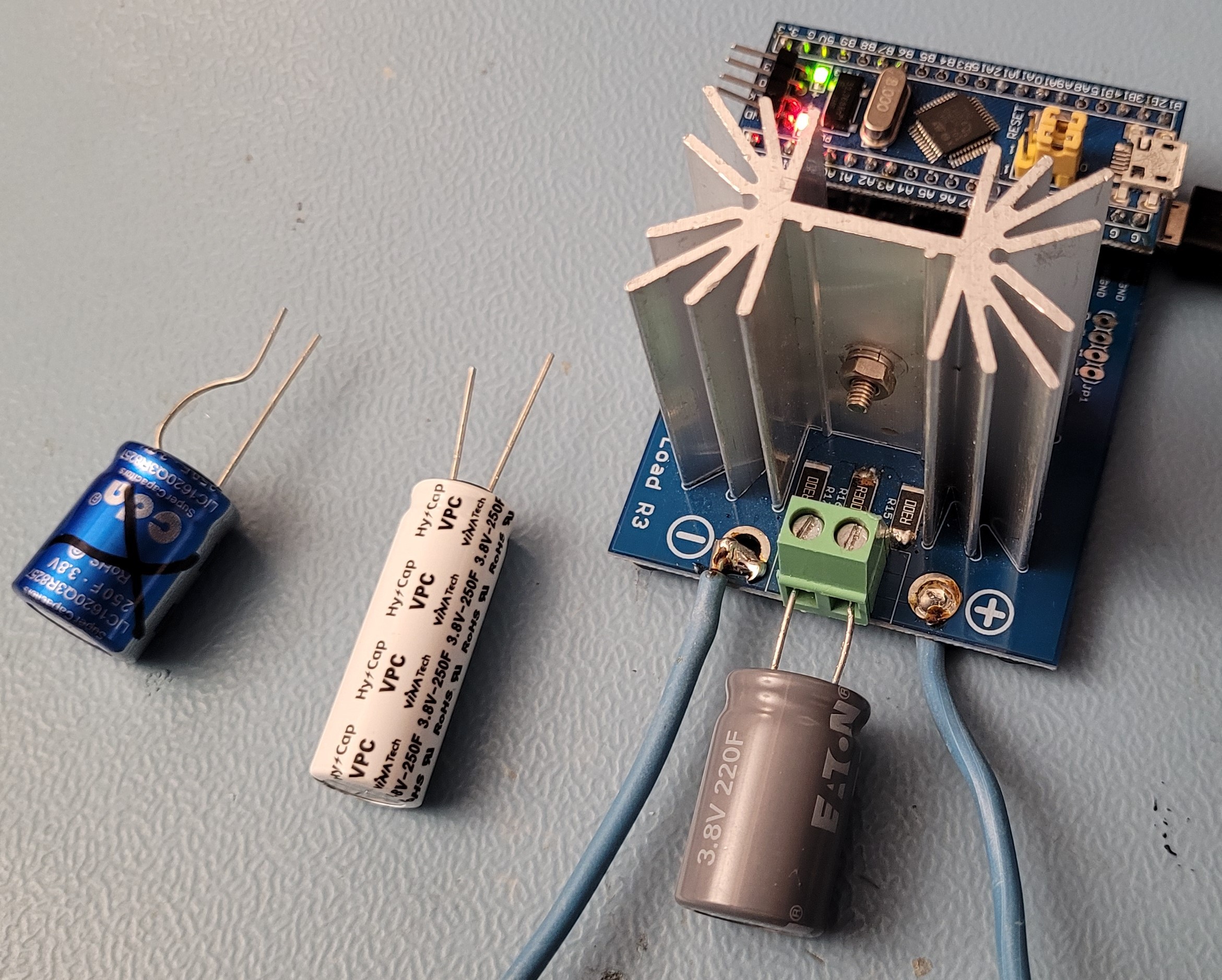
I compared it to other LICs from well know brands like Vinatech and Eaton. I compared datasheets, measured capacitance and measured leakage. To measure the capacitance I used my own electronic load set at a constant current of 500mA and and measured the time it takes to drop from 3.8V to 2.5V. Capacitance is calculated Q(F)= )=t(s)*0.5A / (3.8-2.5)
![]()
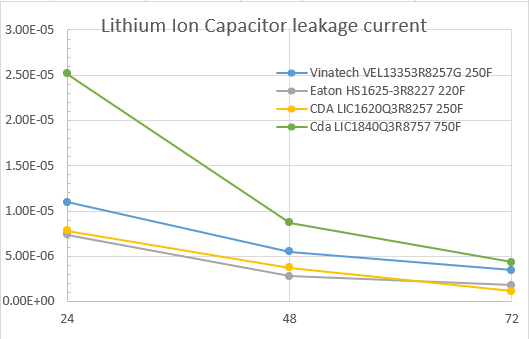
To measure the leakage I charged them up and every day I measured the voltage decay with a bench multimeter and calculated leakage current using following formula leakagecurrent(A)=capacity(Farad)*(yesterdaysvoltage[V]-todaysvoltage[V])/t[s]
Vinatech
VEL13353R8257G![]()
Cda
LIC1620Q3R8257![]()
Eaton
HS1625-3R8227![]()
Cda LIC1840Q3R8757 ![]()
specified capacitance (F) 250 250 220 750 dimensions (diameter x length mm) 12.5x35 16x20 16x25 18x40 operating temperature (Celsius) -25 +70 -40 +85 -15 +70 -40 +85 life cycles 20k (10%) 30k (30%) 500k (30%) 30k (30%) Current continous A 0.75 0.75 1.1 3 Current peak A 1s 5 10 15.3 30 ESR AC 1kHz mOhm 50 50 100 25 specified leakage current 72h/uA 10 5 12 23 price at qty1000 $1.90 at Vinatech $1.90 at a Aliexpress seller $8.60 at mouser not requested measured capacitance CC 0.5A 301F (+20%) 220F (-14%) 228F (+3%) 761F (+1%) measured leakage 72h/uA 3 1 2 4 The CDA 250F LIC has 14% lower than specified capacitance, not perfect but not bad either. The leakage of all LICs after 72hrs is very low, less than 5uA, so it becomes insignificant for most energy harvesting application.
![]()
Conclusion: the 250F and 750F 3.8V LICs from Cda are not bad at all. The specs are good, the measured capacitance is not bad and leakage is good. For the Cda 250F the price is $1.90 in qty1000 same as the Vinatech 250F.
-
Leakage current of lithium ion capacitors vs supercapacitors
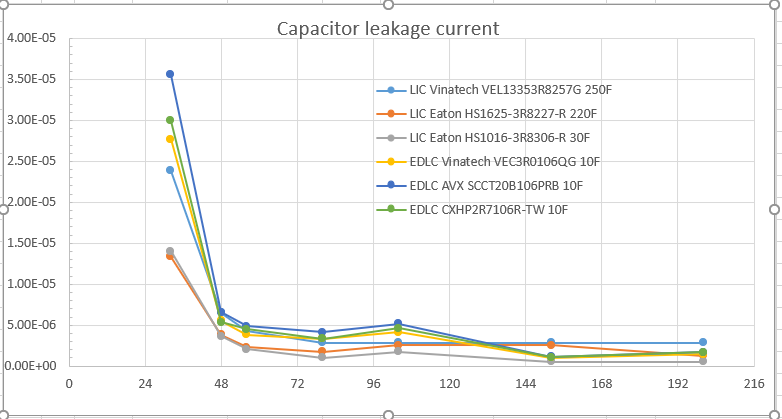
03/09/2022 at 21:06 • 0 commentsI have compared the leakage current of a few Lithium Ion Capacitors (LIC) to a few supercapacitors (EDLC). I charged them up and then almost every day I measured the voltage decay with a handheld multimeter and calculated leakage current using following formula
leakagecurrent(A)=capacity(Farad)*(yesterdaysvoltage[V]-todaysvoltage[V])/t[s]![]()
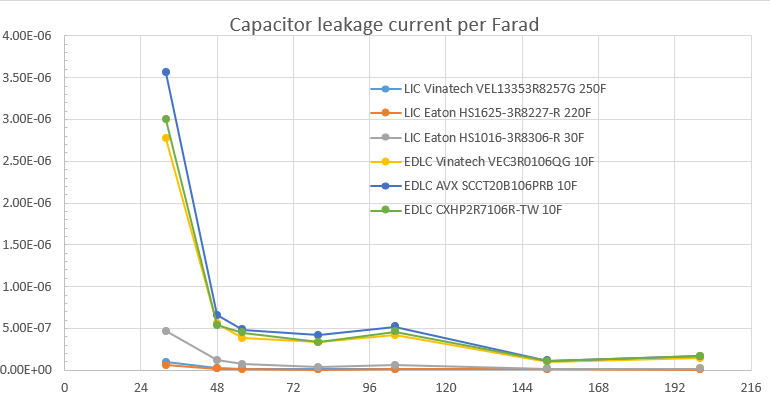
The chart shows for both LICs and EDLCs that after 72 hours the leakage current is less than 5uA, which is good news for low power IoT devices. Interestingly the high capacity (>200F) LICs have a lower leakage than the 10F supercapacitors. And if you plot the leakage per Farad capacity, then it becomes even more clear that LICs have about 5 times lower leakage than supercapacitors.
![]()
-
AEMLIC V2 has 3.3V/400mA output
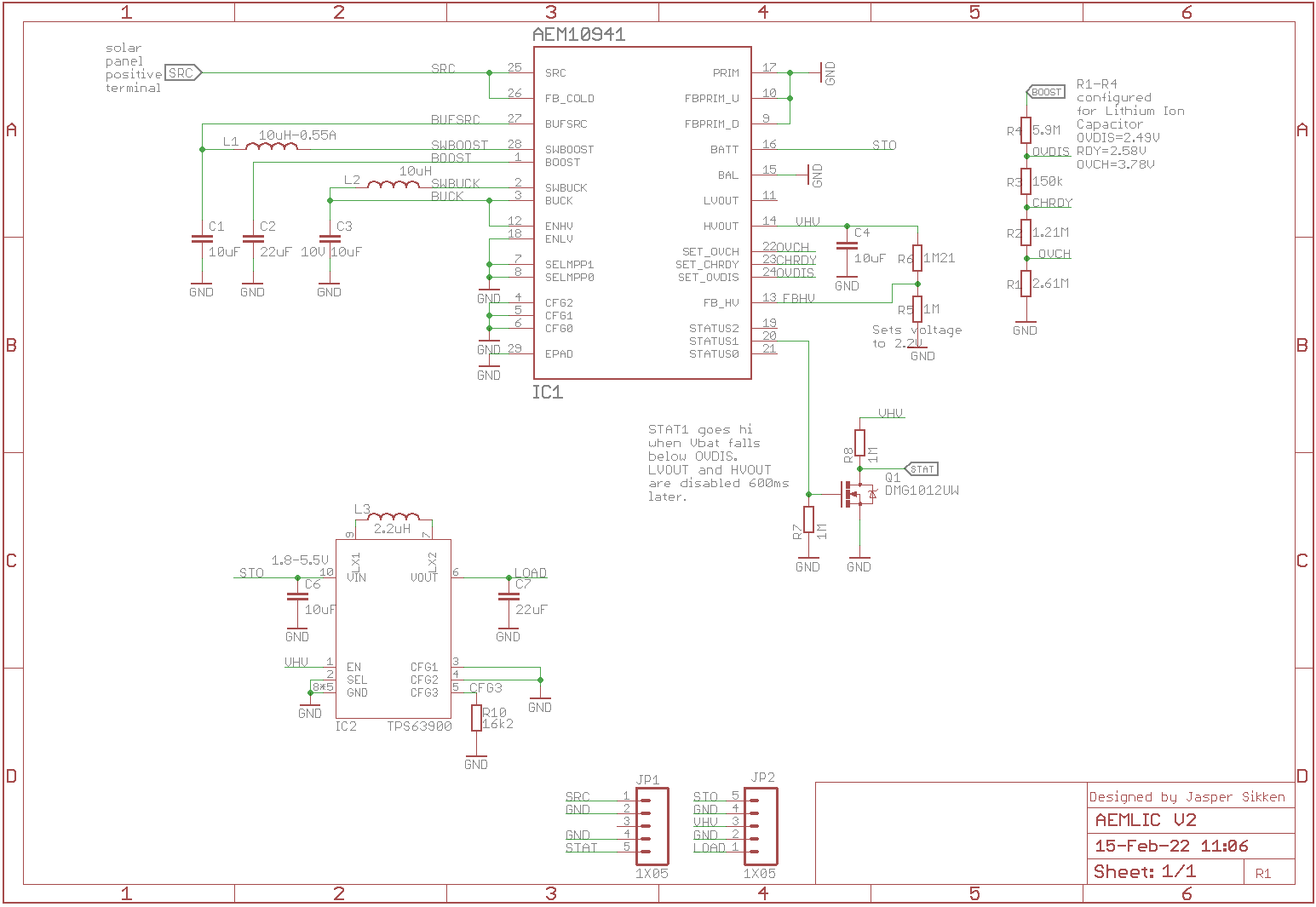
01/08/2022 at 20:30 • 3 commentsI didn't like so much that the AEMLIC V1 has a 2.2V/80mA output while many wireless development boards need 3.3V and a higher current. Therefor I have designed the new AEMLIC V2. It has an TPS63900 buck boost converter that delivers 3.3V/400mA. It is again based on the trusted AEM10941 (there was a problem with the newer AEM10300).
![]()
When AEM10941 storage voltage drops below 2.5V STATUS1 pin goes high and the host processor is immediately informed of an impending shutdown so it can gracefully end EEPROM FLASH/EEPROM write operations before it's power is shut off. The buck booster enable pin is controlled from the AEM10941 VHV output that goes low 600ms AFTER the host processor is warned.
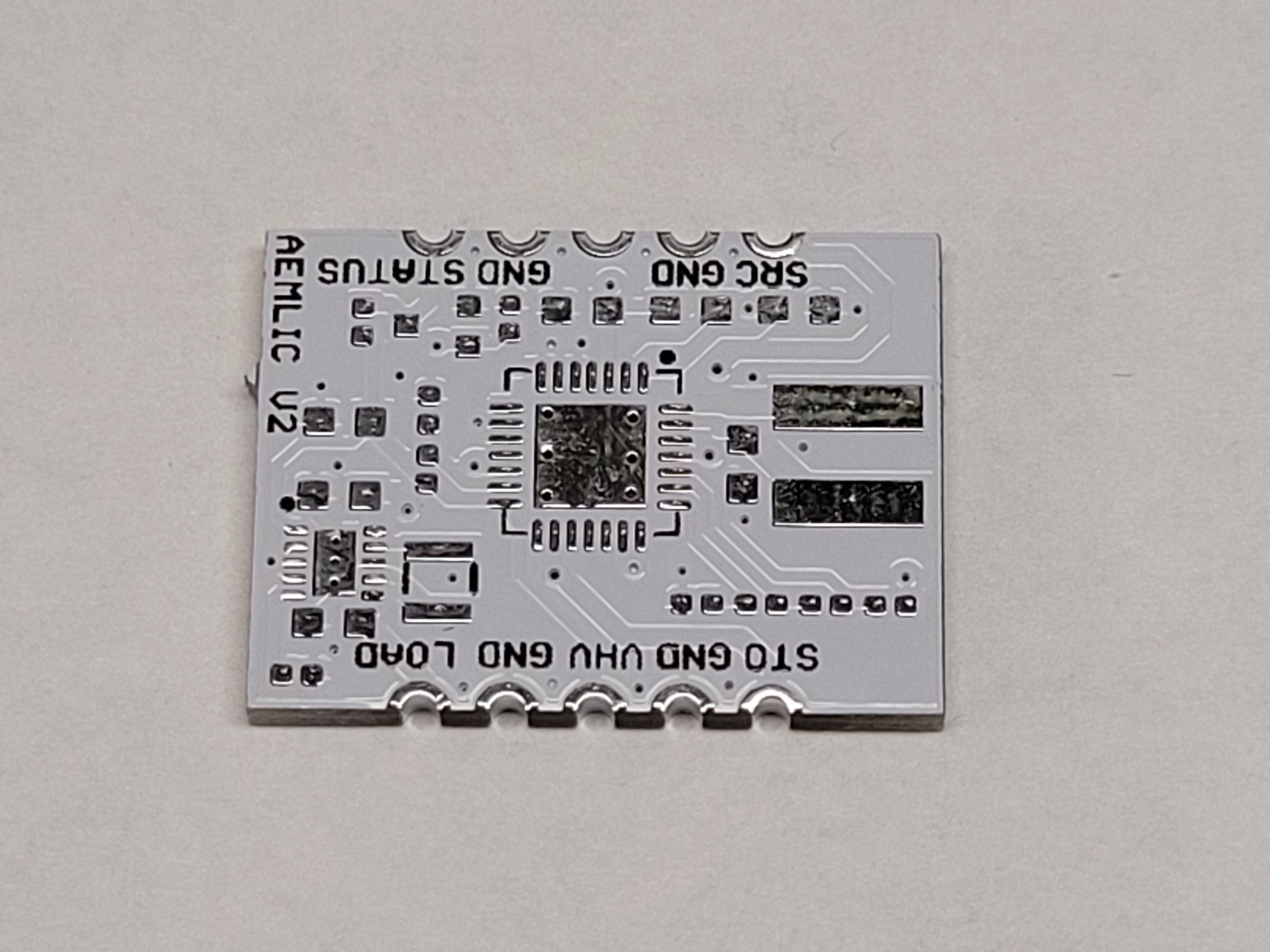
The bare PCB looks like this
![]()
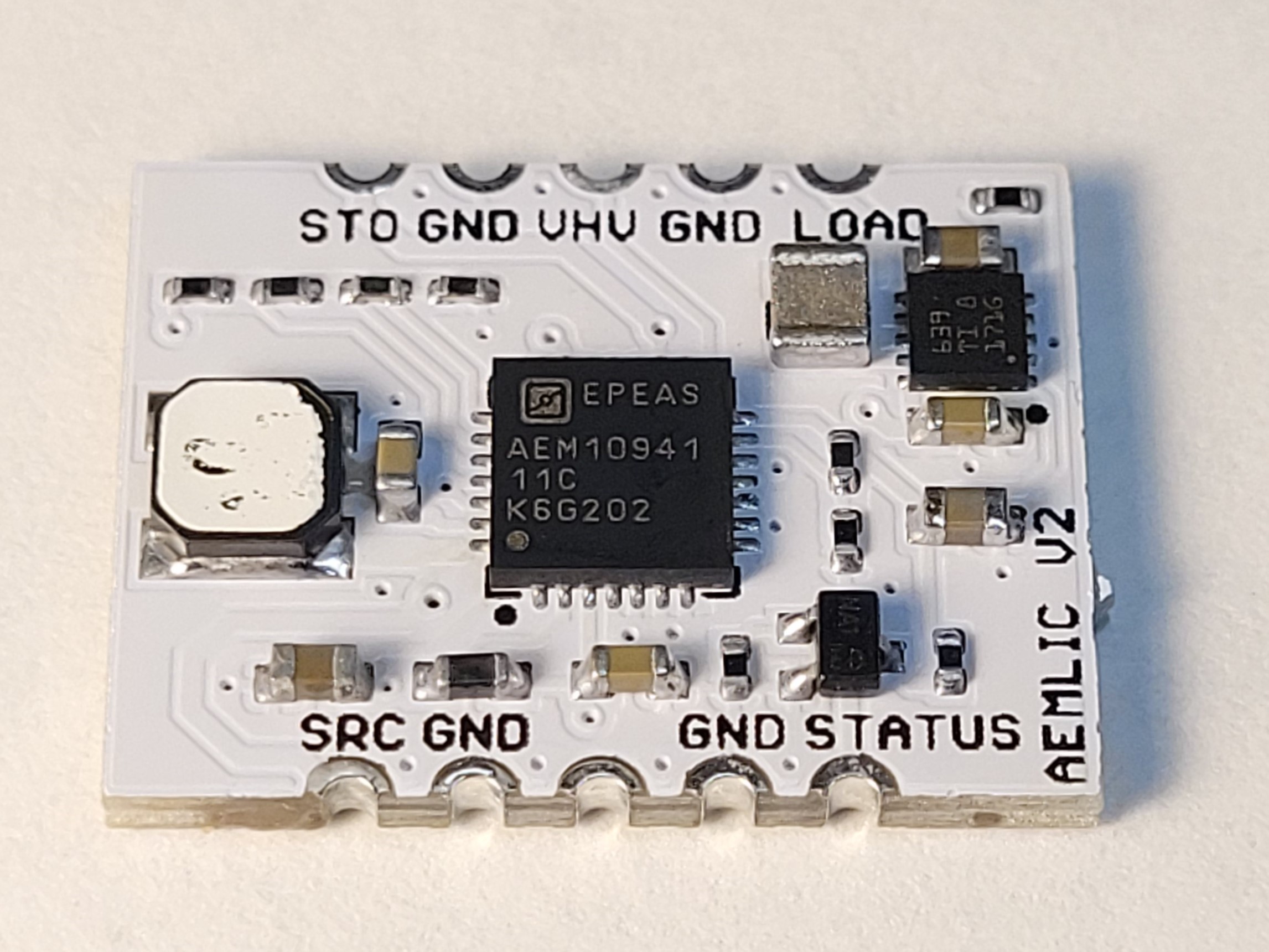
The assembled PCB looks like this
![]()
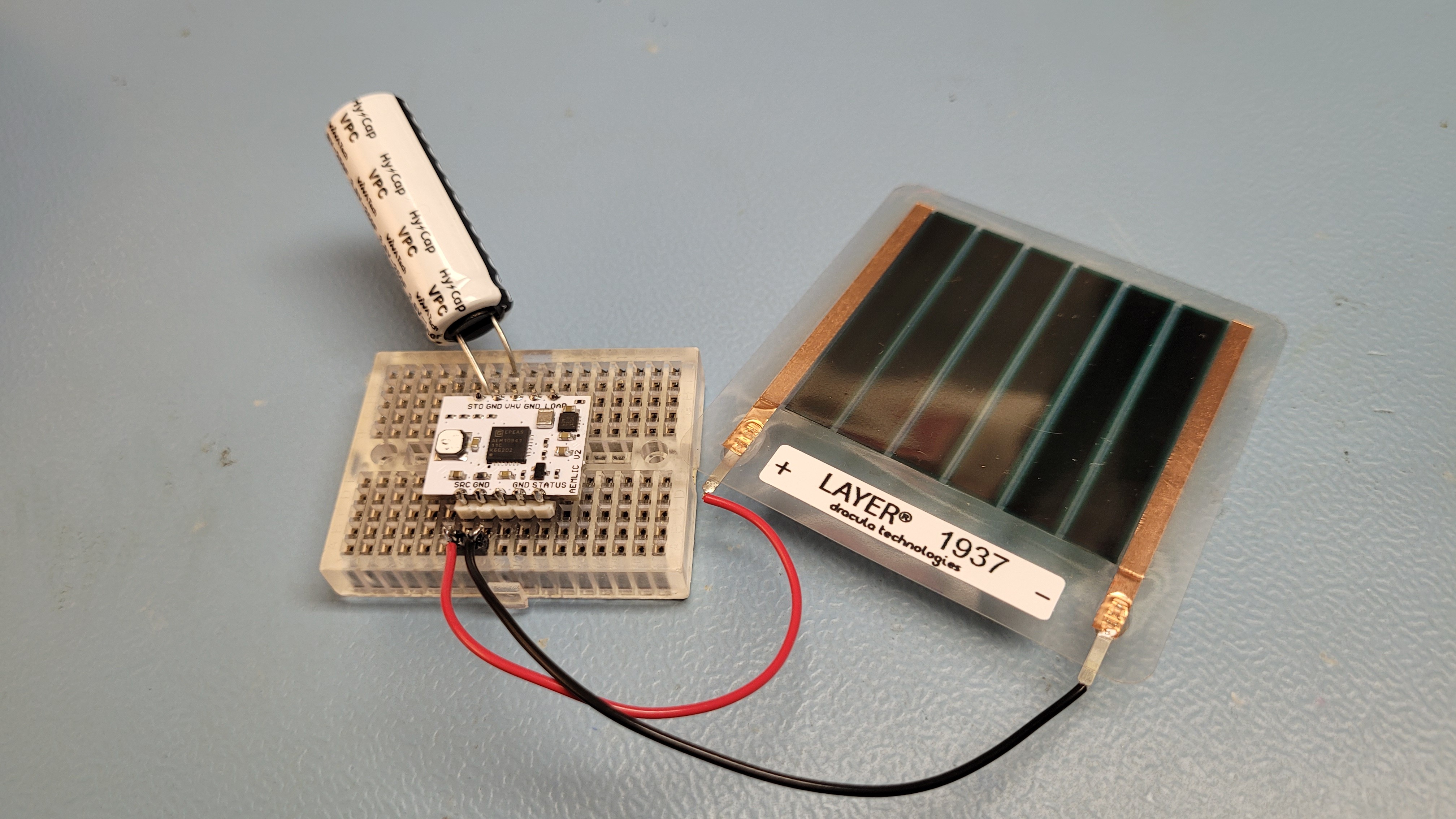
And after soldering onto headers and adding a 250F Lithium Ion Capacitor and a solar panel it looks like this.
![]()
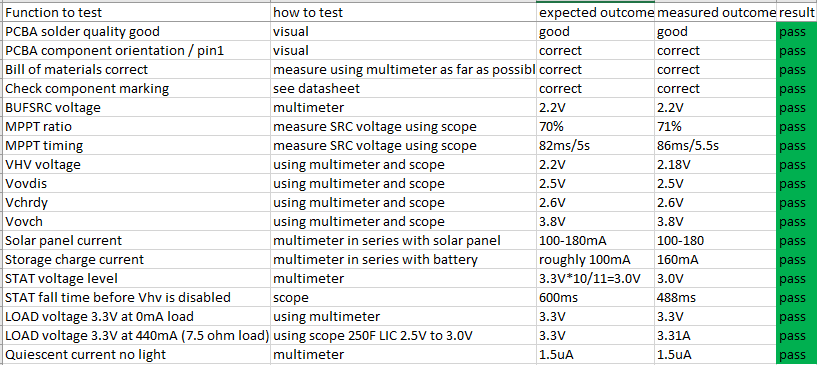
I have performed full hardware design verification and found no problem.
![]()
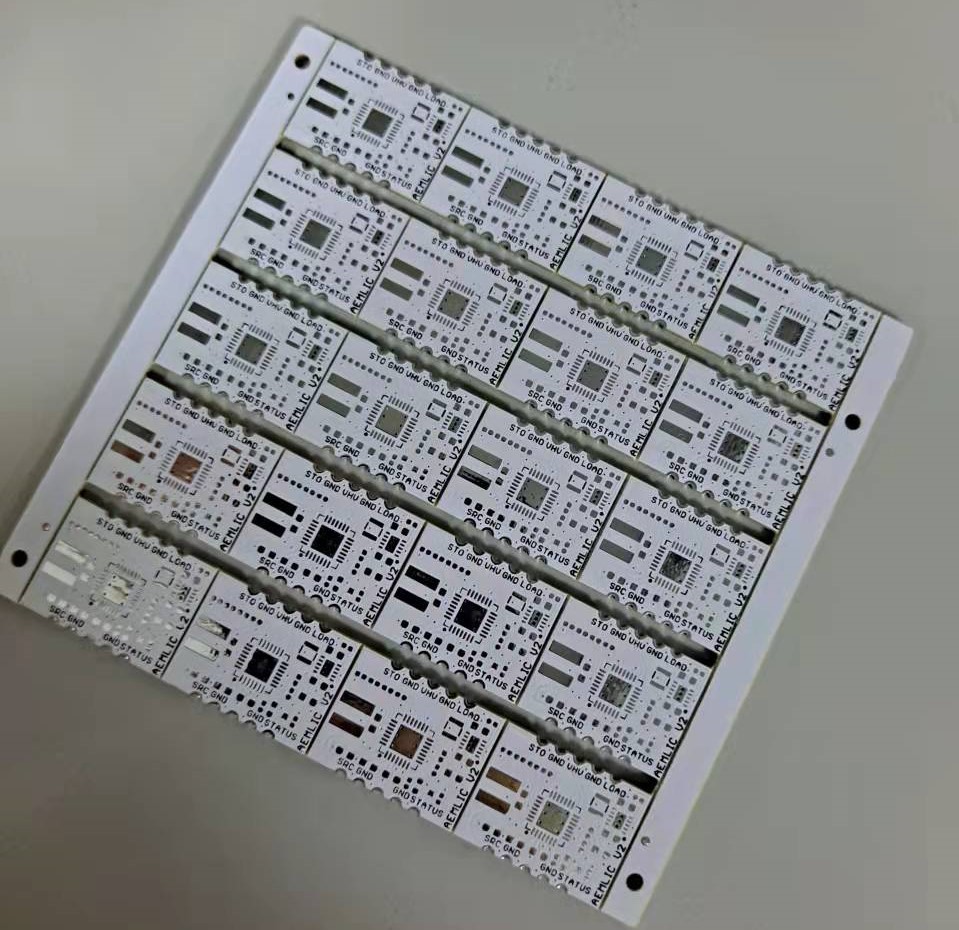
Then I felt confident enough to order the first batch of 50 from Elecrow. They are currently being produced and I expect that they are available for sale end of March 2022. Elecrow already share an image of the bare PCBs
![]()
Normally the TPS63900 buckboost converter is $0.80USD in qty1000 but the stocks were drying up at the normal distributors and so in January 2022 I have bought 220pcs from ICSOSO for $2.10 each. 1 Month later all stocks were completely dried up and Elecrow could source it for $39 each! So I was happy I bought some.
I am so excited about this new board because it uses an awesome solar energy harvesting chip, it stores the energy in a truly green storage device and it is can supply high enough current to power most IoT projects, not only BLE or LoRa but also NB-IoT, LTE-M, and wifi. This week I expect shipping info, which means the board will arrive next week around wednesday. I am so excited!
-
Just received the first batch of 100
04/26/2021 at 19:44 • 0 commentsToday I have receiv
And now I have put it for sale on Tindie. It is still waiting approval. -
PCB assembly is in progress
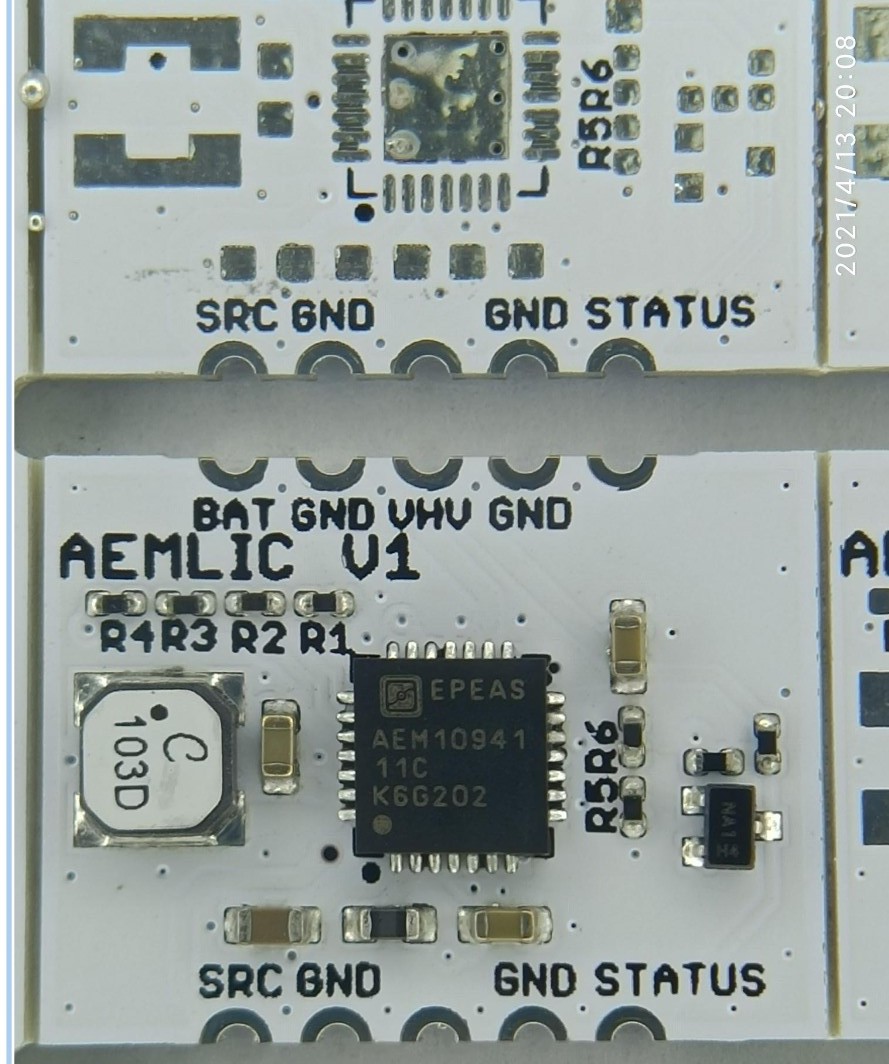
04/15/2021 at 19:33 • 0 commentsThe Chinese PCB assembler Elecrow has recently shared with me the pictures of the panel and of the first assembled board, for my approval.
![]()
![]()
I see some solder mask issues between the pads of the IC but Elecrow assured with me there is no problem and that there will be no short circuits.
Solar harvesting into Lithium Ion Capacitor
A tiny board with AEM10941 solar harvesting IC charging a Lithium Ion Capacitor