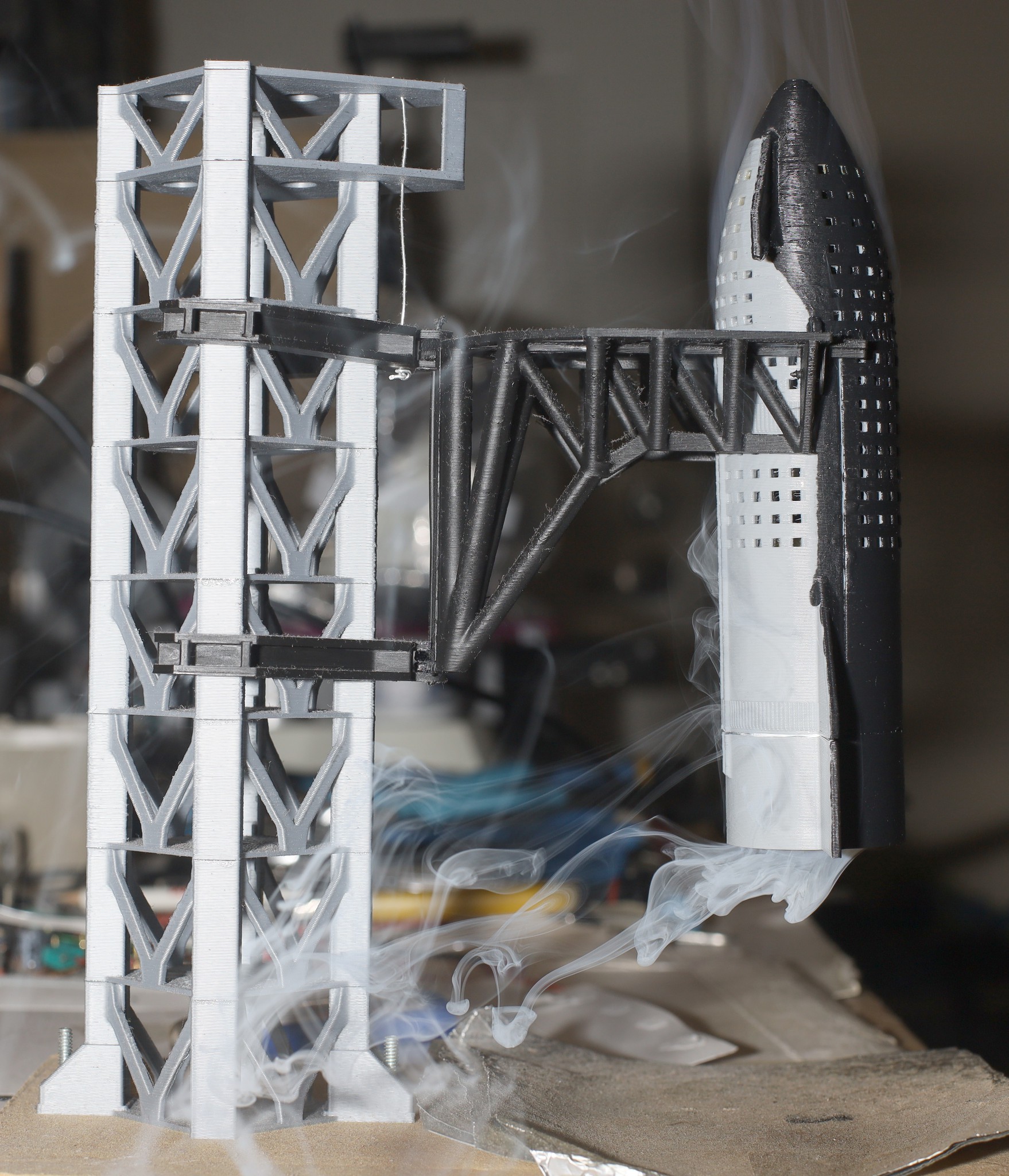
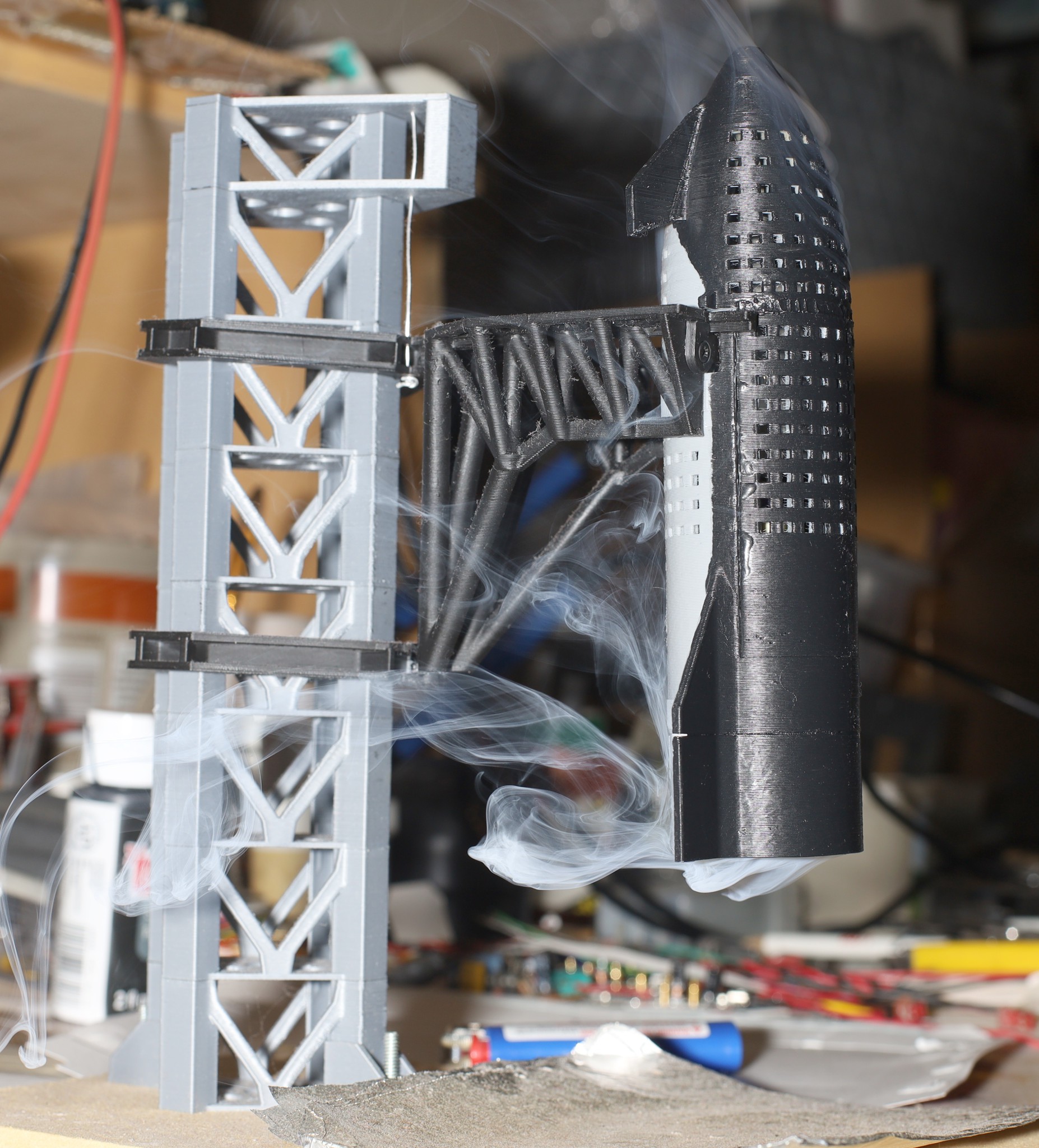
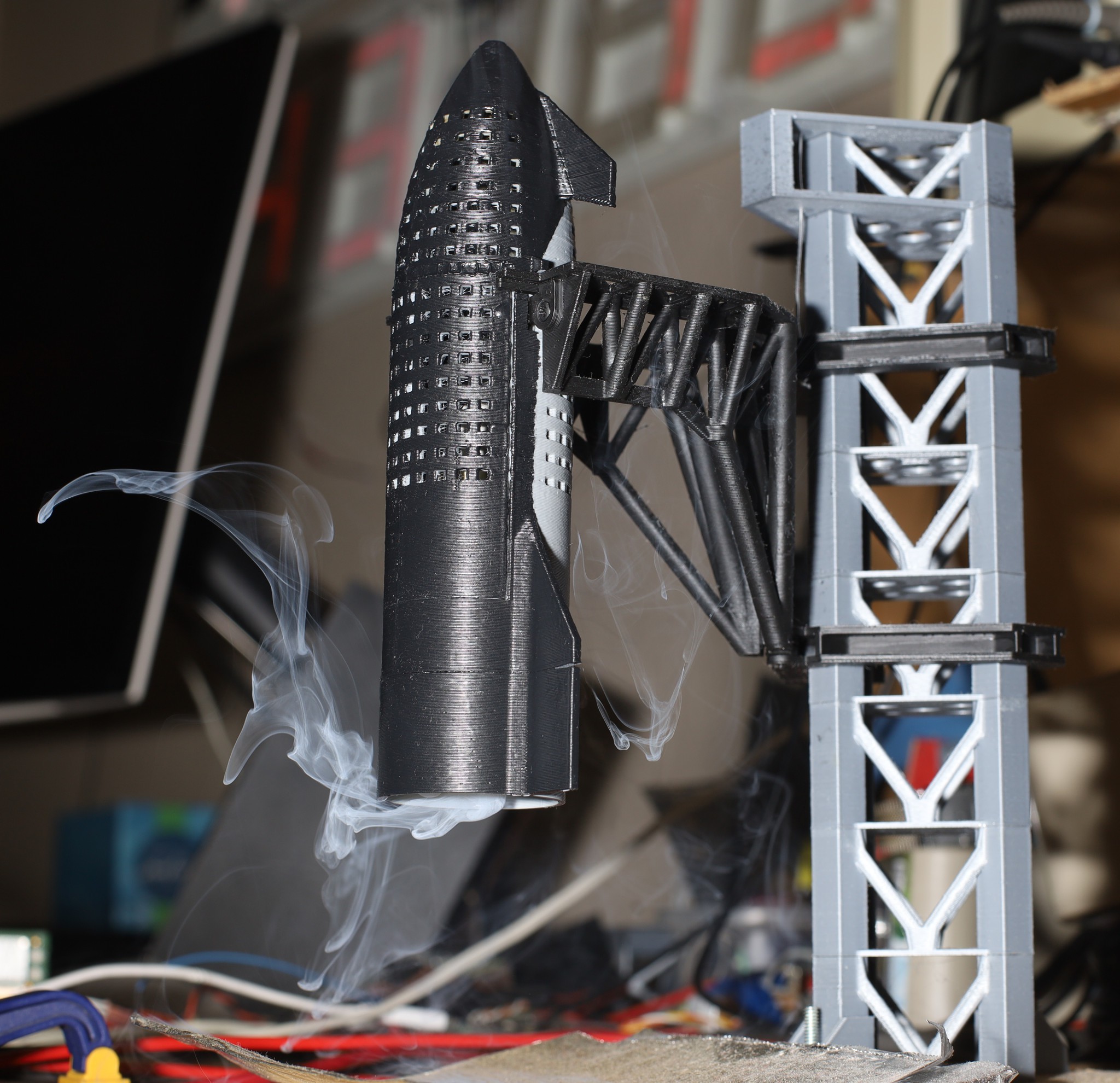
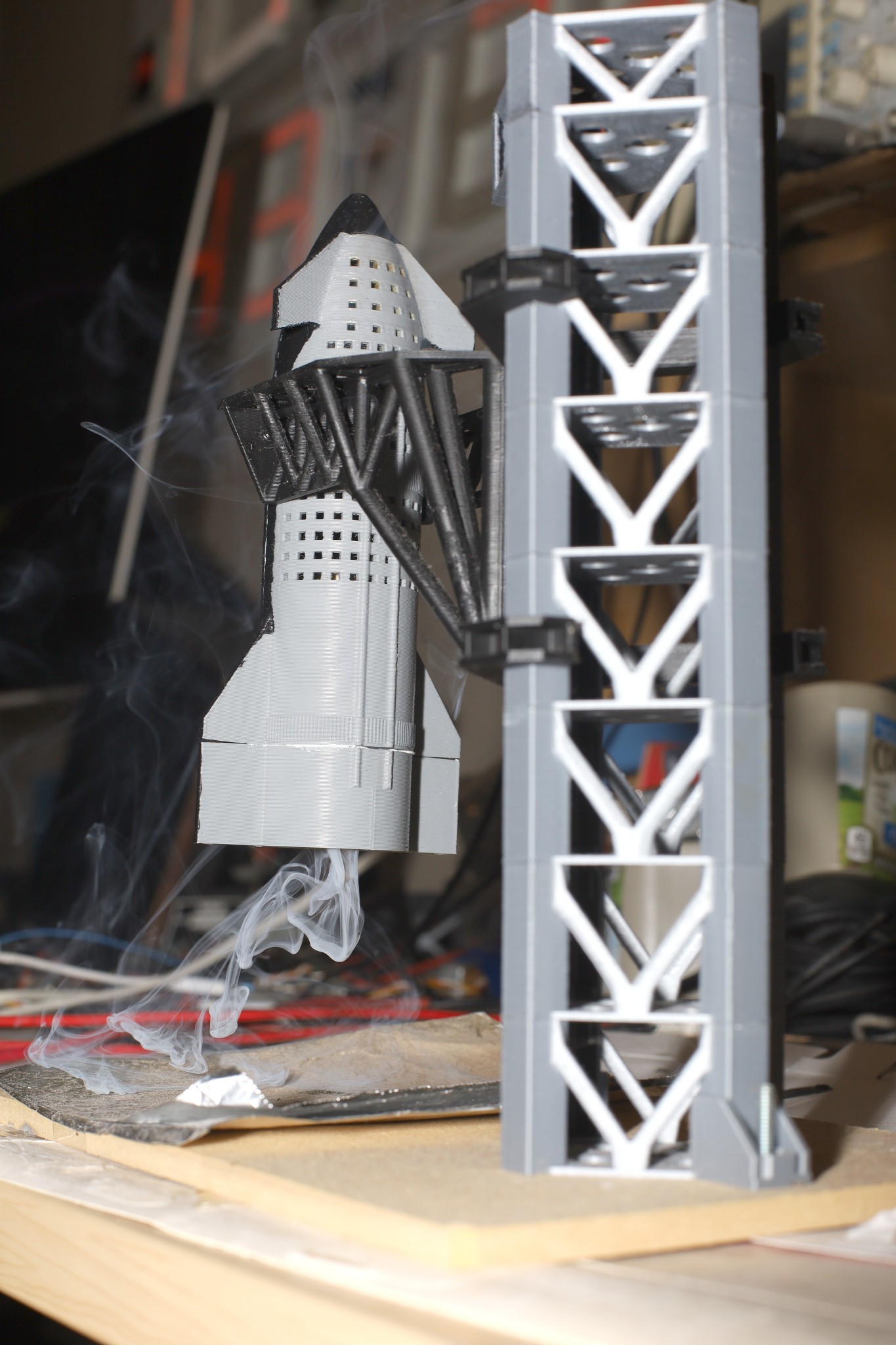
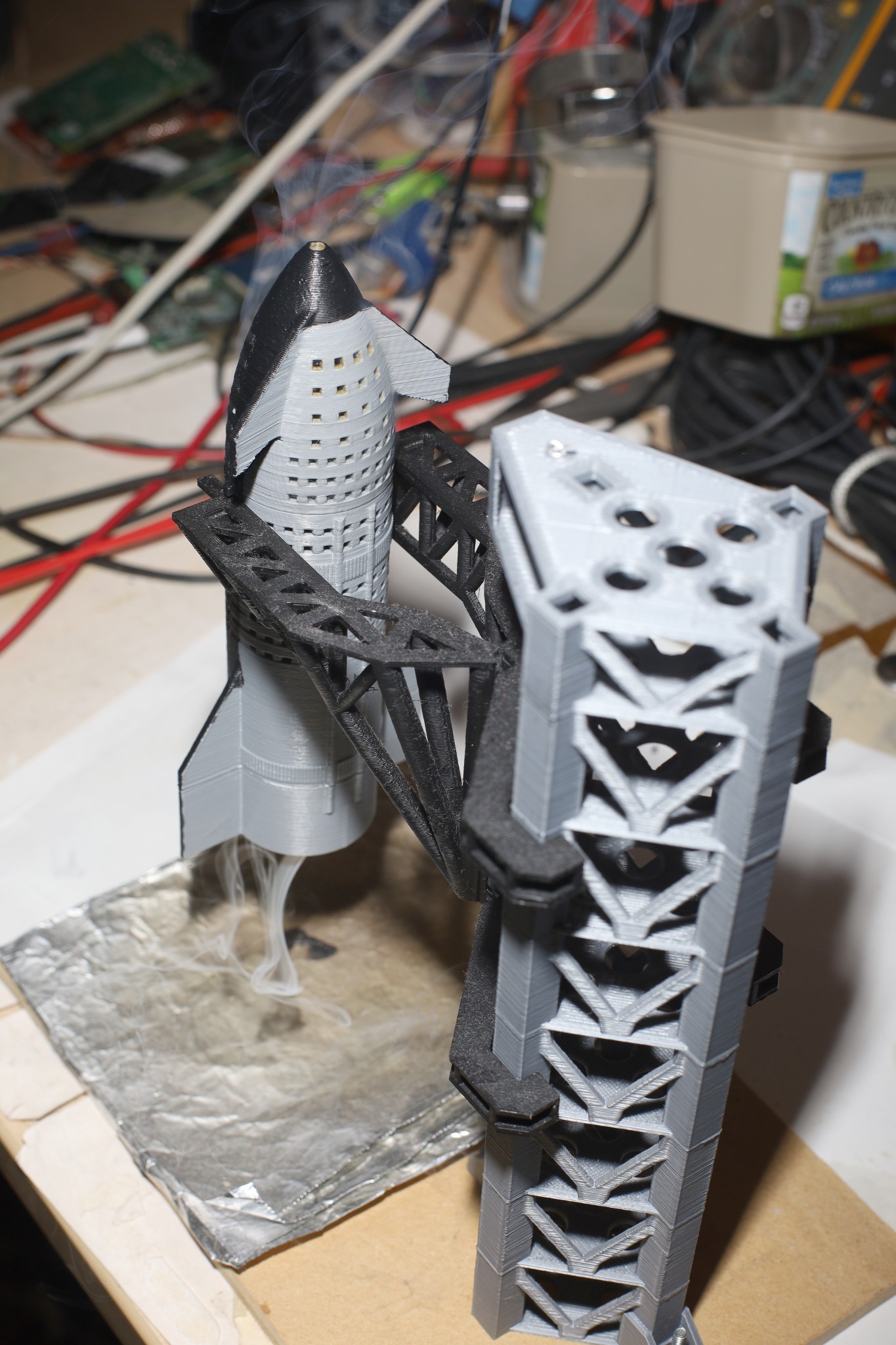
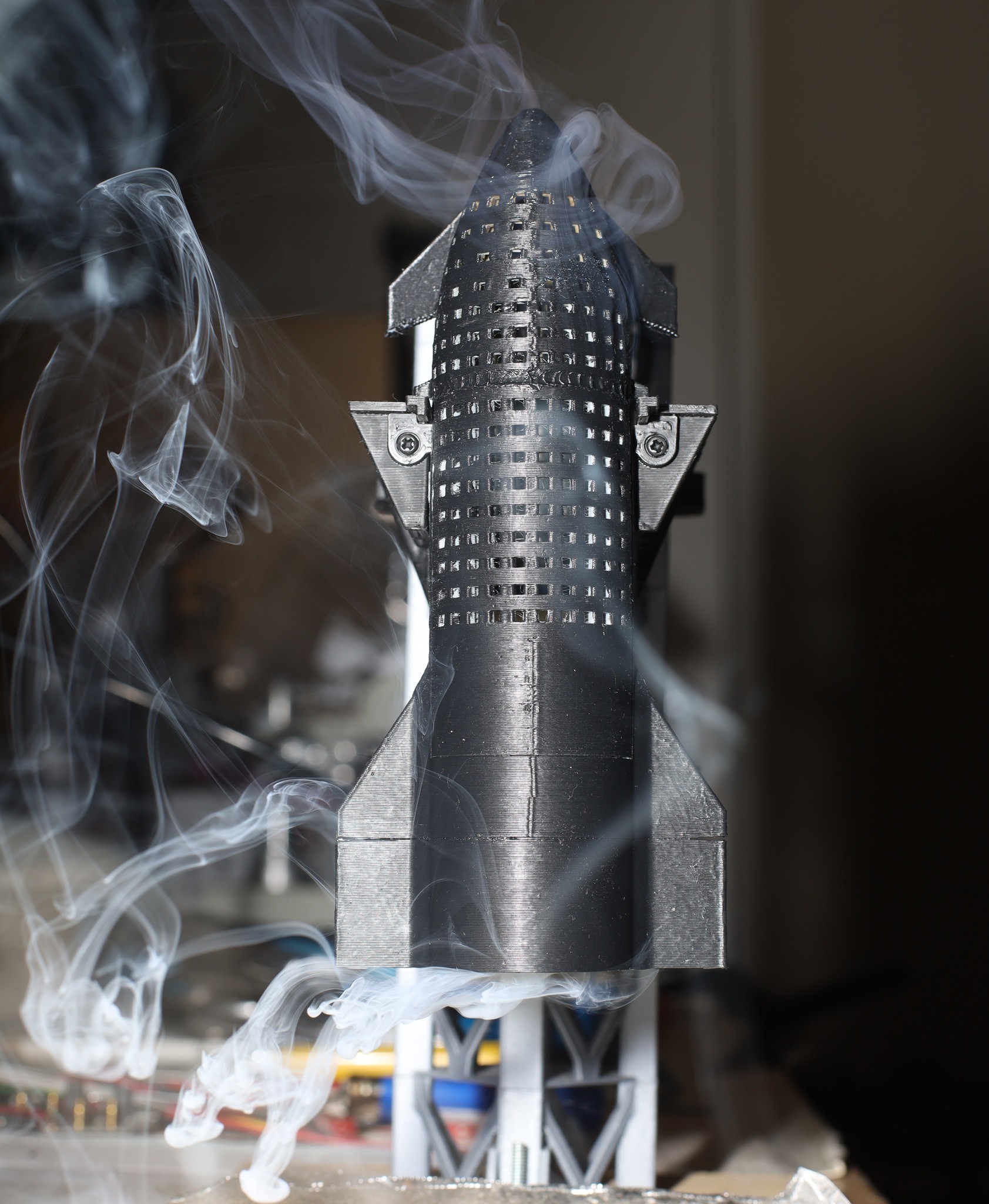
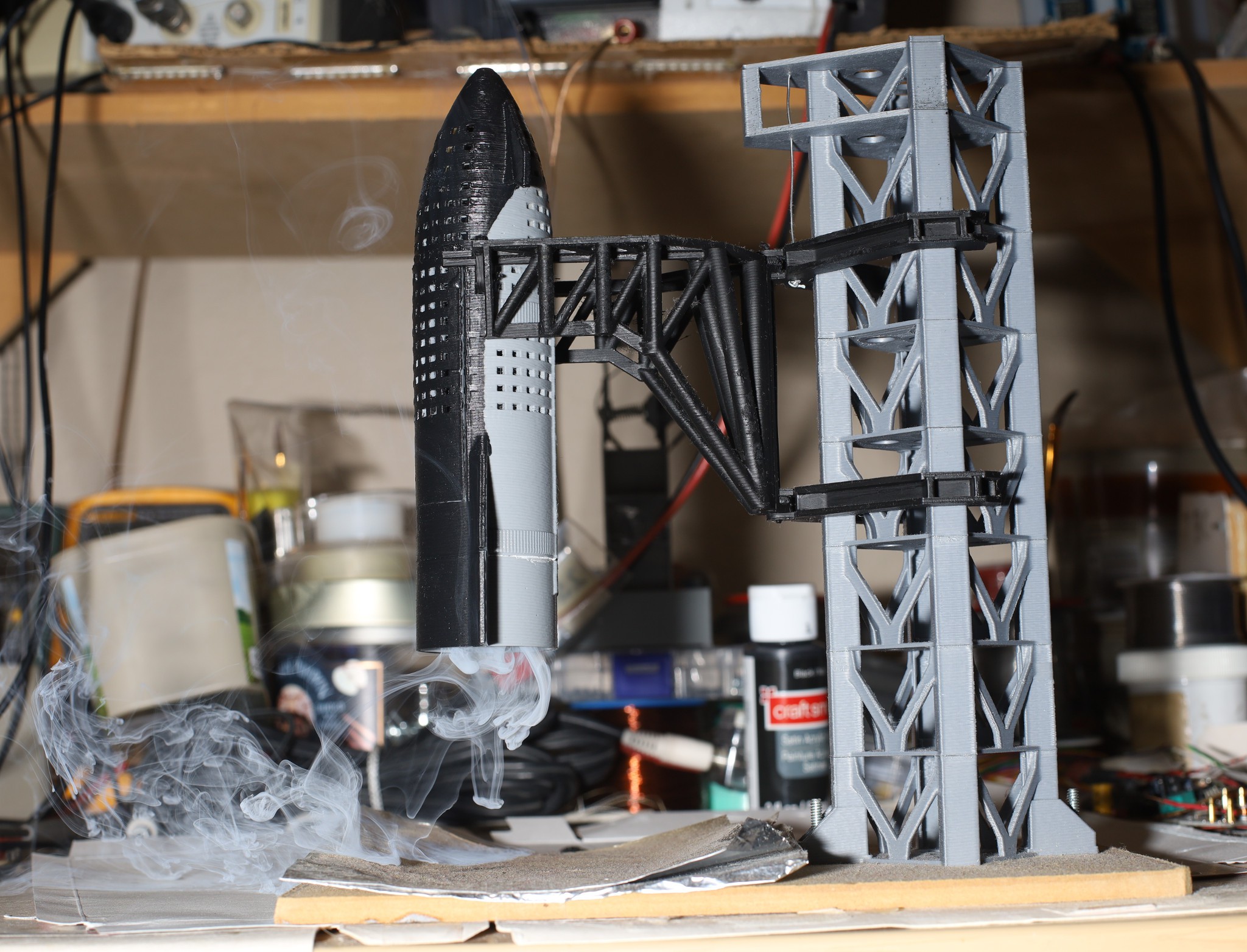
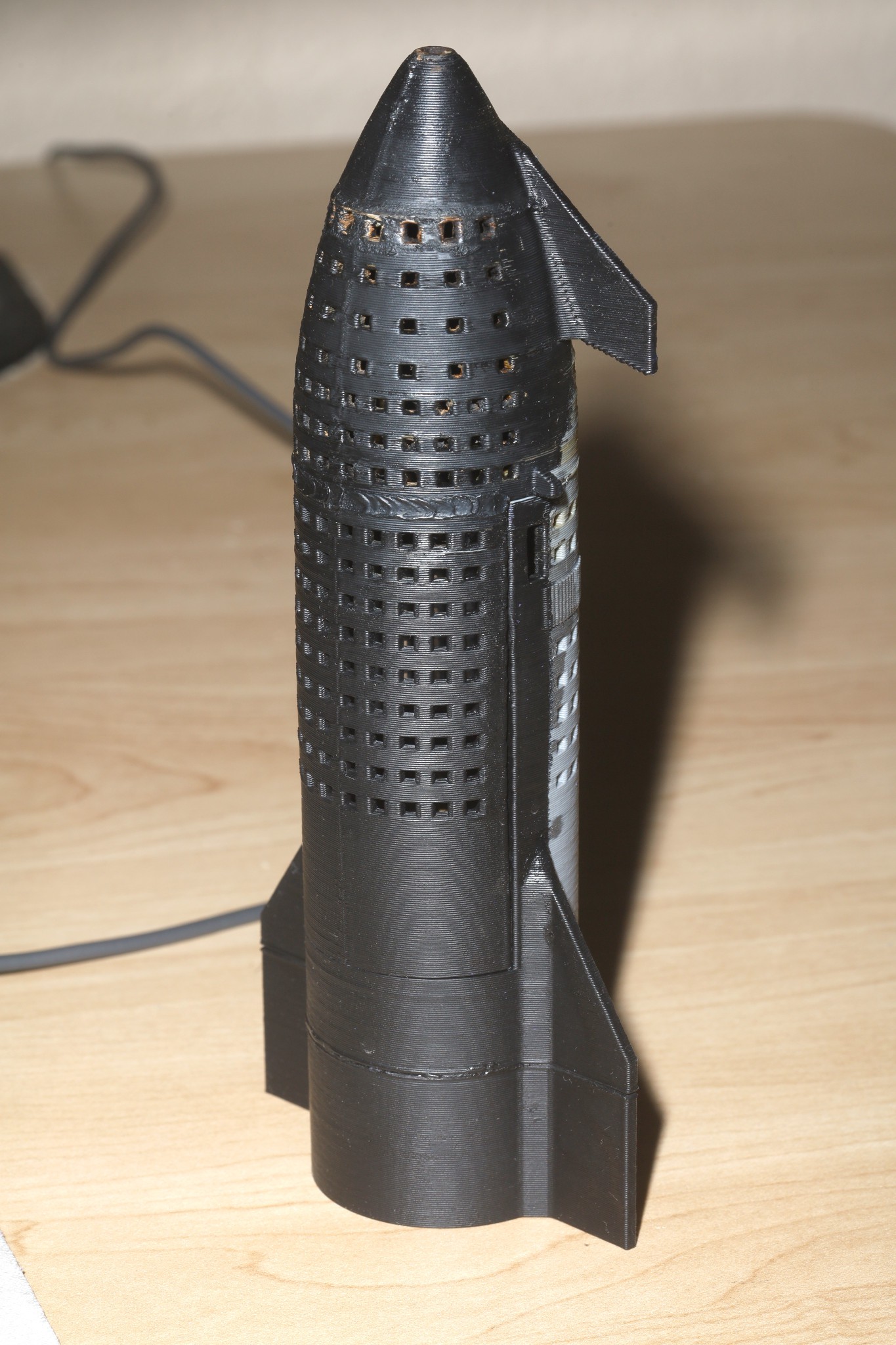
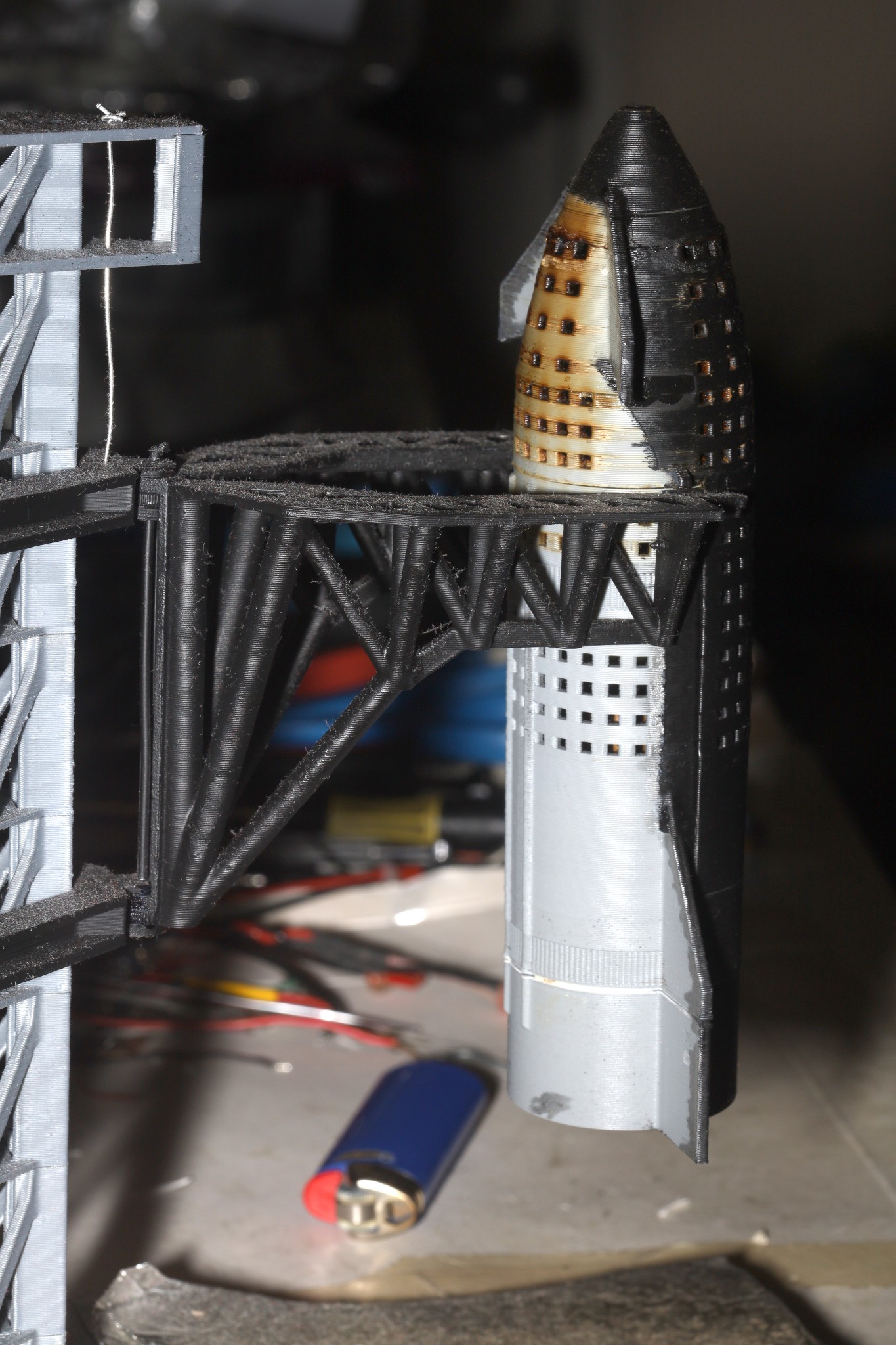
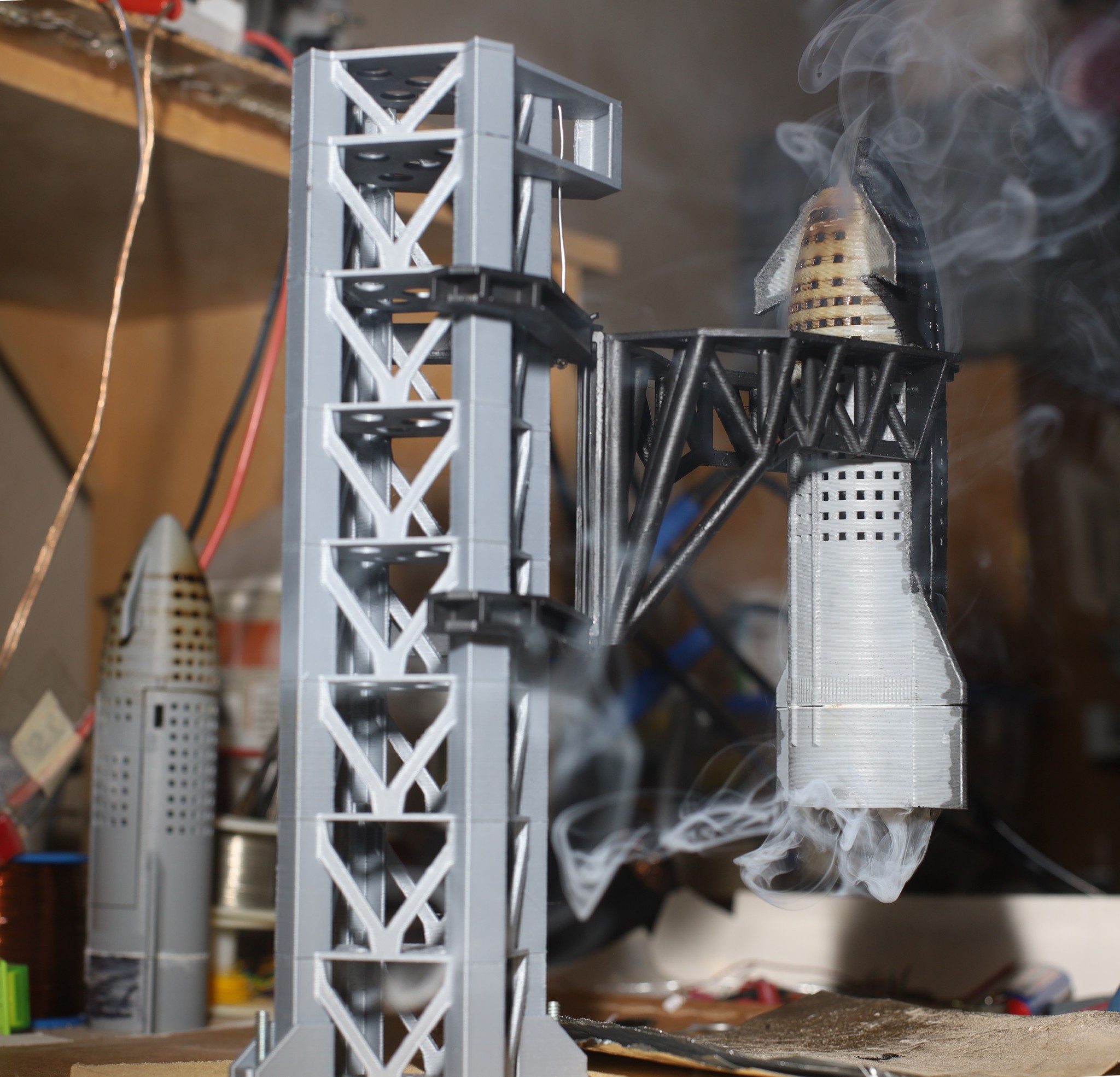
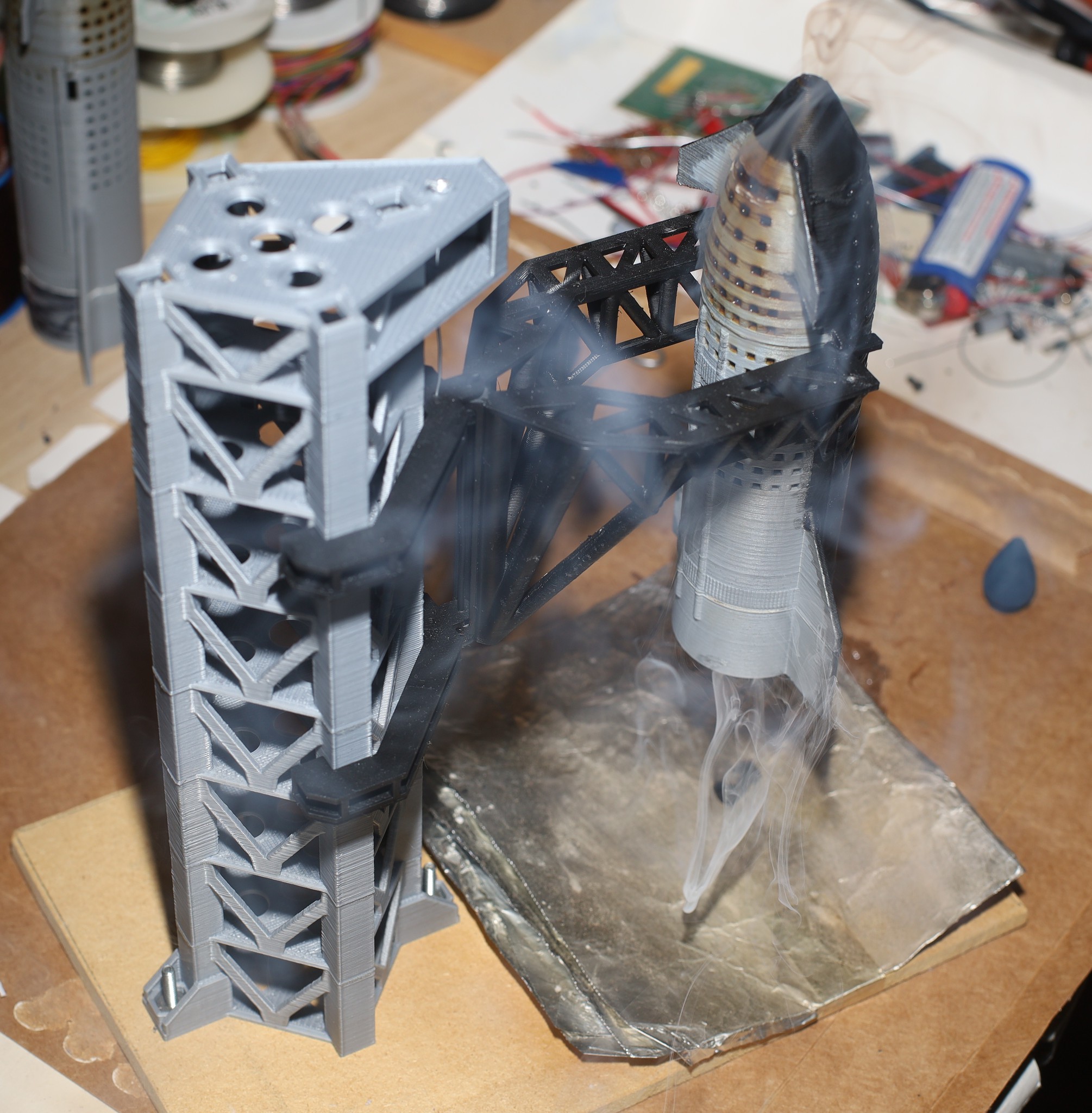
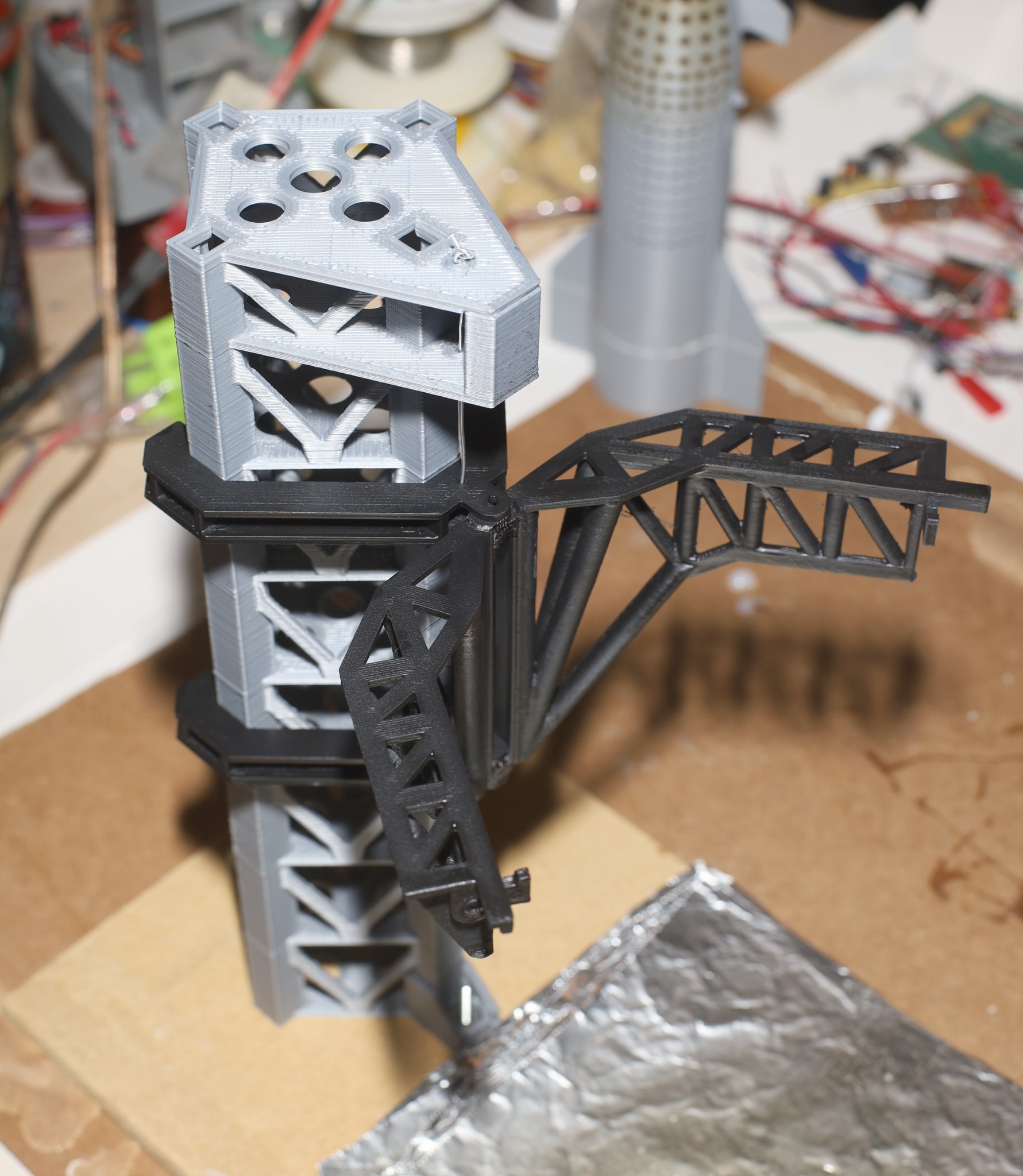
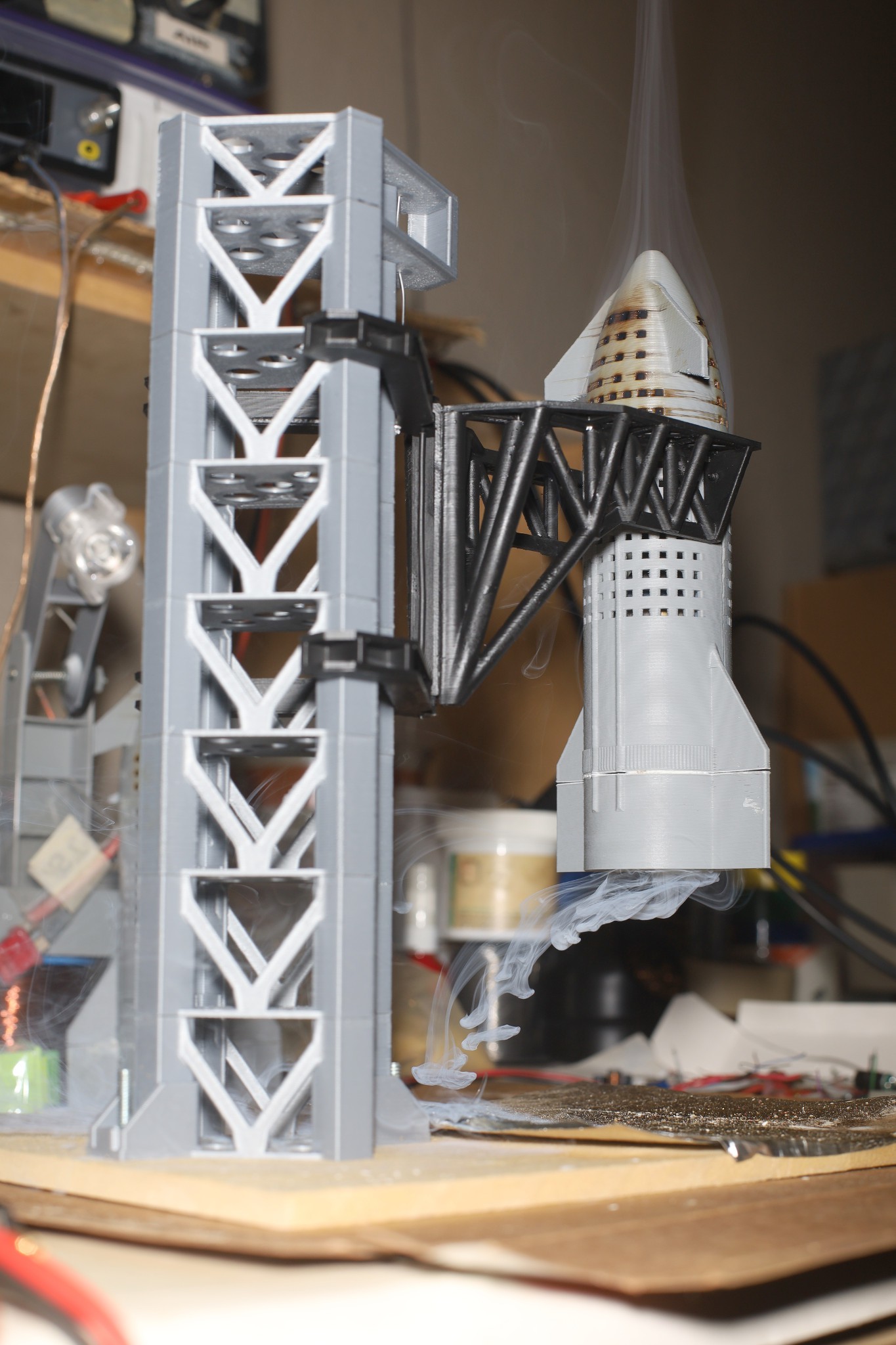
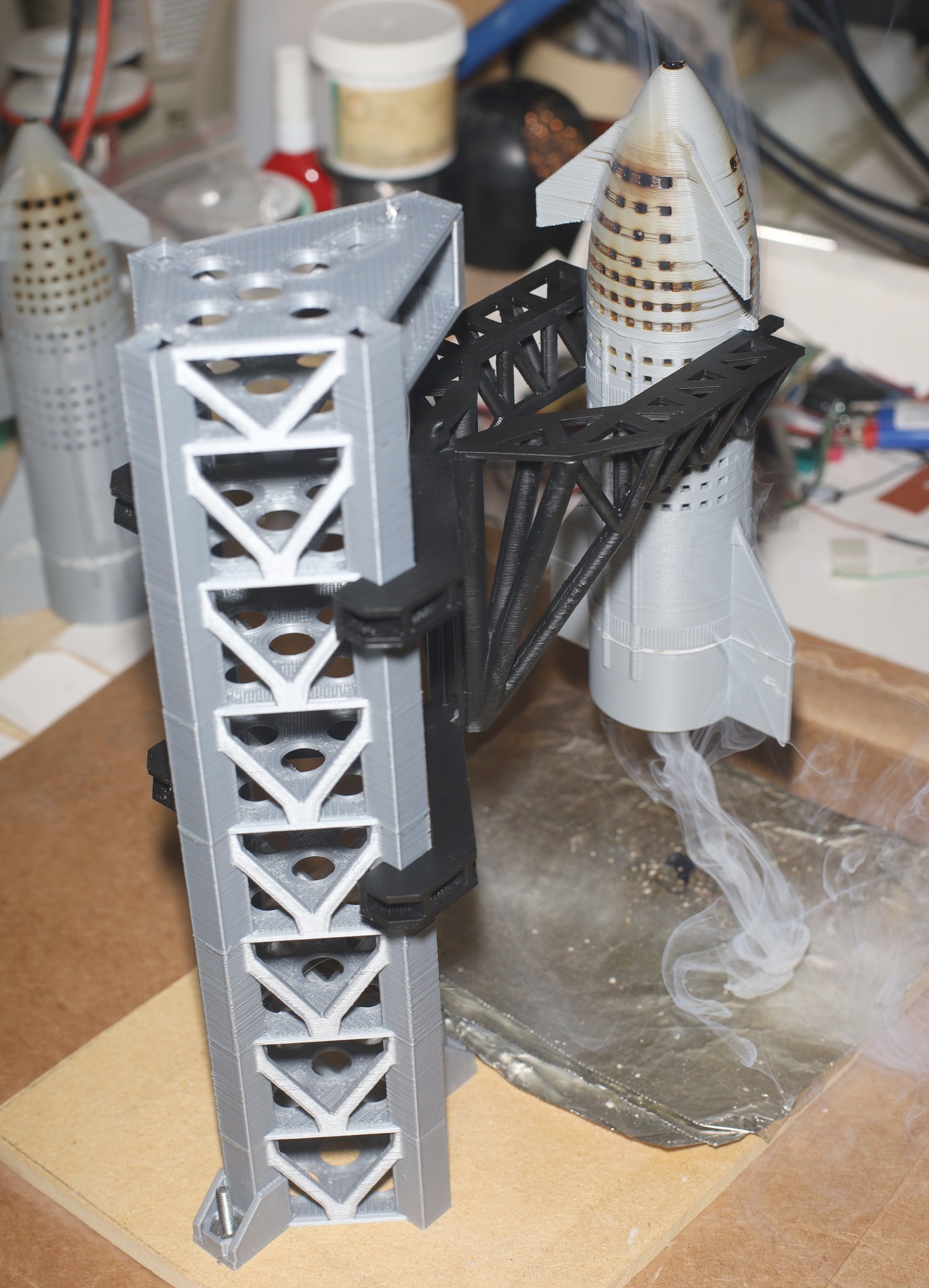
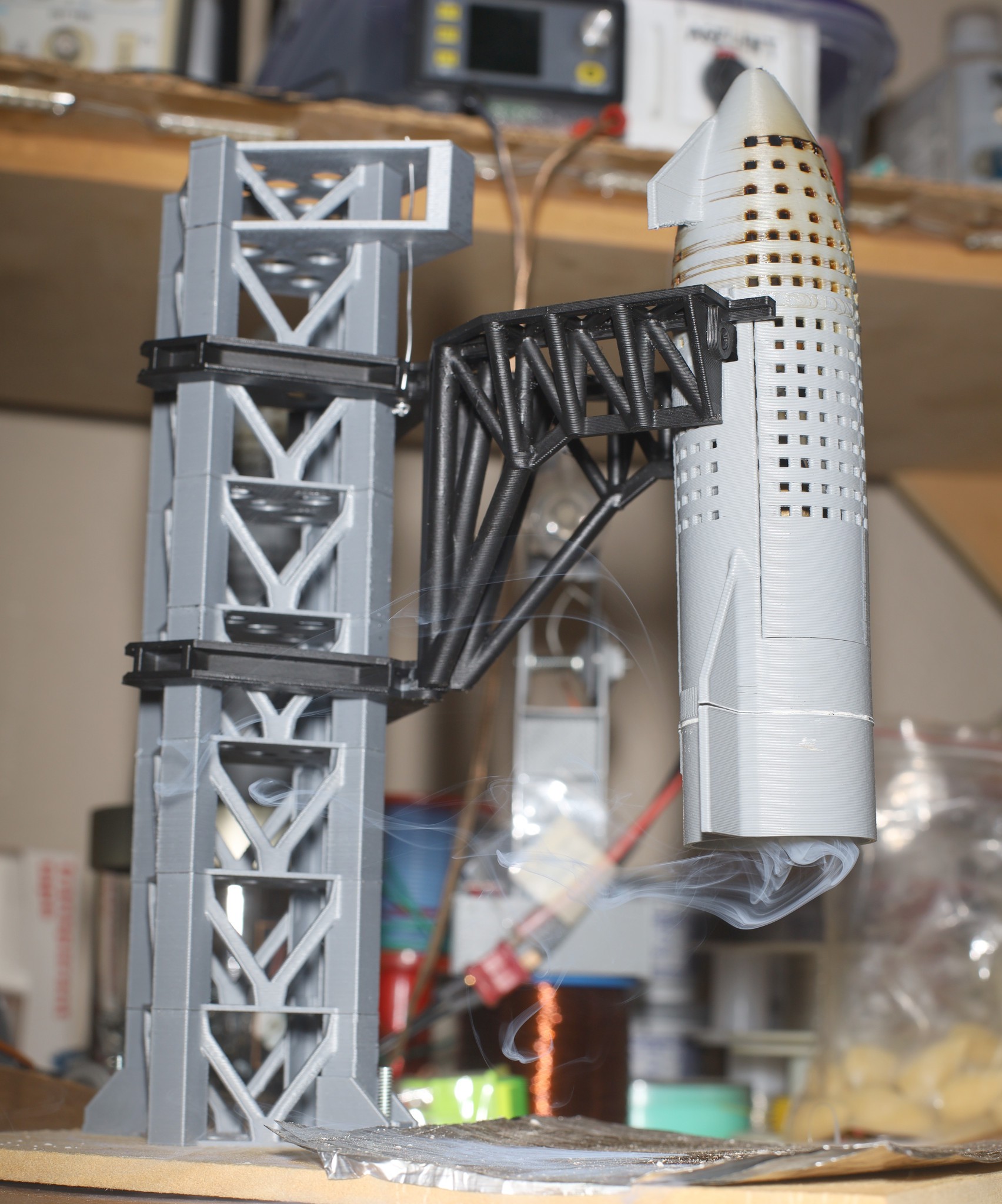
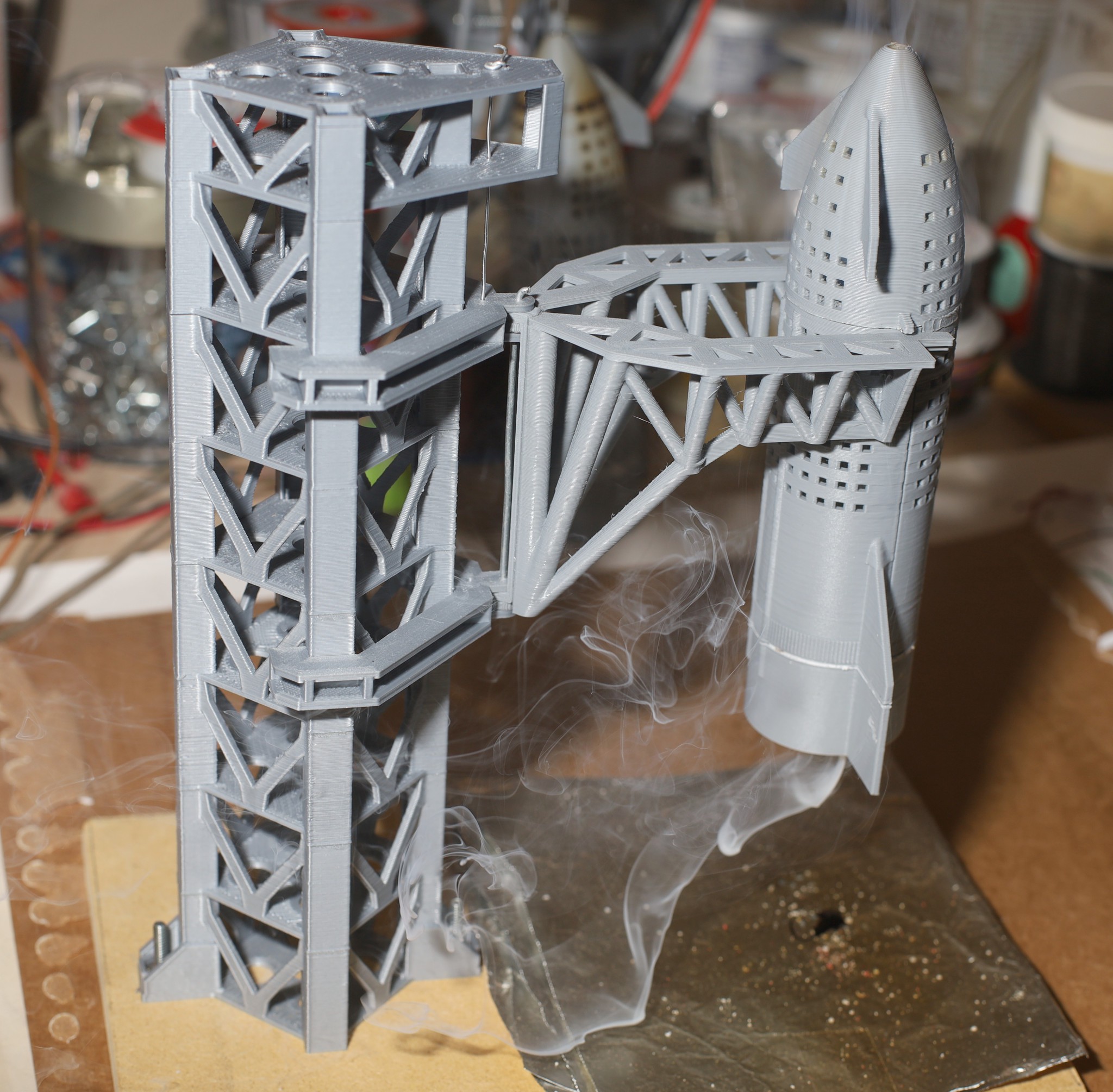
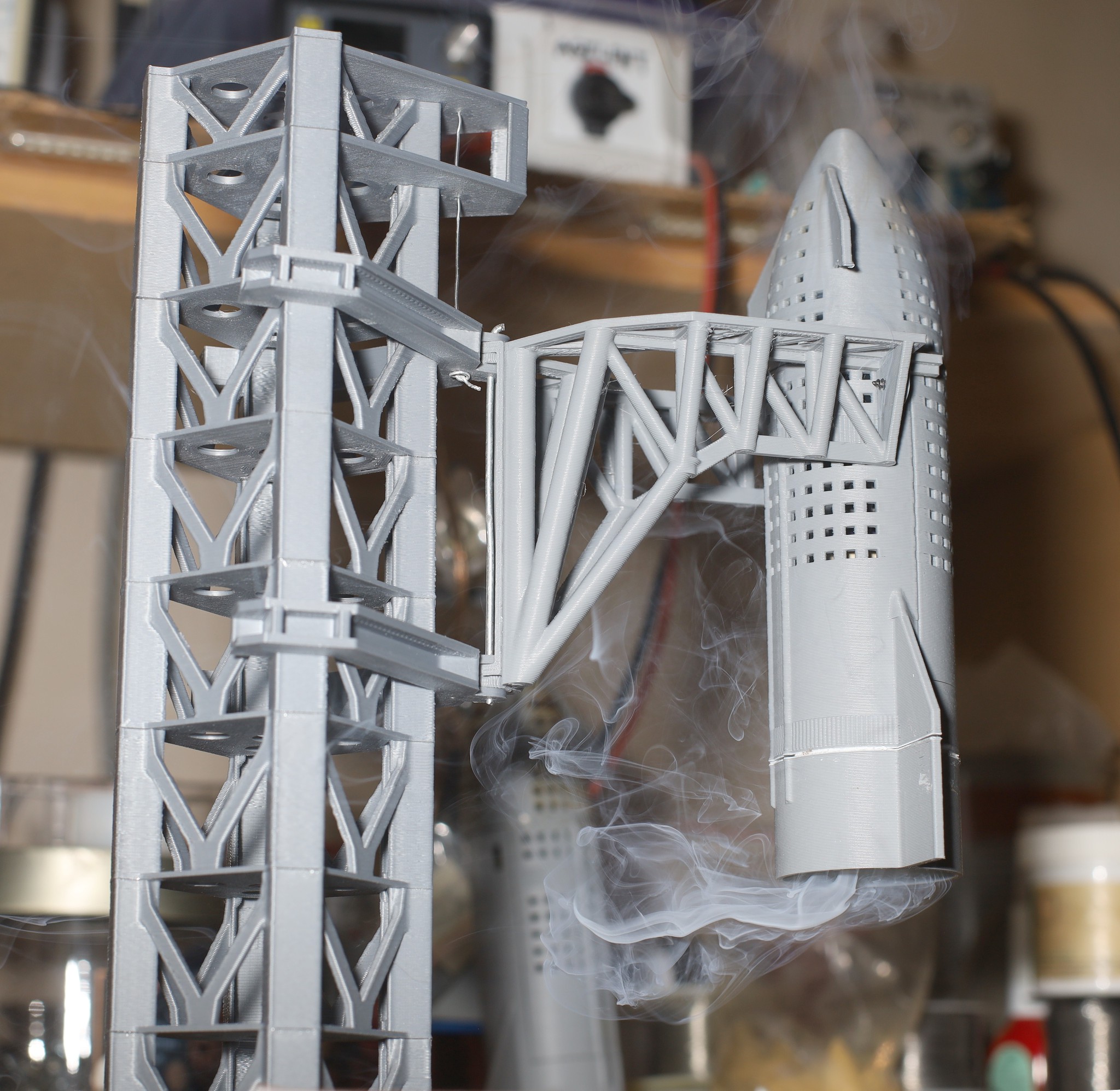
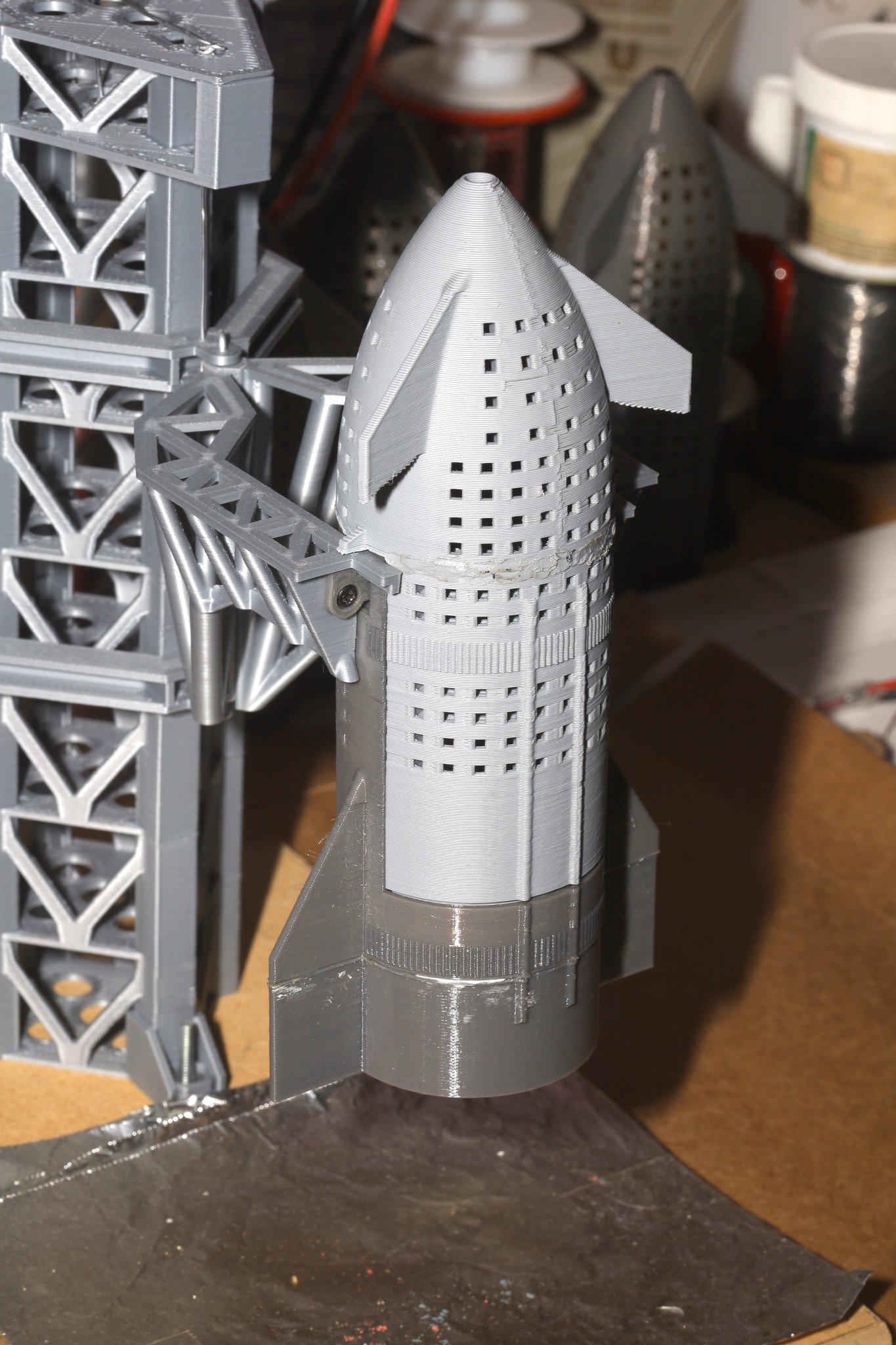
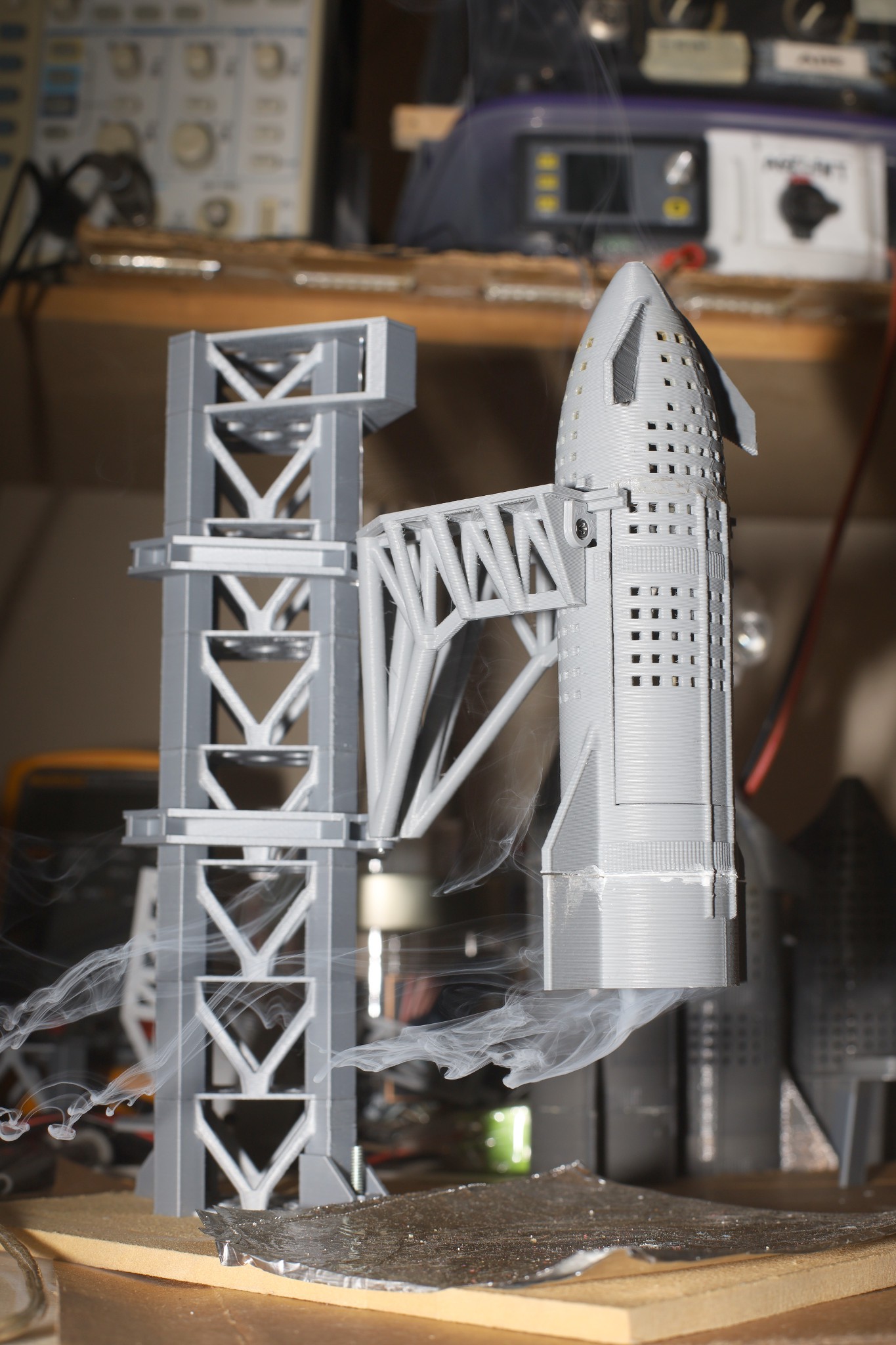
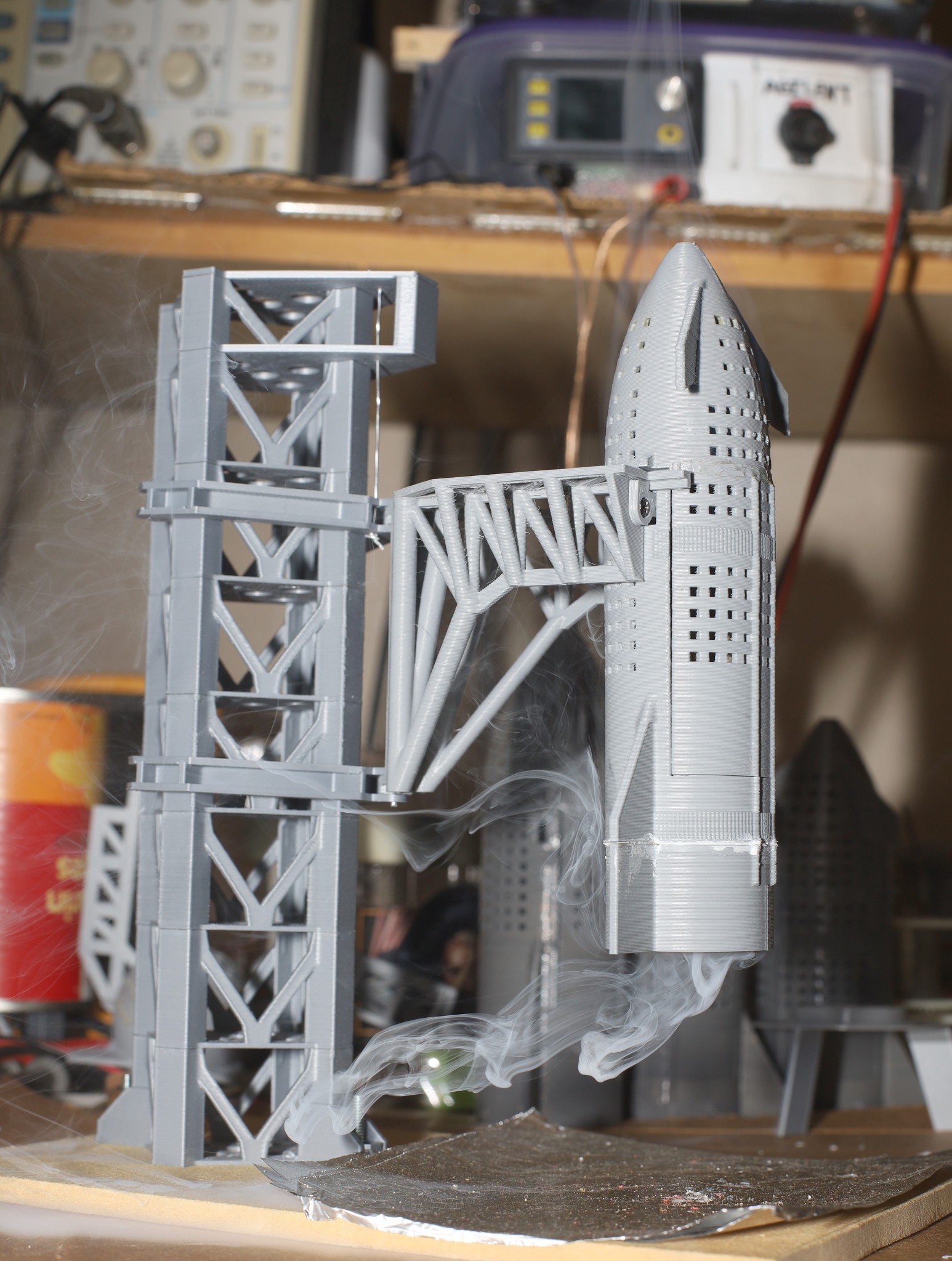
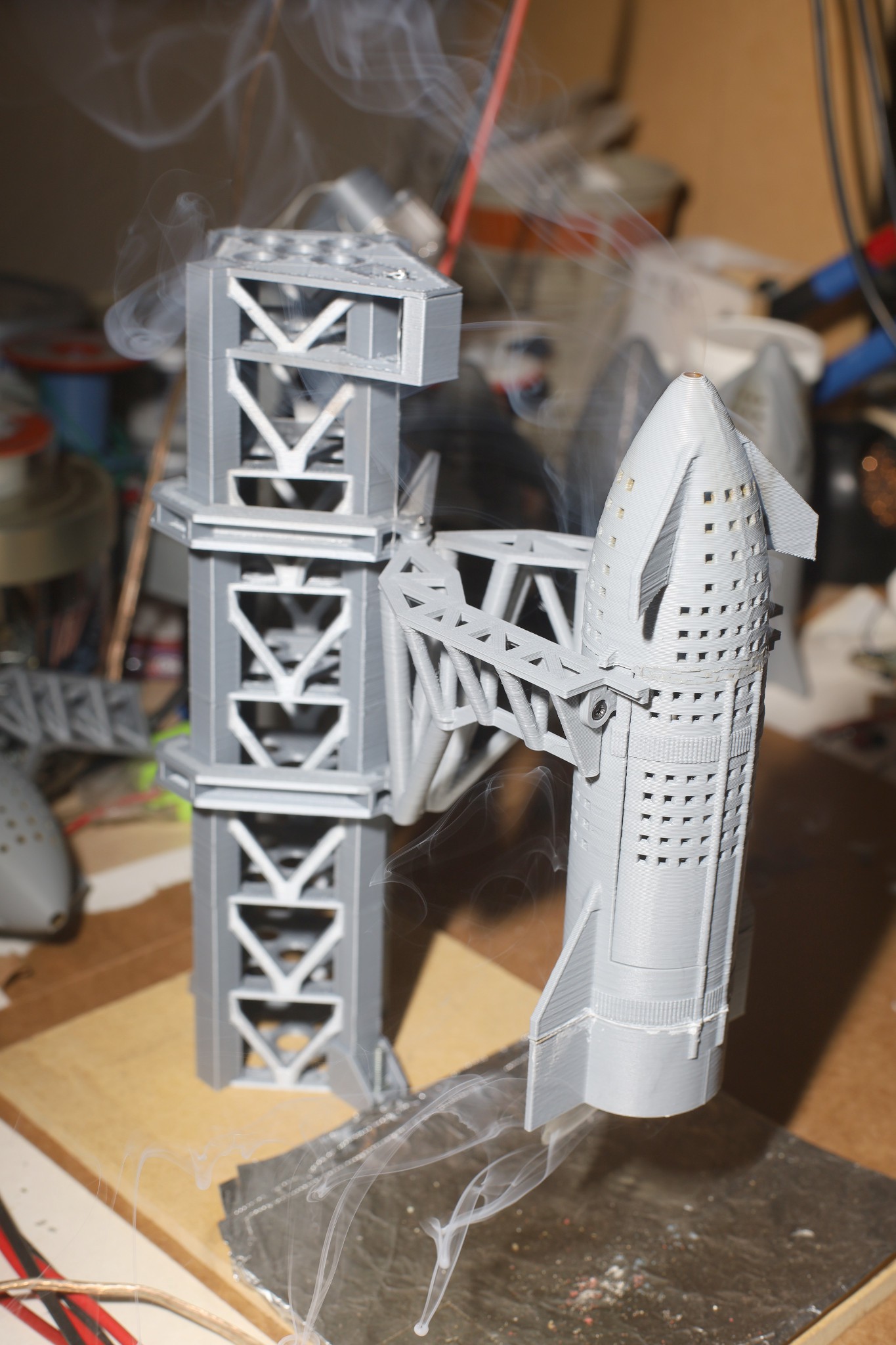
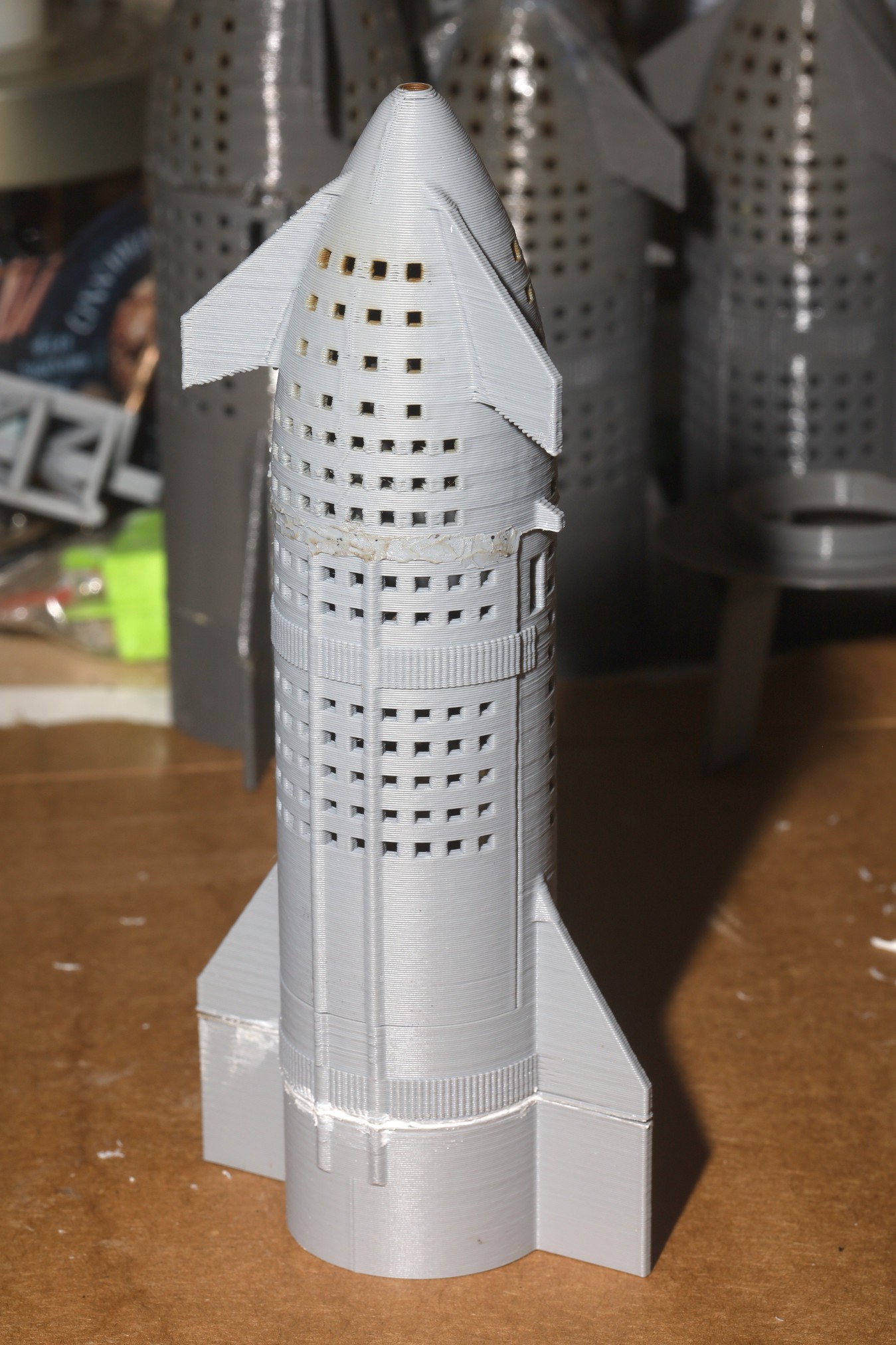
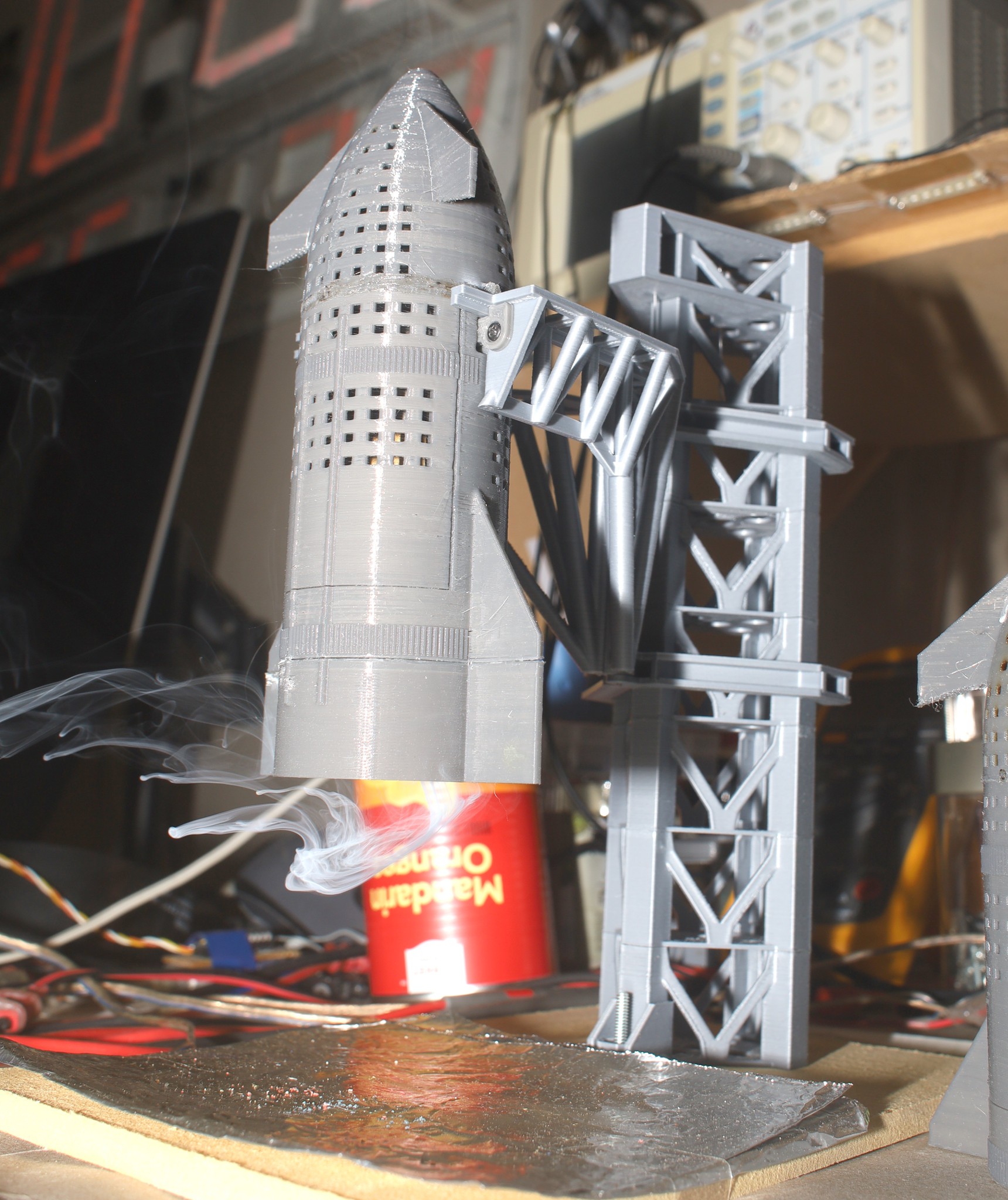
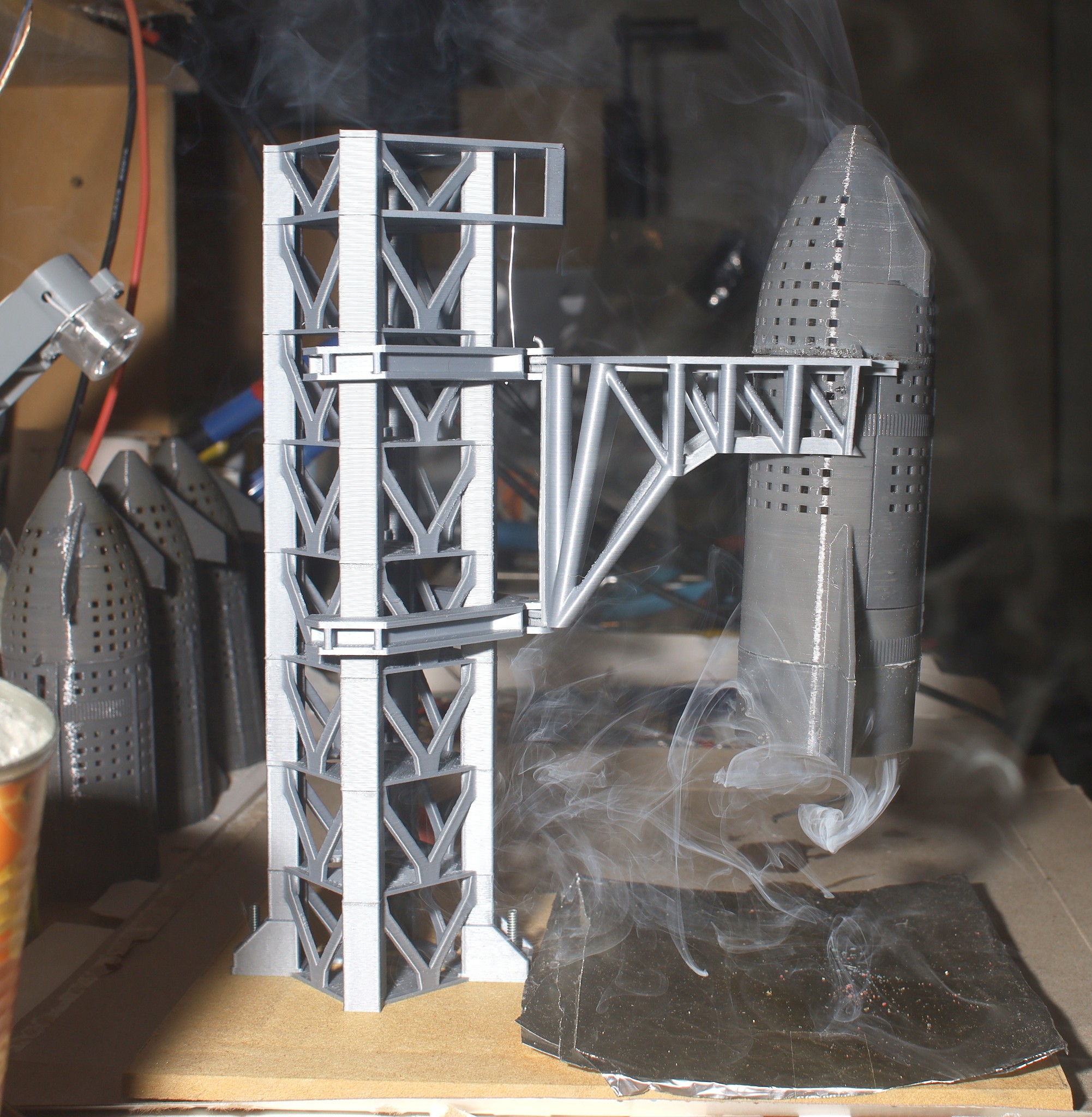
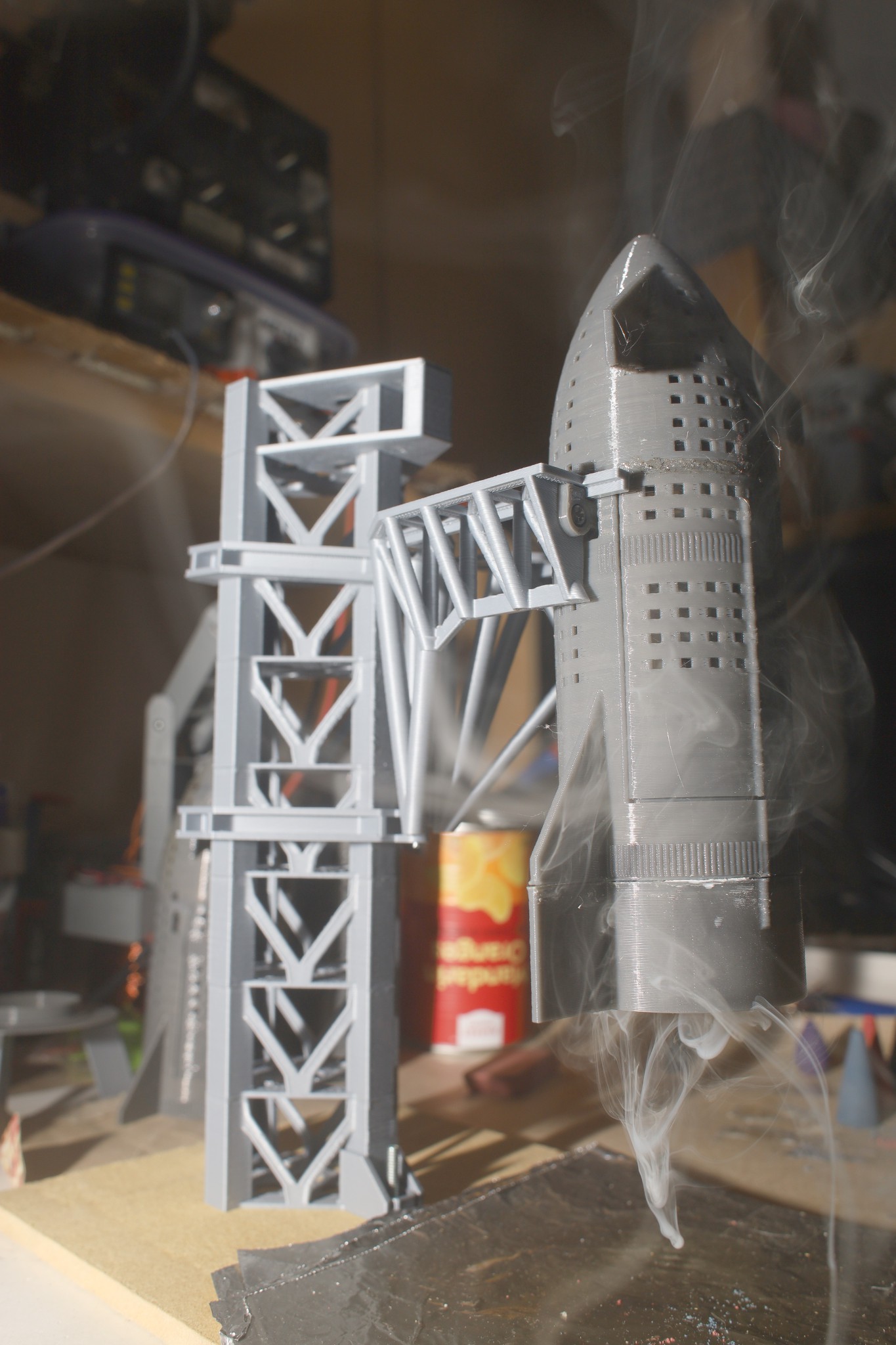
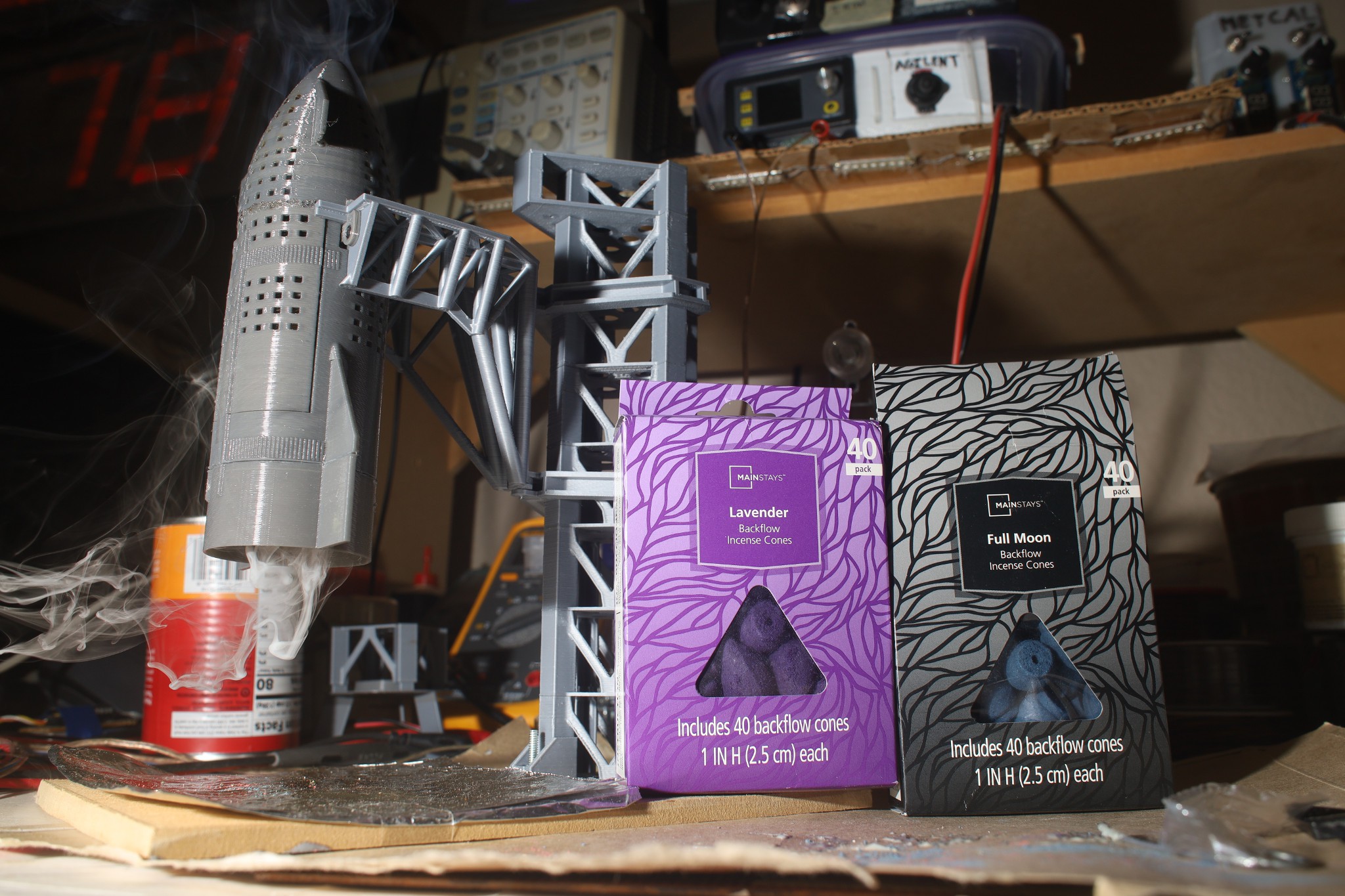
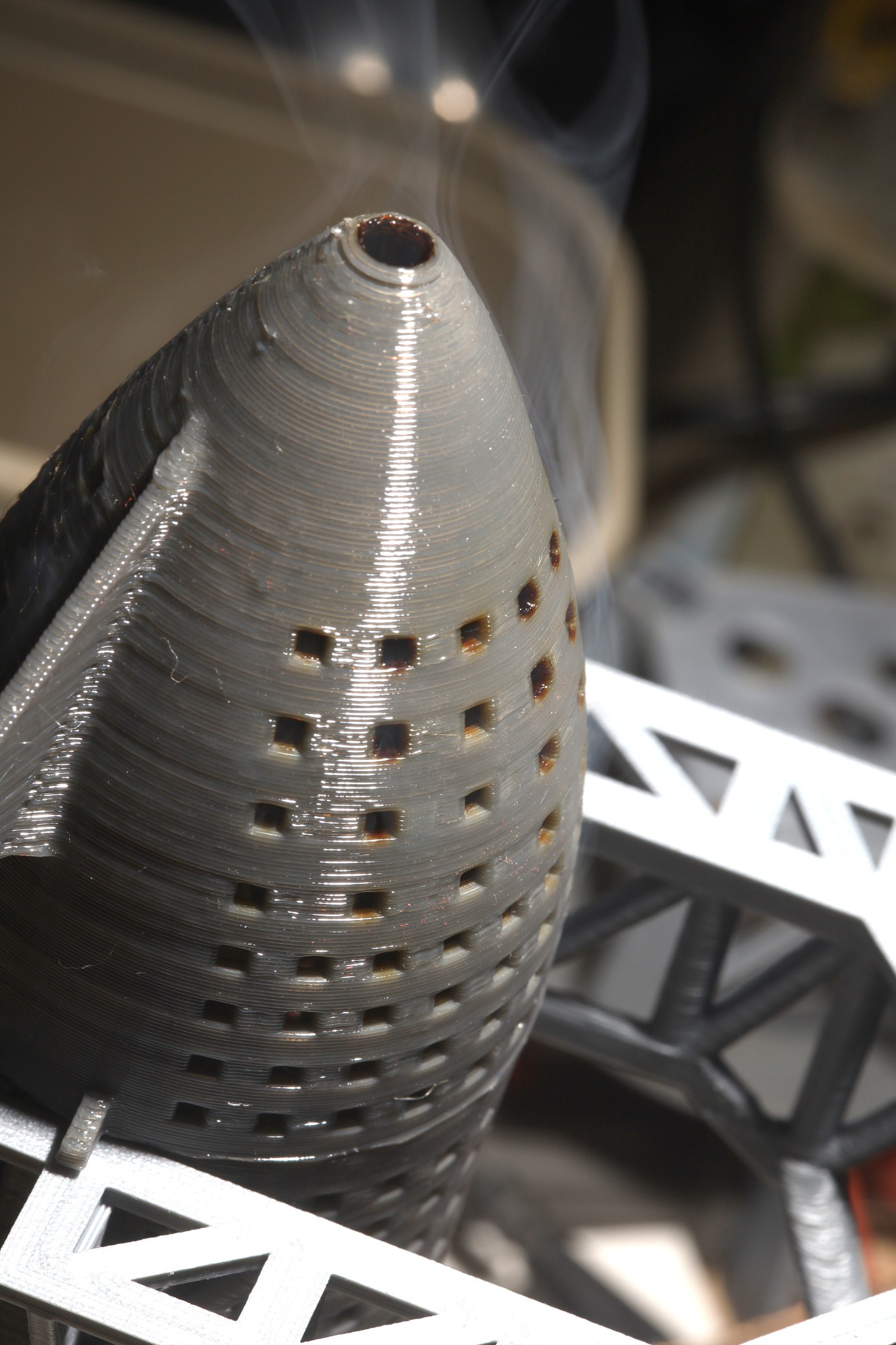
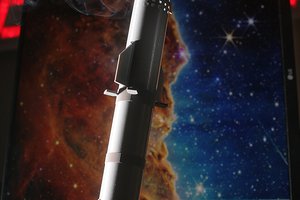
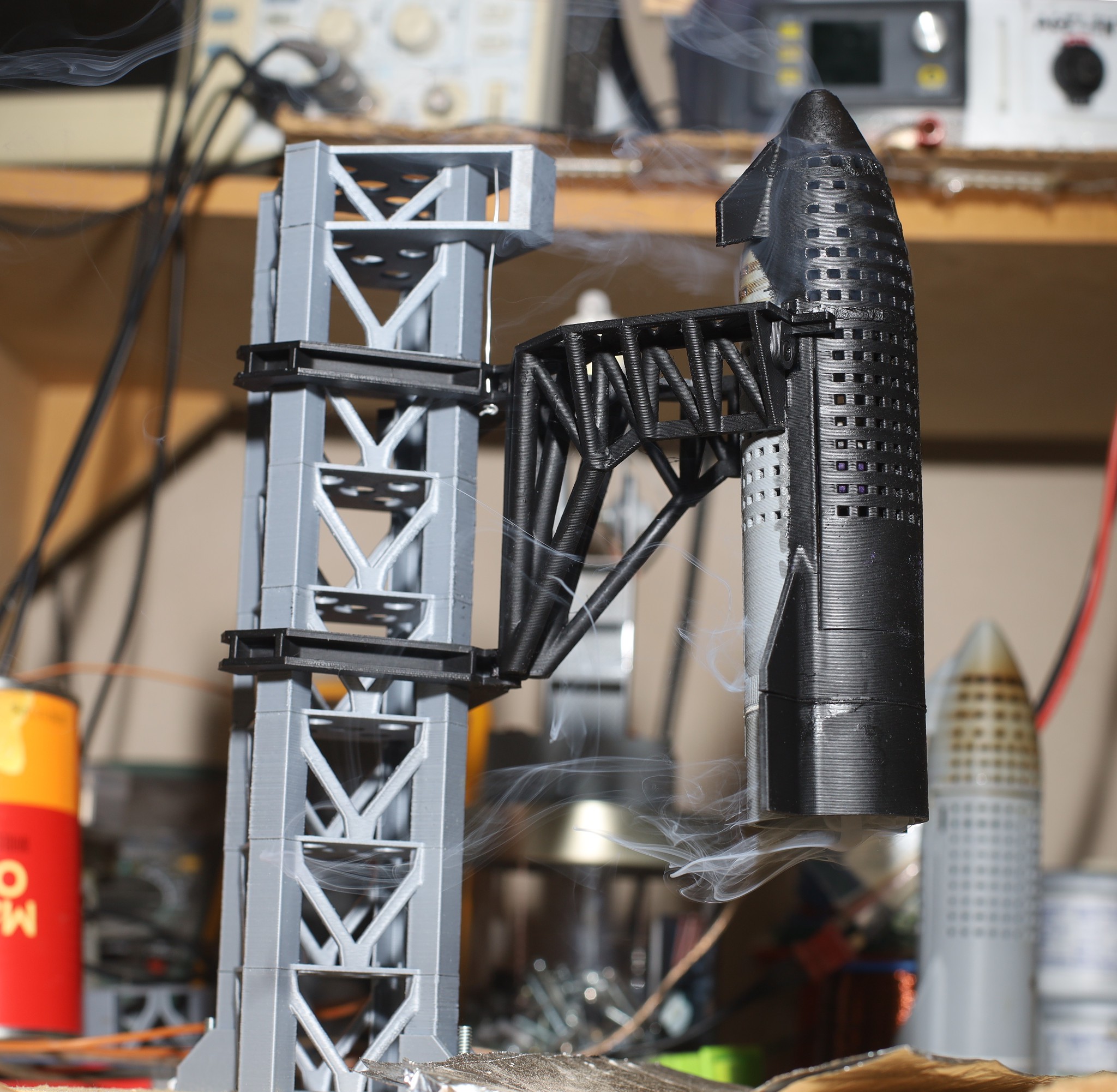
A landed starship diorama with real smoke venting
To make the experience fit your profile, pick a username and tell us what interests you.
We found and based on your interests.

Printed a new one with polymaker HT PLA at 260C. It just began clogging when printing supports, but the rest successfully printed in an ambient temperature of 70F. Speed was 25mm/s.
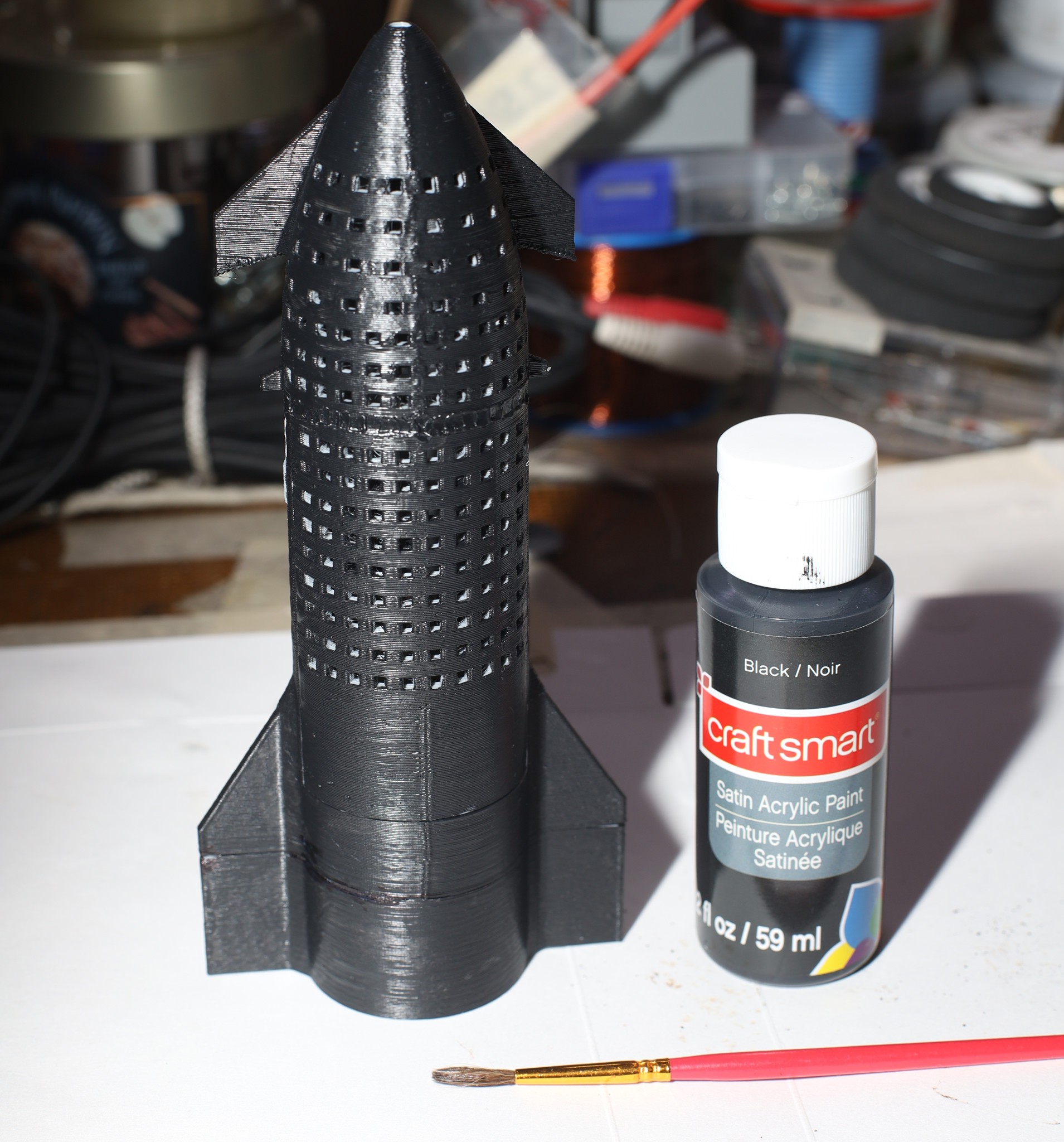
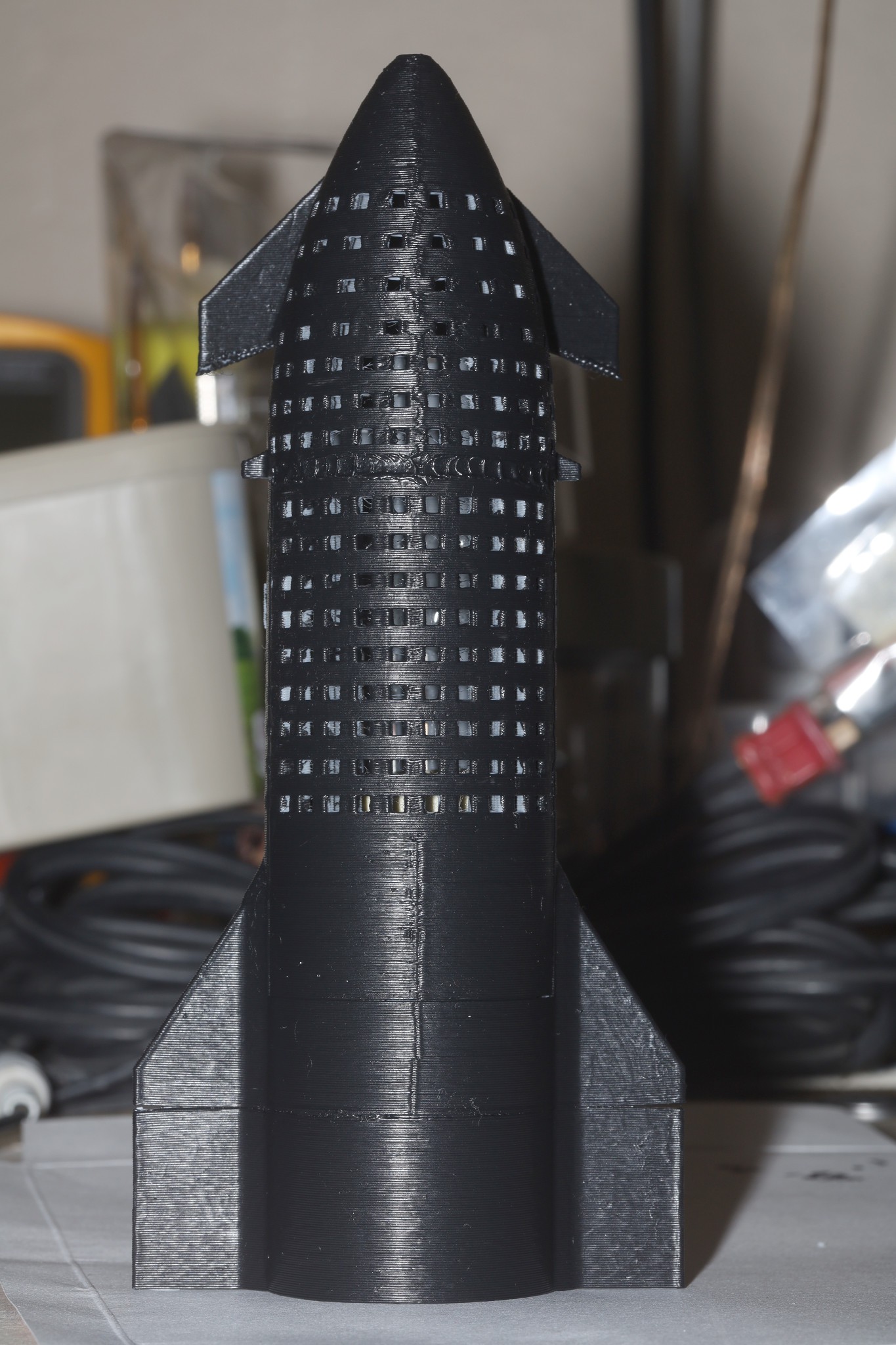
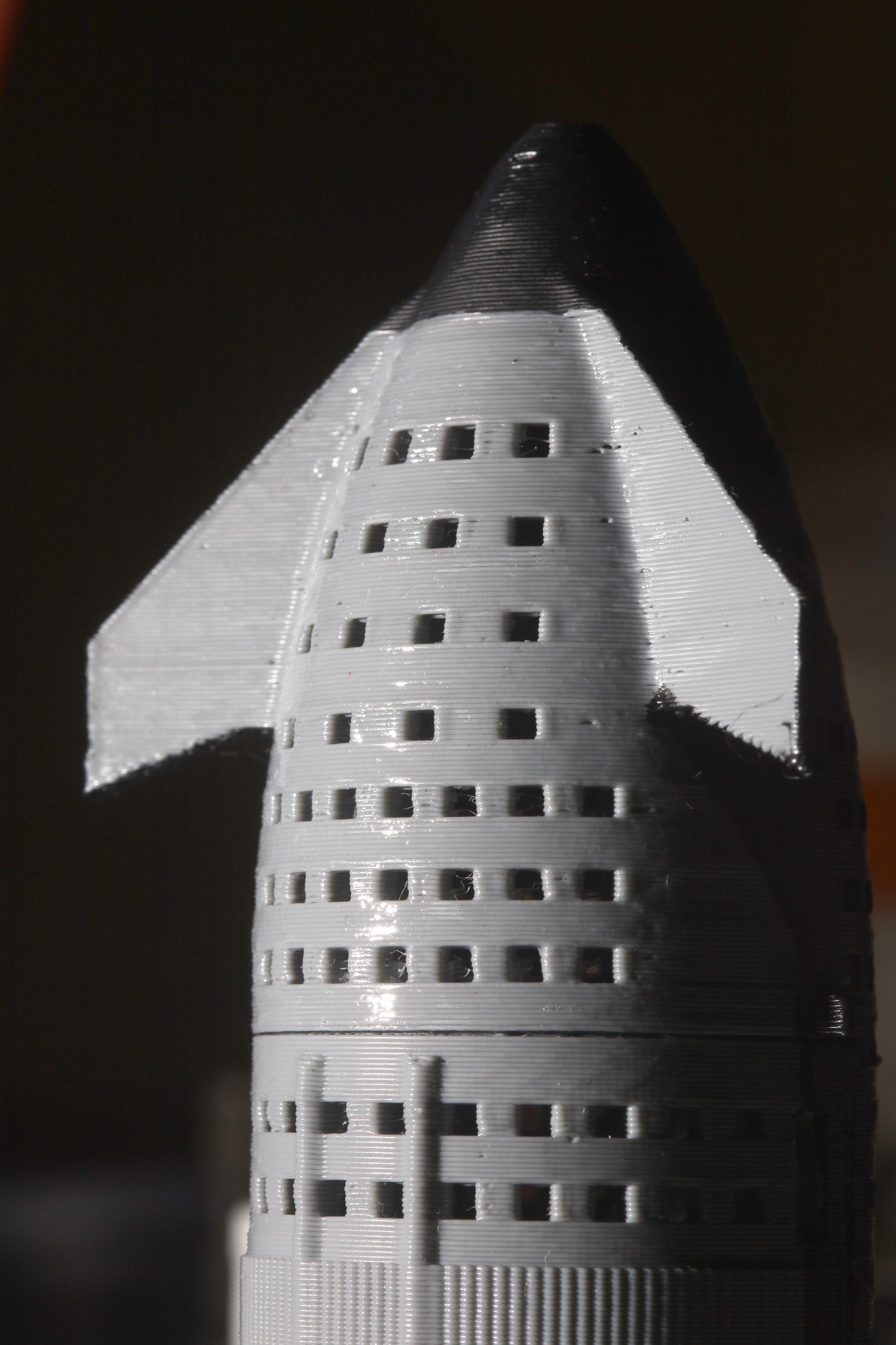
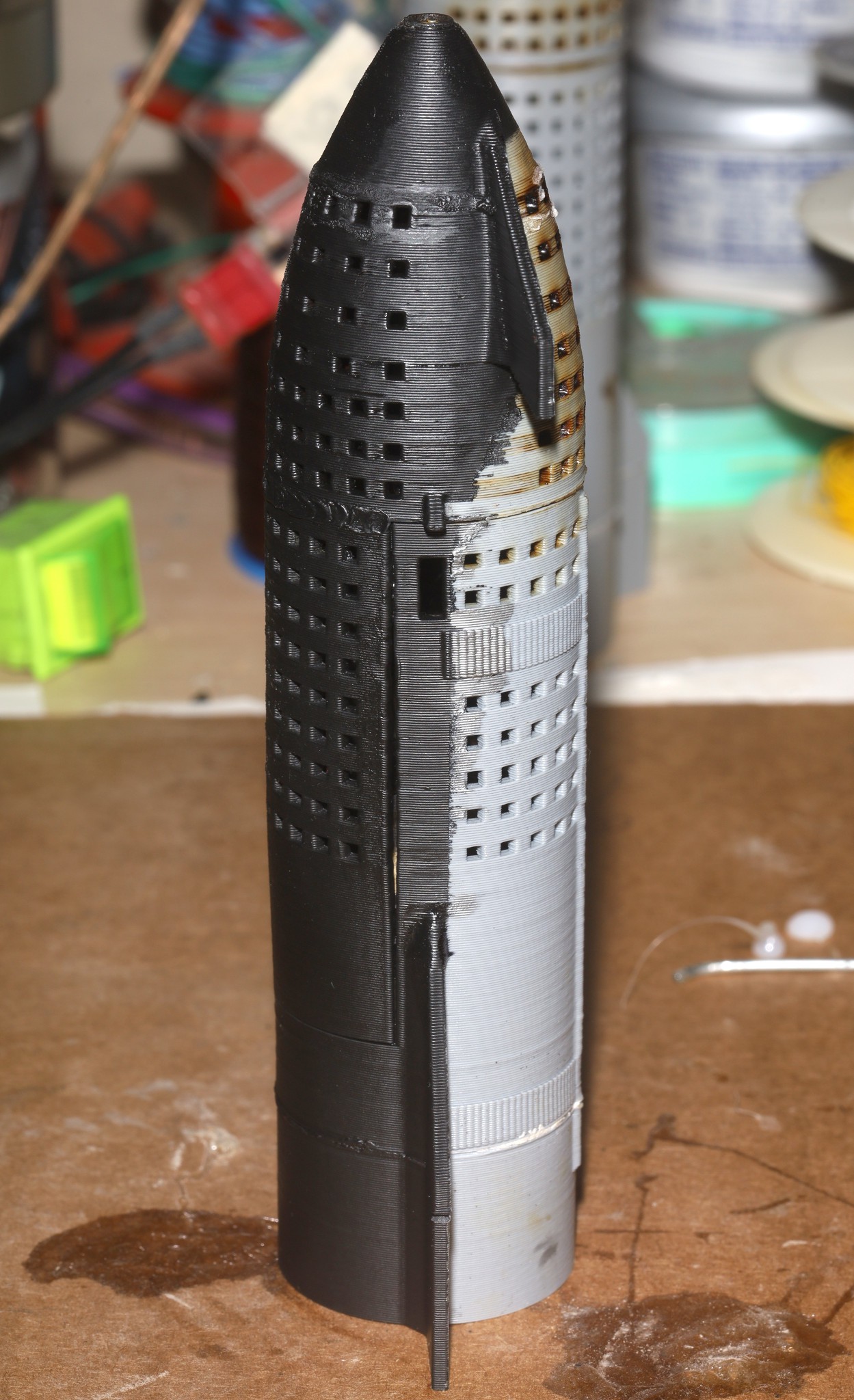
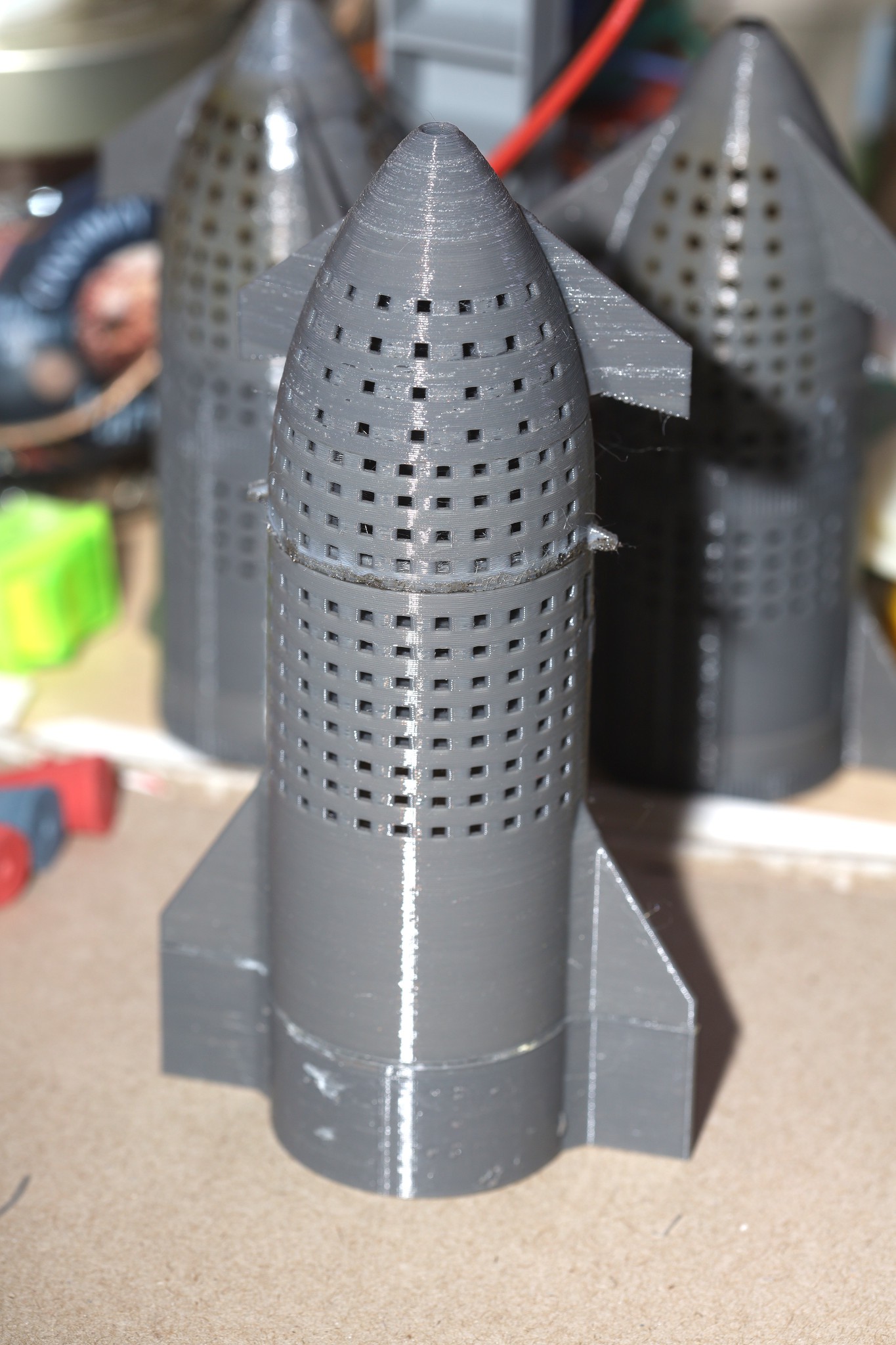
Painted it with the cheapest water based paint & cheapest brush from Michaels. That went better than spray paint. It needed 2 coats to get black enough.
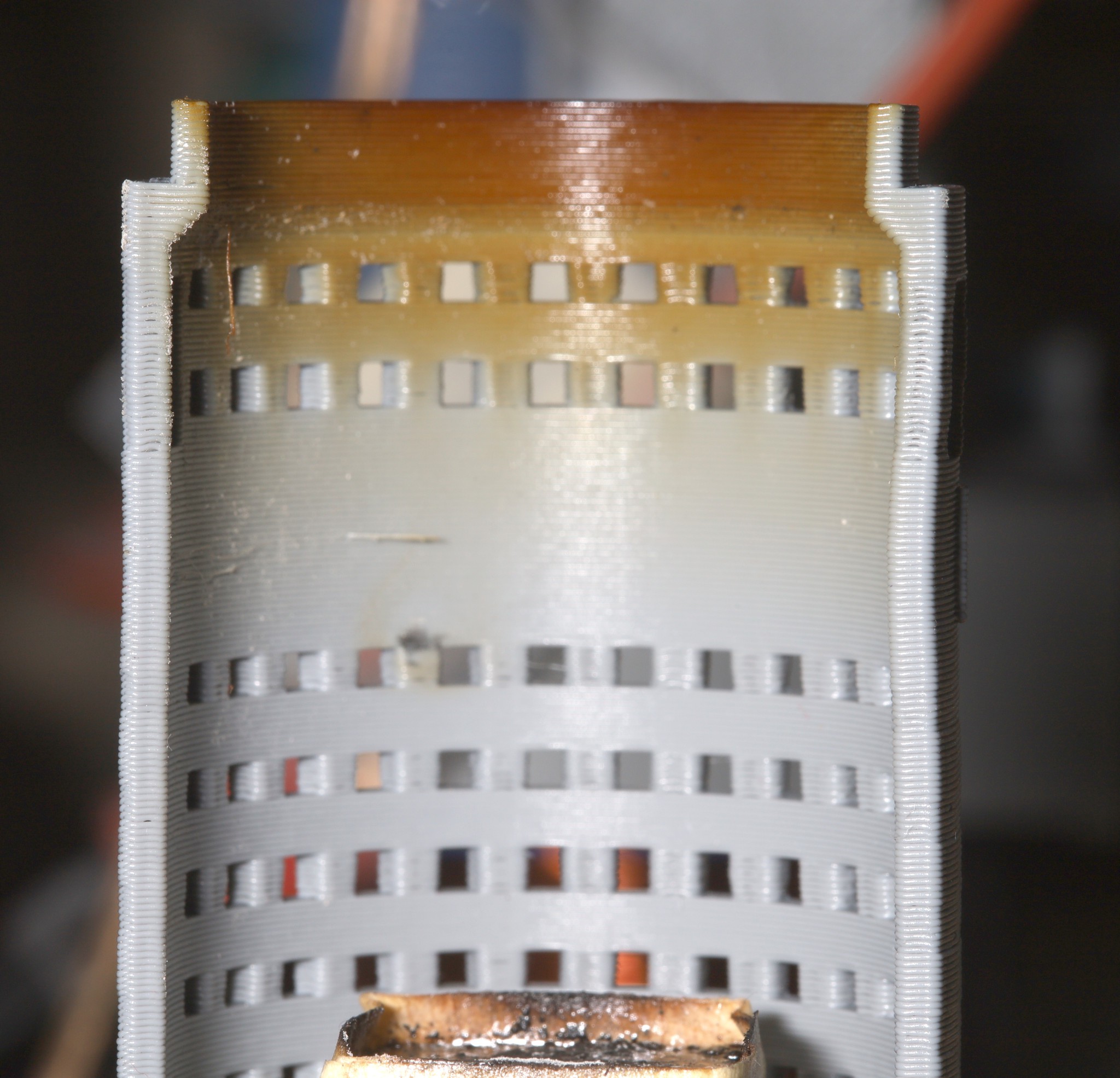
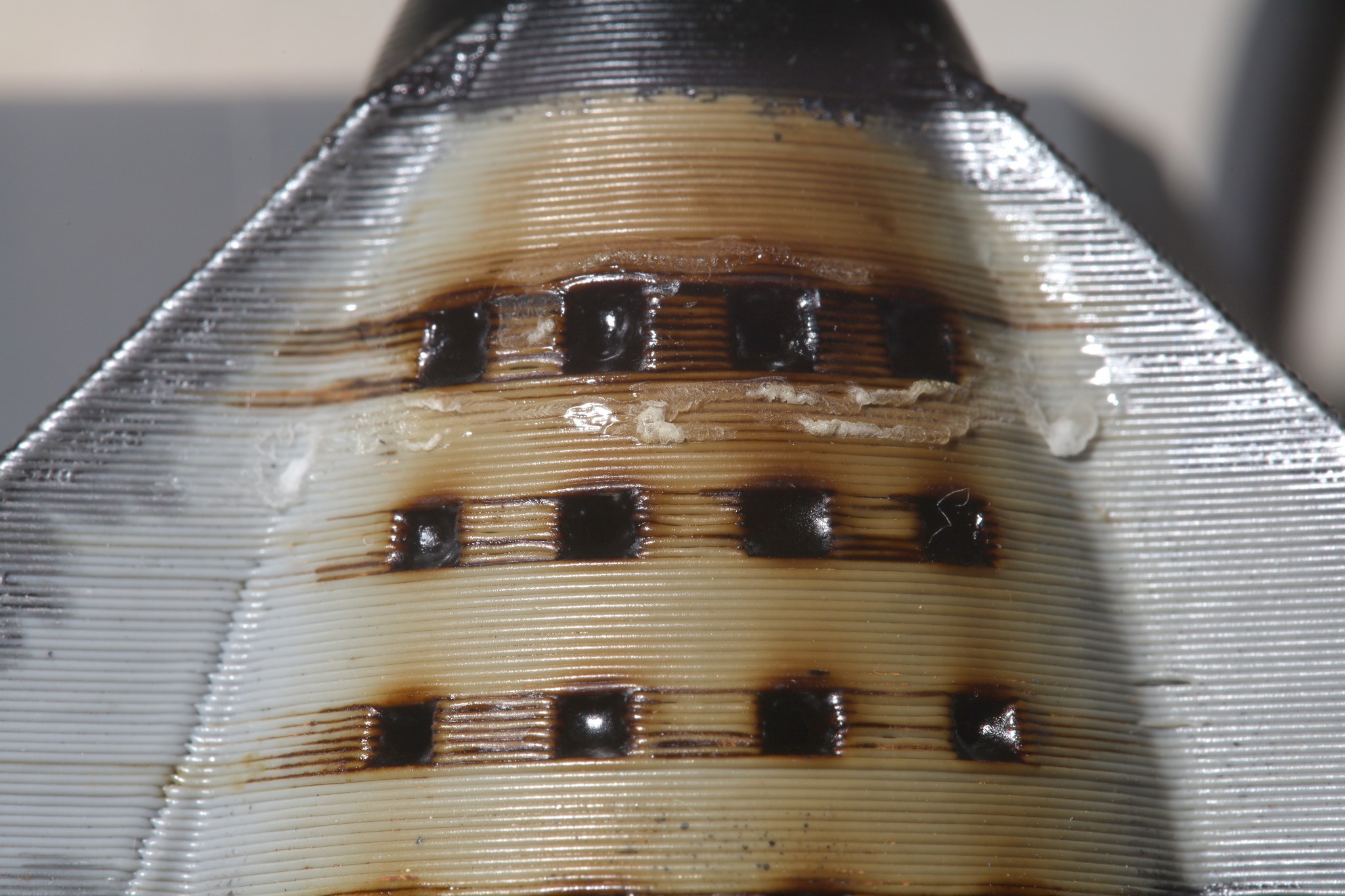
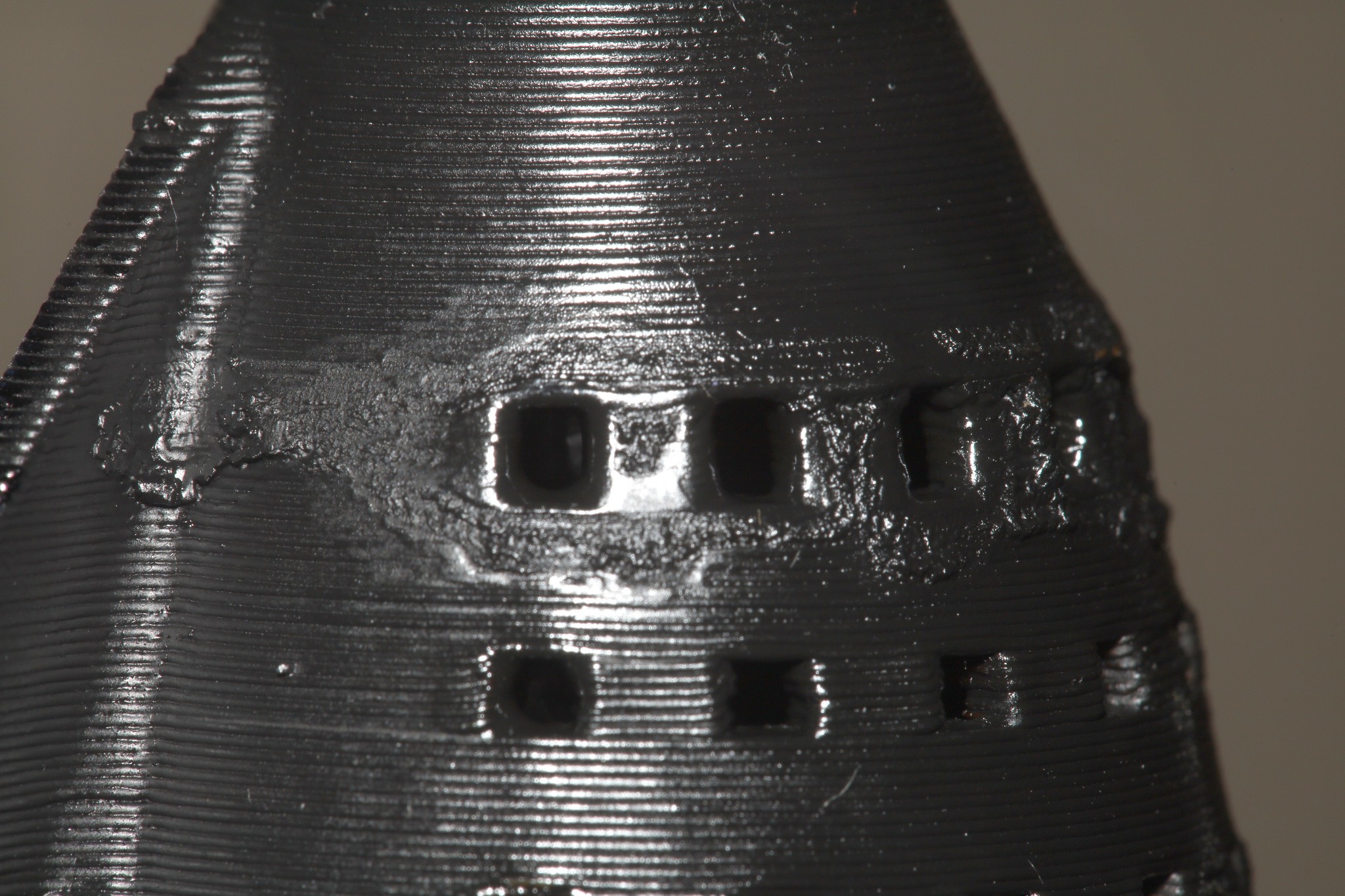
It still ran in the laminations. Drew pencil lines to try to define the boundaries & free pawed it. The only way to get the sharpest boundaries would be modeling fiducials. There might be a way to score the boundaries with a knife or expand the heat shield diameter by .2mm.
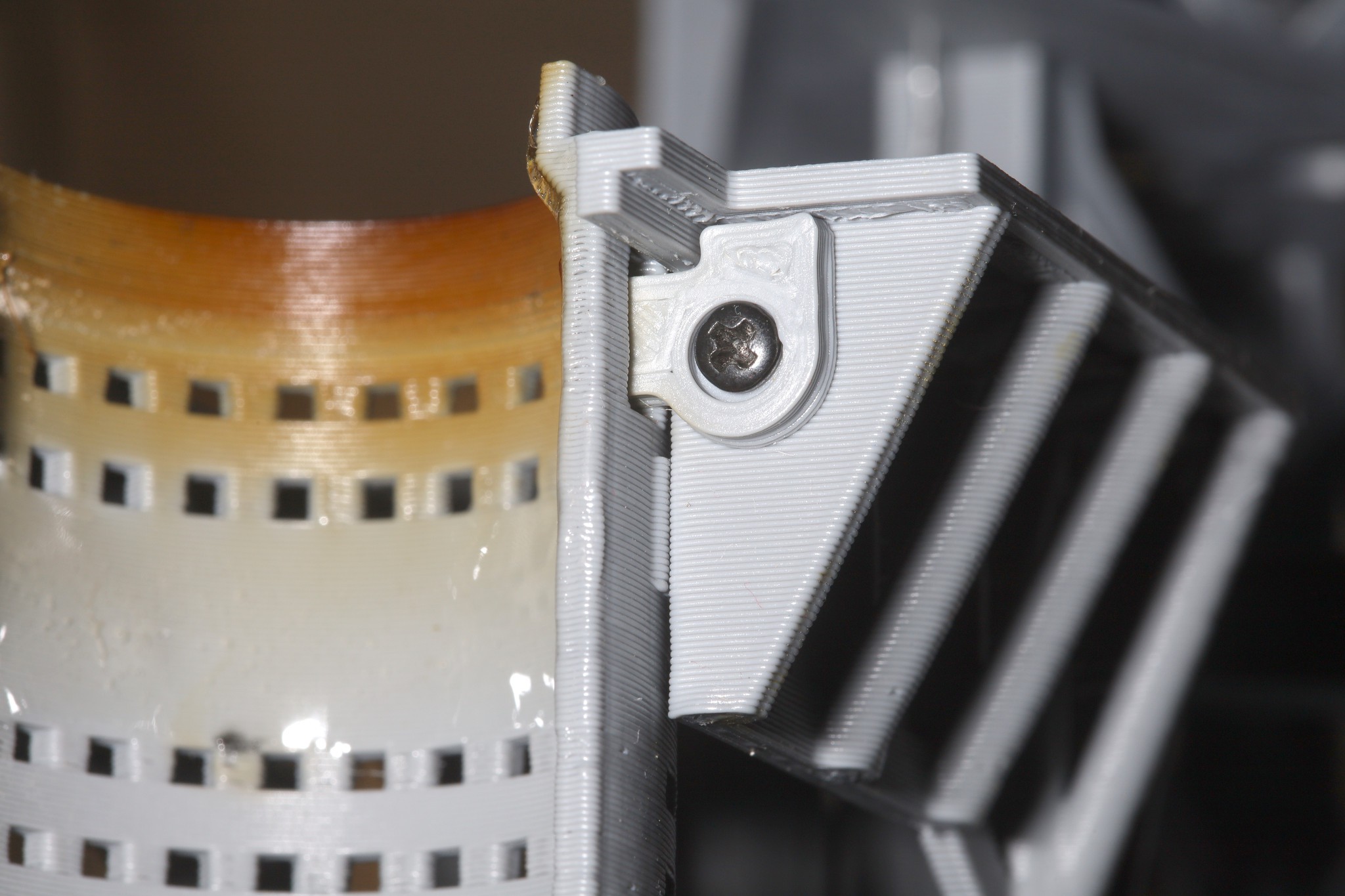
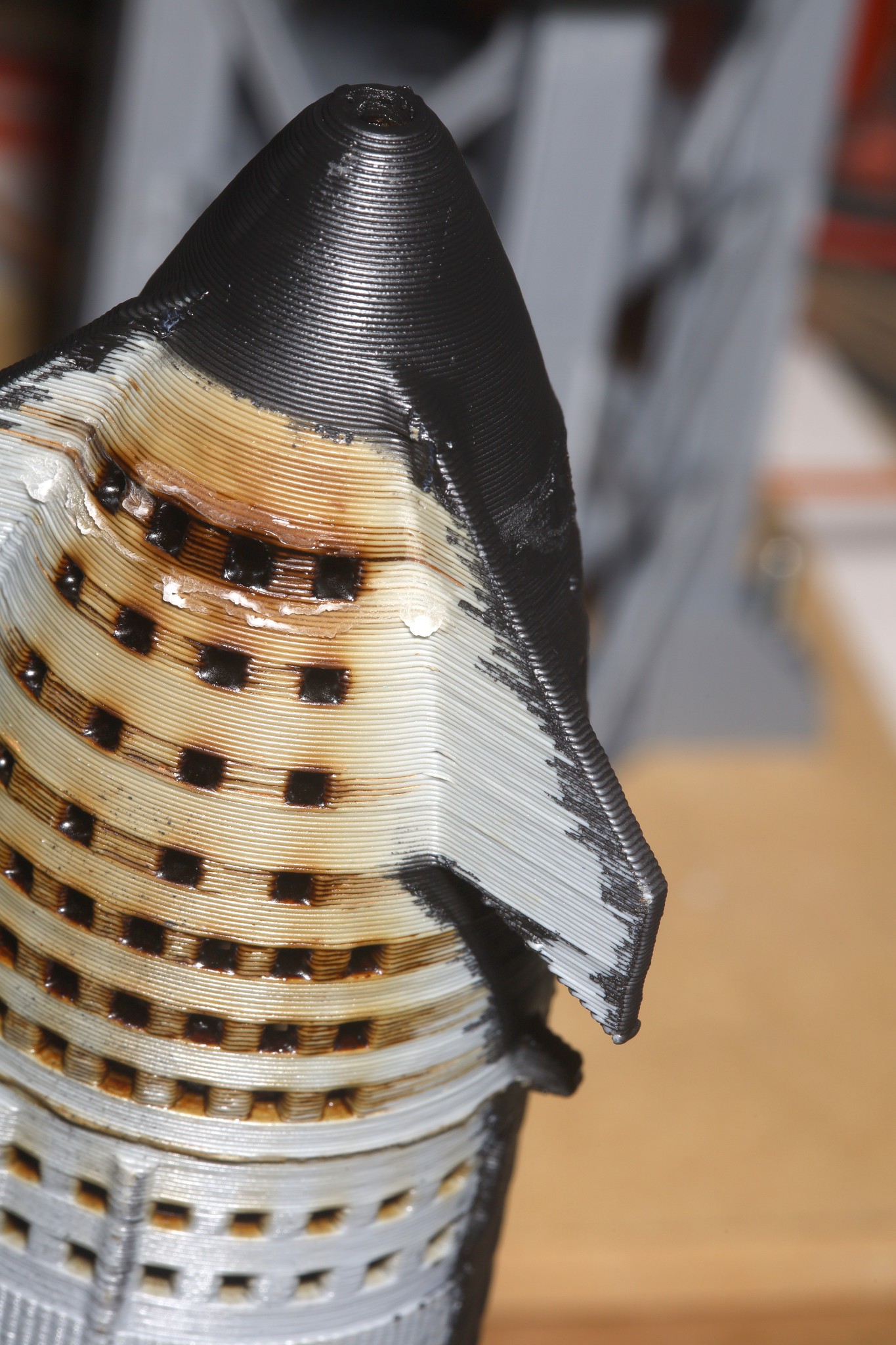
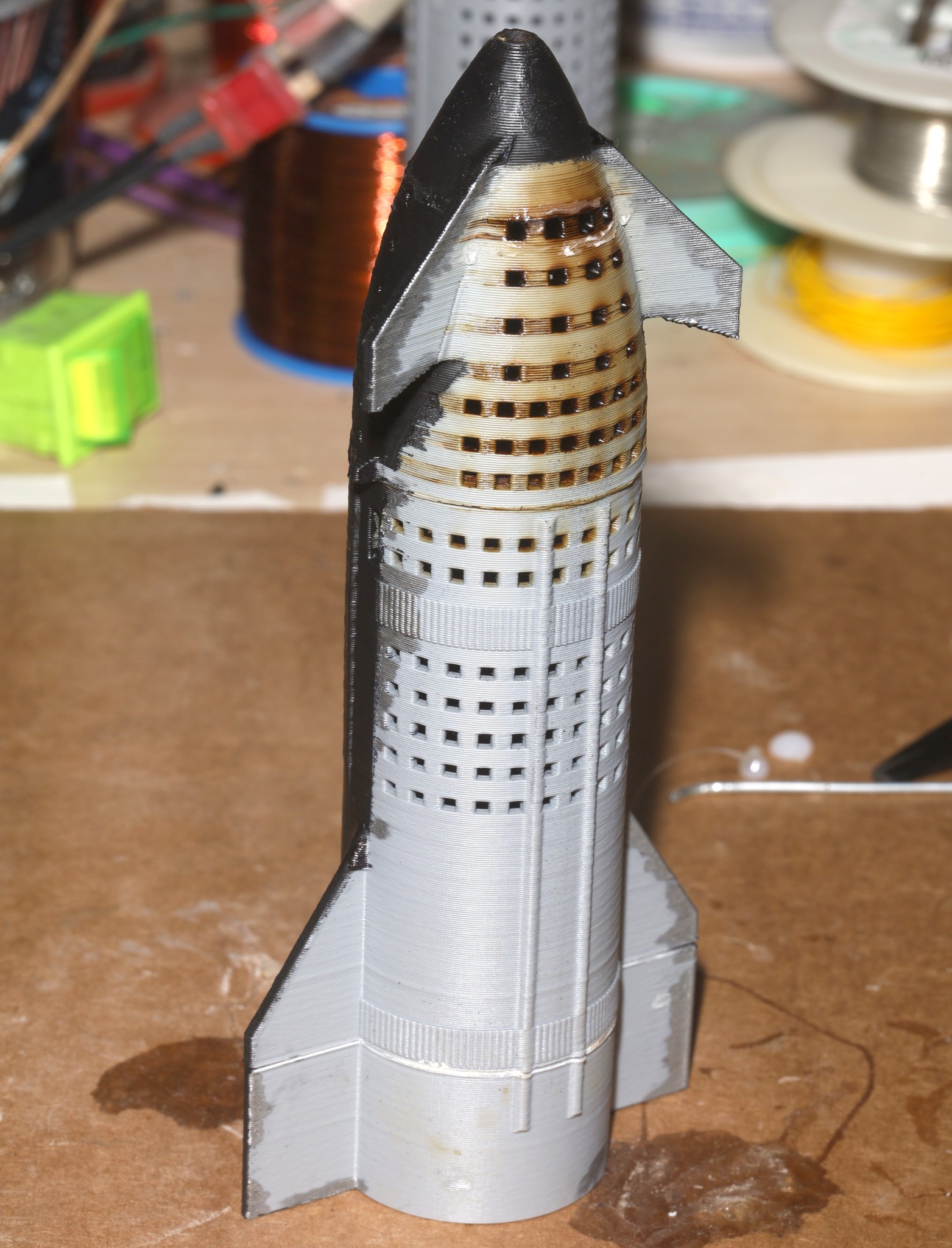
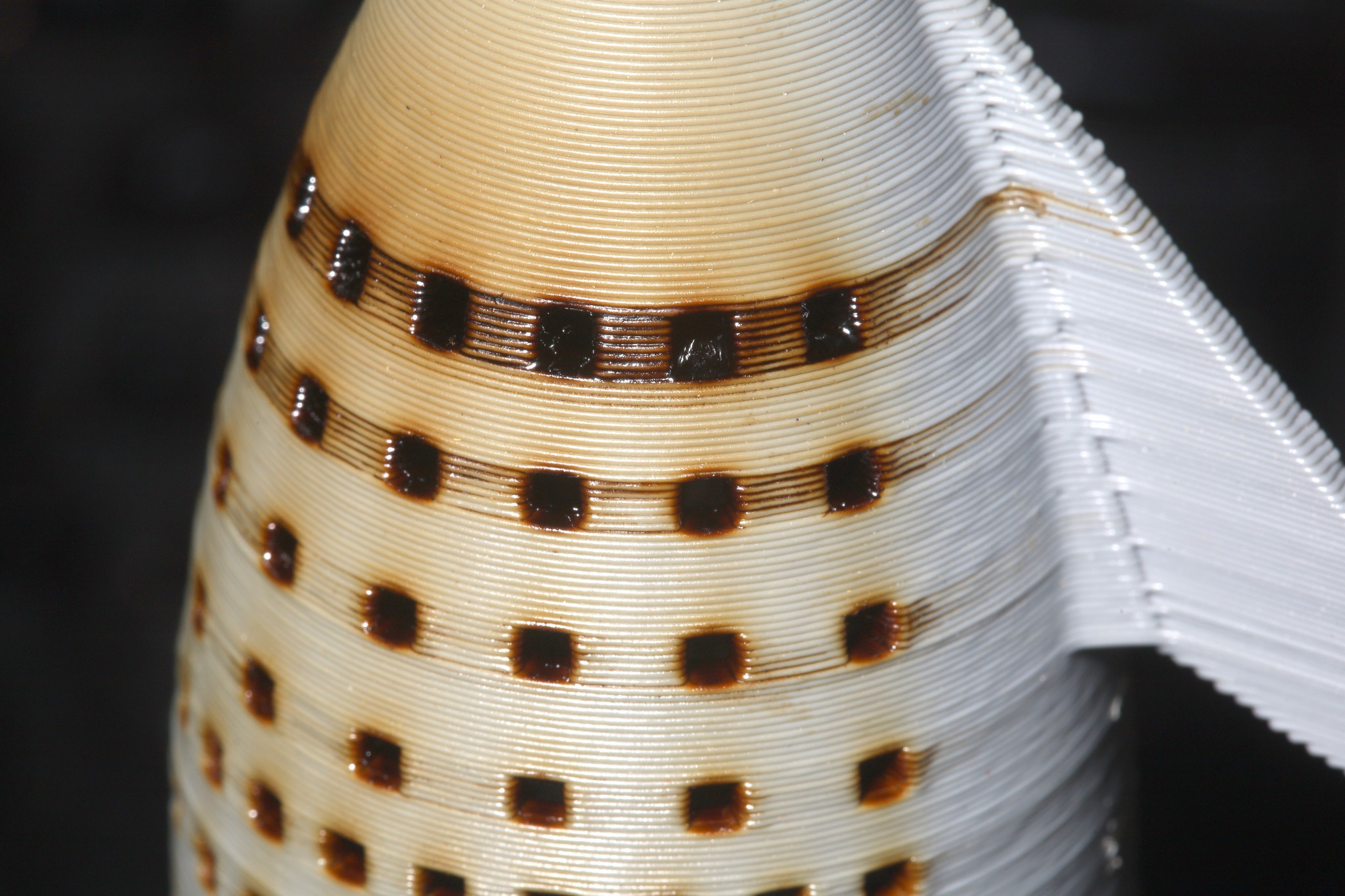
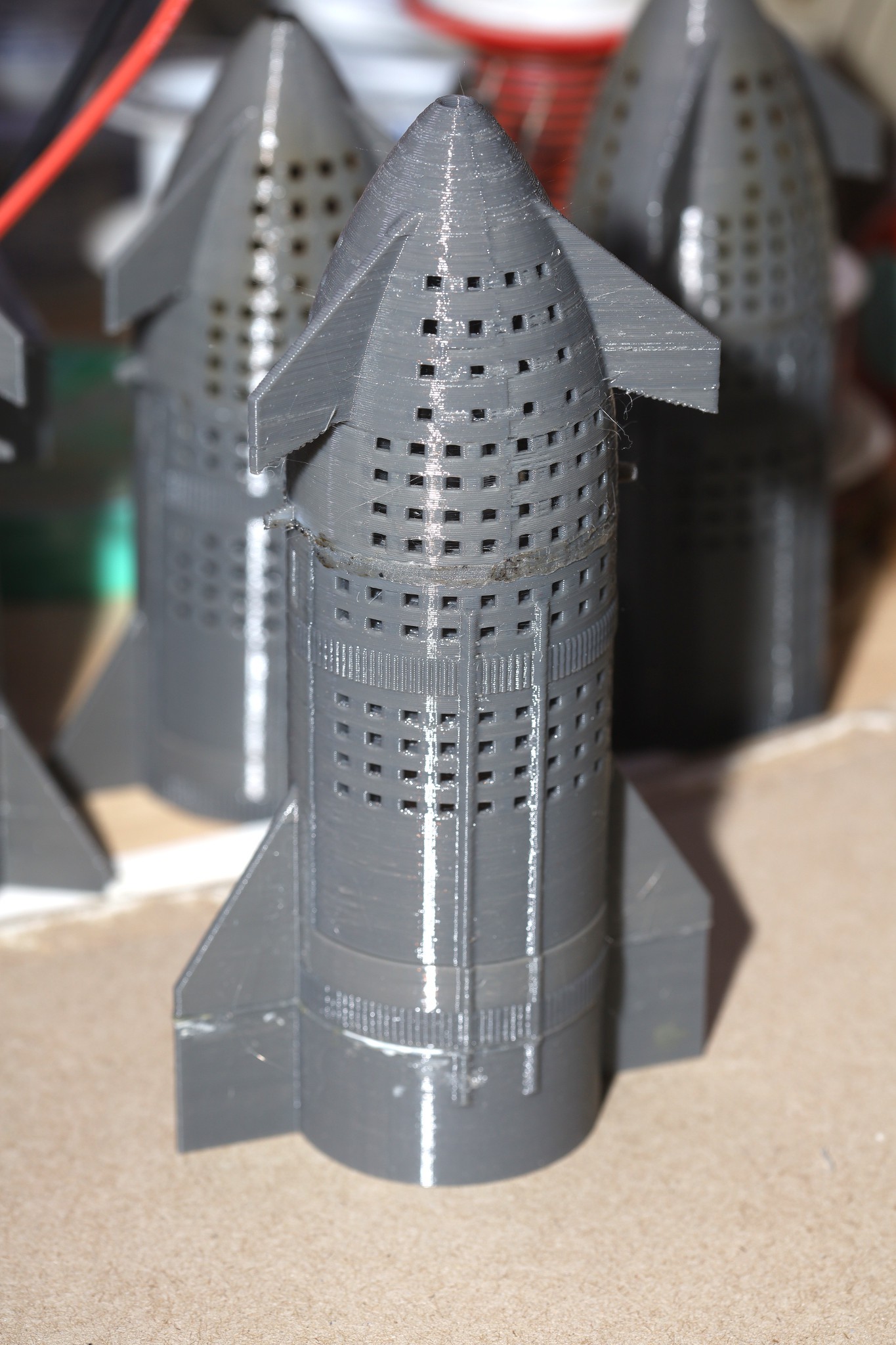
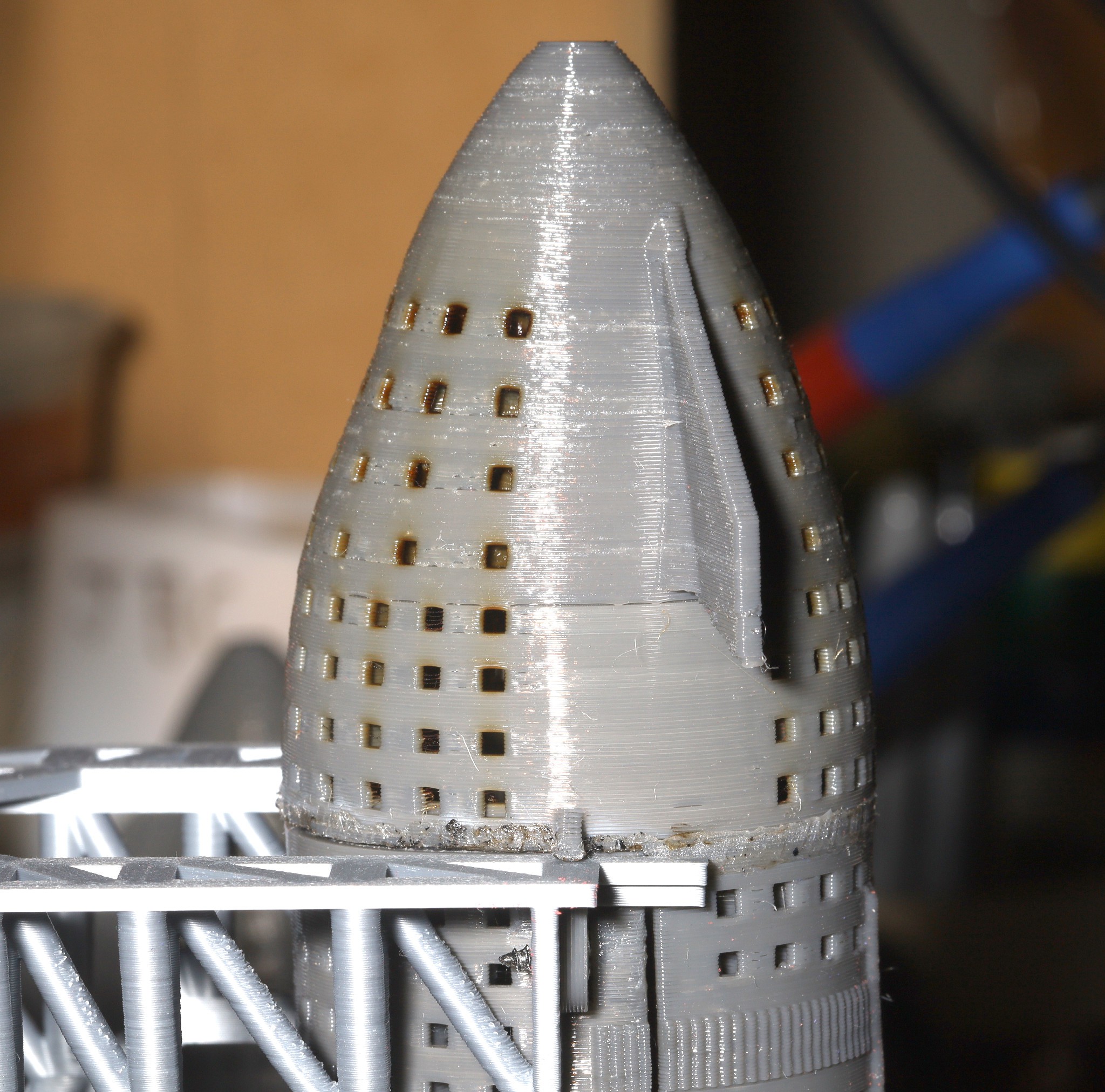
Reinstalled some of the stringers & epoxied some of the melted areas. The only sure way to print the nose may end up being a solid block of PLA. It might be cheaper to mail order metal from China. Its eventual outcome is believed to be delamination of the layers because of uneven heating. Ended up applying a thin coat of CA on the unpainted nose section. A thin coat of CA on the entire nose before painting may end up being the way.
Added a layer of CA to try to improve the heat resistance.
It looked good enough to be a shame to oil up & begin the degradation.

Didn't take long for the holes to fill with oil again.
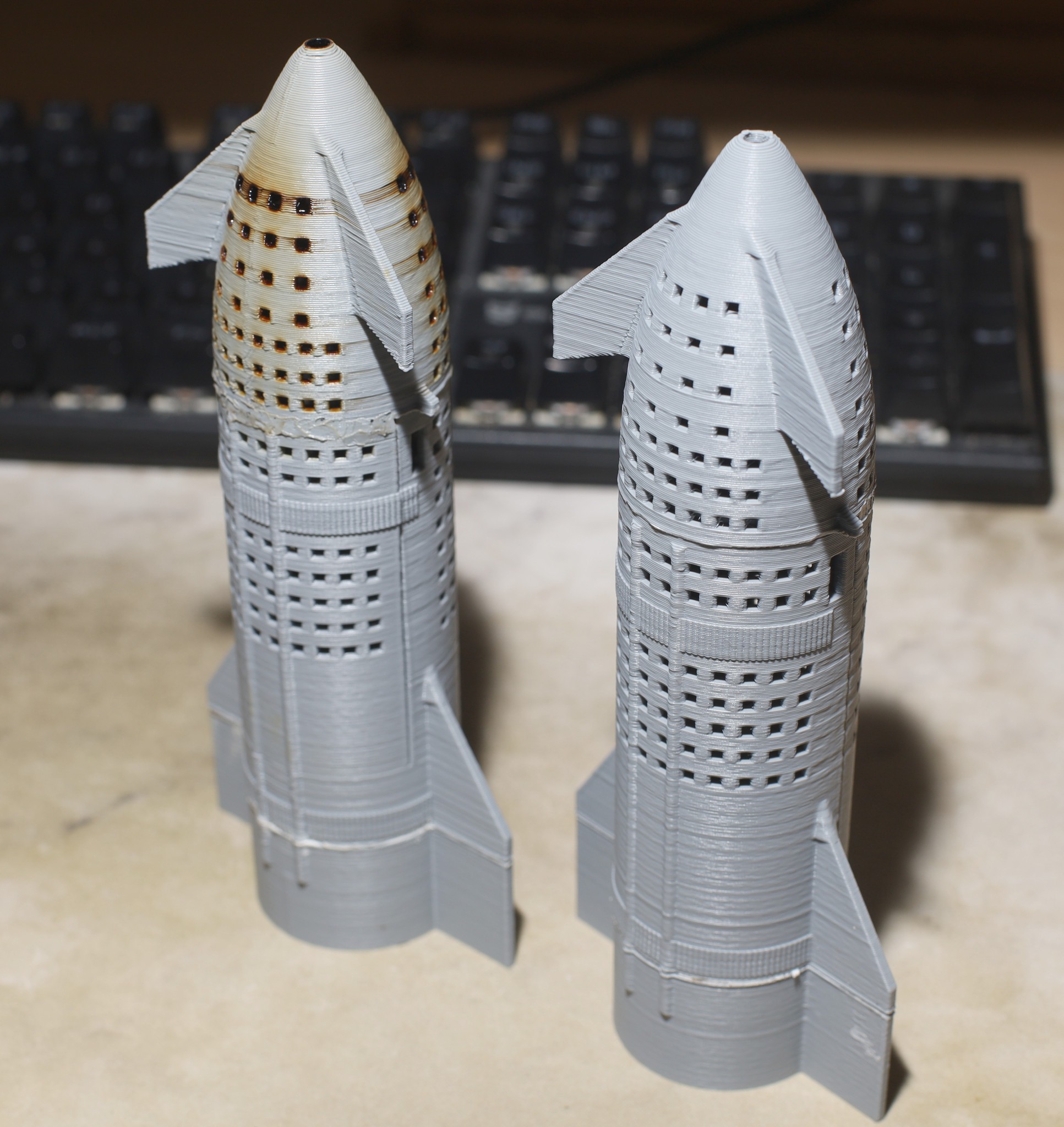
The rest of it has to be frequently cleaned of oil to get it to assemble. Alcohol dissolves the sharpie ink. With the oily buildup, the black paint doesn't do it for lions. Maybe it would if real used starships were a common sight.
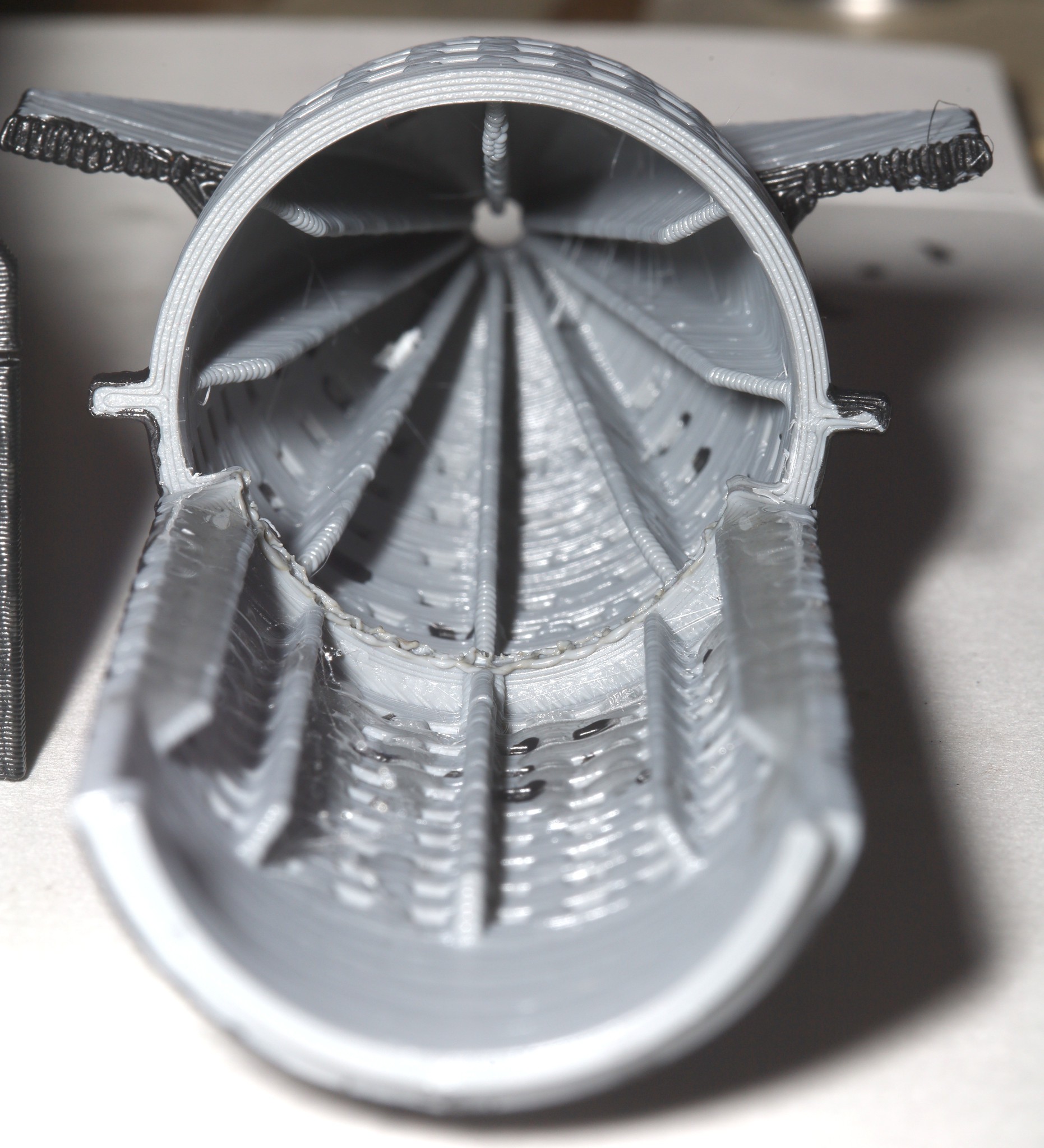
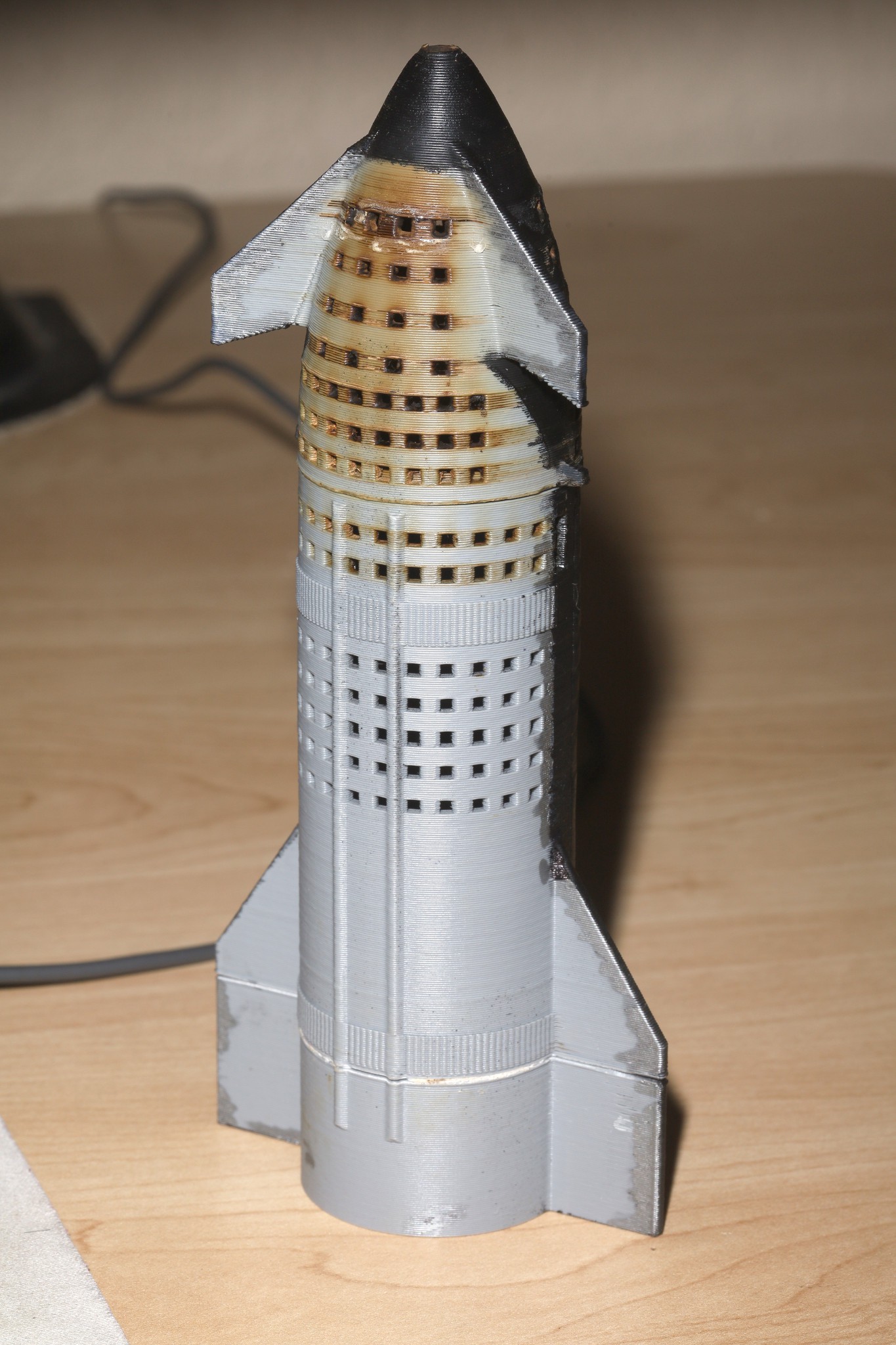
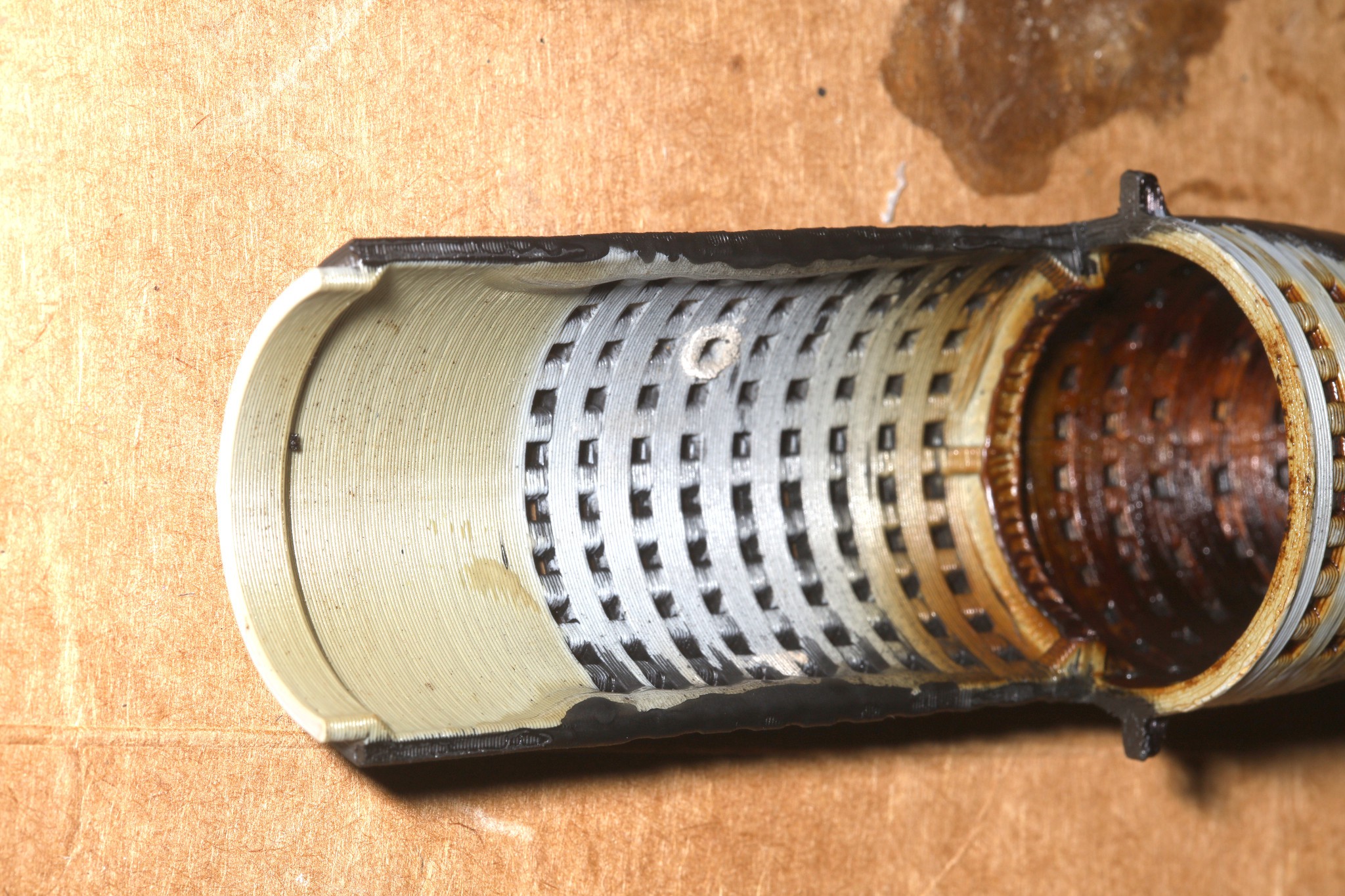
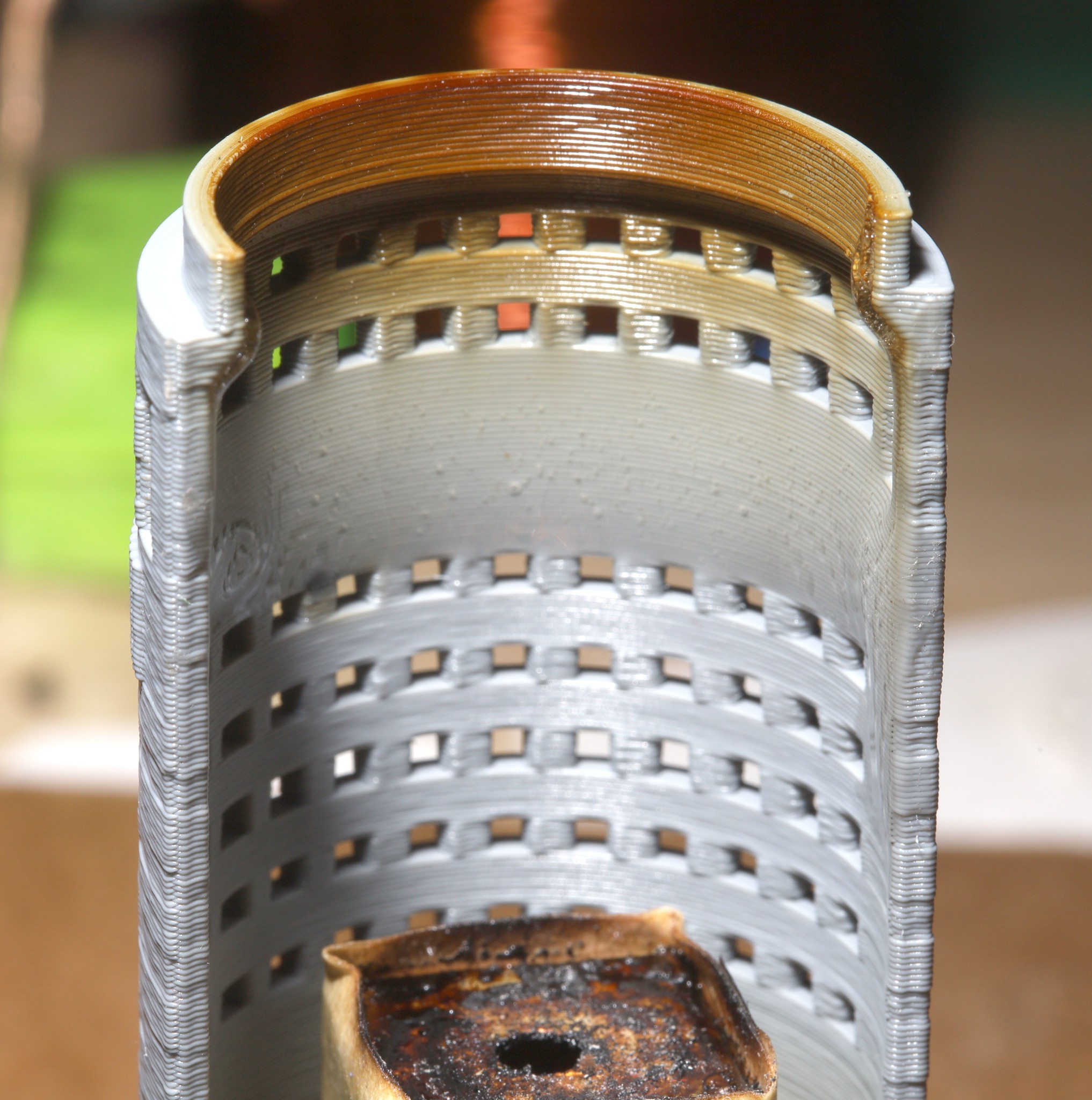
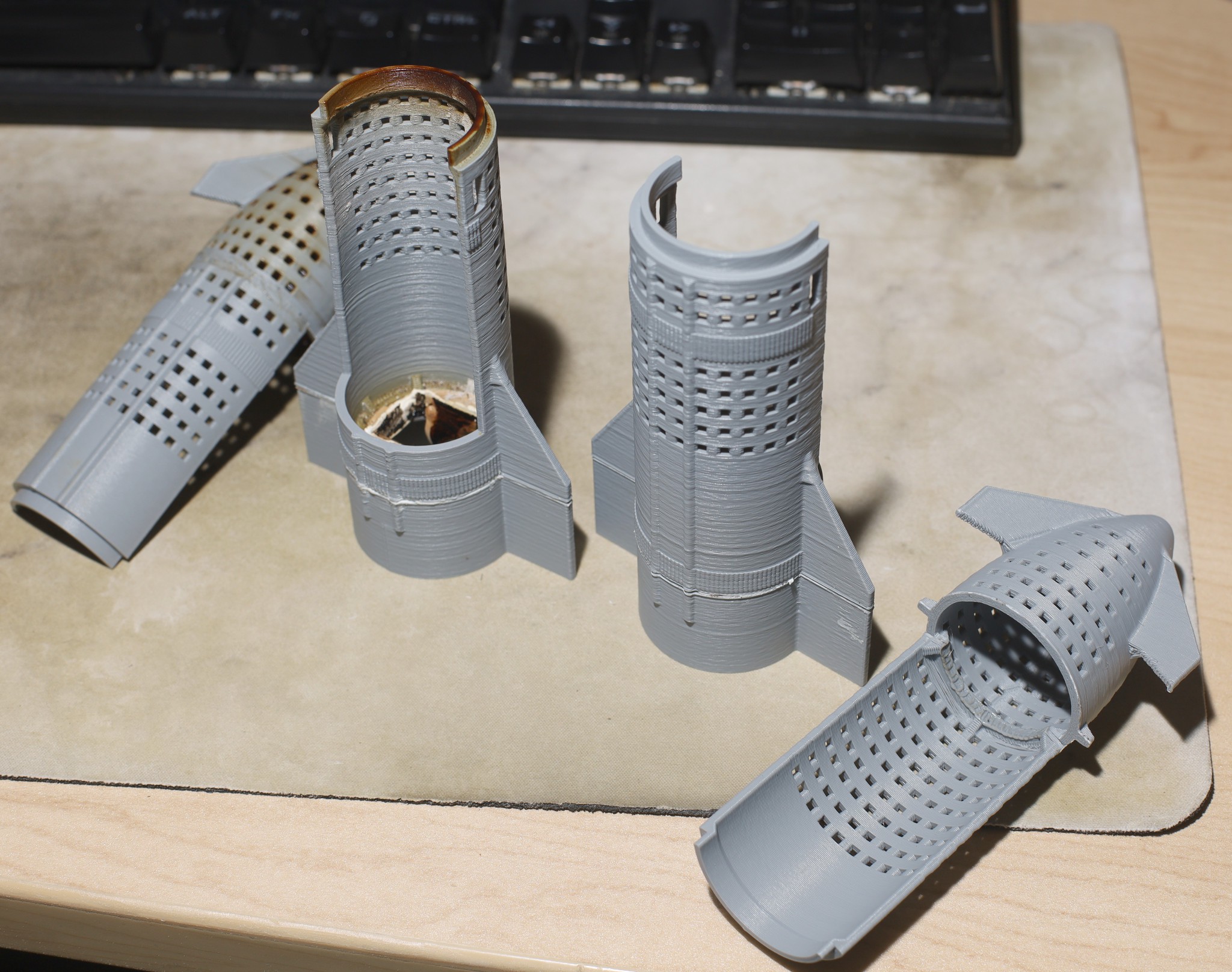
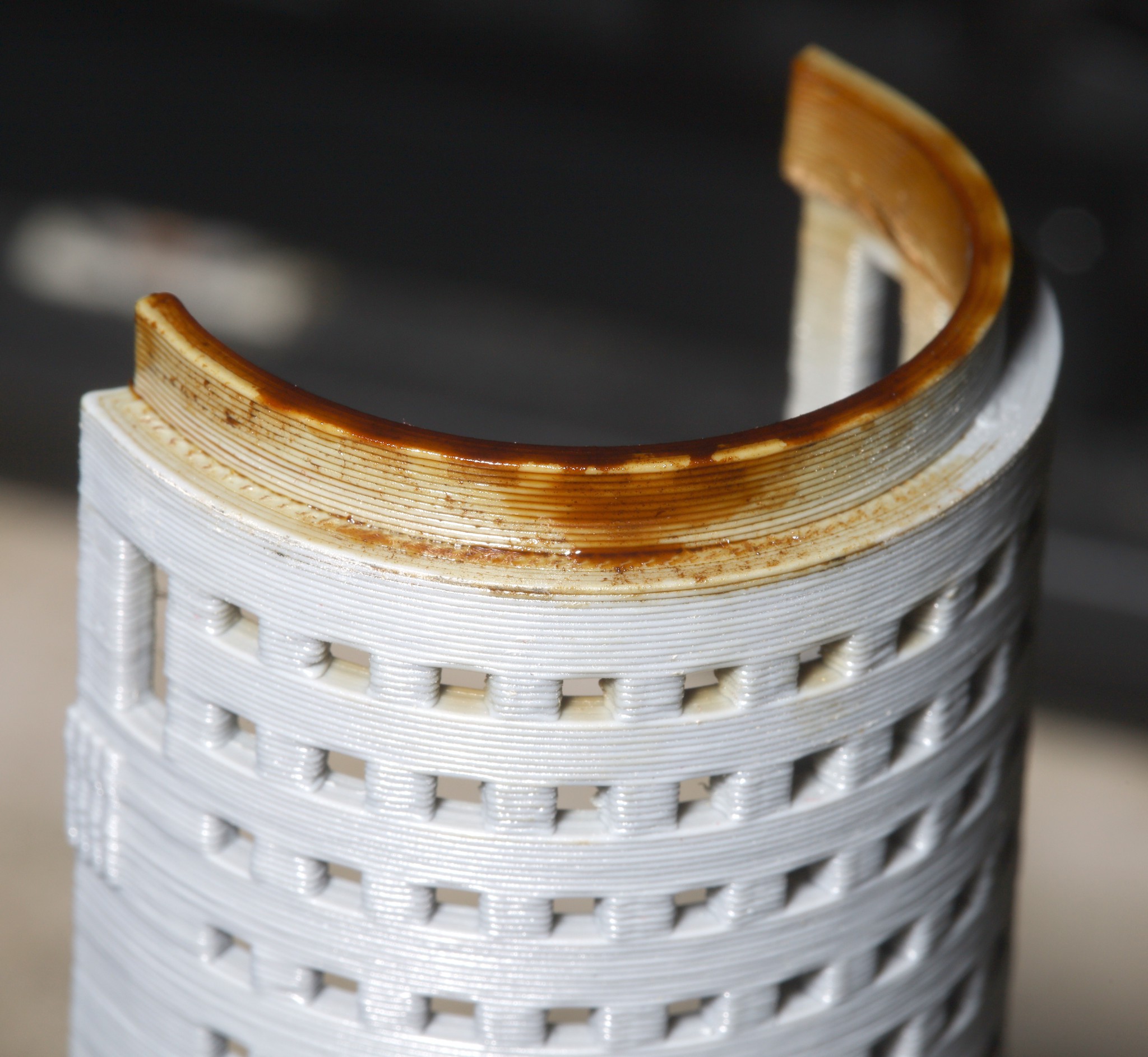
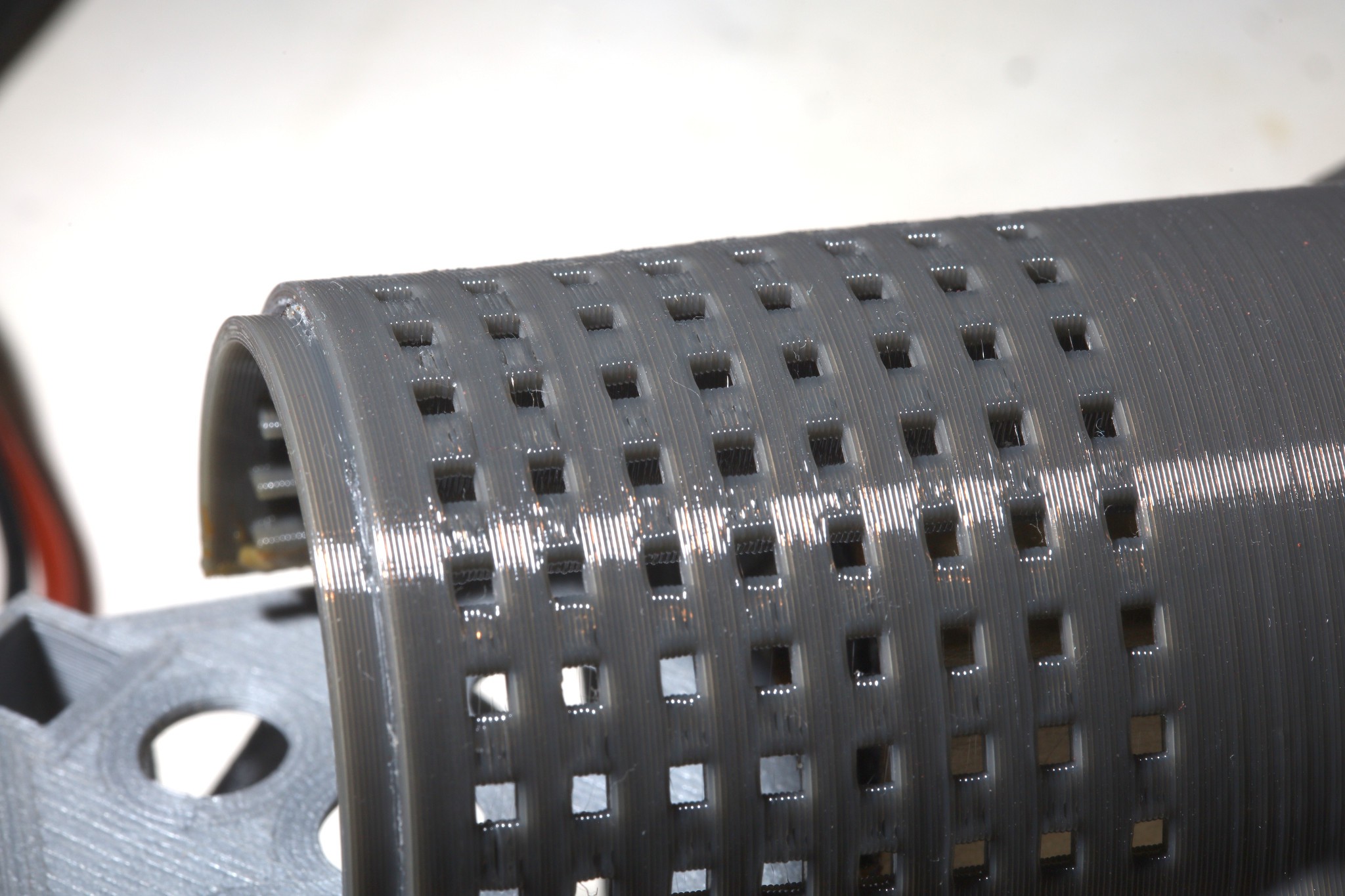
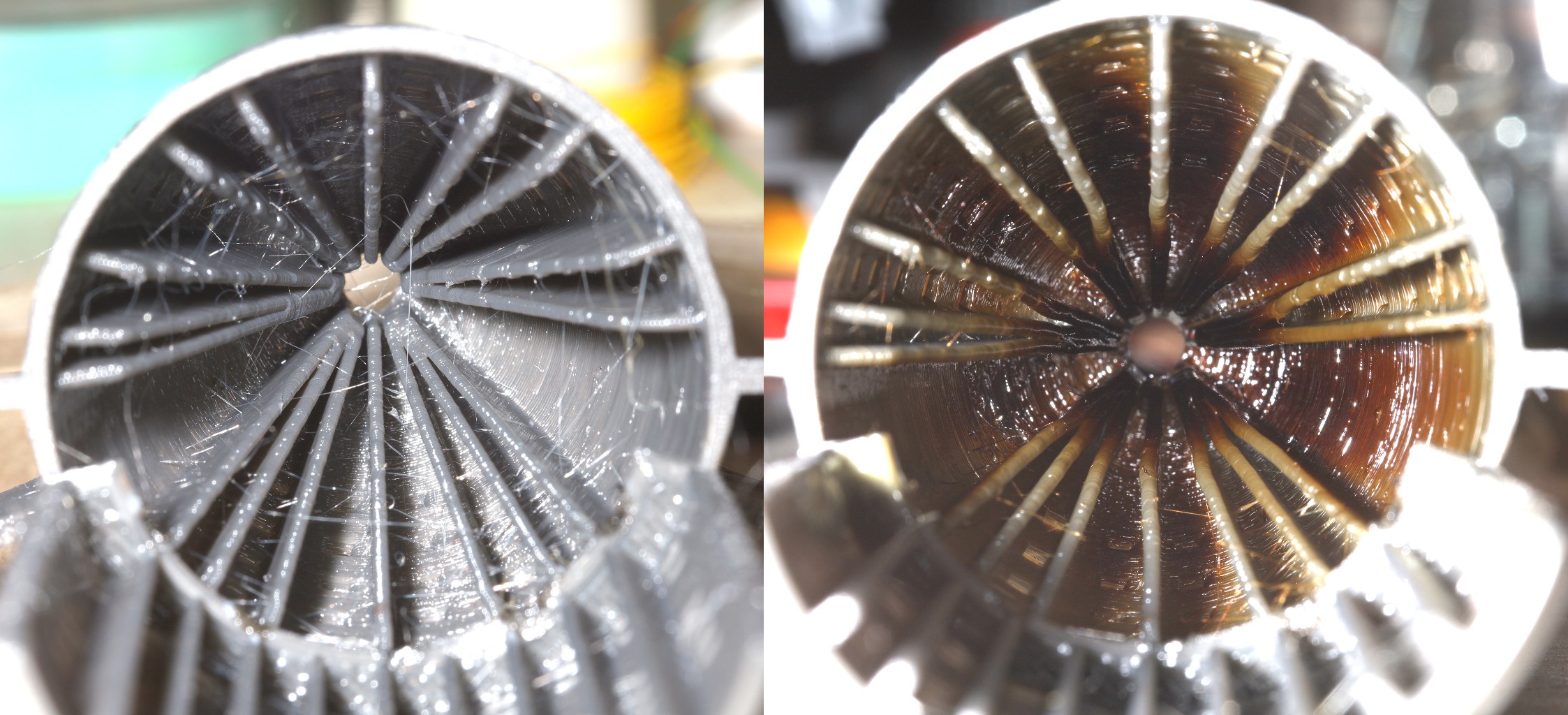
The oil eventually makes the unpainted side as dark as the painted side. The heat eventually delaminates the layers & they break off. They can be glued back together. Looks like either the diameter needs to go back up or it needs the stringers.
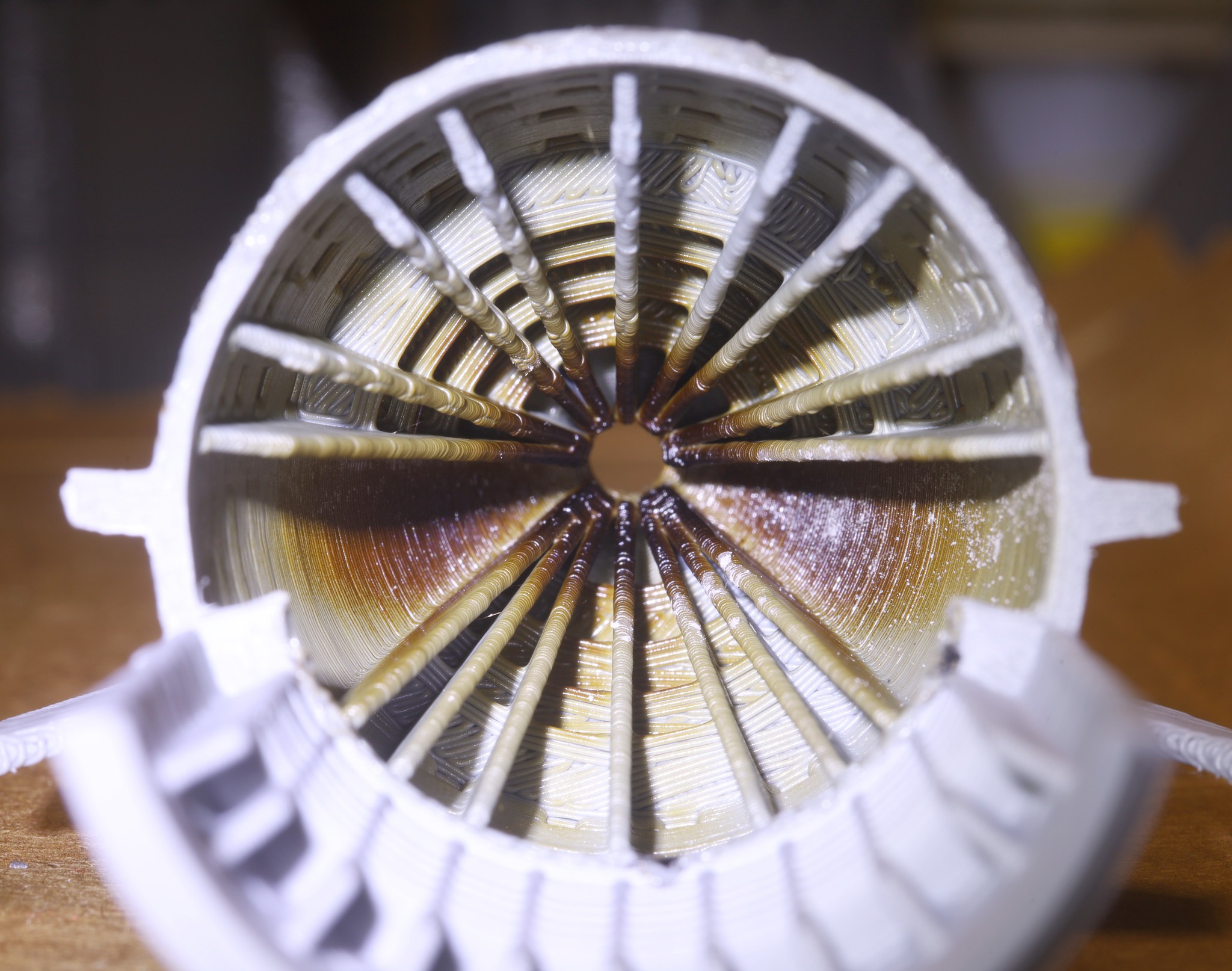
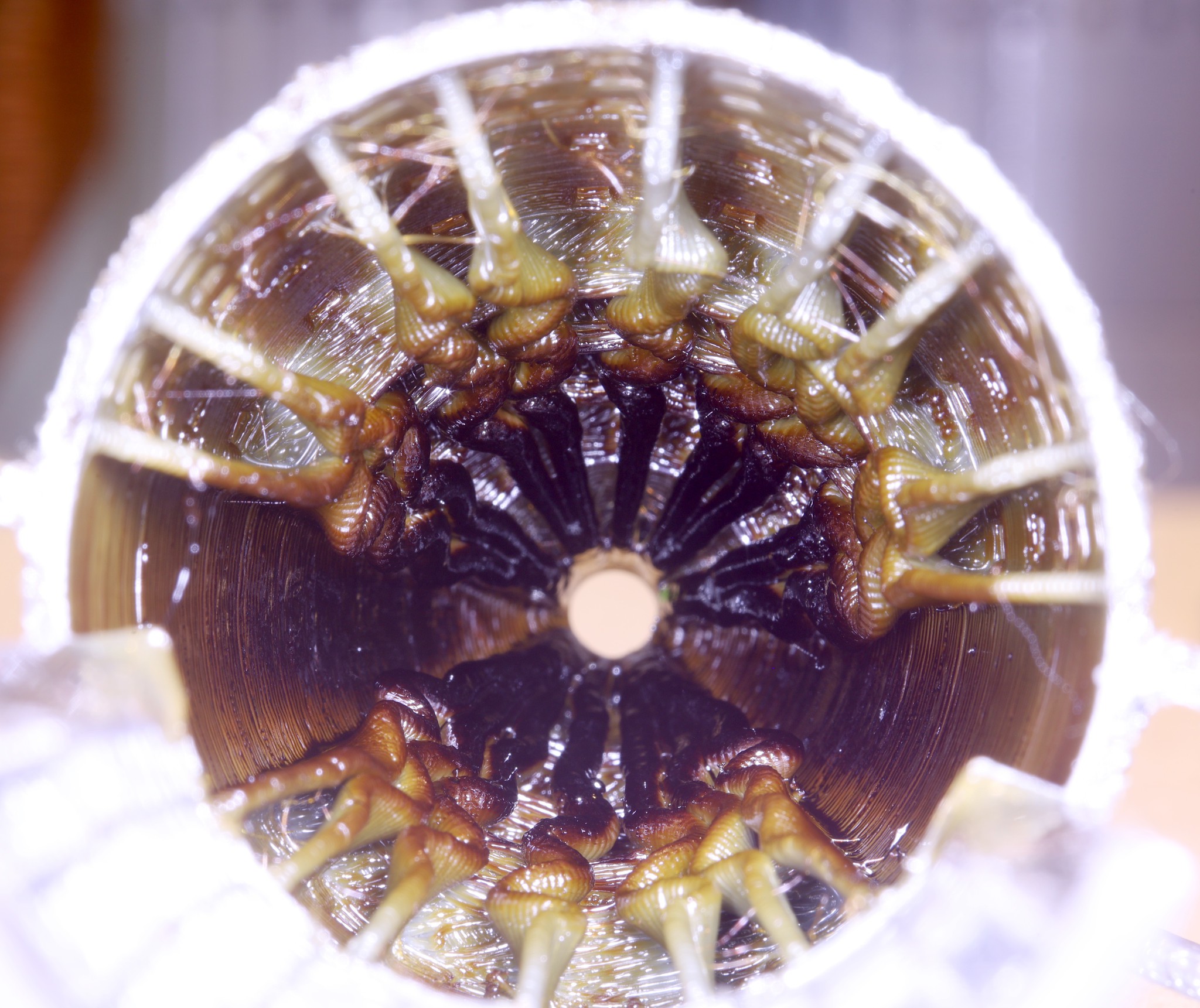
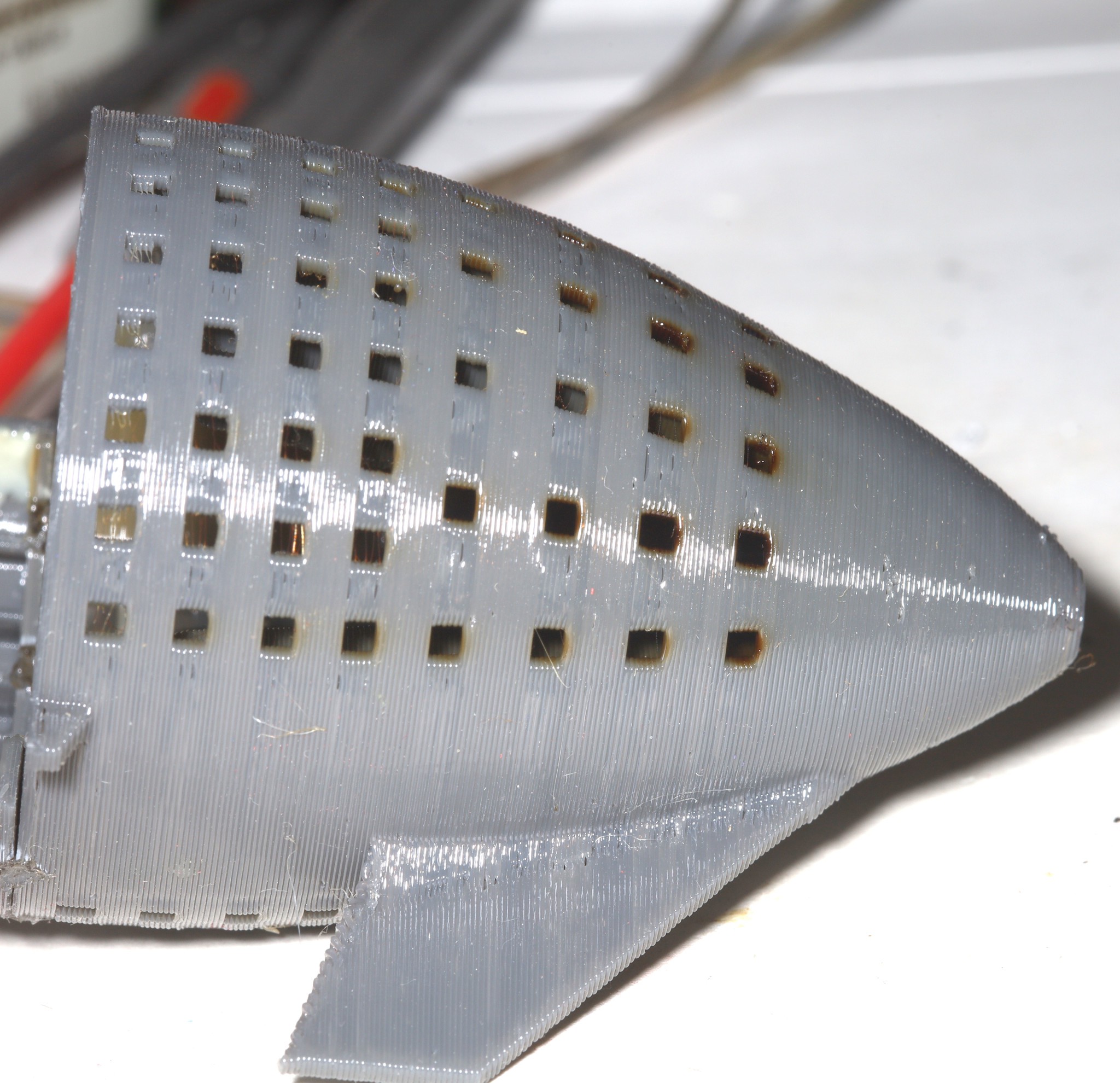
Noted the holes quickly fill with oil until there's no more ventilation. They have to be cleaned with alcohol, hot water, & a brush.
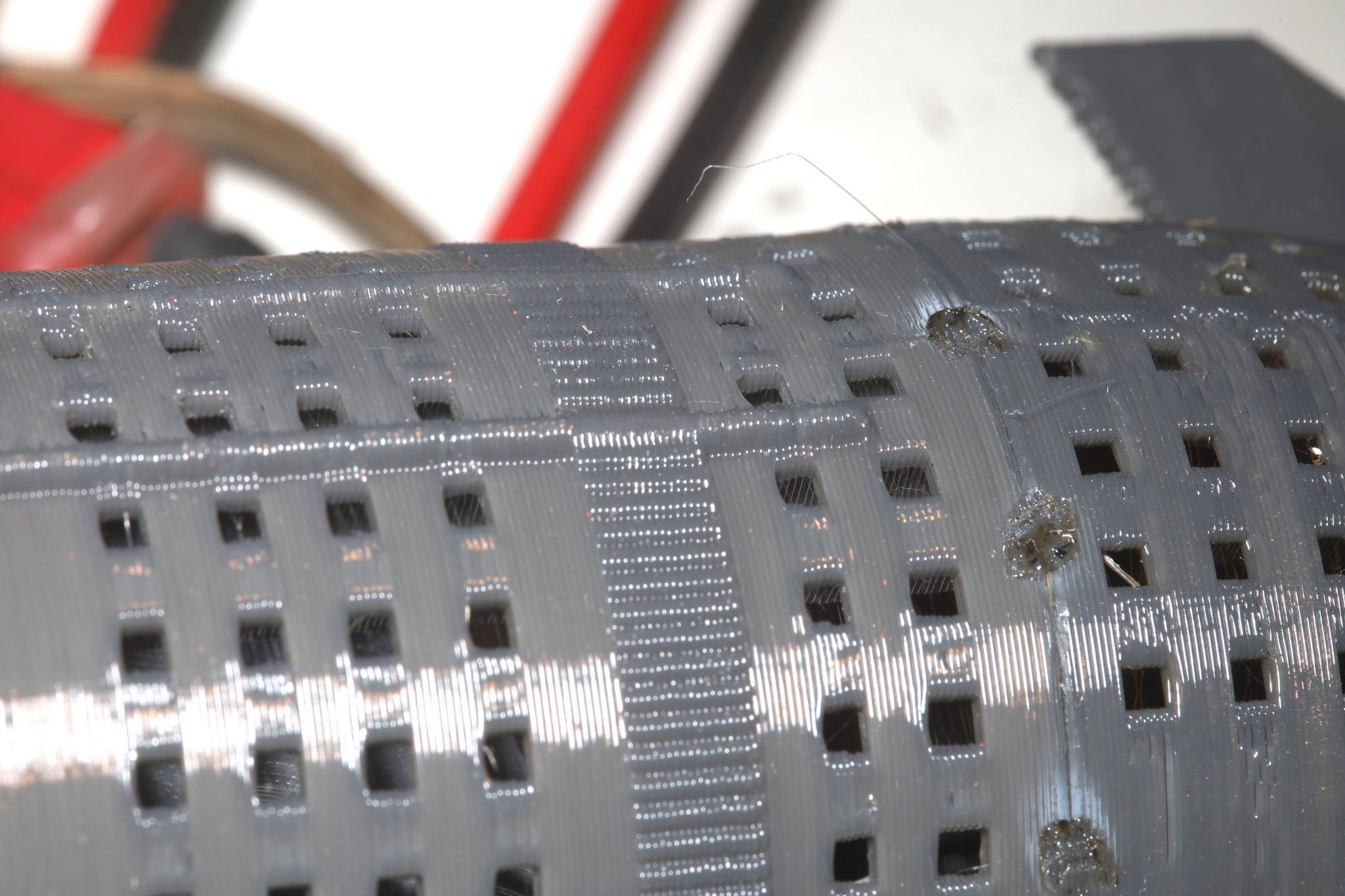
The access panel started showing deformation near the bottom, where it's cooler. The nose started showing deformation in the usual places. These new areas got more epoxy beads.
The hottest part of the nose started warping & delaminating, so it got CA glue. Lions are satisfied anything besides metal is going to have a limited lifespan.
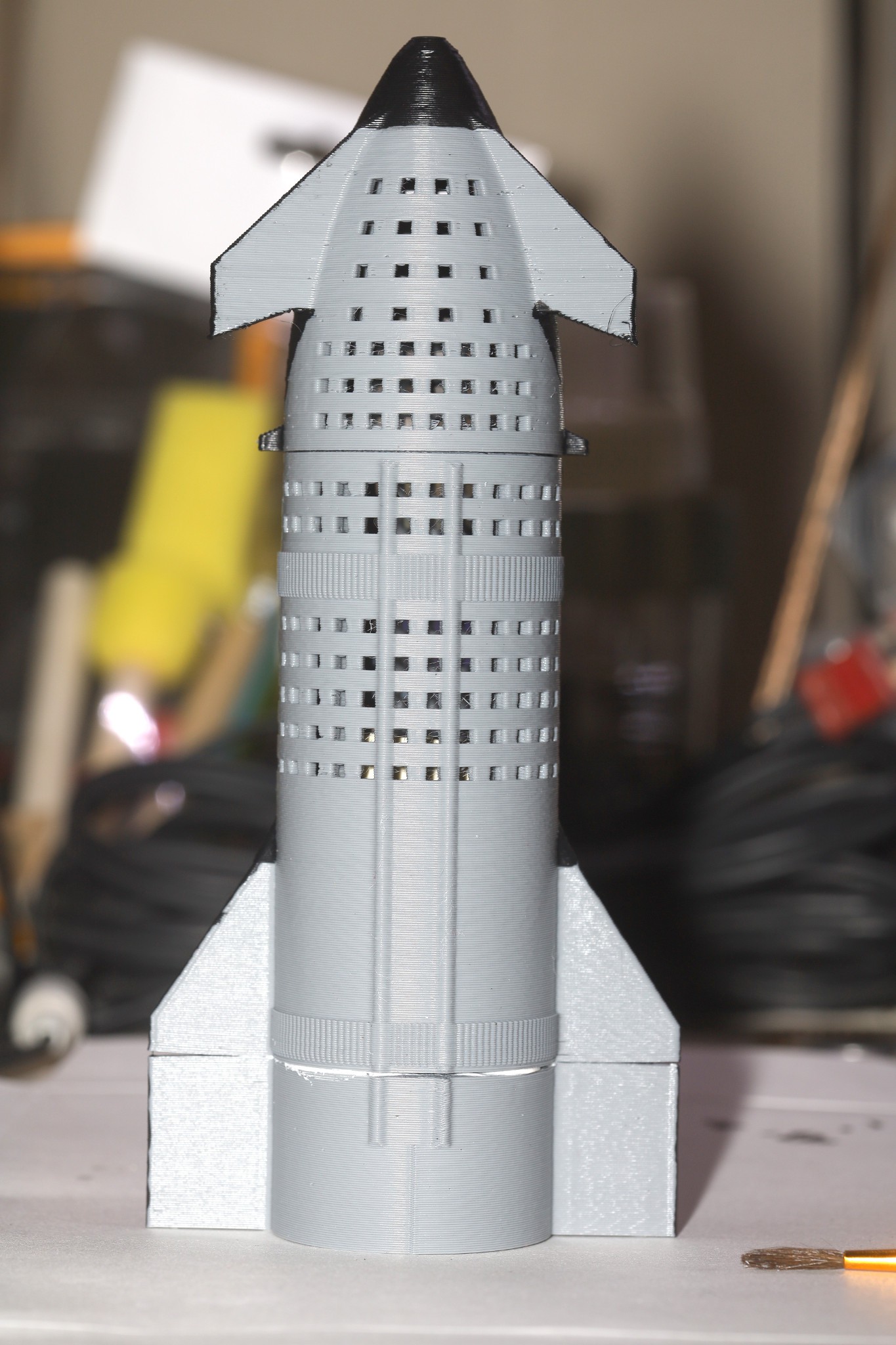
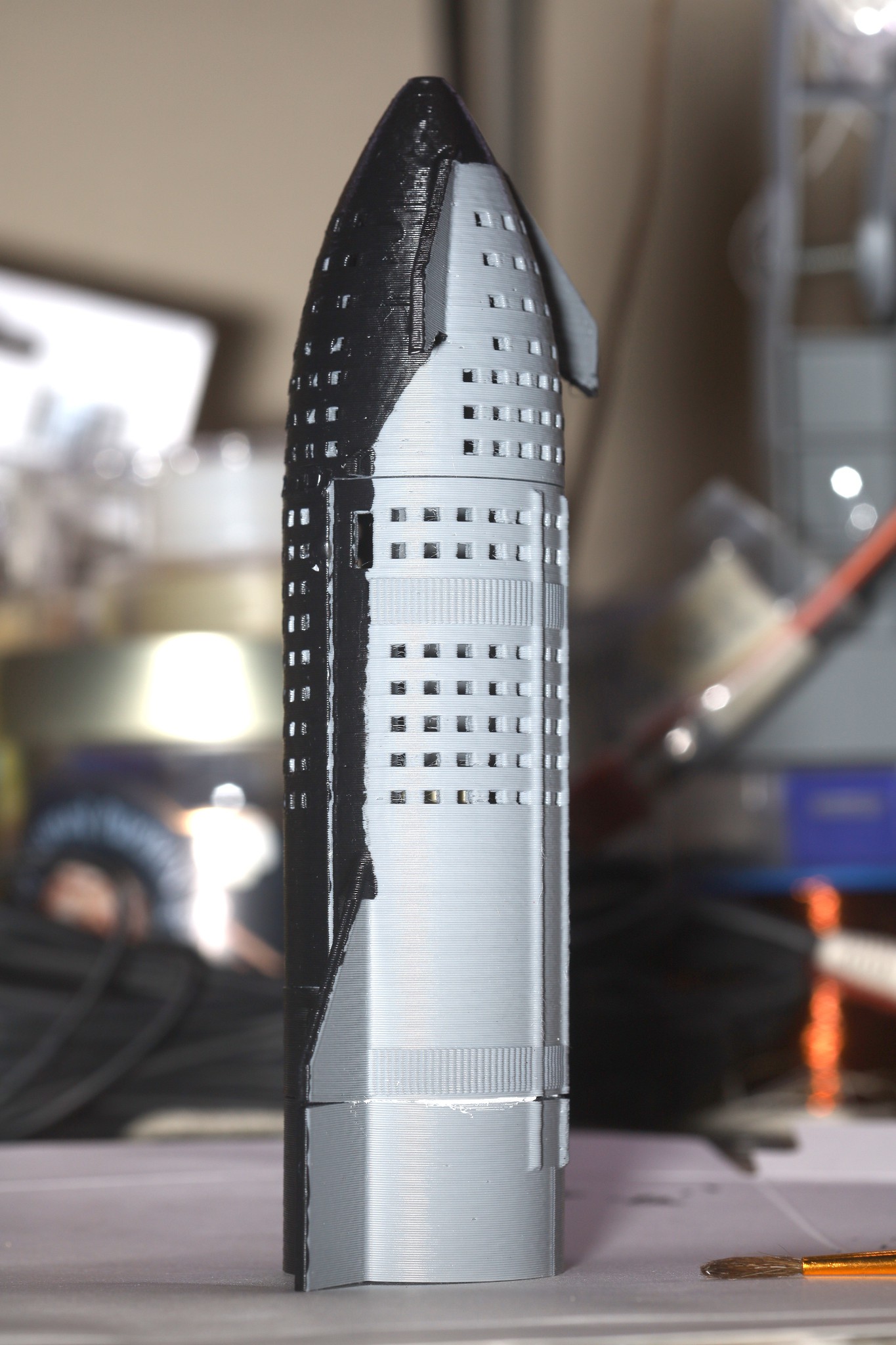
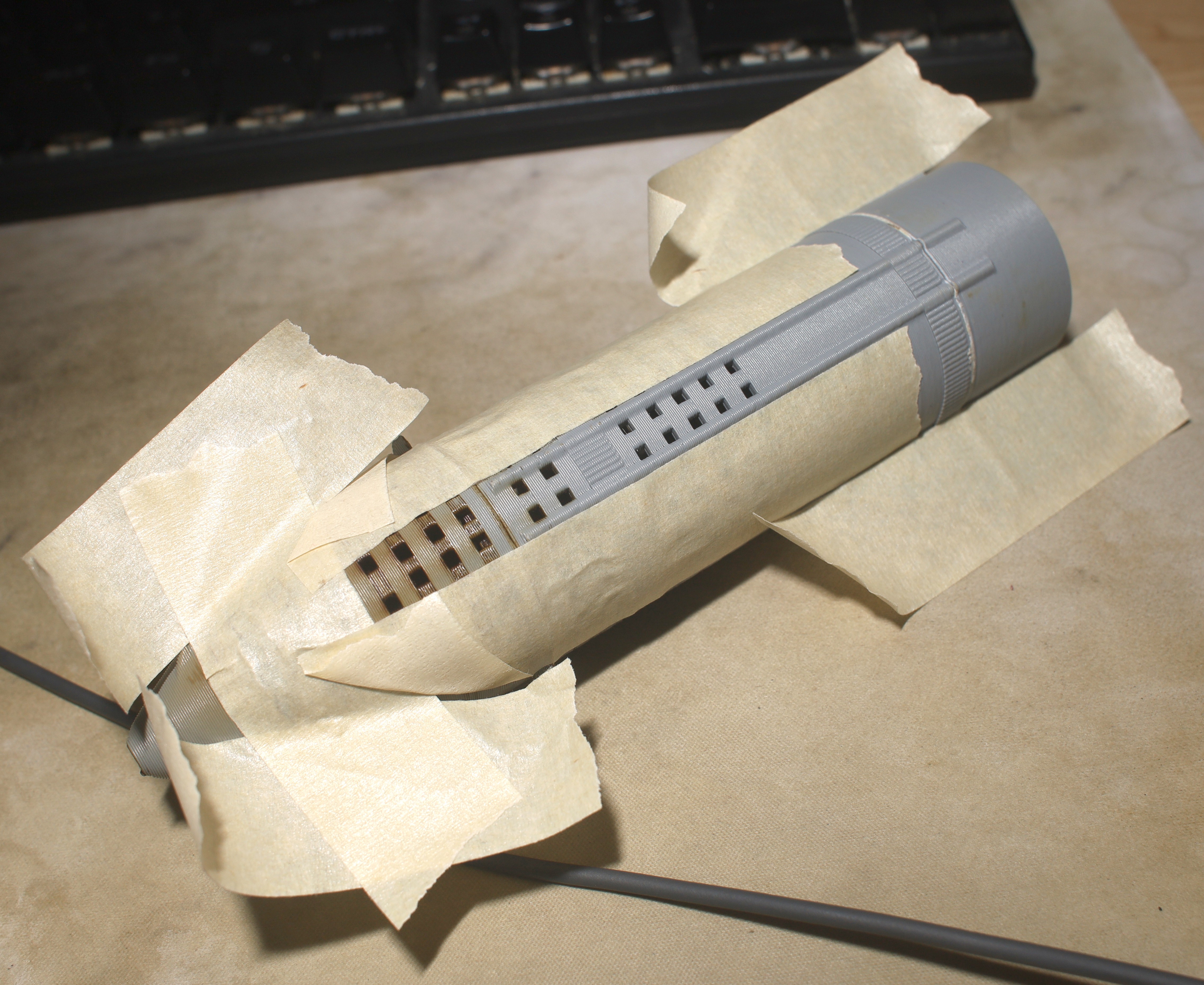
After much contemplation, decided to try spray painting the heat shield. Brushed paint is no longer sold in any reasonable quantity & it's super expensive. The heat shield would be a matter of lots of masking tape & touching up with a sharpie. It's important to tape over the entire downwind side, to defeat wind. This level of masking still wasn't enough for the layered structure. Quite a bit leaked between the layers.
91% alcohol got a small amount of paint off. Sadly, sharpies dry out on contact with HT PLA. Letting them rest for 30 minutes between small touchups can make some progress. The PLA was oily, sooty & badly printed enough that more than a certain quality of painting made no difference.
It's really time for a better painting solution than homeless despot & sharpies.
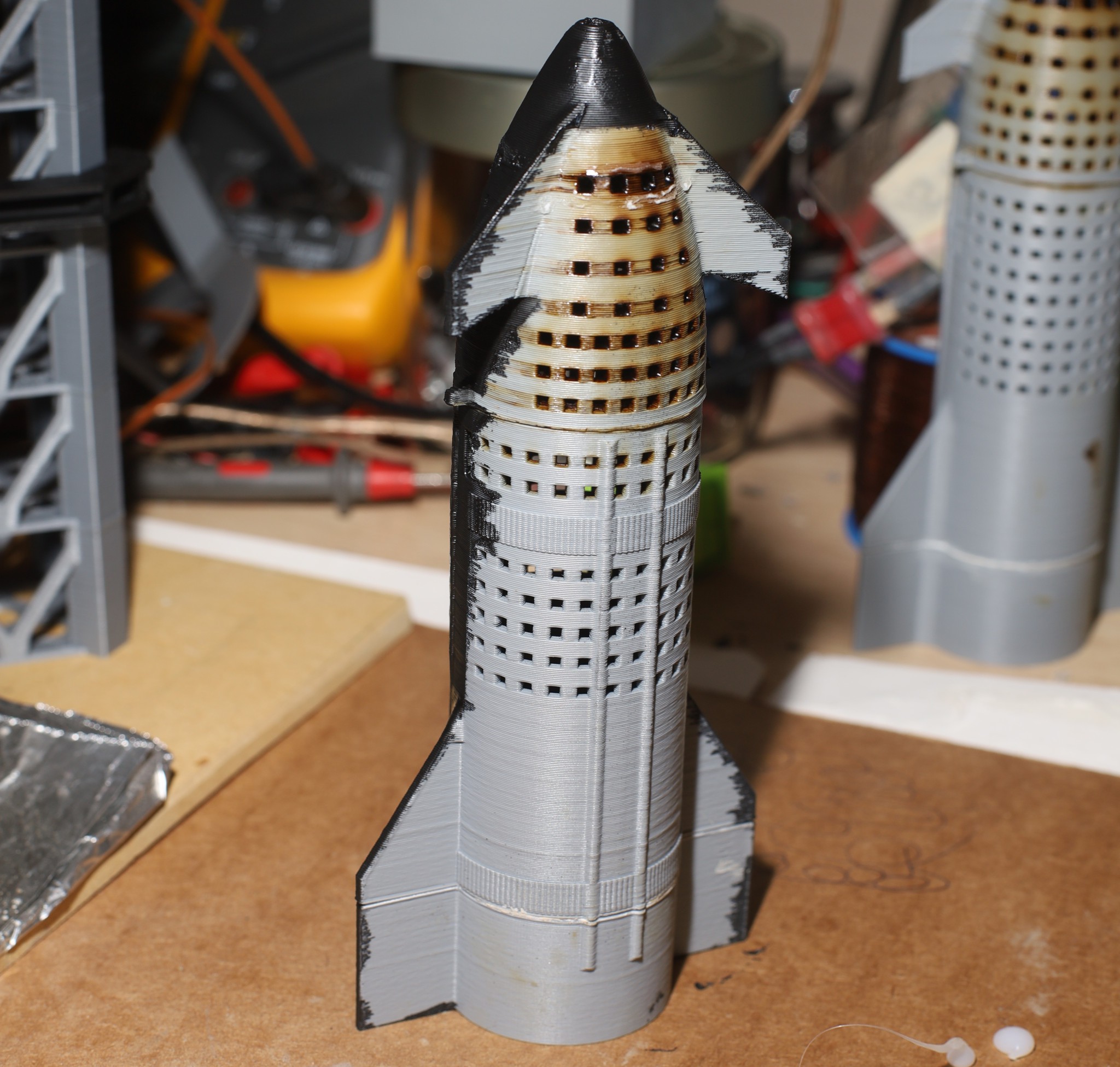
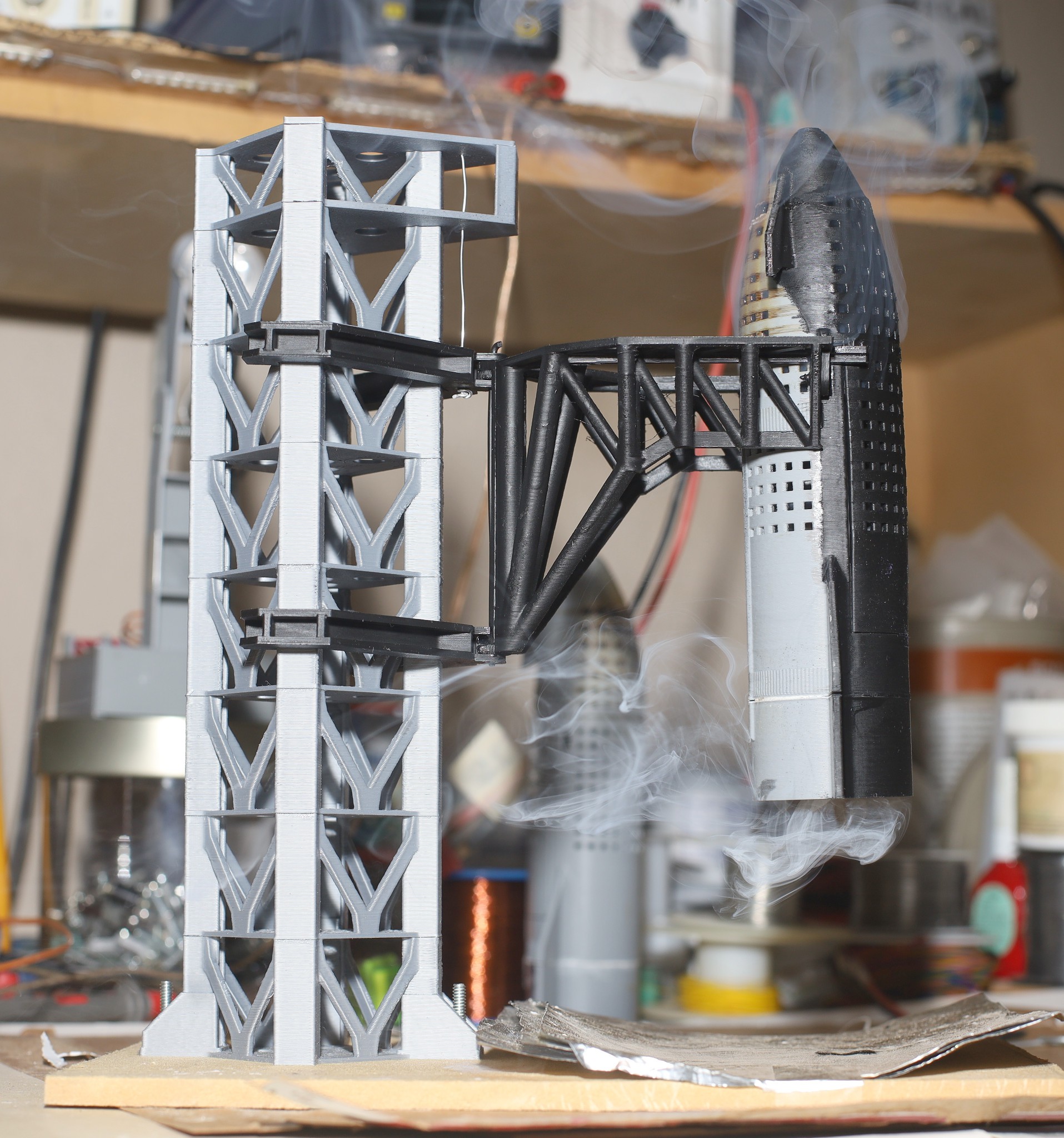
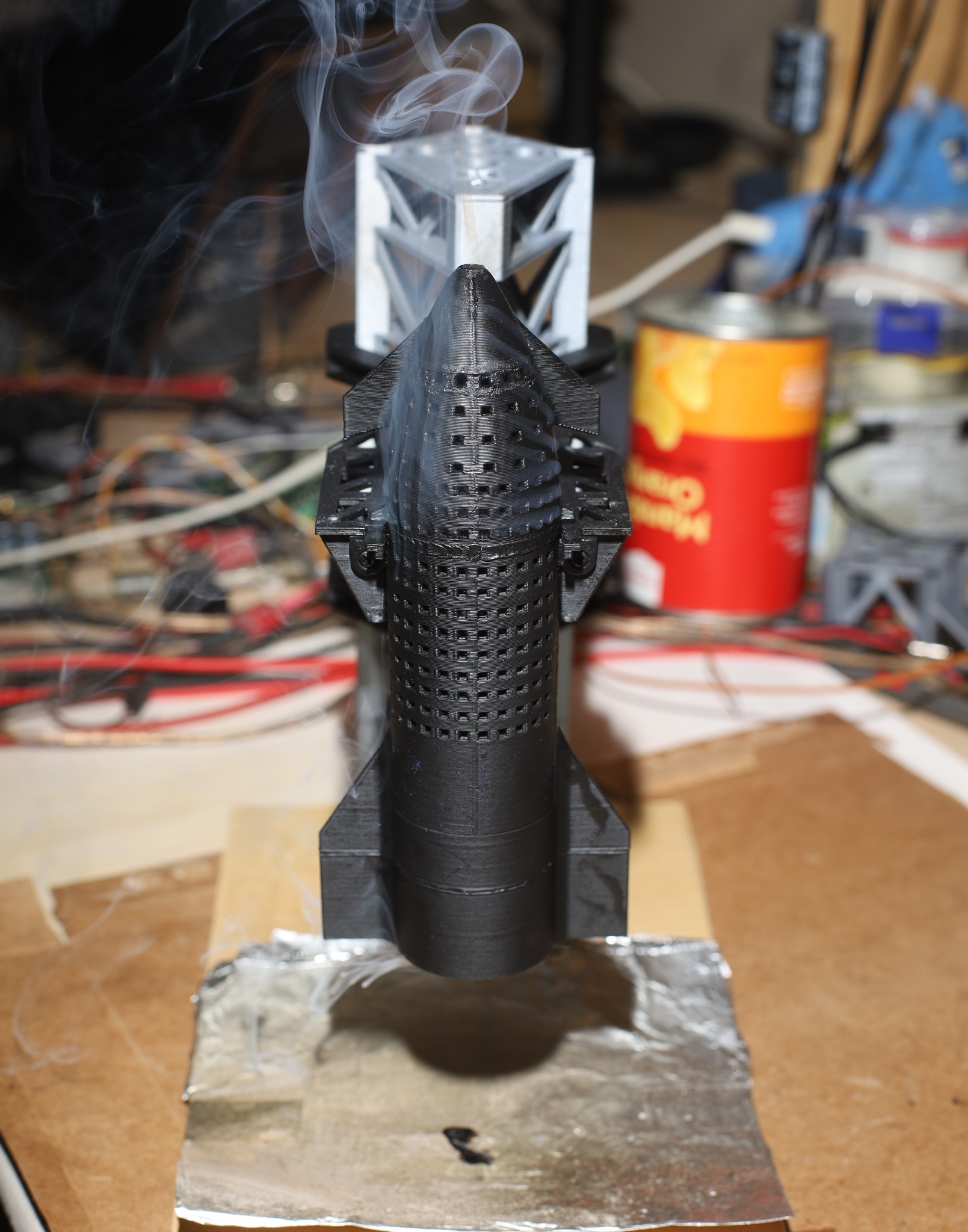
Initially noted how the black ship highlighted the nose smoke. Otherwise, all the other stuff in the complete diorama hid the crimes.
-----
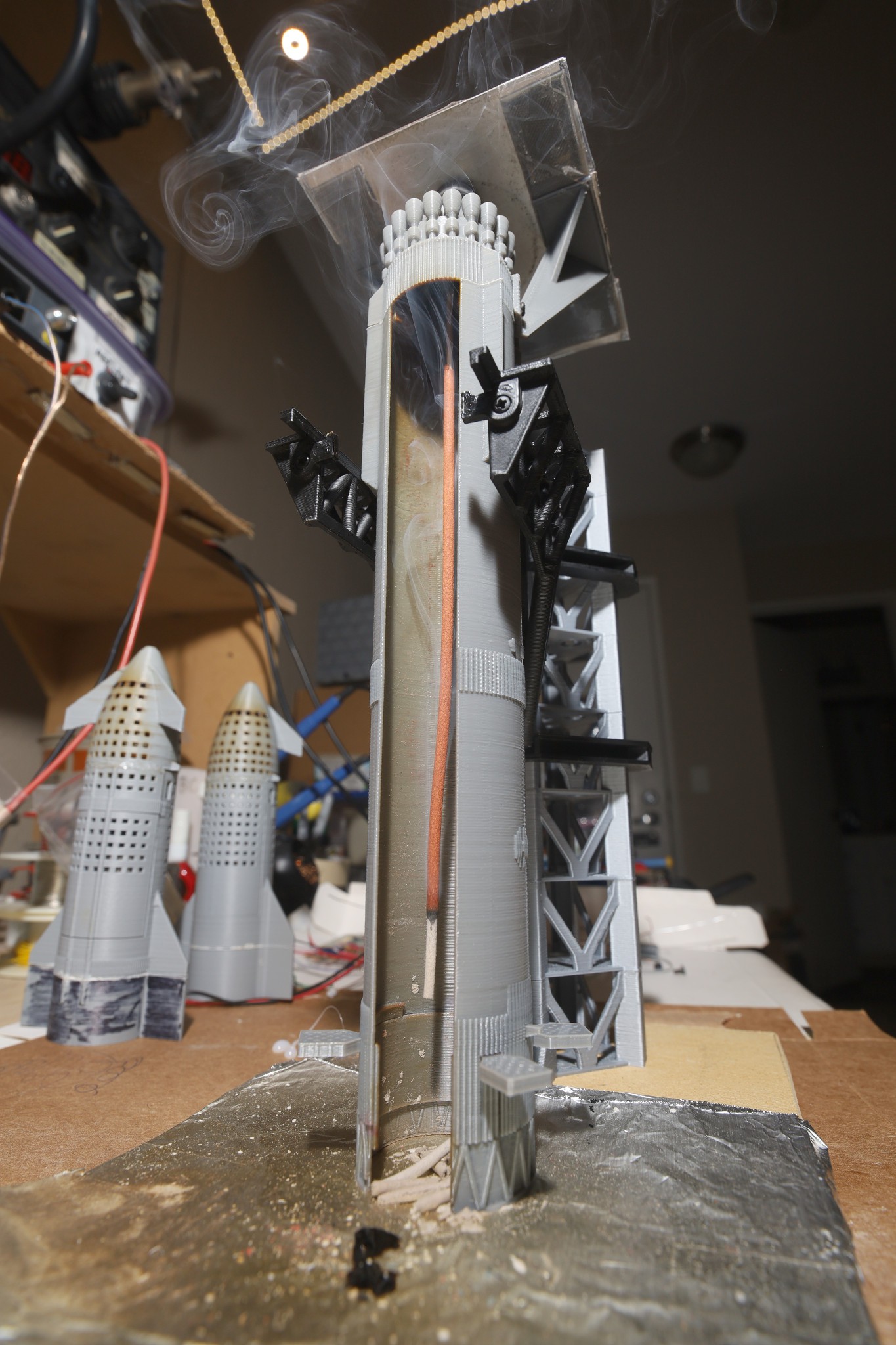
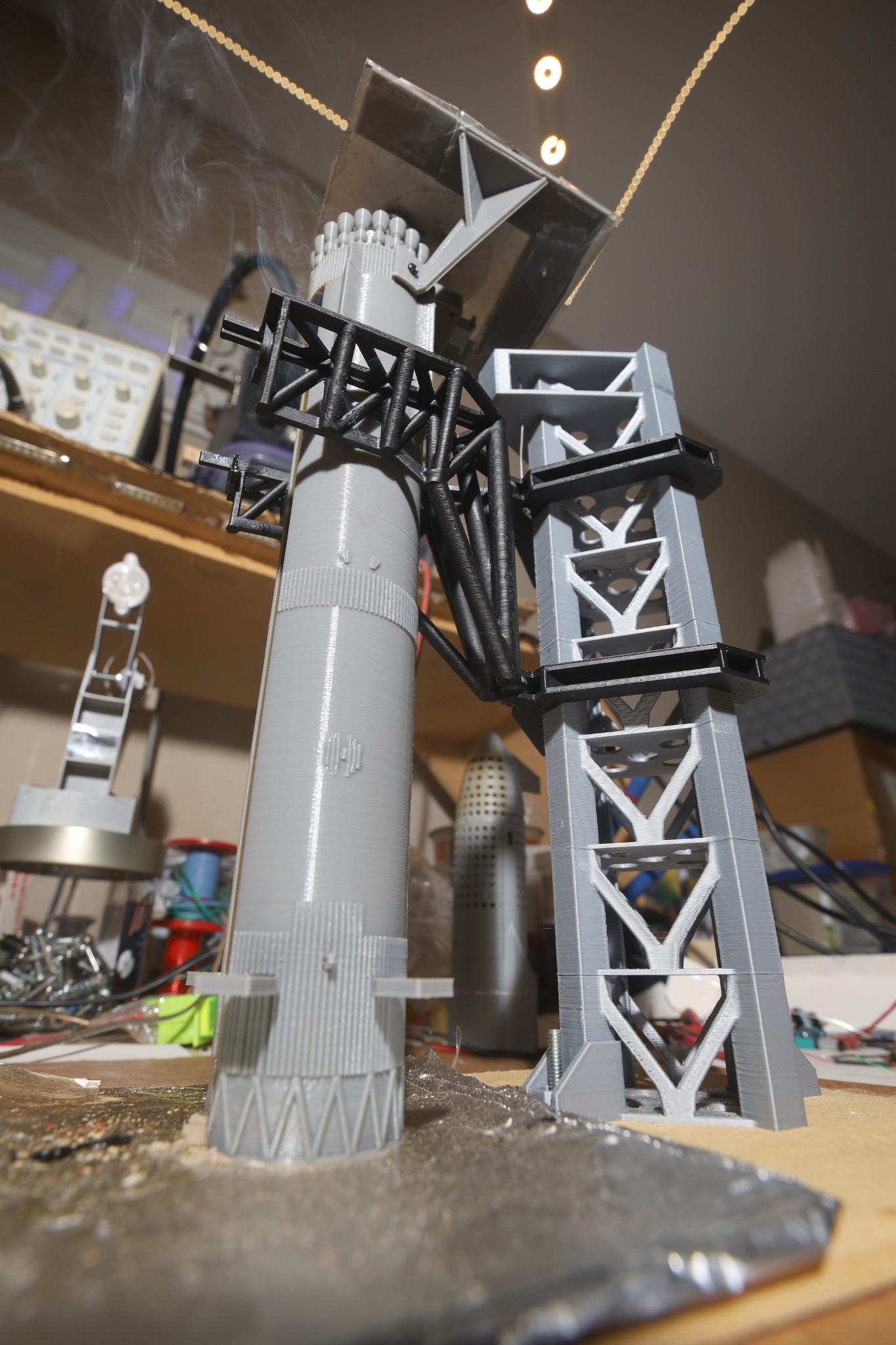
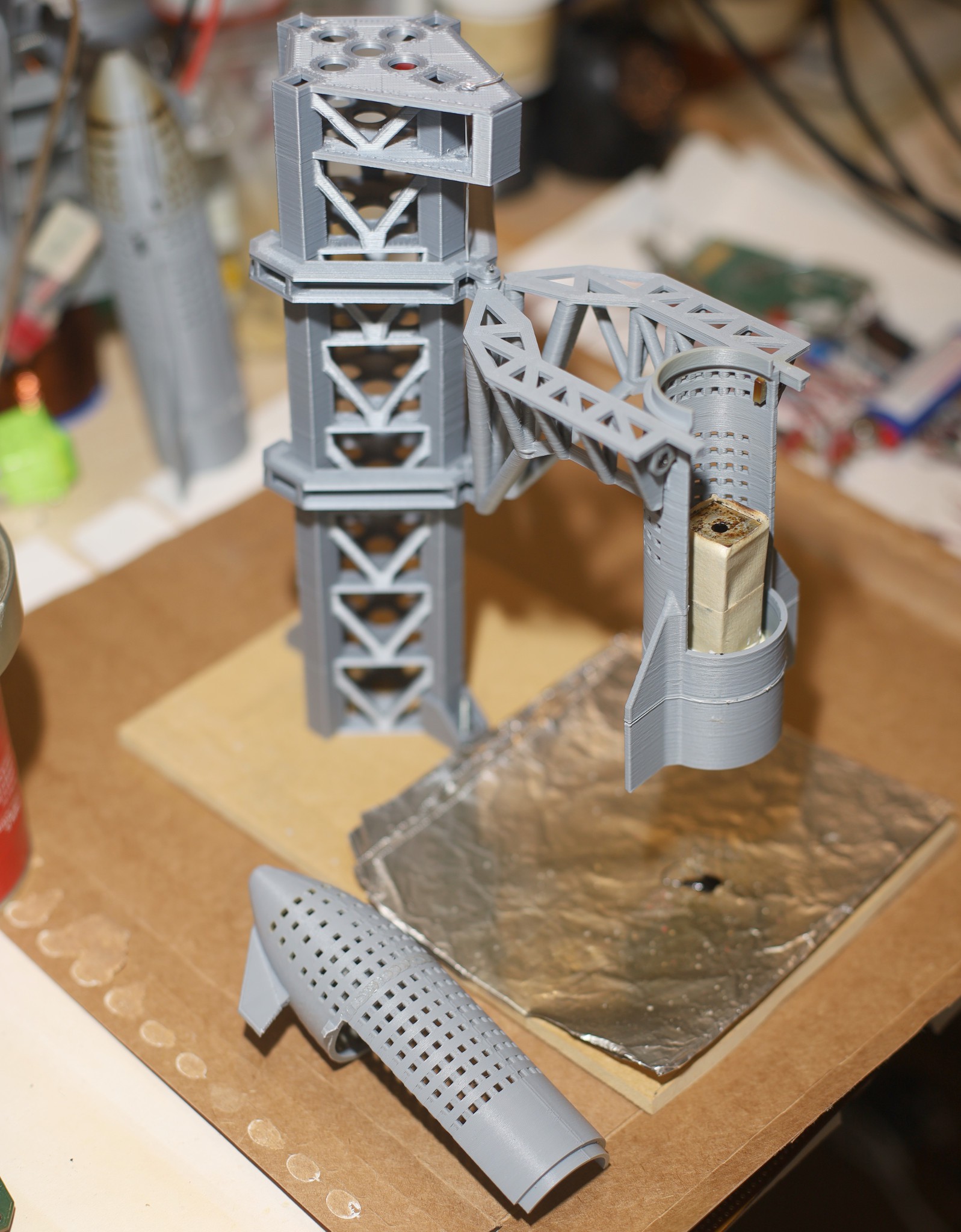
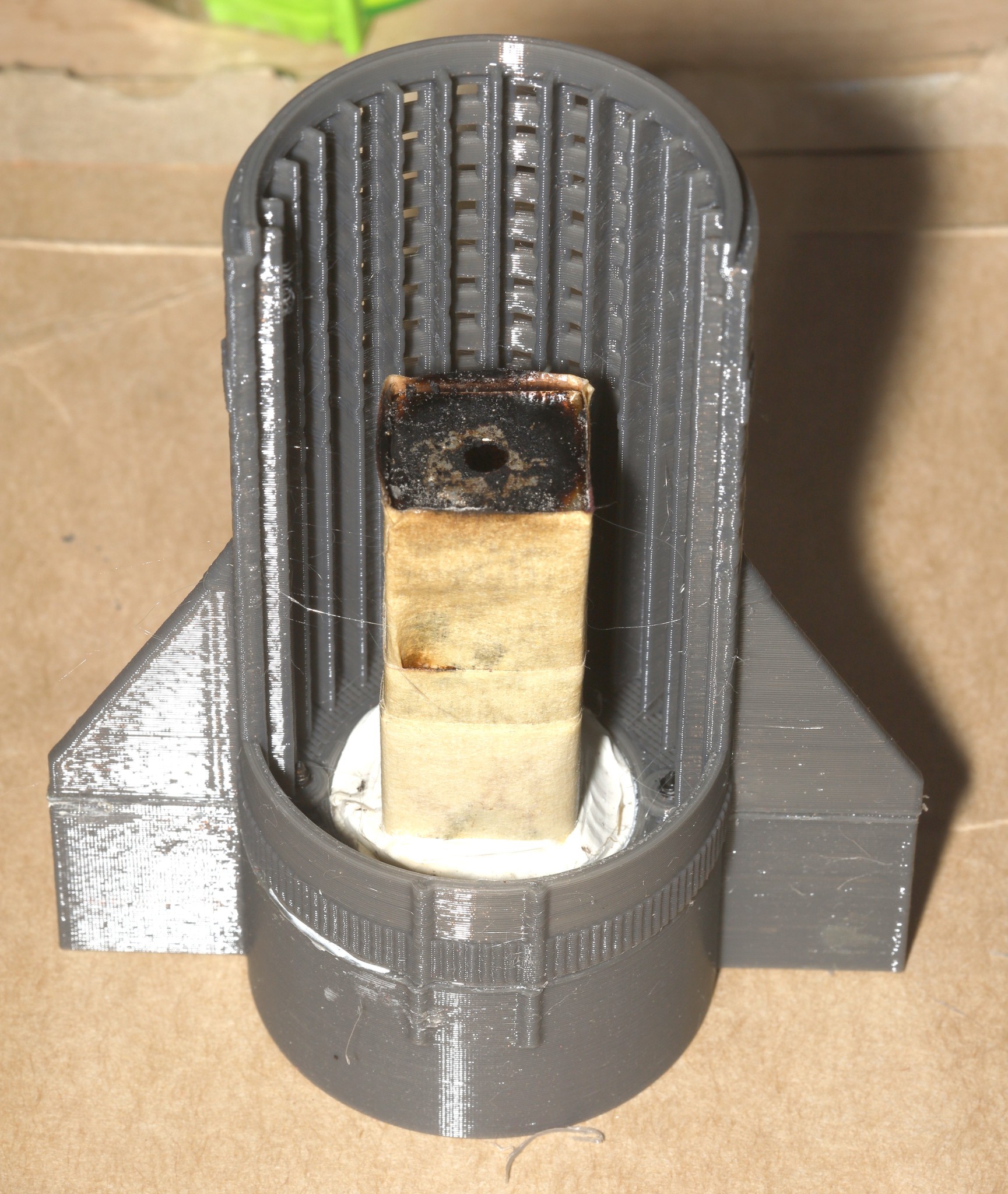
Figured out how to use the launch tower with the booster model to burn incense sticks upside down. The ashes aren't so easy to clean.


It really popped with the black paint. If only lions could afford the real estate to store multicolored filament.

It came to pass that HT PLA melted in the same trouble spot as PETG, though still not in the nose.
There was some static stress from the chopstick pressing in, but not in the exact place which melted.
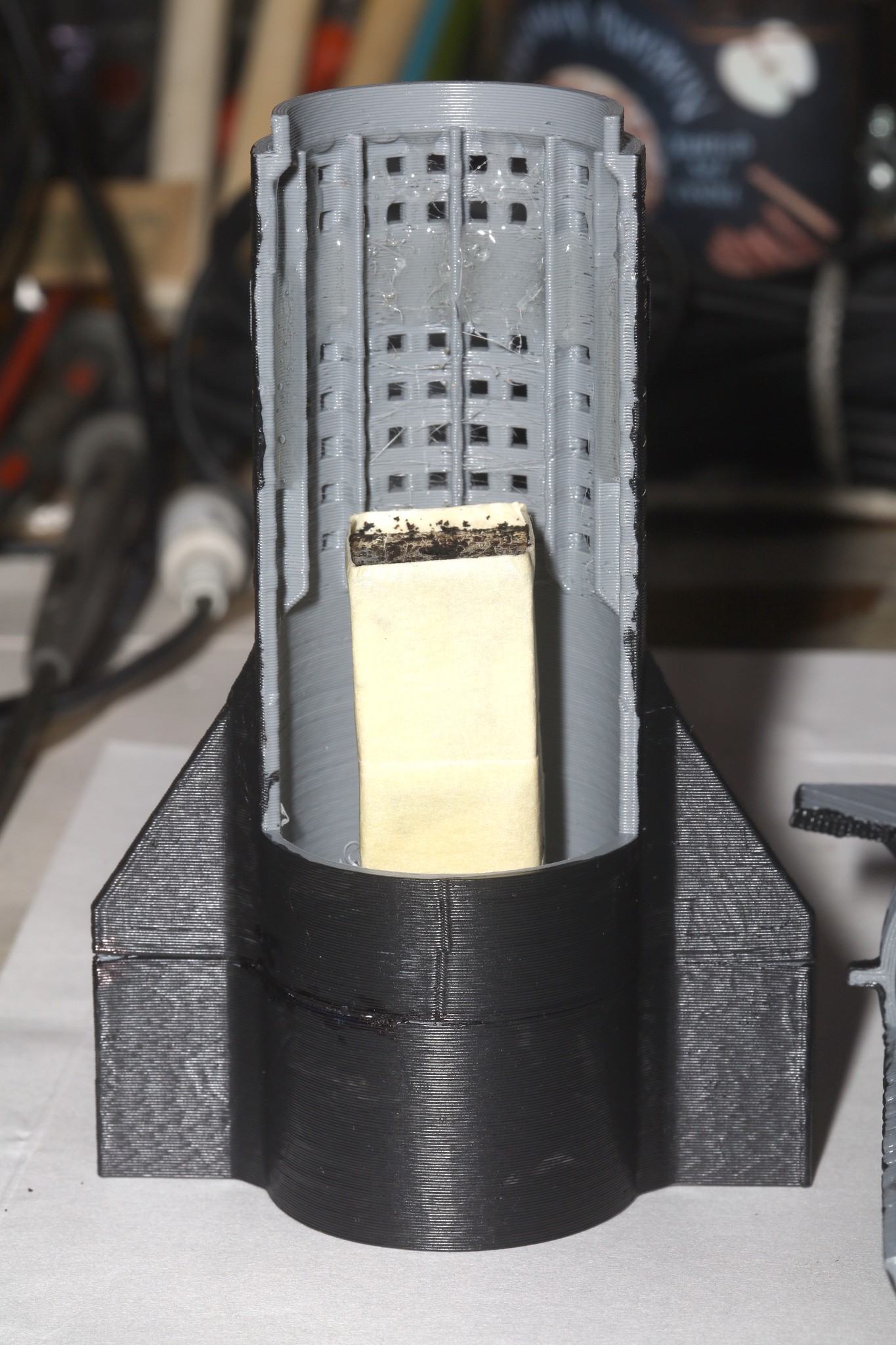
It was back to good old epoxy. Used the knife & gravity to try to build up a bead where it melted. The best way to epoxy it might be to masking tape the opening & let it sit facing down on the masking tape.
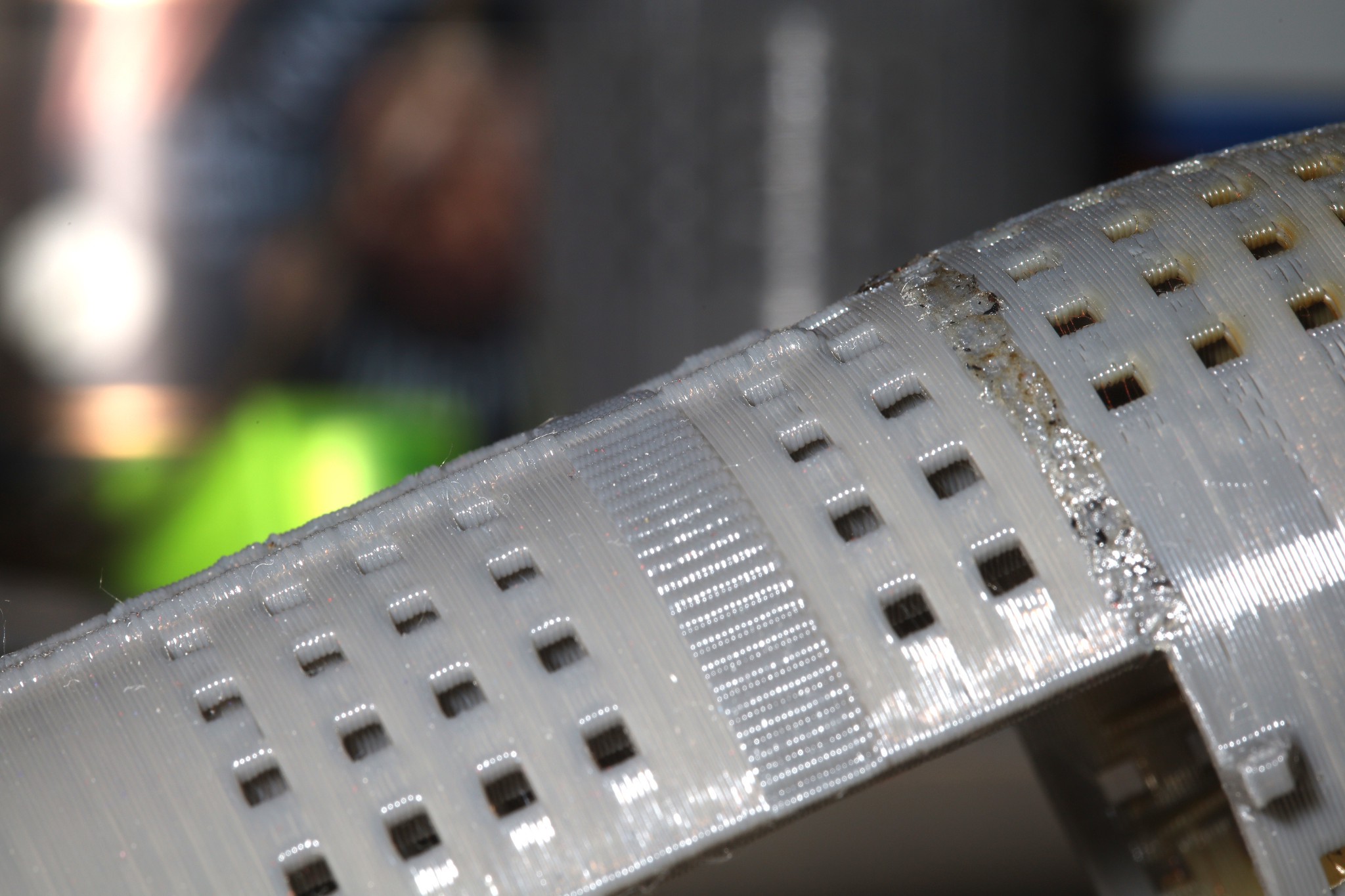
That area still isn't the hottest area. It's believed the holes create a shielding layer of gas. The solid band doesn't have the shielding gas.
The mane changes were lowering the heat break from 50mm to 45mm so less gas could be getting sucked in. Then, the big solid band was flipped from the smaller removable side to the bigger fixed side.

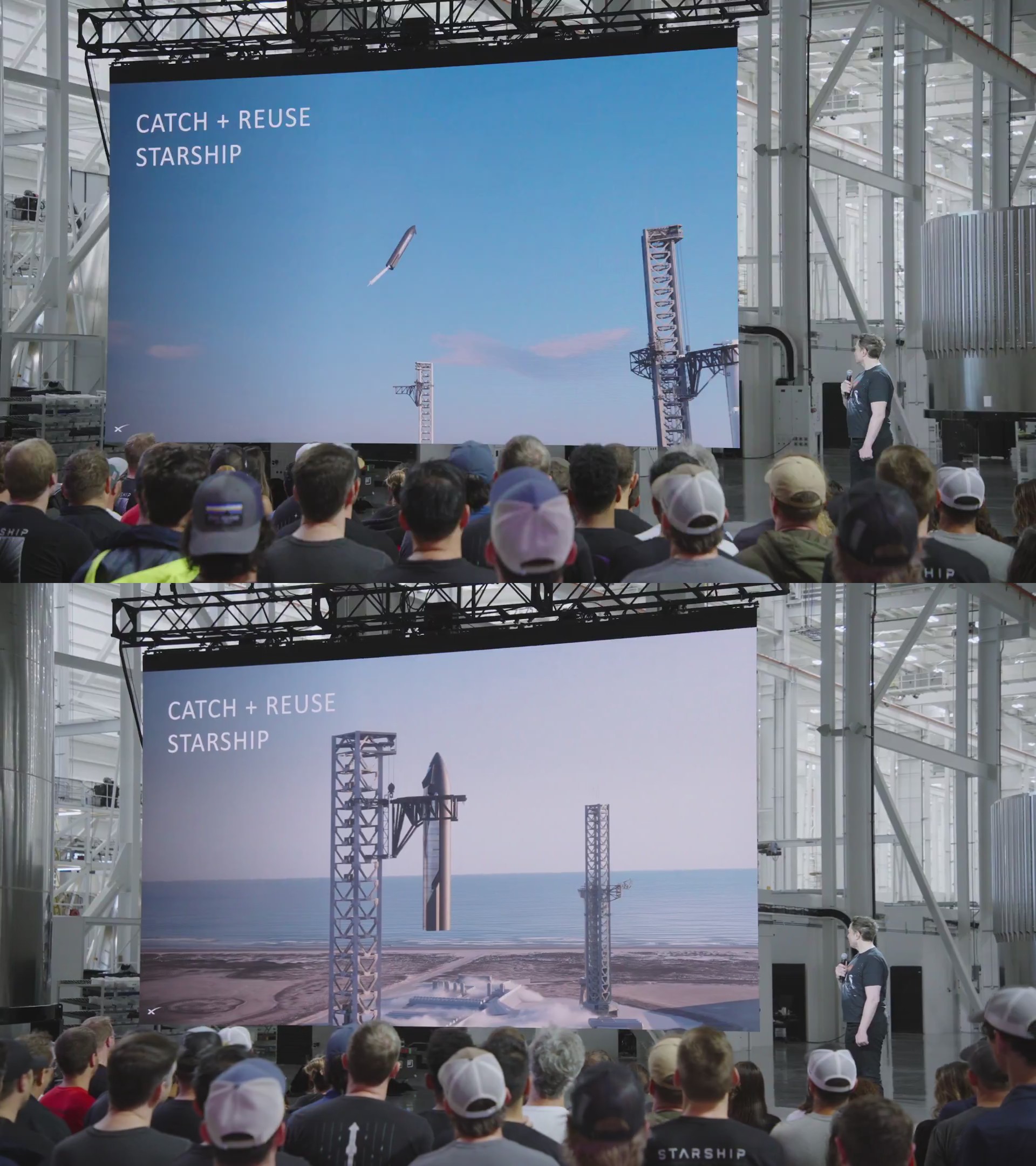
Made a new model which loads from the tile side instead of the window side. This way, it can be mounted on the tower the same way it lands in real life. It has to fly over the tower from the west & back up into the tower with the heat shield facing east.
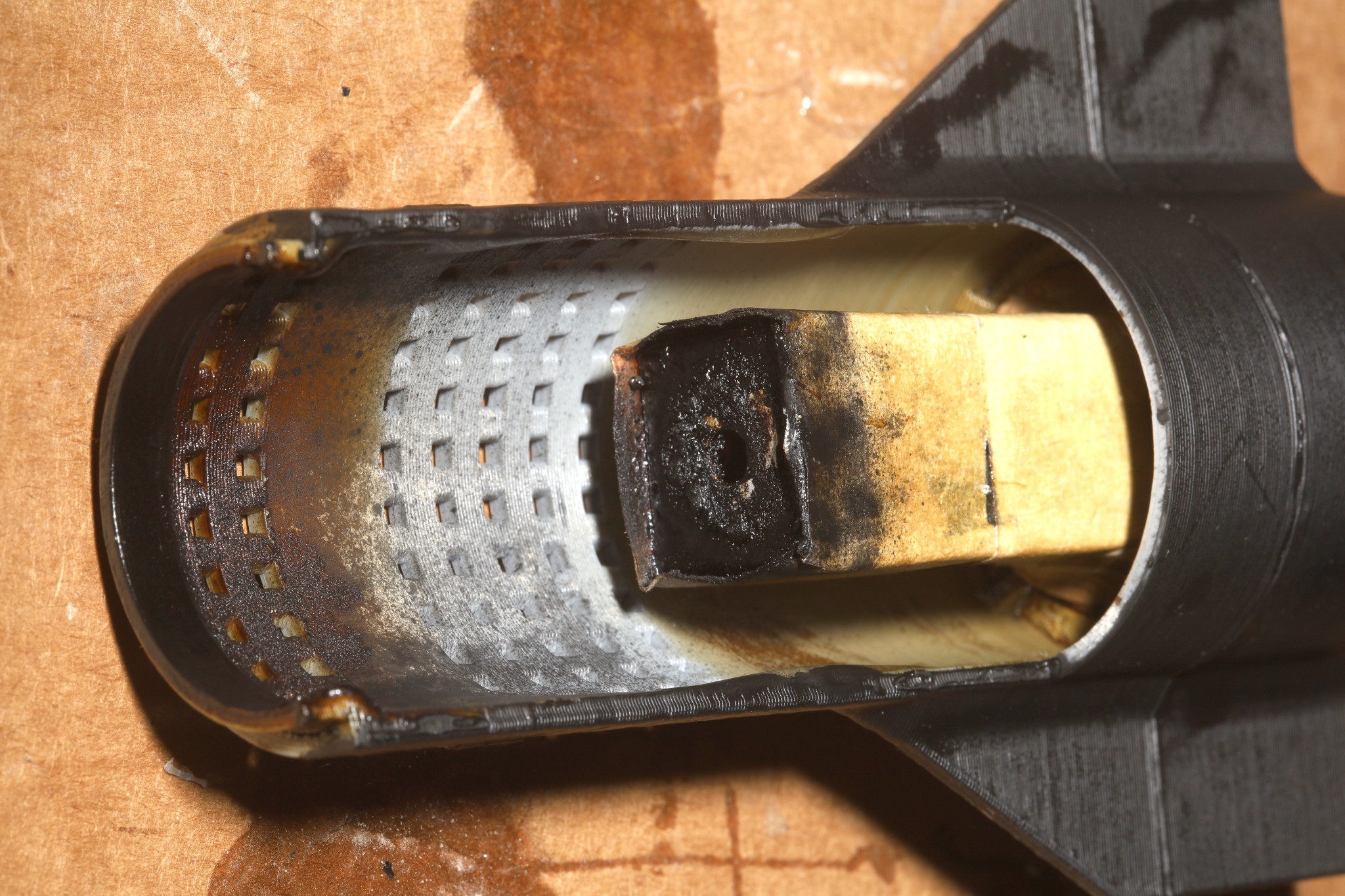
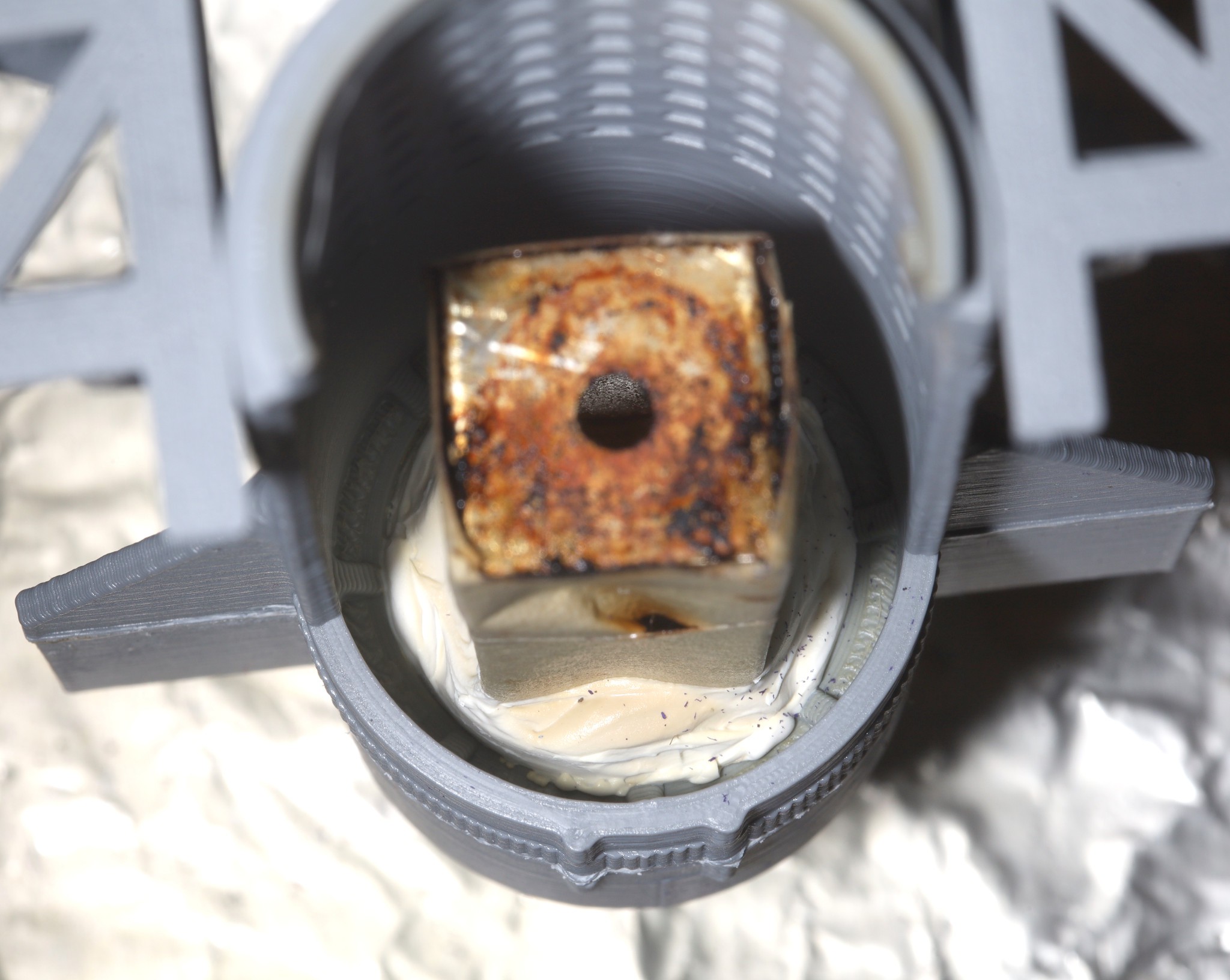
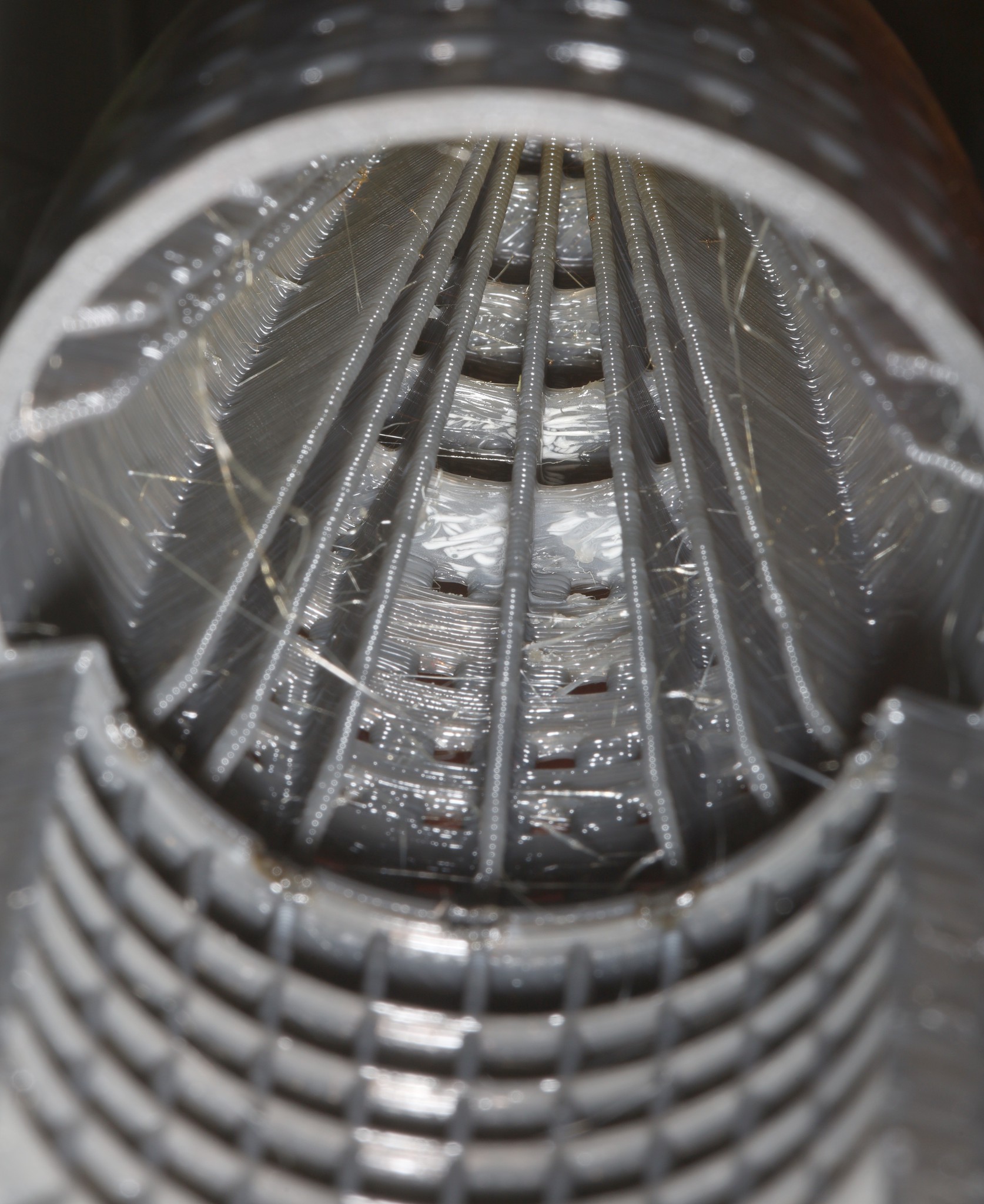
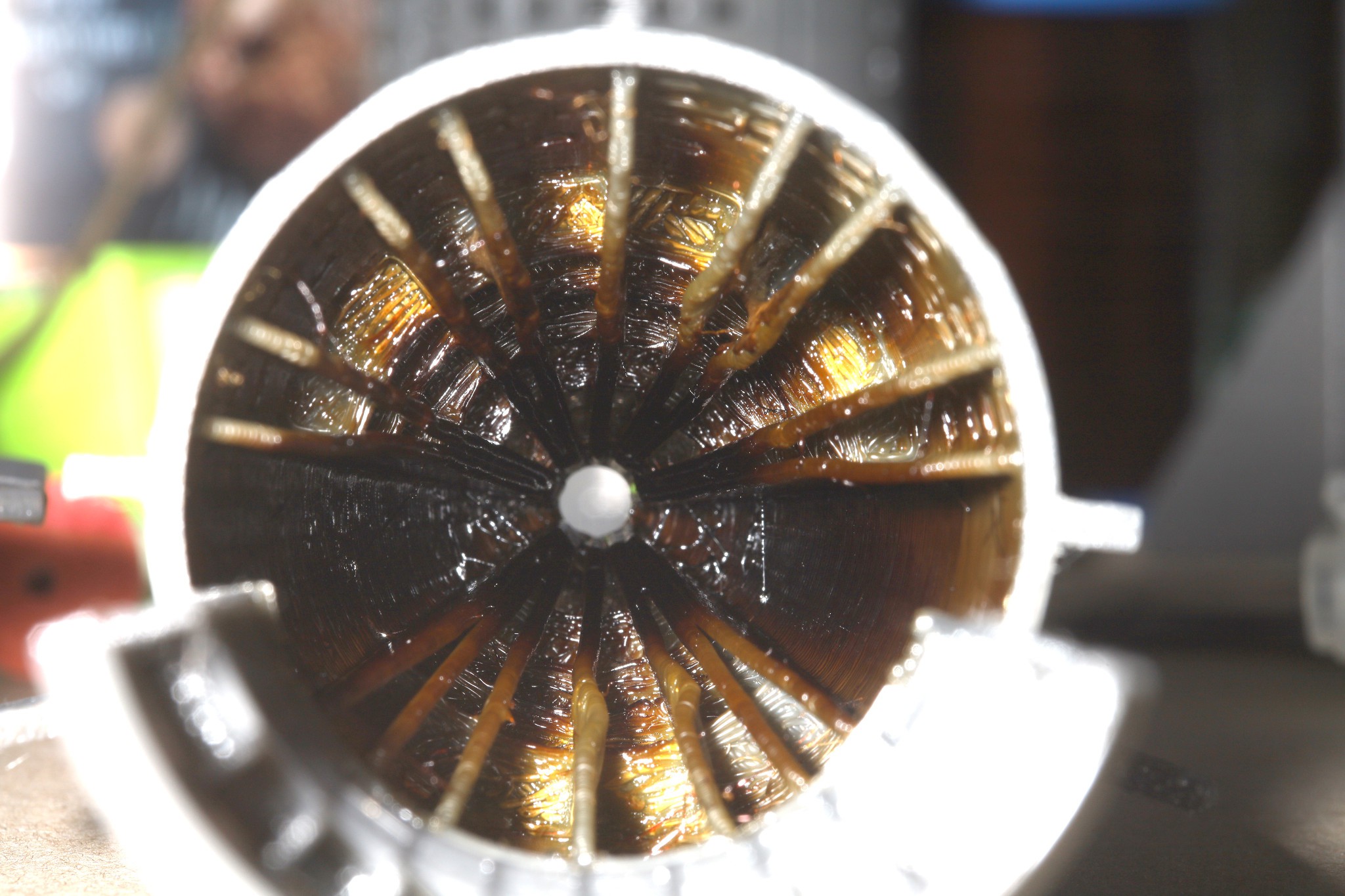
After many burns, the nose becomes an oily mess. The highest temperature was found to be the top row of windows in the nose. That gets to 100C.
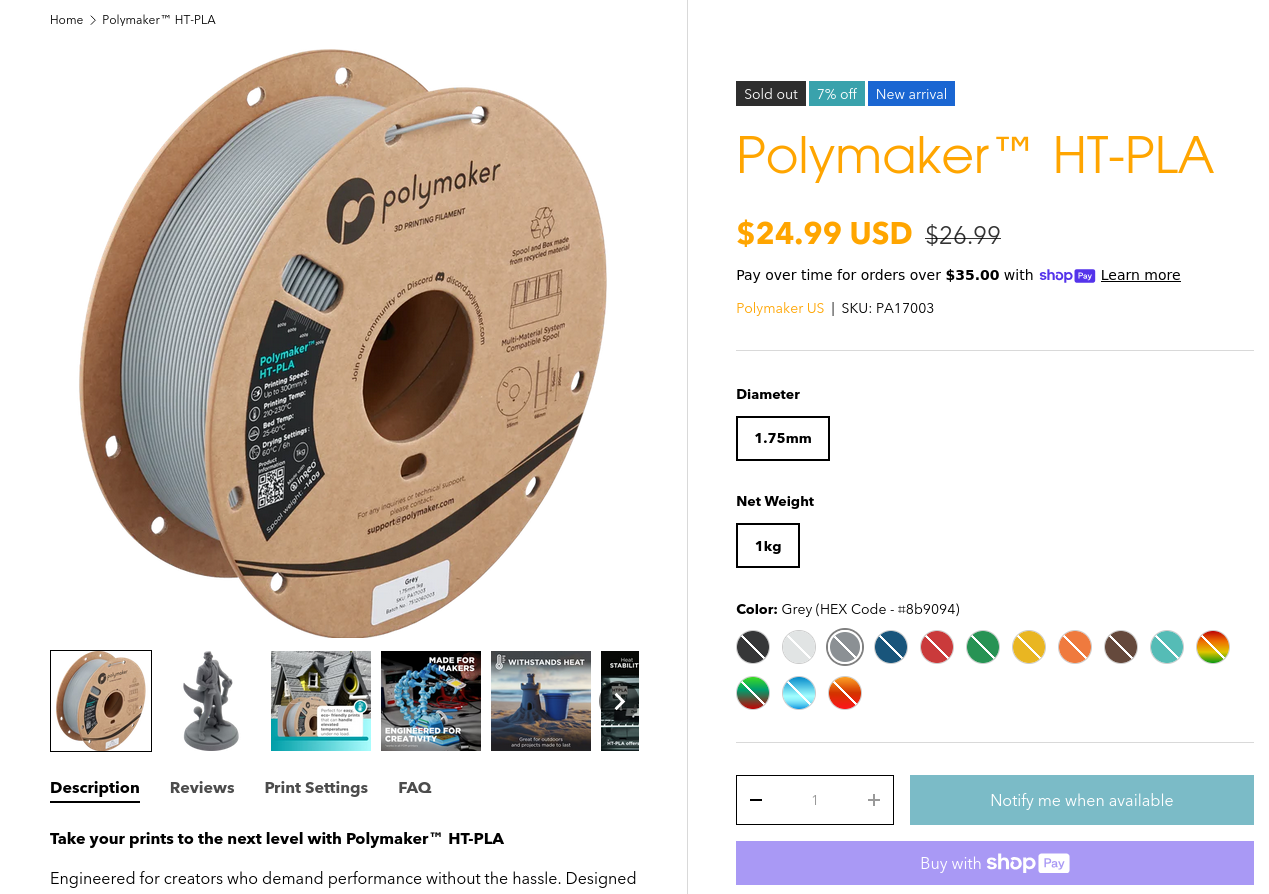
Sadly, polymaker HT-PLA seems to be discontinued. There are HT PLA's from protopasta, for 4x the price of normal PLA. The lion kingdom impulse bought 1 last roll of polymaker which was still less than protopasta despite having $10 of shipping & taxes. It's not likely enough for future plans but it might cover all incense burner improvements. There was an idea of printing motor mounts & maybe even a motor out of it.
The mighty polymaker HT PLA rated for 150C showed promising results. There was no melting in any of the trouble spots, after several cones. It's more brittle & feels more like clay than normal PLA. It prints at 230C while normal PLA clogs above 220C. The 1kg roll is shorter than normal PLA because it's denser. The 1kg roll is twice the price of the cheapest PLA.
The decision was made to try the 40mm diameter again with 2mm walls & no reinforcing structures.
The chopsticks got reprinted in HT PLA. Not easy to get the cone in the narrower diameter but it looks much better. HT PLA held up to the narrower diameter.
A caulking plug holds the engine section on instead of screws.


Tried a clear epoxy in the channels. It might not be hard enough, but JB weld was more expensive. Lions are curious how much force is actually being exerted on the melting parts.
The nozzle clogged near the bottom of the nose, leading to some ugly welds.
Burned a few cones & added a wire to support the chopsticks.
Then the nose melted & the epoxy reinforced sections melted slightly less than before.
The lion kingdom's 5 year old roll of PETG ran out during the nose, after the nozzle clog. The new roll had a lower printing temperature & a lower melting temperature it seems. There's no point in using PETG if it's the same melting temperature as PLA.
The next step is going to be heat resistant PLA. The problem is heat resistant PLA reviews are all sponsored & they're not allowed to show the melting point of competing materials. They're only allowed to show a PETG of unknown melting point melting faster than HT-PLA, but as shown, modern PETG's can melt more easily than PLA.
Given the history of 3D printing being little more than a search for higher temperature PLA, if HT PLA really worked, there would already be no other type of PLA.
Was thinking it would be nice if it slowly rotated left & right when it burned. It would only need to actuate 1 chopstick. It would provide some more entertainment but take more room.
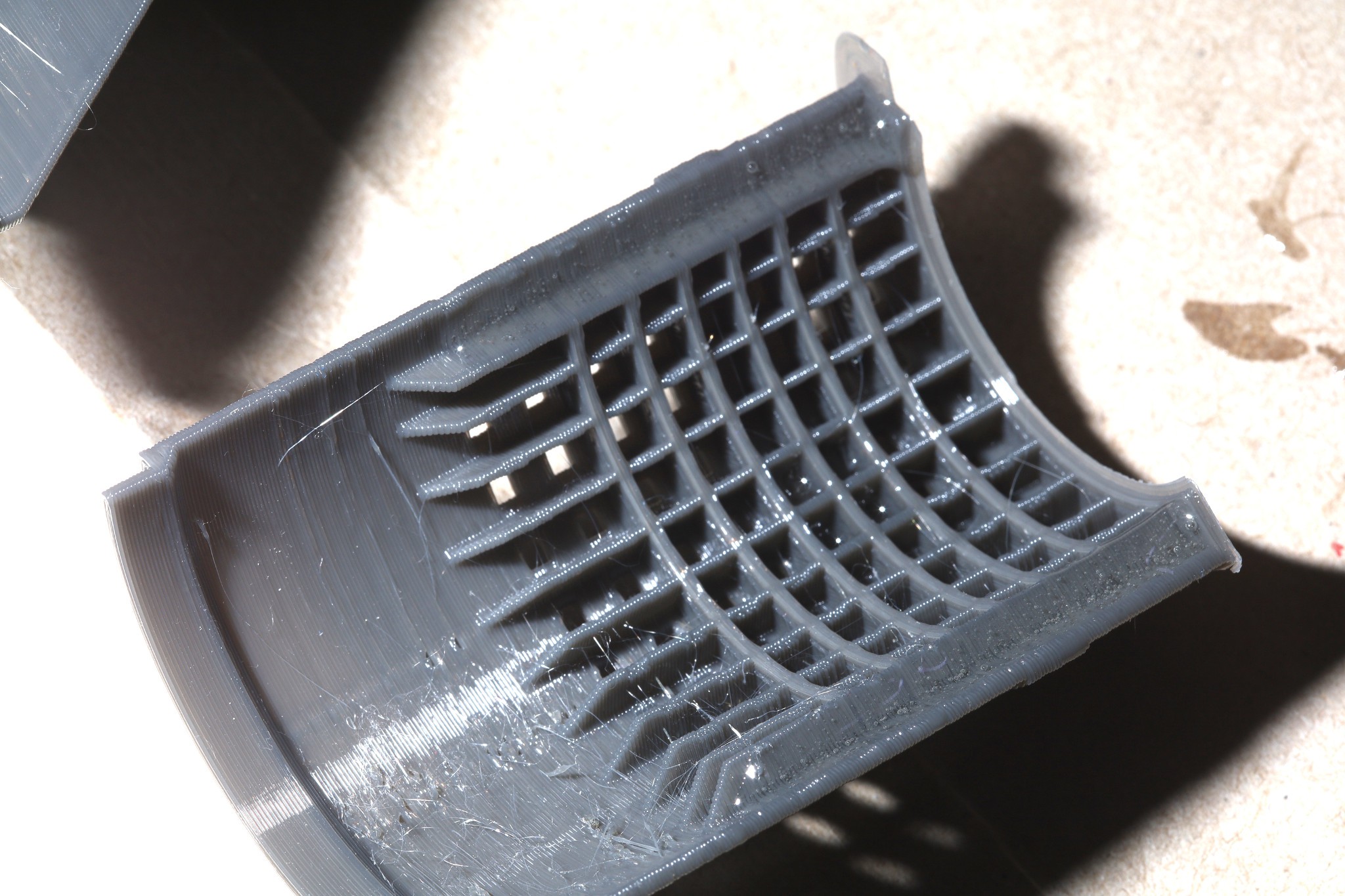
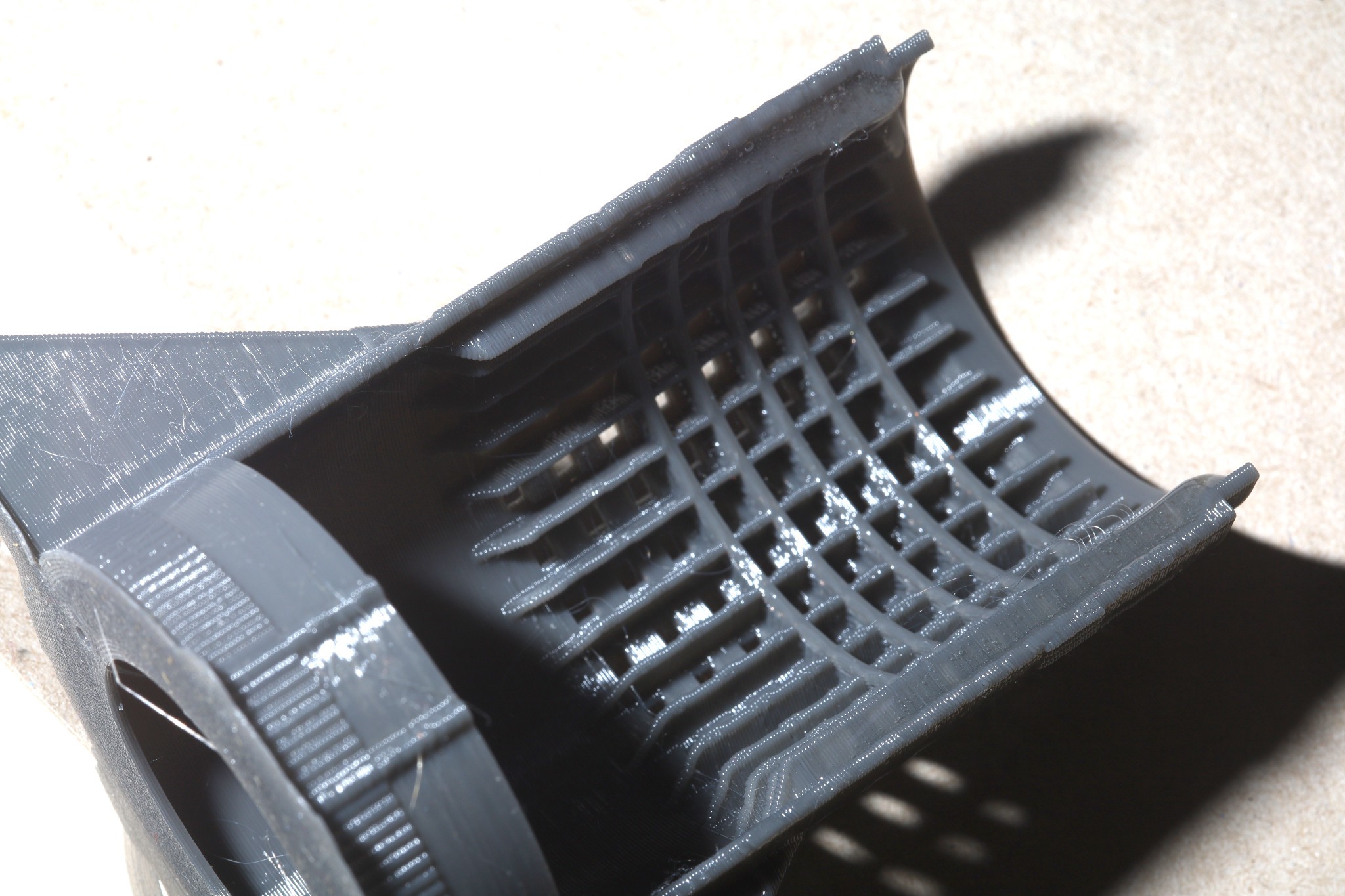
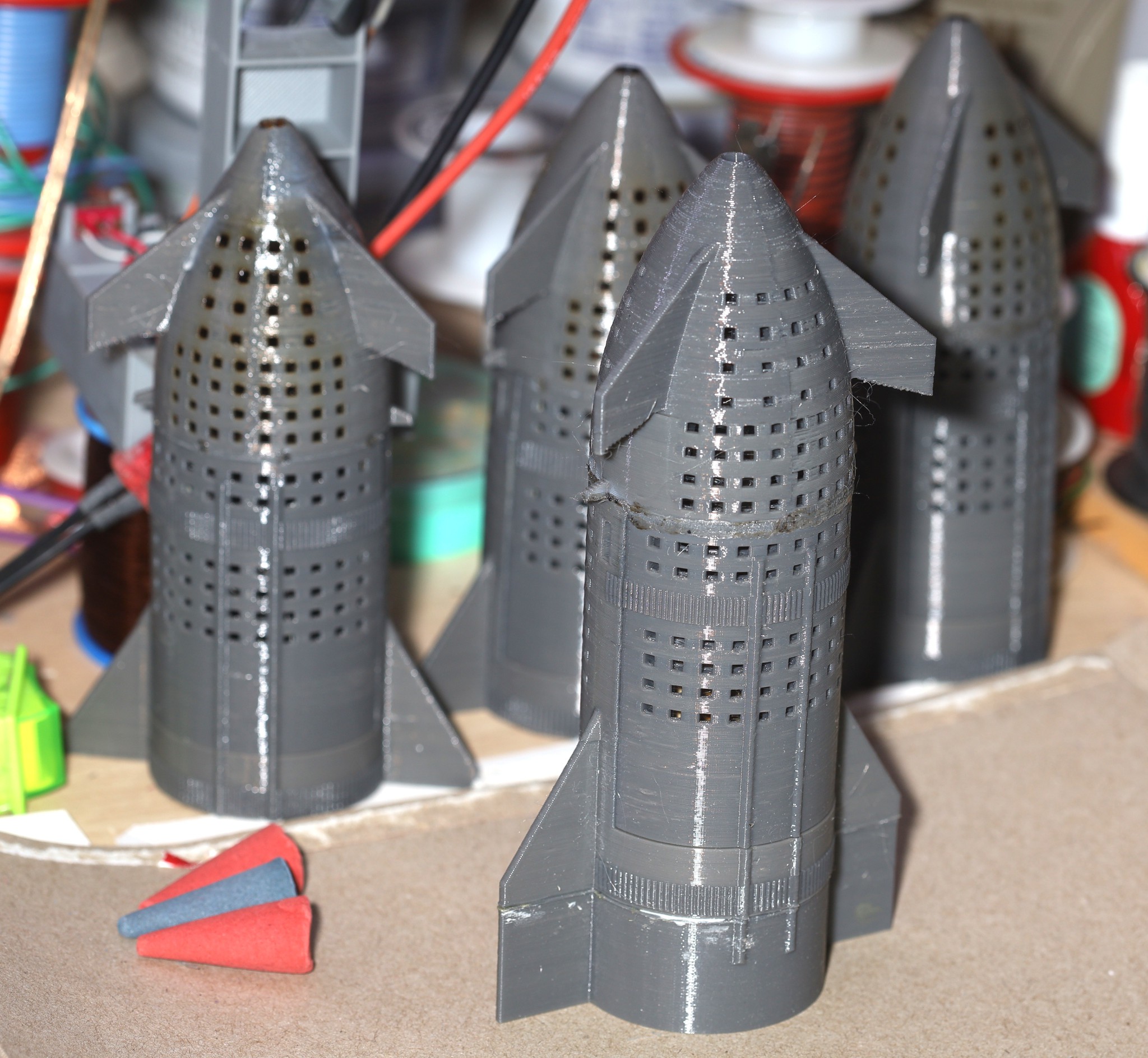
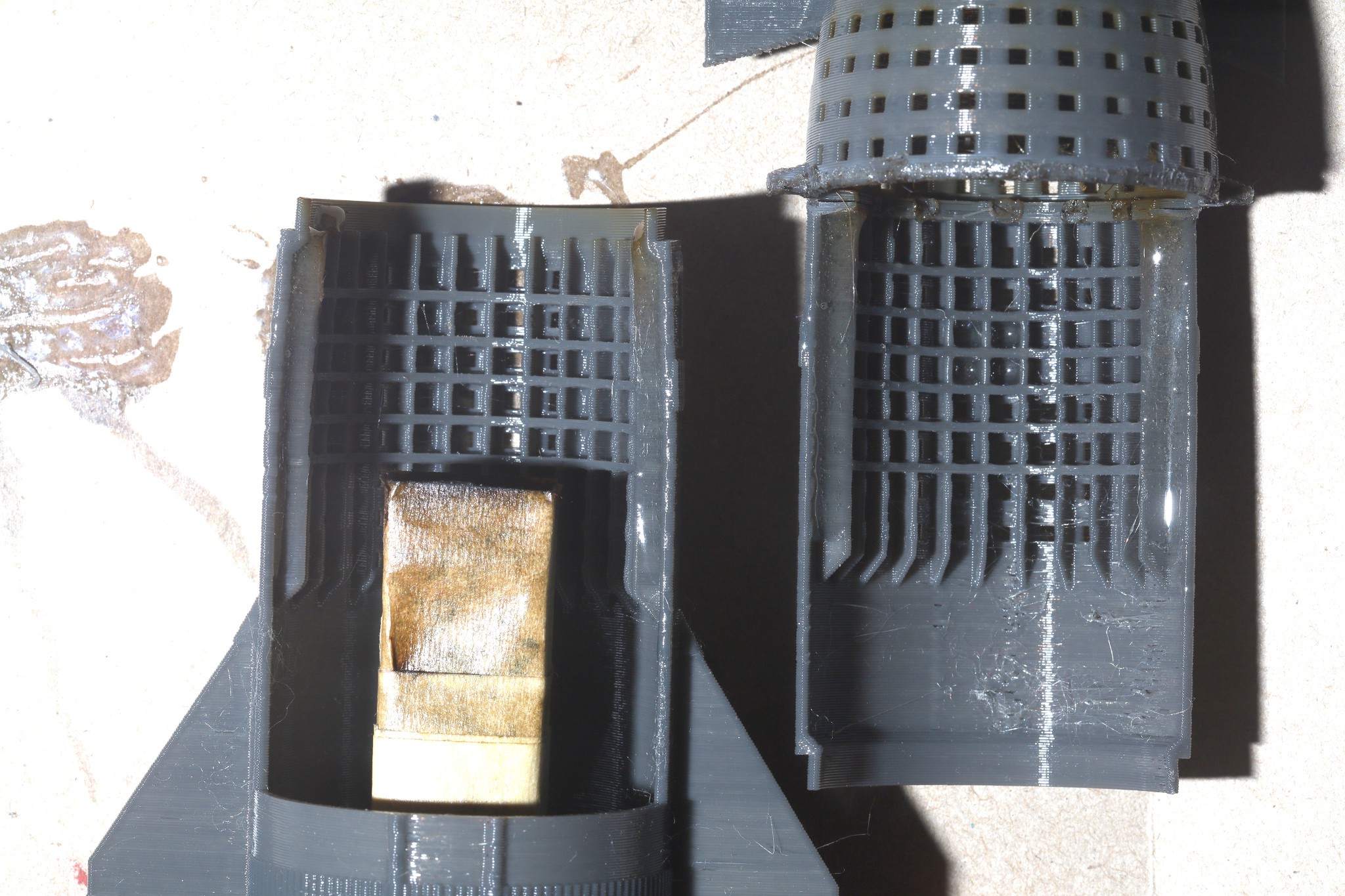
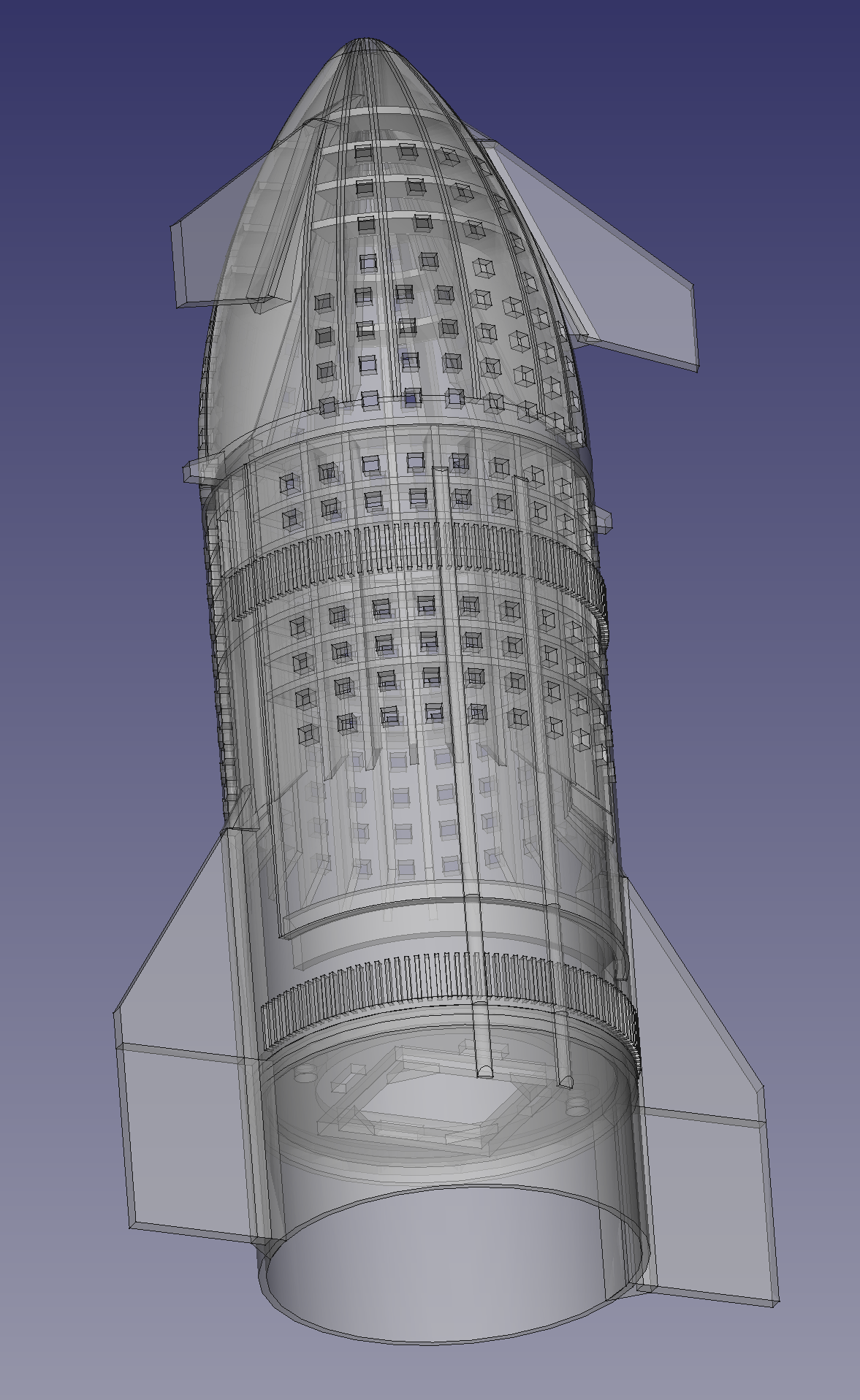
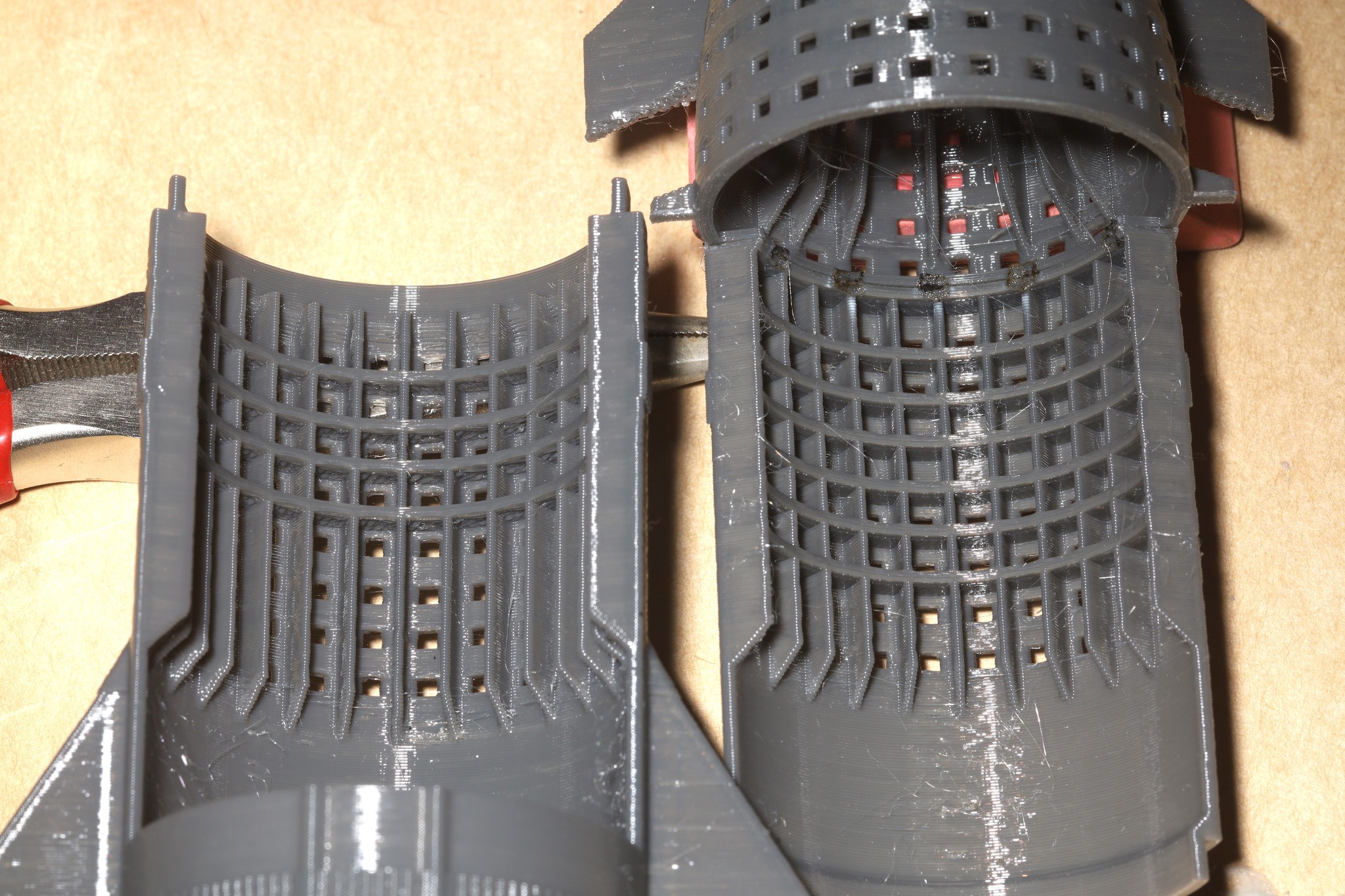
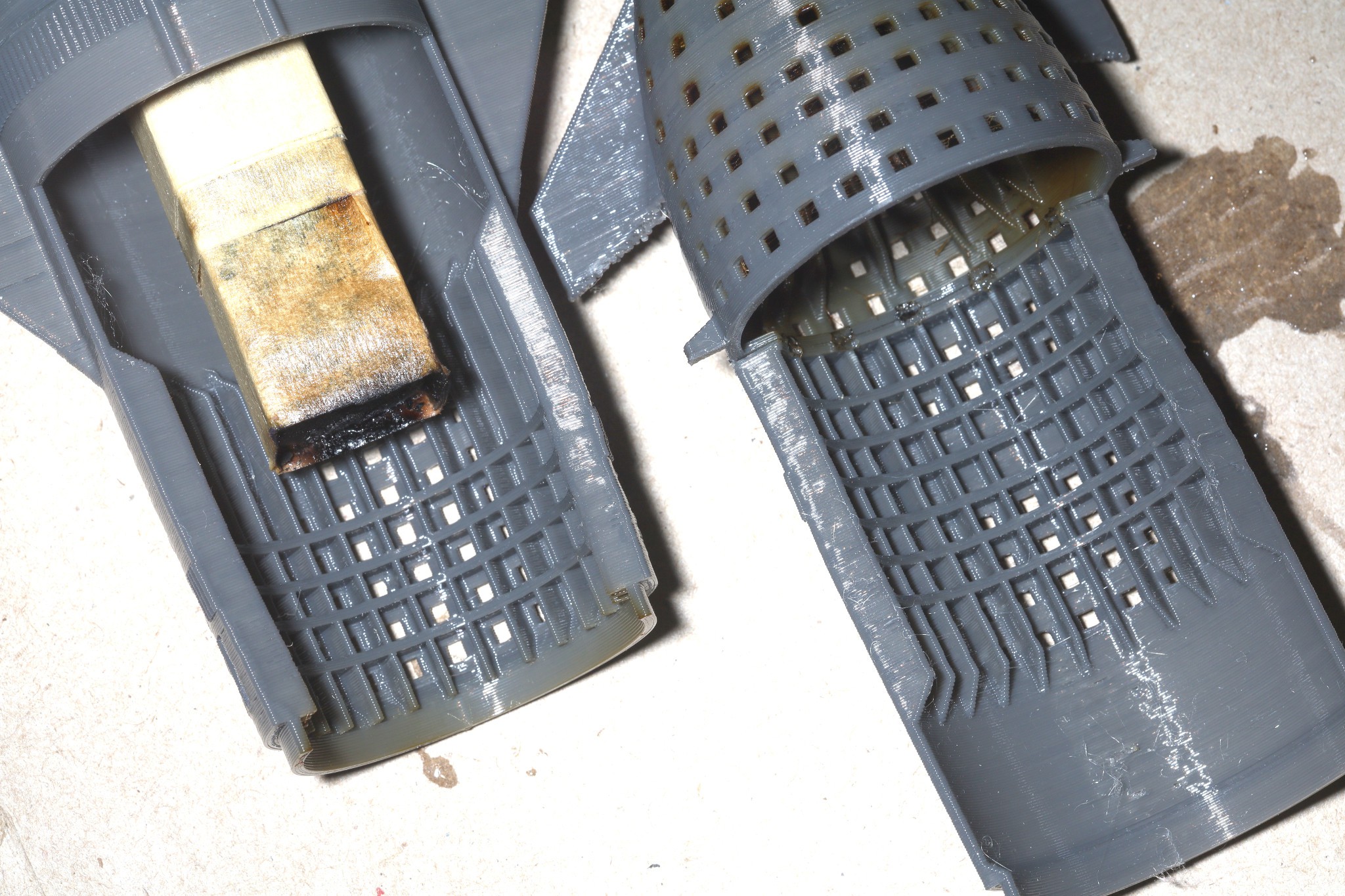
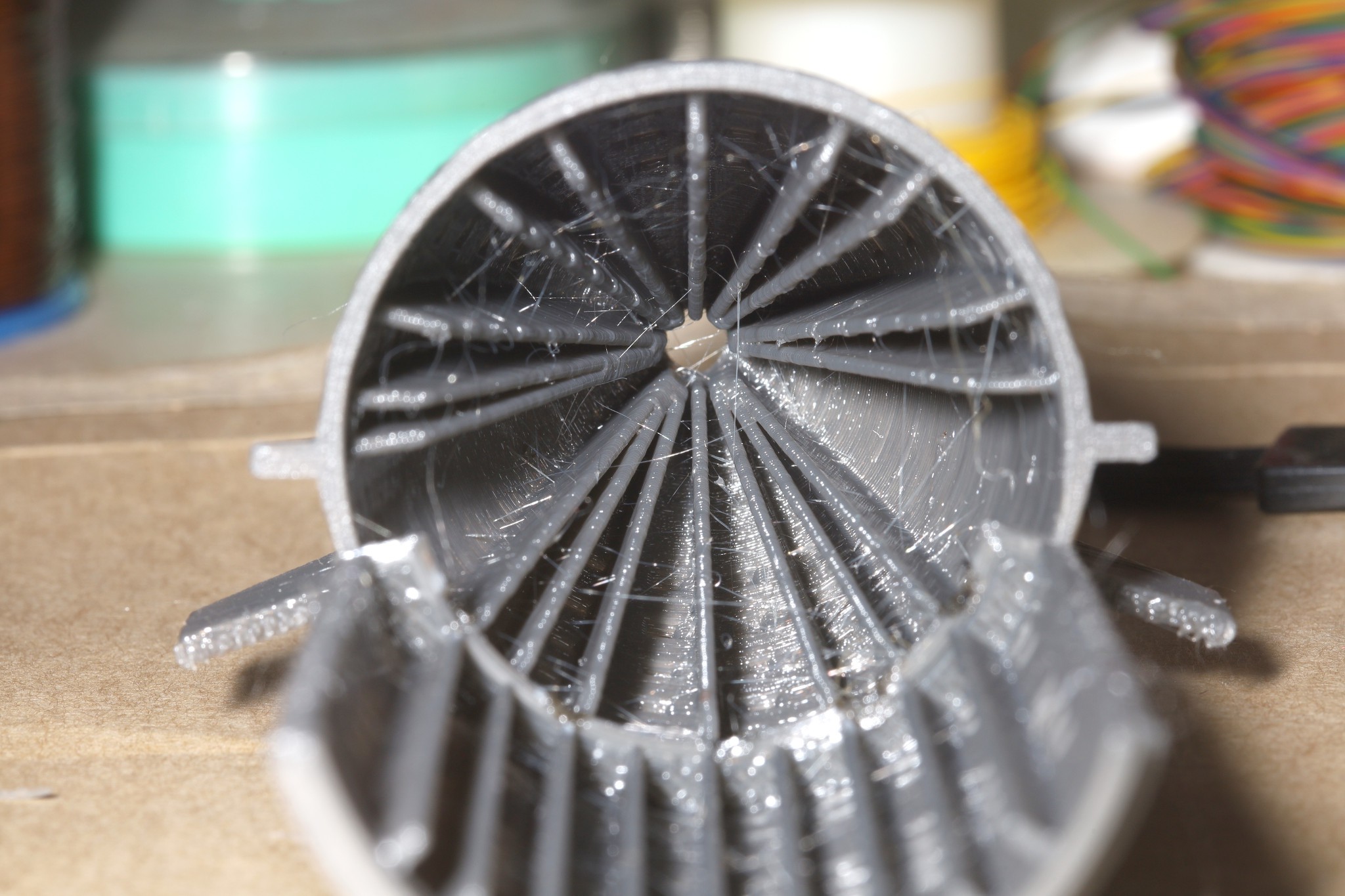
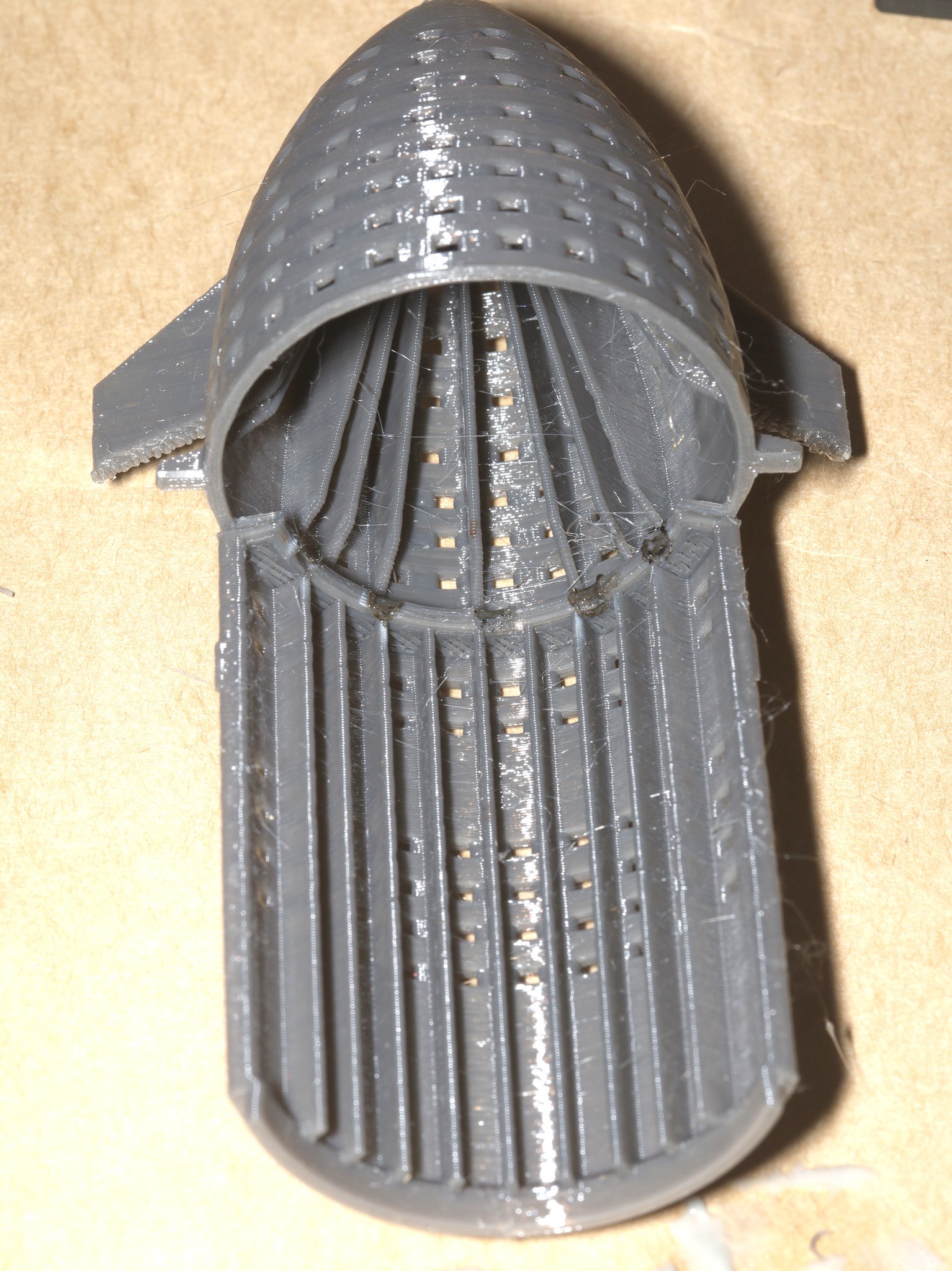
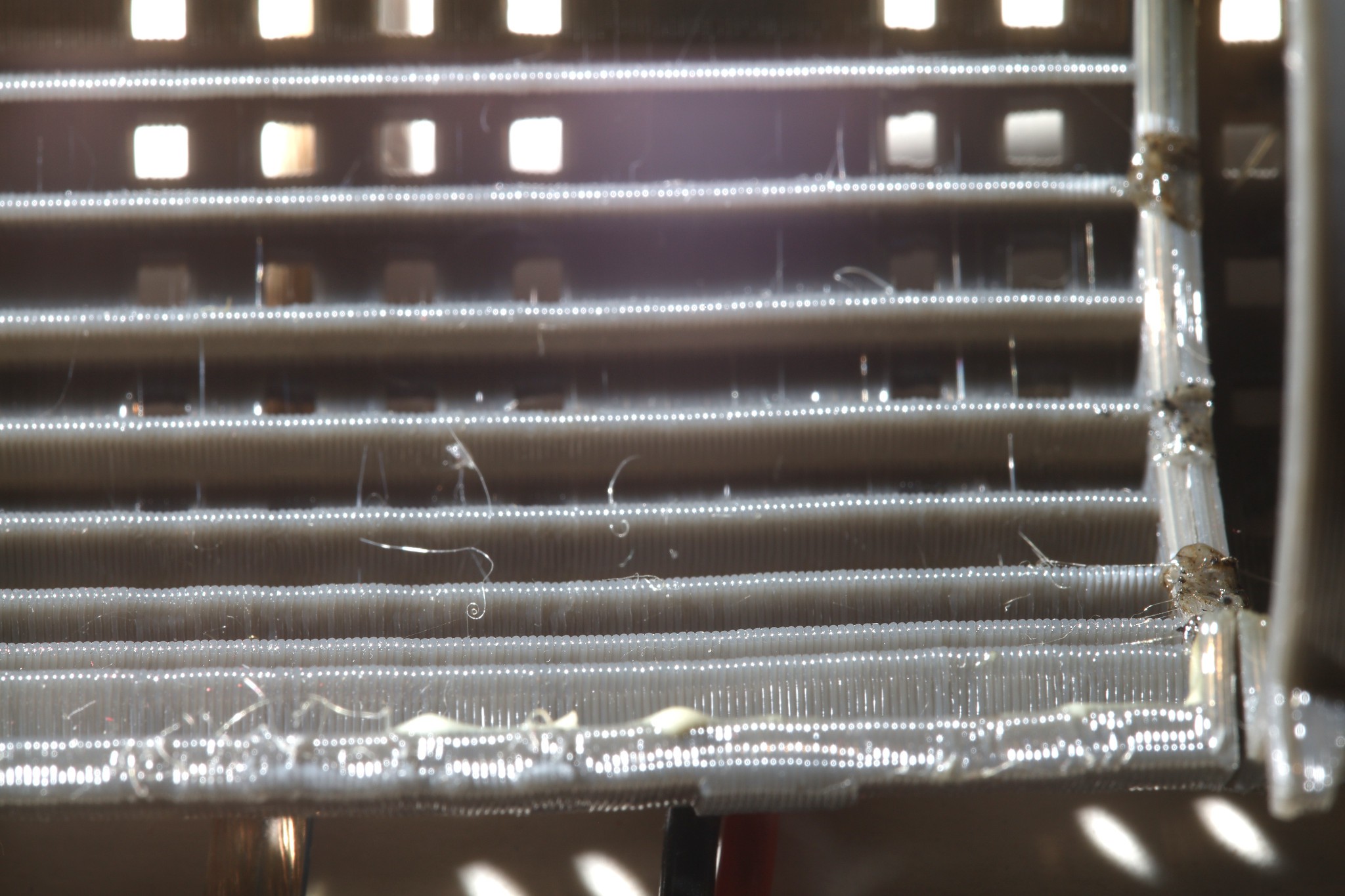
Went with a full orthogrid behind the most melted parts. Either way, the melting seems reasonably solved. Noted it's a very gradual melting which exponentially expands after many burns. It's always going to gradually melt, but the stringer patterns seem to have extended the lifetime just enough. The heat break & the masking tape are other areas which are going to limit the lifetime.
It completely dropped the 1st layer of bridging in the nose but managed to do better in the cylinder.
The front was sitting a bit proudly.
The nose held up better but the cylinder was unchanged from just the vertical stringers.
The mane problem was shrinking of the catch point area. That had shrinkage on the edges.
Thinking epoxy channels on the edges should fix the mane trouble spots while the nose is already fixed. The common reason for the melting is the large number of small windows. If they were replaced by big holes & epoxy was applied all around, it wouldn't melt.
Lavender & full moon are the only good ones, locally.
The chopsticks have deformed to the point of making it harder to empty the ashes. They might become PETG with a long weld for the hinge. Stuff which melts as slowly as that might be easier to just melt back into position.
Surprised there isn't a single part adhesive in filament form. The printer would extrude it & it would cure into something heat resistant. There is no UV cured filament. Resins have higher melting points but are expensive.

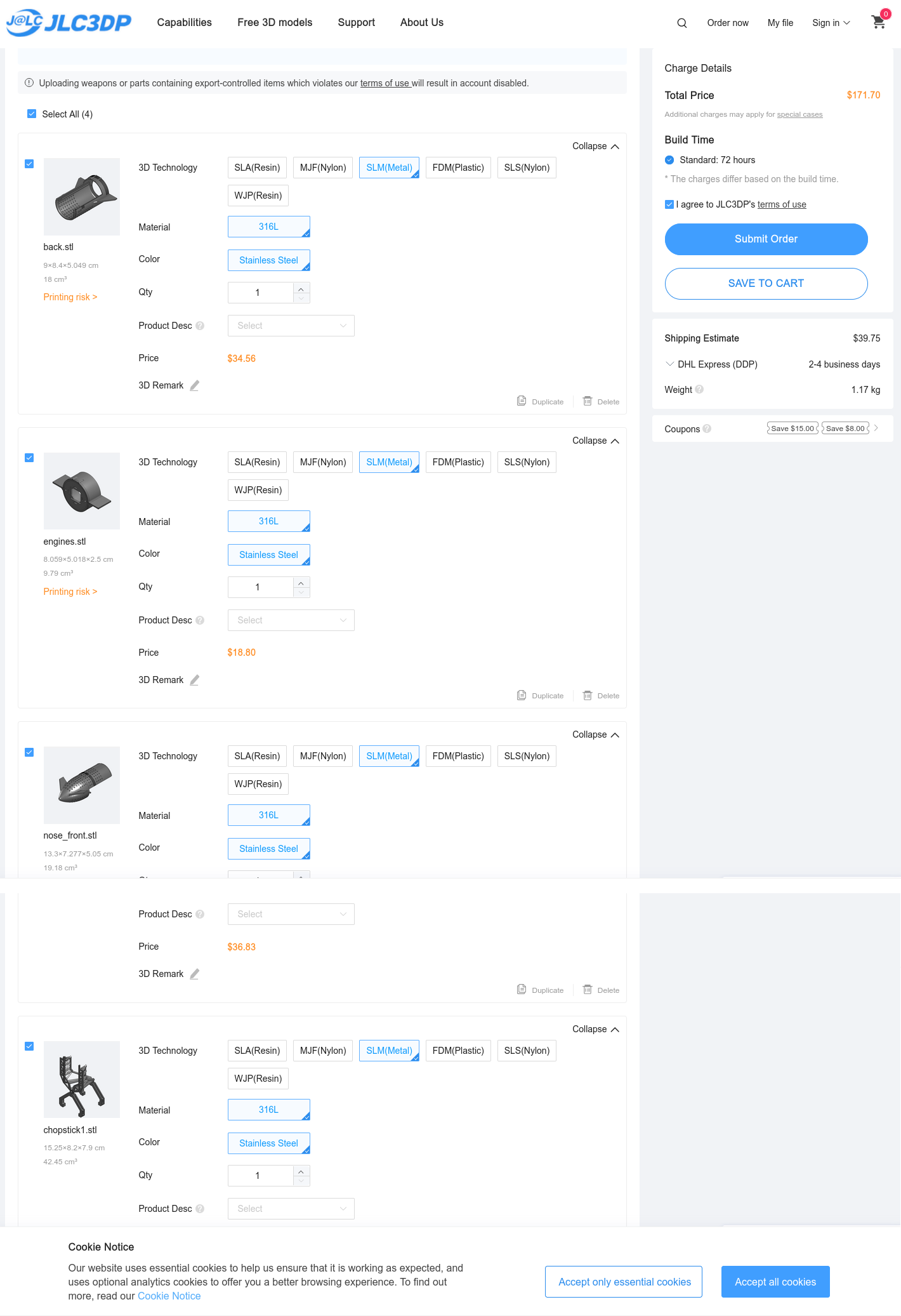
A full metal ship would be ideal. Home SLS printing is a real mess, requiring powder removal, a glove box, respirator. JLC3DP said roughly $172 + $40 shipping to do the 50mm ship & chopsticks in metal. Realistically, the whole chopsticks would have to be metal to dissipate the heat of a metal ship. The whole thing would of course be reduced to 40mm & made more realistic. The weight of steel would require beefing up the tower. It really has to be more practical to spend that kind of money. There are other battles.
The next rung down is a metal combustor liner. That would still require an exhaust hole on top & a way to attach the liner to the exterior.
The next rung is an easily fabricated, easily installed sacrificial layer inside the artistic exterior. Both structures would be PETG. The exhaust still has to get out. It almost requires scrapping all the openings except the nose hole & vents below the cone.
Noted deformation in the chopsticks. The key need is an air layer inside the exterior. The part of the nose supported by the fins held up better than the any other part. The extra material seems to absorb the heat or reinforce it.
Any plastic ship is going to be as consumable as the incense itself.
There are aquarium pumps which could inject air inside the ship & maybe even create film cooling with the right printed nozzle.
---------------------------------------------------------------------------------------------------------------------------------------------------
Another PETG ship loaded with stringers emerged. This one had many modeling errors but would show any effect from the stringers. The trend has been adding more PETG. More mass can absorb more heat. The final solution may be 5mm thick walls of solid PETG. It would still be cheaper than metal.
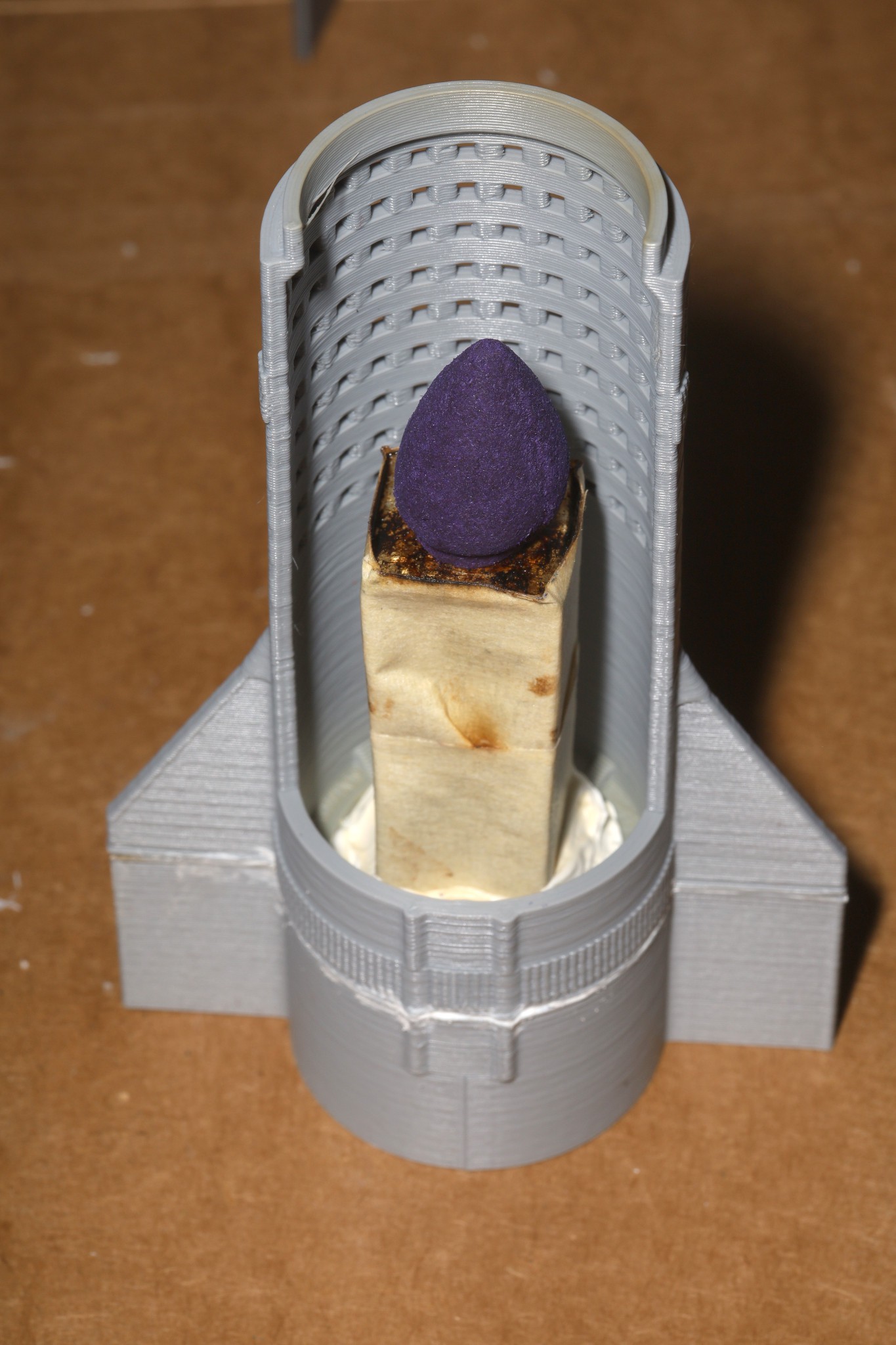
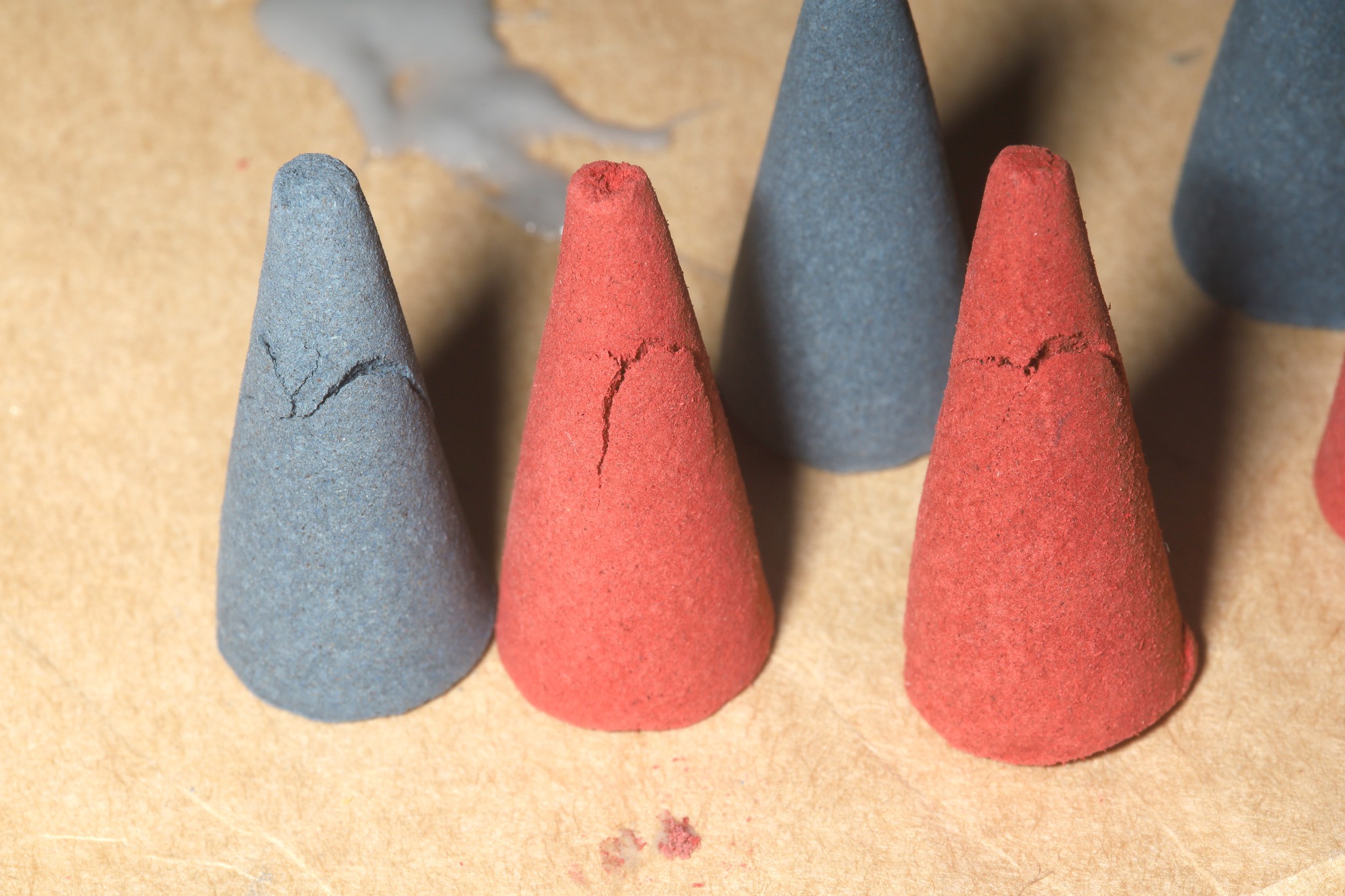
Attempts to drill out stock incense cones with the electric drill were a failure. It creates too much torque. Nibbling at it with the manual drill is the only way.
As with the last 3 PETG prints, yet another slight reduction in the melting but still melting in the same spots. The next step would be a full orthogrid on the inside of just the trouble spots, but the overhangs could be difficult & there's not enough room in the nose without making it solid PETG.
The linear stringers tend to bend in their wide axis.
The nose stringers tend to bend in their short axis.
It seems the stock backflow cones create more melting because they get hotter while the drilled cones burn slower & cooler. Cones with no drilling make the most heat because they have the most fuel.
Create an account to leave a comment. Already have an account? Log In.
Become a member to follow this project and never miss any updates
lion mclionhead