Close
0%
0%

Kemitron Computer

As I collected parts for my Interak Computer project, I gained a few Kemitron Computer cards. But what is a Kemitron - could I build one?

Similar projects worth following
Having obtained a few Kemitron Computer cards, I thought they could be the basis of a project to build one, if only I knew what one was!

Initially, this project will try to discover what the Kemitron computers were, and what I have. Then we'll see what happens from there. I'm hoping someone with knowledge of a Kemitron will stumble across this project and be able to add to what I know so far (which isn't a great deal!)

I don't even know which Kemitron my cards are from, as I have identified at least three different models.

It seems the small UK manufacturer Kemitron produced at least three Kemitron models: The 2000 Series, the 3000 Series and the Solo. My cards look to be the correct size for the Solo, but of course I've never seen the other models.
As I find more information, I'll add it into the respective project log.

  • Kemitron TP-A-2 Tape Interface

    Will04/03/2025 at 11:29 0 comments

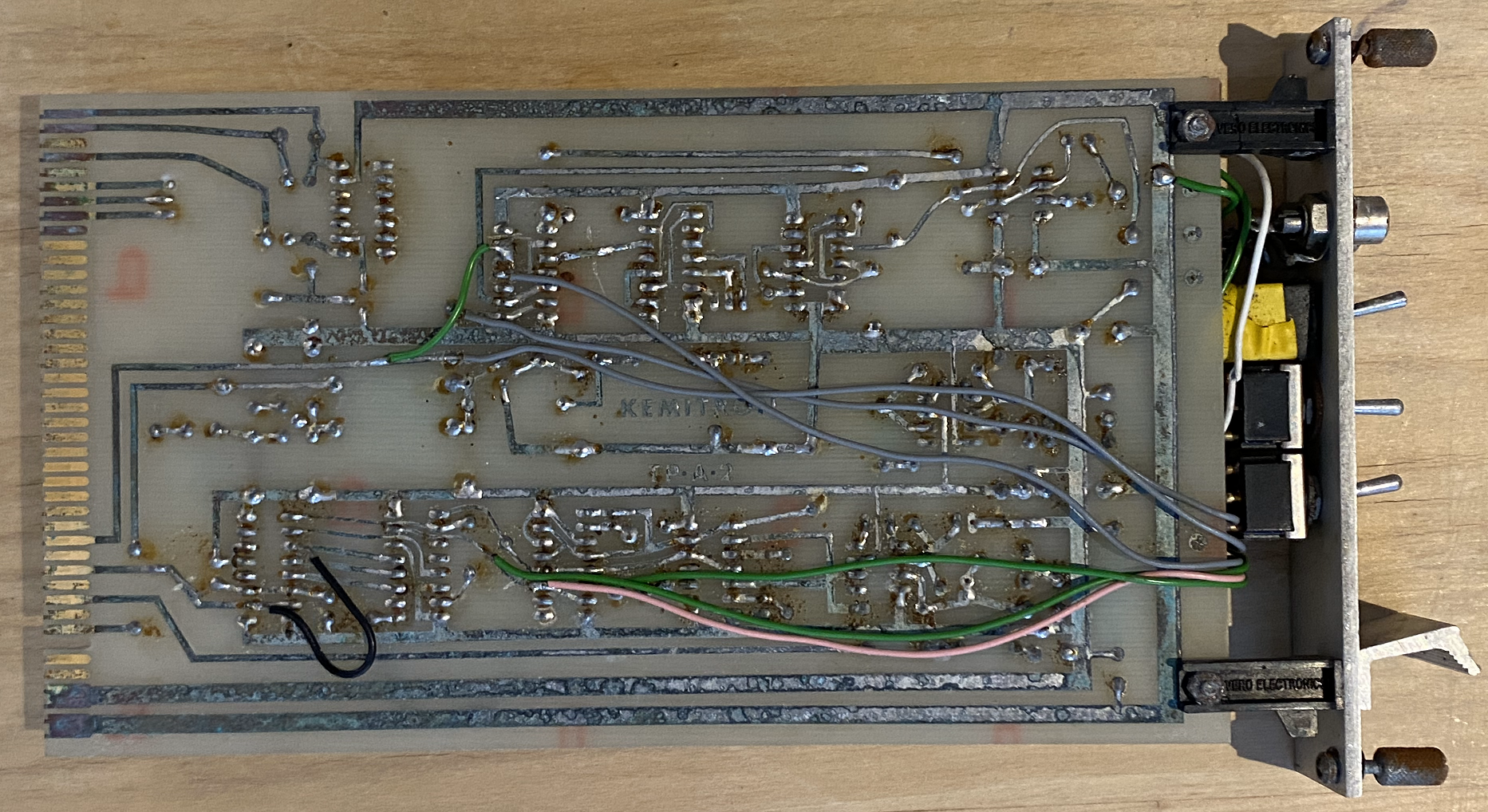
    I know little about this board, although the Interak overview documentation does state that a Tape Interface can be used within an Interak System. Elsewhere, the Interak documentation refers to the board as a "Serial Binary and FM Converter", an indication that it uses frequency modulation to encode/decode a serial stream of binary data.

    There is a 1979 Kemitron Electronics booklet “A Guide to SC/MP Programming” that has a description of an assumed earlier but similar TP-A board:

    This board coverts serial binary input data to an audio signal and the converse.” ... “The Kemitron tape board (TP-A) is reasonably sophisticated and uses digital synthesis to produce a near sine-wave output (this is easier to record than a square wave) as well as a majority input gate to reduce the effects of minor tape defects.

  • Kemitron MZB-3​ Card

    Will05/25/2023 at 12:51 0 comments

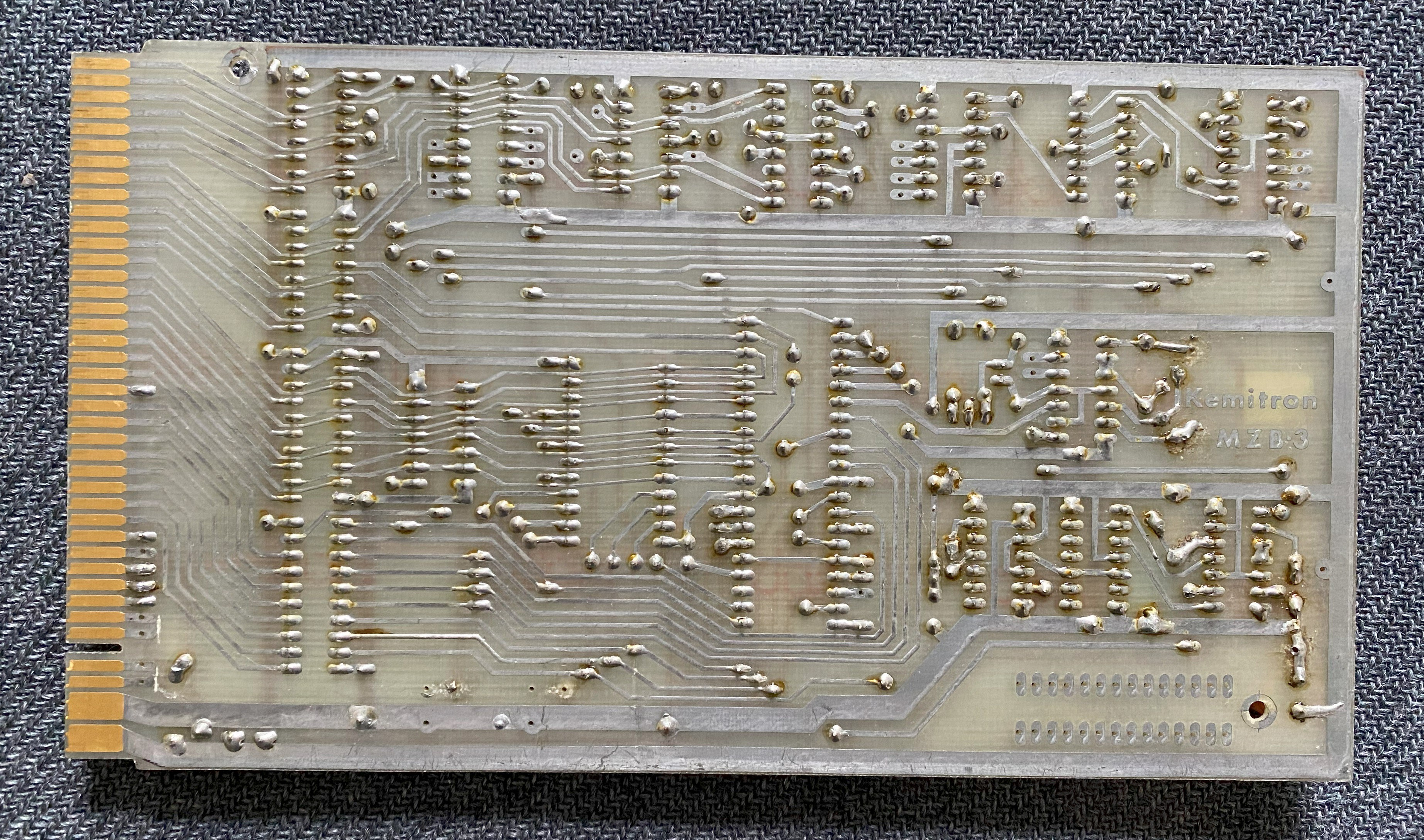
    The MZB-3 card is a Z80A CPU card that is well documented, as it is also used within the Interak computer system. The only difference to the Interak card (other than the Kemitron logo) is the the Boot ROM contents will be different for a Kemitron computer.

  • Kemitron OP-3 Card

    Will05/25/2023 at 12:28 0 comments

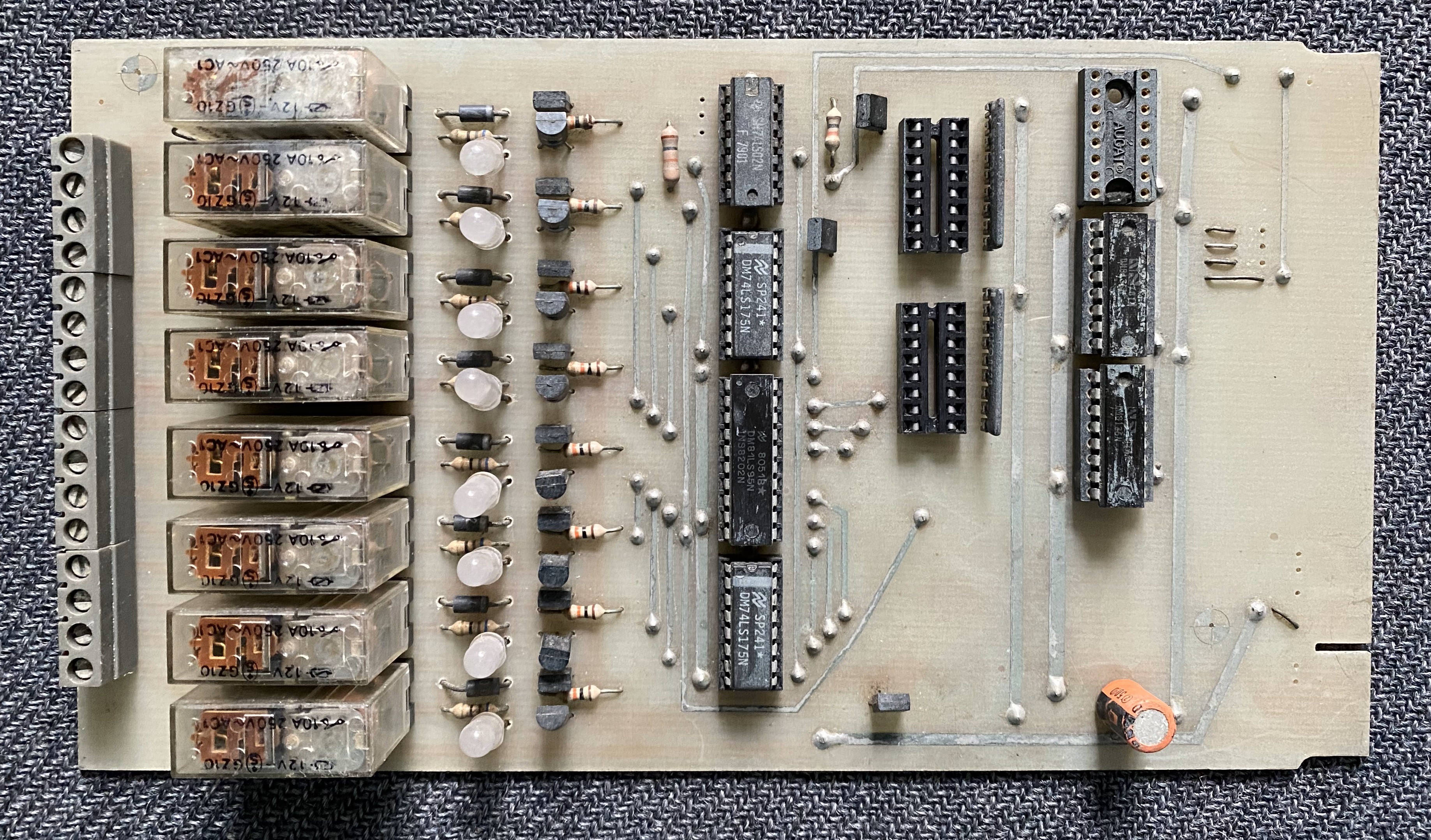
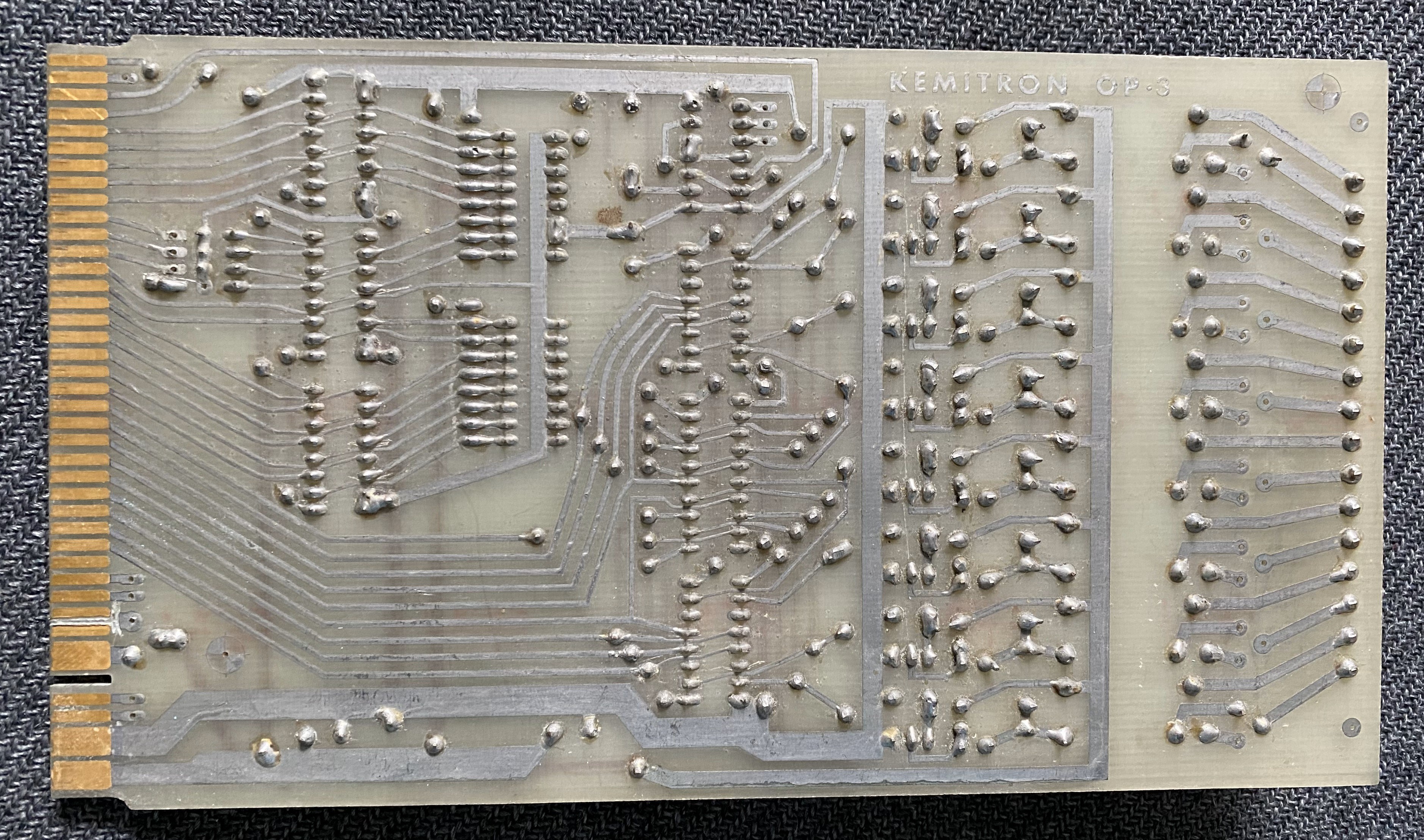
    I had a Kemitron OP-3 card in my collection, which appeared to be a relay isolated output port. I believe these cards were used in Kemitron computers to control laboratory equipment, i.e. to turn apparatus on and off at predetermined intervals. As the Kemitron bus is so similar to the Interak bus, could I get it working in my Interak system?

    The board appeared to have three ICs missing, so the first task was to reverse engineer the circuit. I quickly realised two of the missing ICs were in fact not ICs, but 8-way DIL switches, used to set the address of the card. Tracing the wiring from the DIL switches revealed the three ICs alongside the edge connector all appeared to be the same, and as two were DM8136N “6-bit Identity Comparators”, it seemed logical the third was too. These comparators are relatively rare nowadays, and command quite high prices, but to complete my card I went ahead and placed an order for a replacement.

    The replacement IC finally arrived, and when installed together with two new DIL switches, my OP-3 card was once again complete. I set the card address to 0010h, slid it into my Interak cardframe, and powered-on. There was no smoke, which is always a good sign, and my Interak was still working!

    I wrote a short piece of 8080 ASM code to output “3” to port 0010h and ran it. “Clunk”. The lower two relays operated and their associated LEDs illuminated. Things were looking good. I then wrote a slightly longer piece of code to read a digit from the keyboard and write it to port 0010h. Success! Though the largest number I could enter as a single digit was 9. A further code modification and I could read two digits, multiply the first by ten, add it to the second, and write the result to port 0010h. That didn’t work!

    Entering 0 to 9 worked as before, but 10 appeared as 0, 11 as 1, 12 as 2, and so on. Was my code at fault? I couldn’t see anything wrong.

    Fast-forward a couple of days, and I stumbled across a not overly well documented issue with how the Z80 writes to hardware ports. If you use the 8080 OUT instruction (which I was) then the Z80 puts the port address on the lower 8 bits of the address bus (to address the port) and puts the contents of the accumulator on the upper 8 bits. Who knows why that was considered a good idea! Once I discovered that, I realised the upper address bits were changing the port address, as my OP-3 board was decoding all 16 address lines. Sometimes I wasn't writing to the port at all! (It’s actually slightly more complicated than that, because not all of the address lines are connected by default, but we’ll come back to that).

    Realising the issue, I pulled the top address decoder chip (the one that was missing originally) which stops the upper 5 address lines being compared. The three lines below that are actually un-jumpered on the PCB, so the upper 8 address lines are now ignored. And that's it fixed. It no longer matters what weirdness the Z80 does on the upper half of the address bus, as it's not checked. My card was now fully working.

    It seems that the OP-3 card was flexibly designed to work with a number of different processors. In a Z80 system, an IC needs to be omitted and 3 address lines left un-jumpered, but it could also use all 16 address lines with the IC and jumpers fitted, should that configuration be usable by a different processor. 

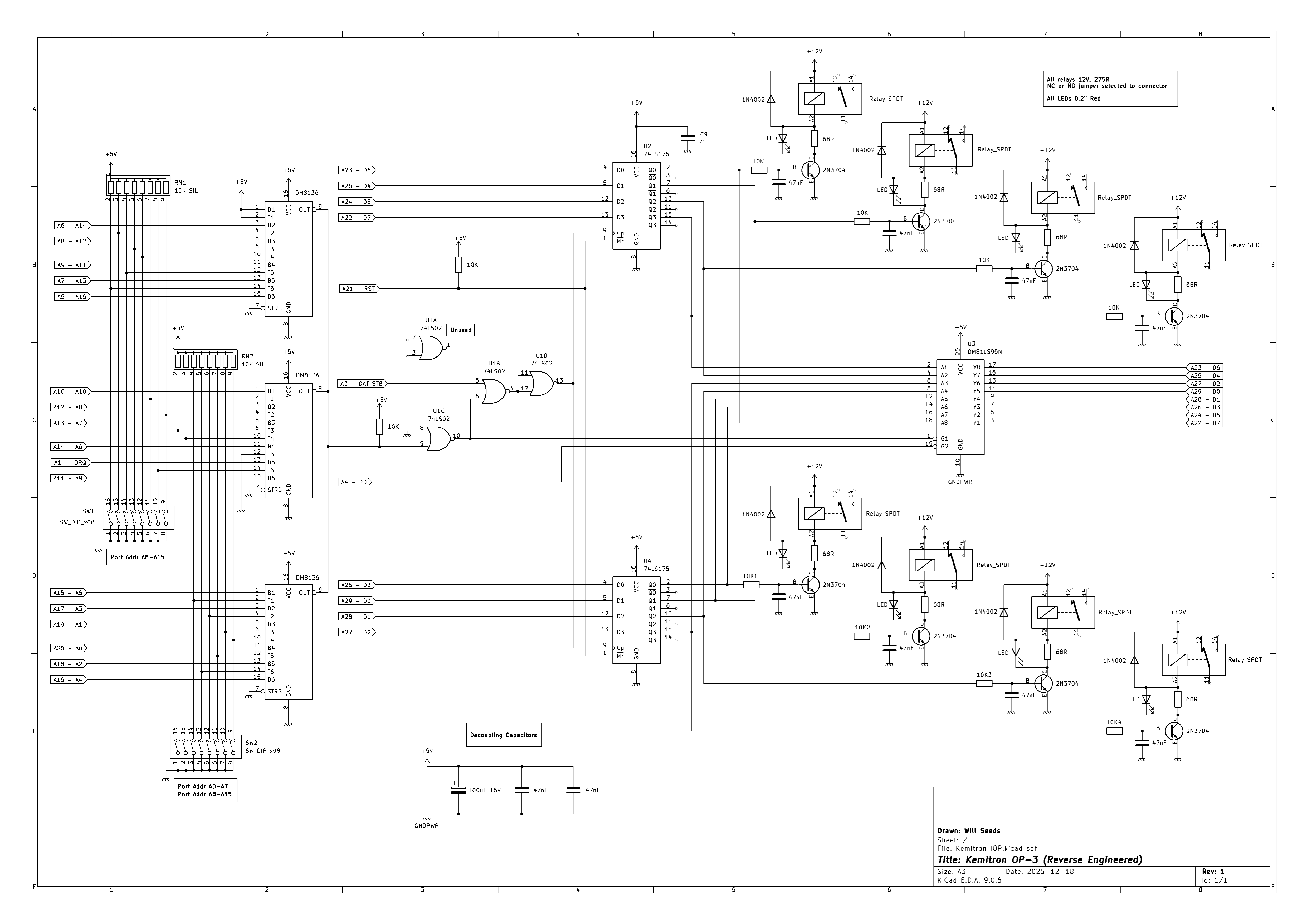
    A bit late in the day, I decided to draw-out the complete reverse-engineered schematic. Had I done it sooner, I’m sure it would have made the problem a lot more obvious! The schematic is provided below, and I believe it to be correct, but please remember it is reverse engineered and not from any official source.

    From the schematic, a couple of interesting features are noticeable. Firstly, the LED connections. Rather than using a standard series current-limiting resistor, the LEDs are connected in parallel with low-value resistors. The resistor values have been carefully...

    Read more »

  • Kemitron SIO4 Card

    Will05/25/2023 at 11:36 0 comments

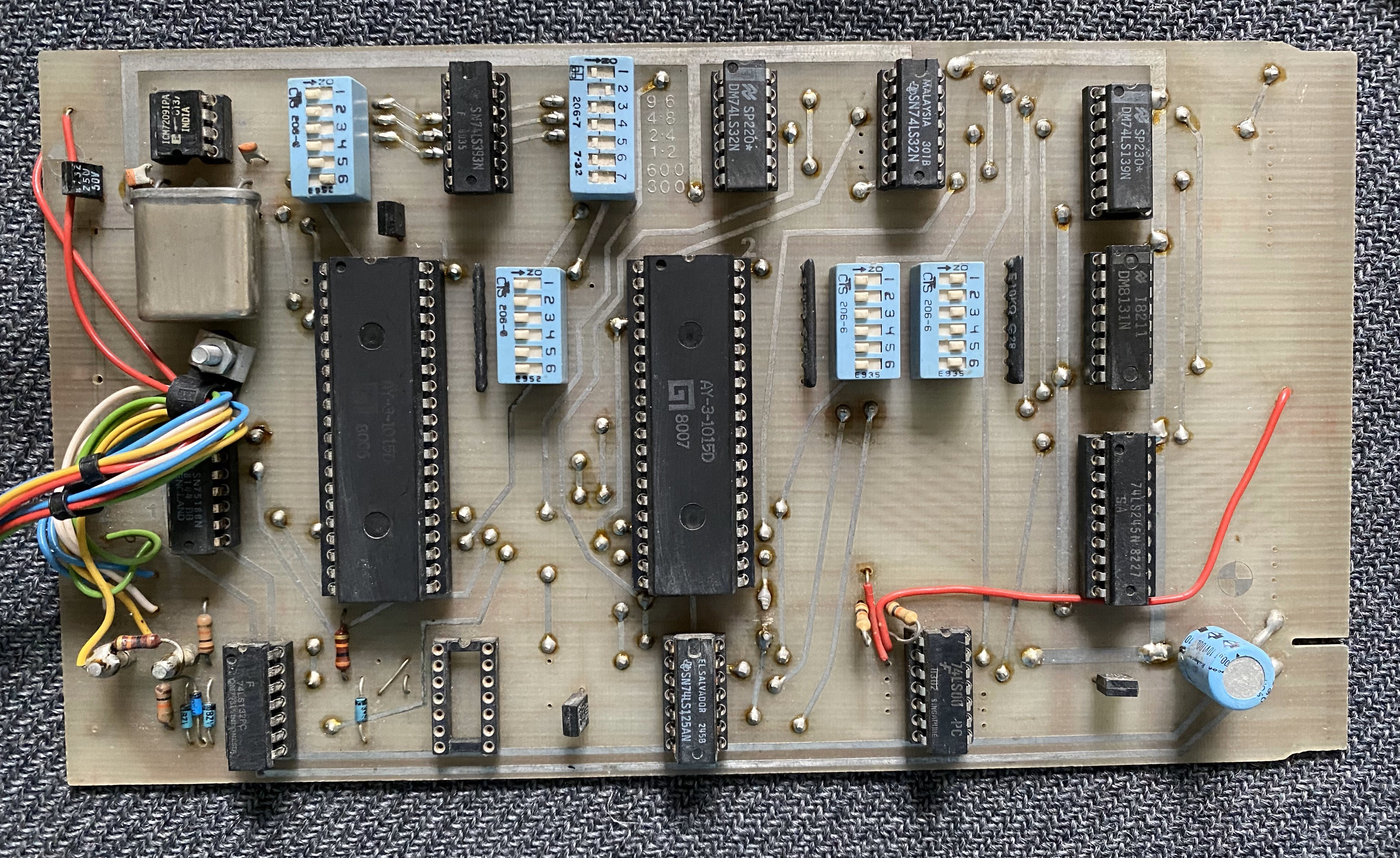
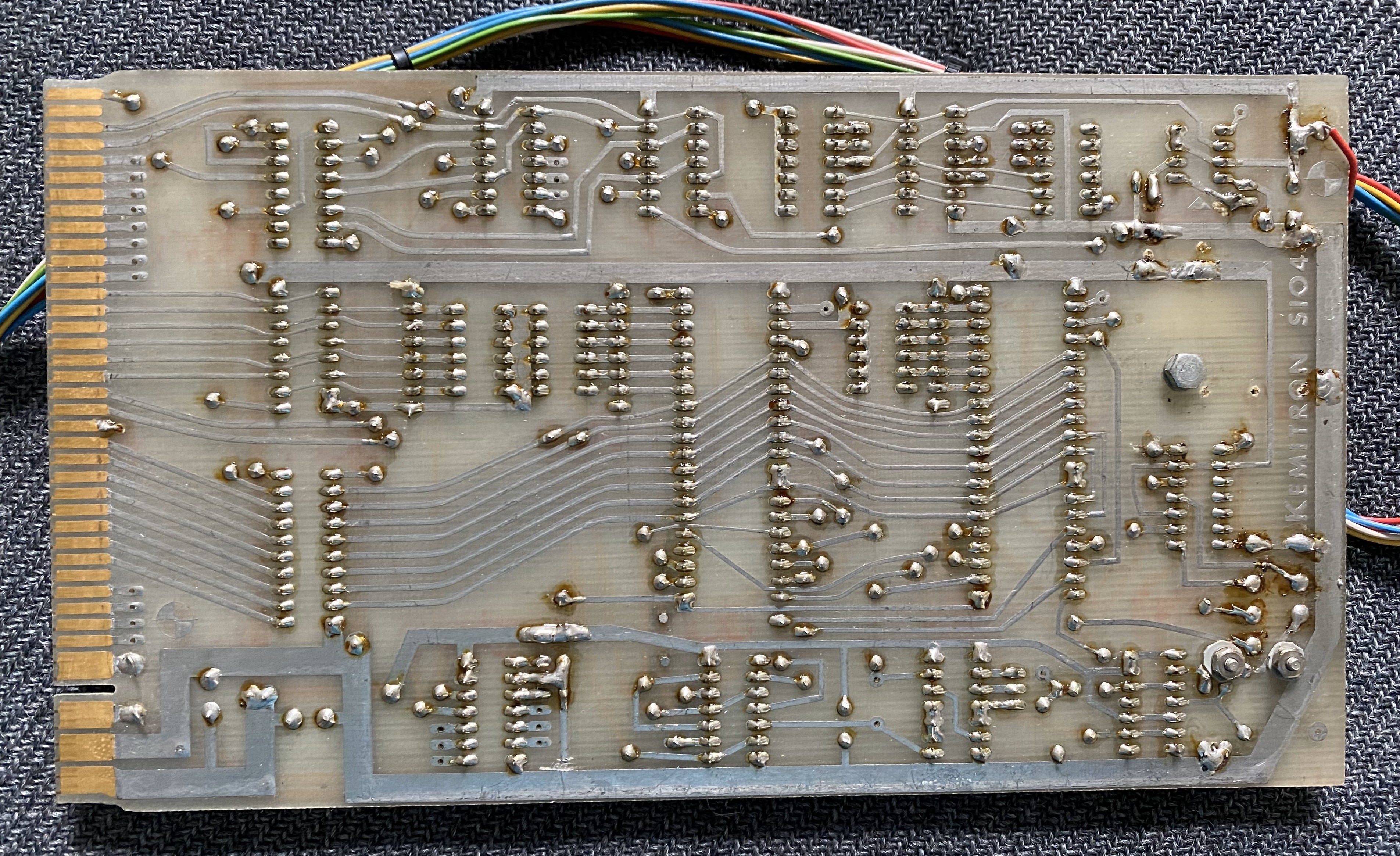
    In my collection of Kemitron Computer cards I have an SIO4 card. I have not investigated further but a cursory glance would suggest it is a serial I/O card based around the AY-3-1015D UART.

  • Kemitron 2000

    Will05/24/2023 at 11:38 0 comments

    The 1986 PhD Thesis from Loughborough University, that provides the specification for a K3000, also refers to the use of a K2000E.

    From the reference, something of the K2000E specification can be inferred:

    Processor:  Z80 (as Z80 Assembler is used).

    RAM: Unknown.

    Storage: Unspecified size Floppy Disk Drive.

    Interfaces: P.P.I. Interface. Expansion slots for I/O cards. (RTC and 16-channel, 12-bit ADC fitted).

    OS: Unknown but CP/M assumed. (MBASIC used).

    There is also mention of a Kemitron ADA-5 Card – a bidirectional 12-bit DAC and ADC, which is likely the ADC in use.

  • Kemitron 3000

    Will05/24/2023 at 11:11 0 comments

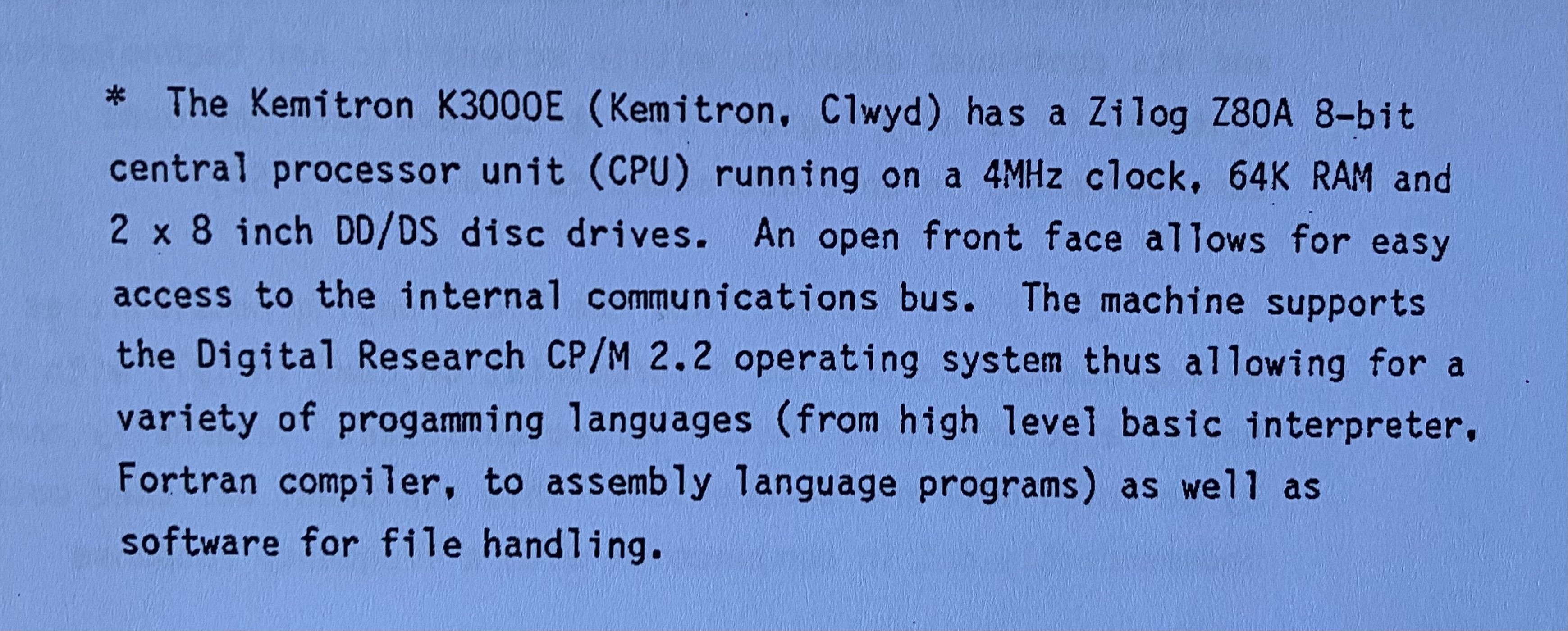
    I managed to find the specification of a Kemitron K3000E, in a PhD Thesis from Loughborough University, where a K3000 was in use in 1986.

    Processor:  Z80A, 4MHz.

    RAM: 64K RAM.

    Storage: Dual 8” DS/DD Floppy Disk Drives.

    Interfaces: Expansion slots for I/O cards.

    OS: CP/M 2.2.

    The Kemitron 3000 series appears to have used the same processor as my Kemitron MZB-3 CPU card, but the form factor is unknown. Dual 8" Drives would require a large(ish) case though.

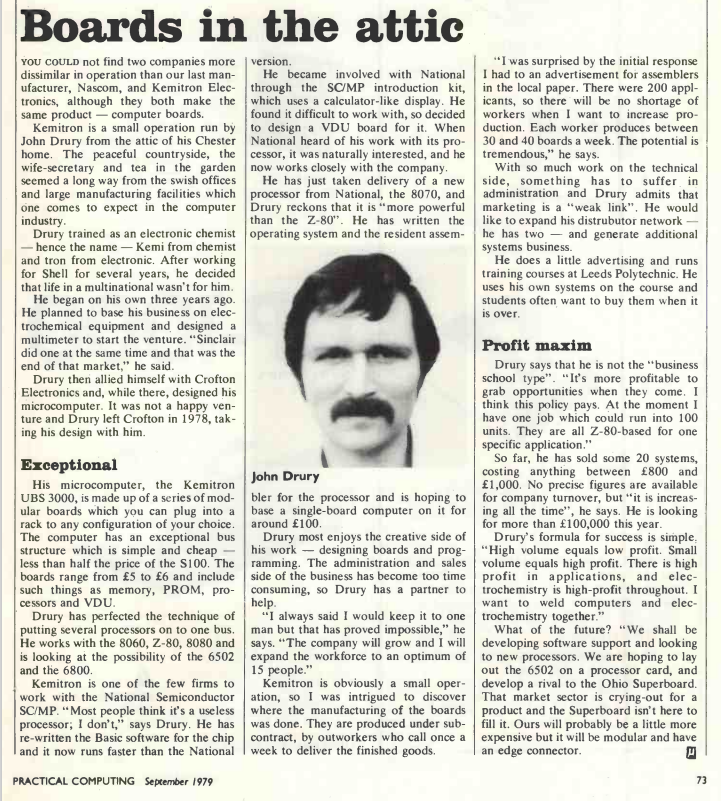
    Some further detail is provided in the September 1979 issue of "Practical Computing" which has an article focussed on Kemitron Electronics. The article describes the Kemitron UBS 3000 as having a modular construction with the option to plug any of a number of cards (Processor, RAM, CPU, etc.) into the system bus. The article also suggests a variety of processors might be available.

  • Kemitron Solo

    Will05/24/2023 at 10:39 0 comments

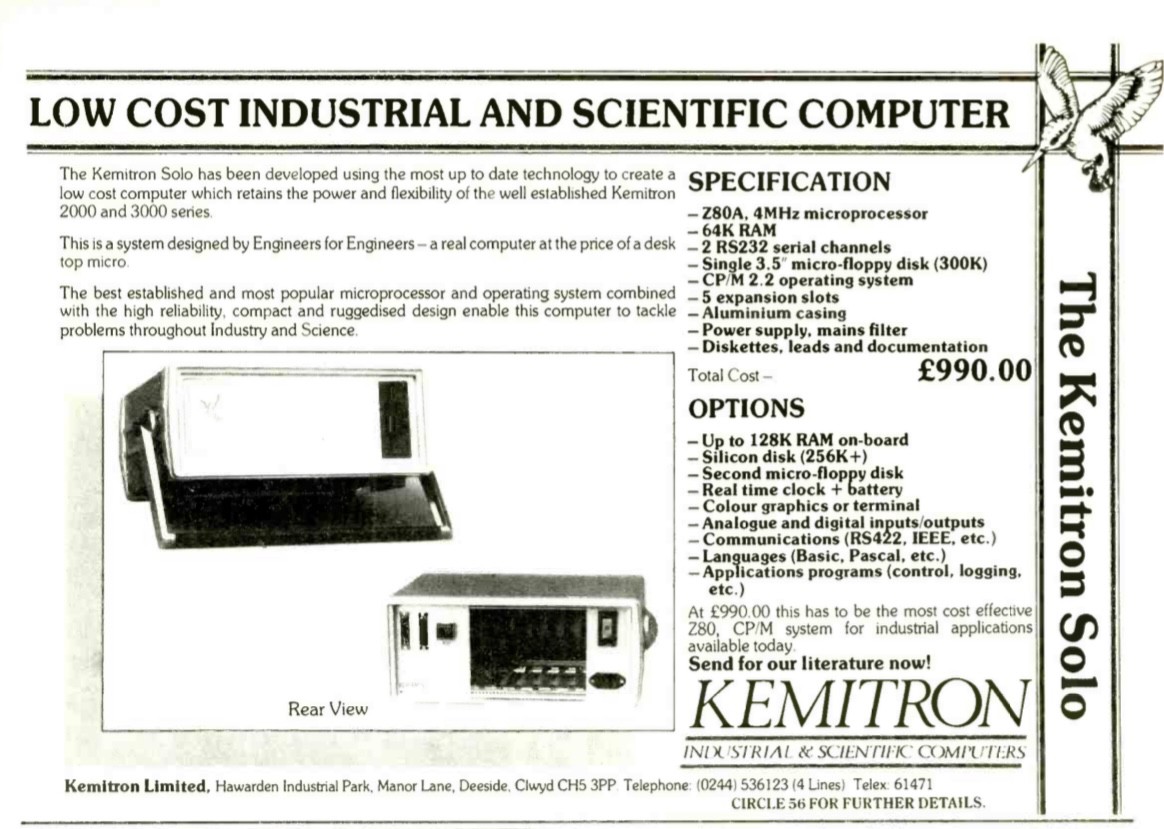
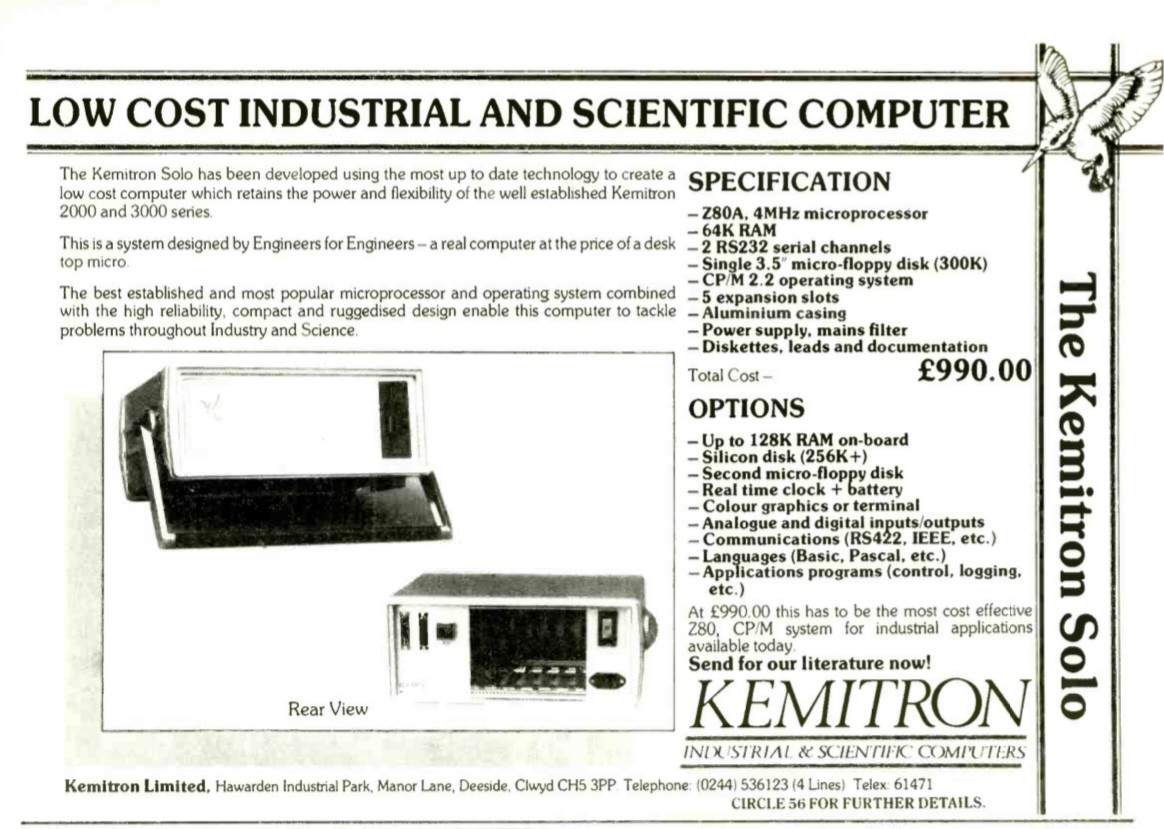
    This is the only Kemitron model of which I have a picture, and in fact a full advertisement with specification. (Advertisement from "Electronics and Wireless World", April 1985 issue.)

    The specification of the Kemitron Solo is:

    Processor:  Z80A, 4MHz.

    RAM: 64K, expandable to 128K.

    Storage: Single 300K Floppy Disk Drive, Second Drive optional. Optional RAM Disk.

    Interfaces: Dual RS232. Five Expansion slots. RS422 and IEEE interfaces optional. Analogue and Digital I/O cards also available.

    OS: CP/M 2.2.

    The fact that it had a RAM Disk is unusual, and cutting edge for the time - no doubt driven by its principle use of high-speed laboratory data collection.

    It is difficult to say from a picture, but the expansion slots could be for International Sized Cards (4.5" x 8"). This could be the computer I have cards for!

View all 7 project logs

Enjoy this project?

Share

Discussions

Similar Projects

Does this project spark your interest?

Become a member to follow this project and never miss any updates