Curtis Soldano
-
Laying Out Components
10/06/2026 at 04:31 • 0 comments![]()
-
More inner frame progress
10/05/2026 at 18:02 • 0 comments![]()
![]()
![]()
![]()
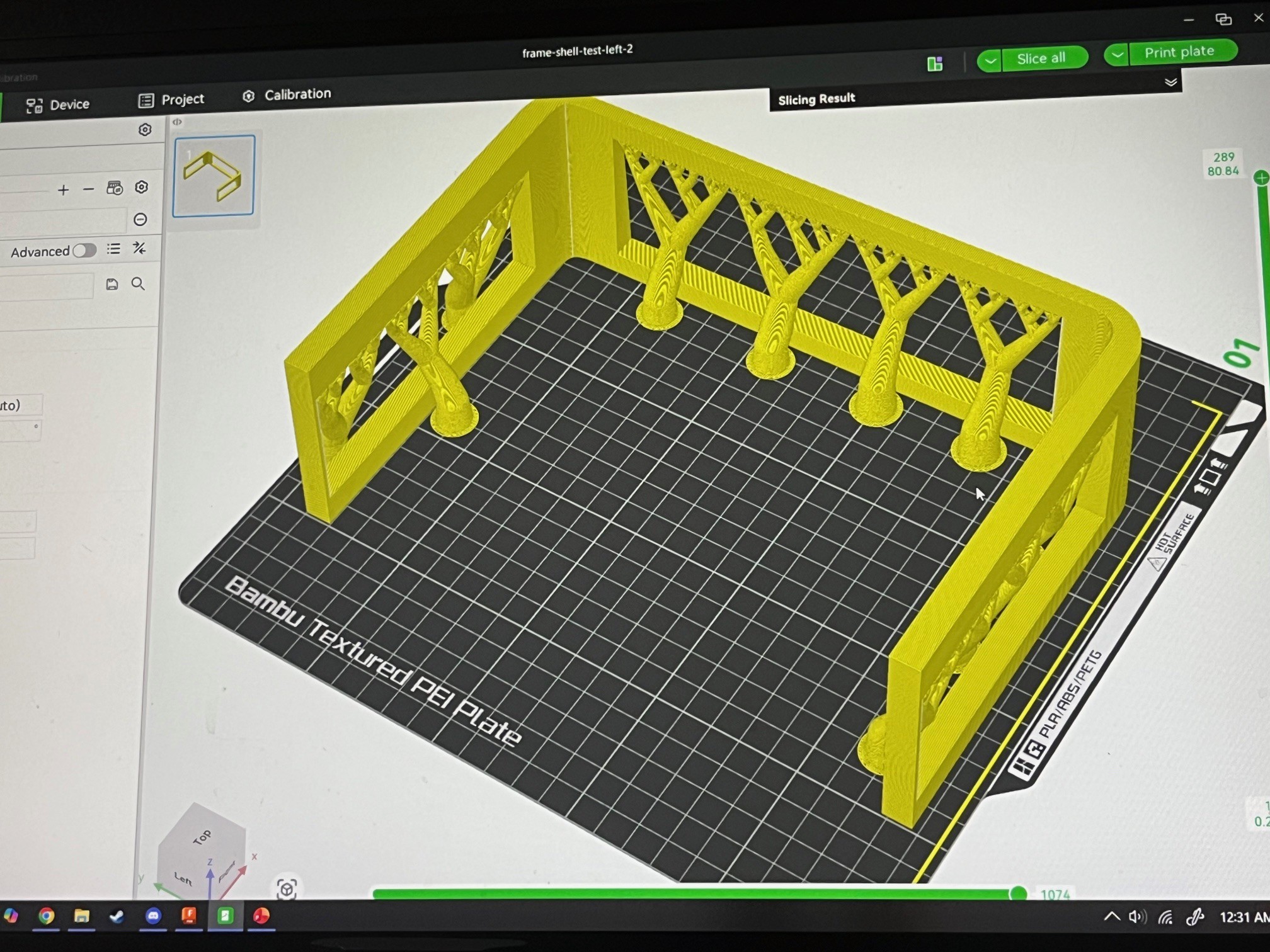
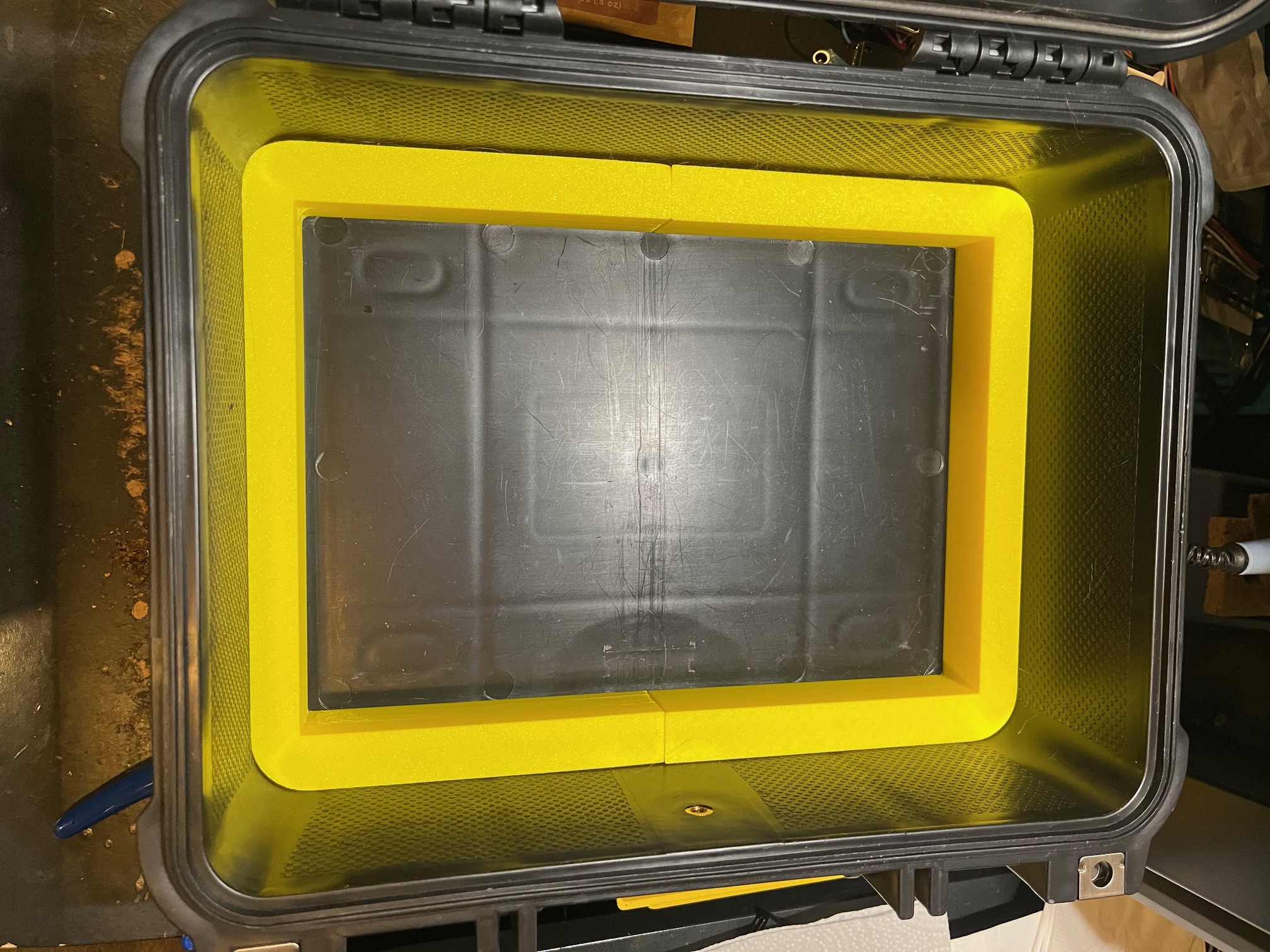
Latest frame update. A thinner outer frame tapered outward at the top with cross member supports for strength because it has to be split into halves to fit on my 3D printer. So far its just a press fit without any anchors and I'm really happy with the fit, the lower left corner has a little gap but overall super solid. Also, despite it being a press fit, the frame won't have anywhere to move to when the case is closed so it's pretty darned secure. Ultimately I may print these outer elements in TPU to make it more shock resistant. Next up, modeling in the components and figuring out a stacking system and placement attachments for the components. Onward!
-
Inner Frame Progress - Loaded and Locked!?
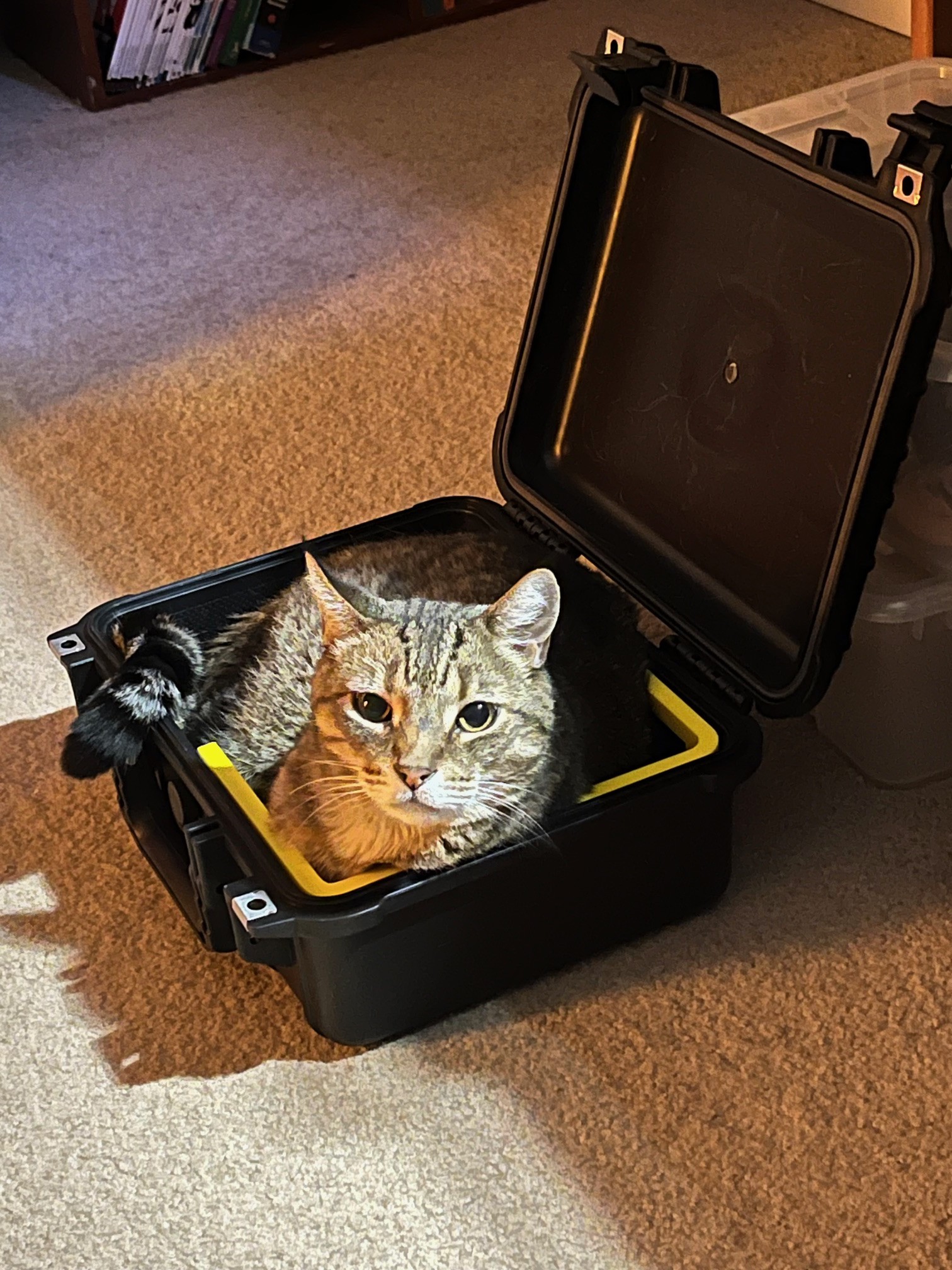
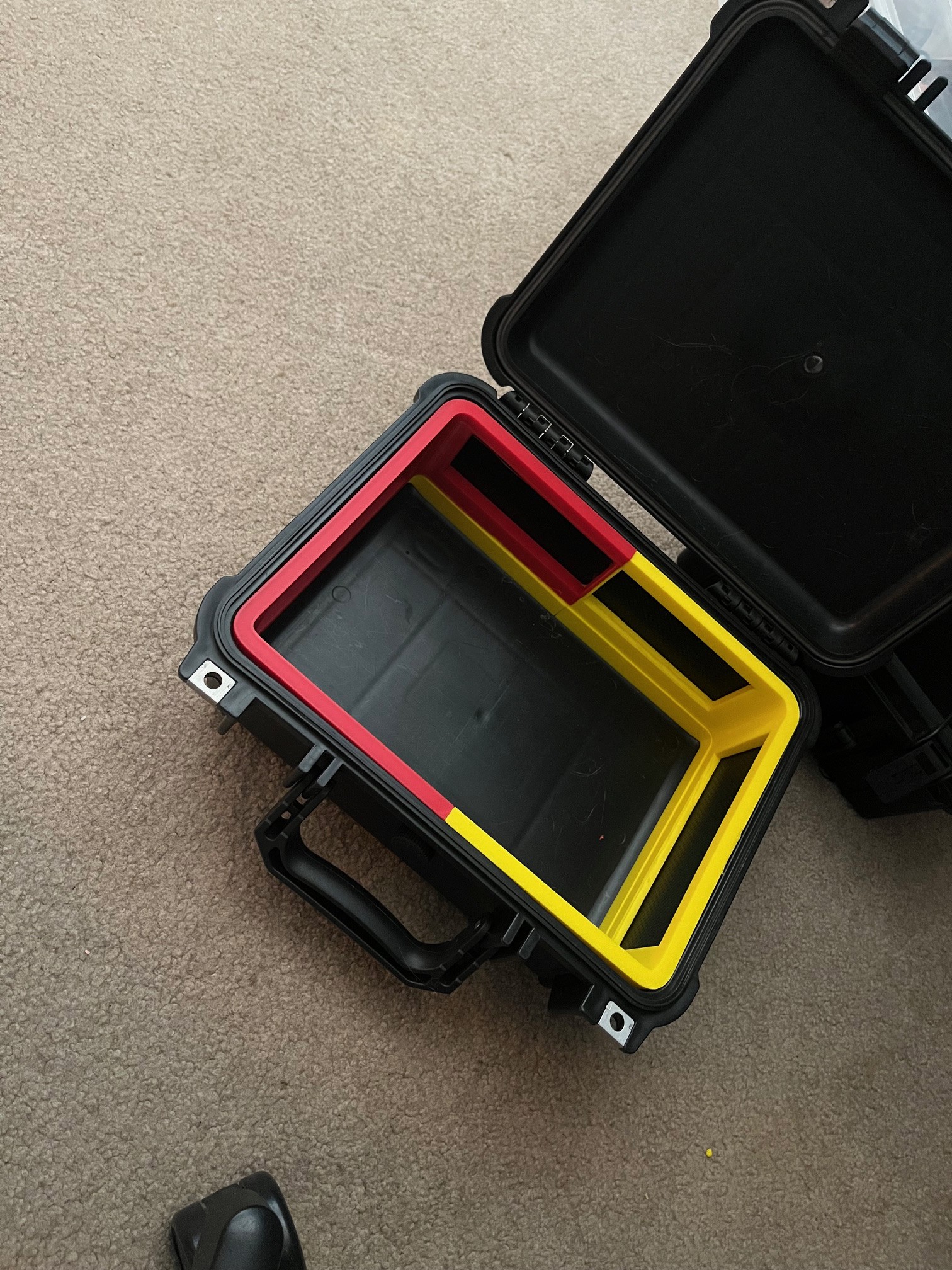
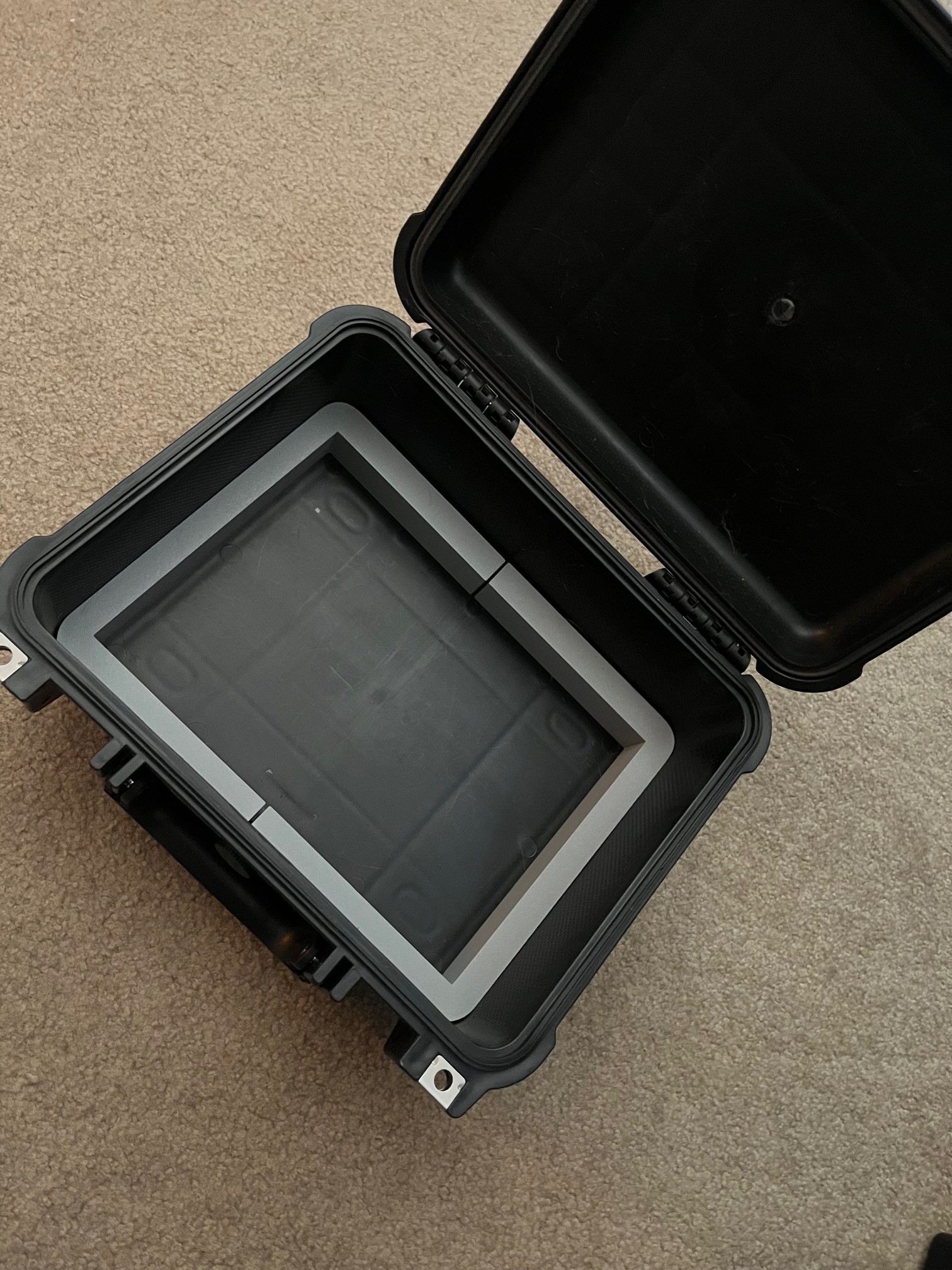
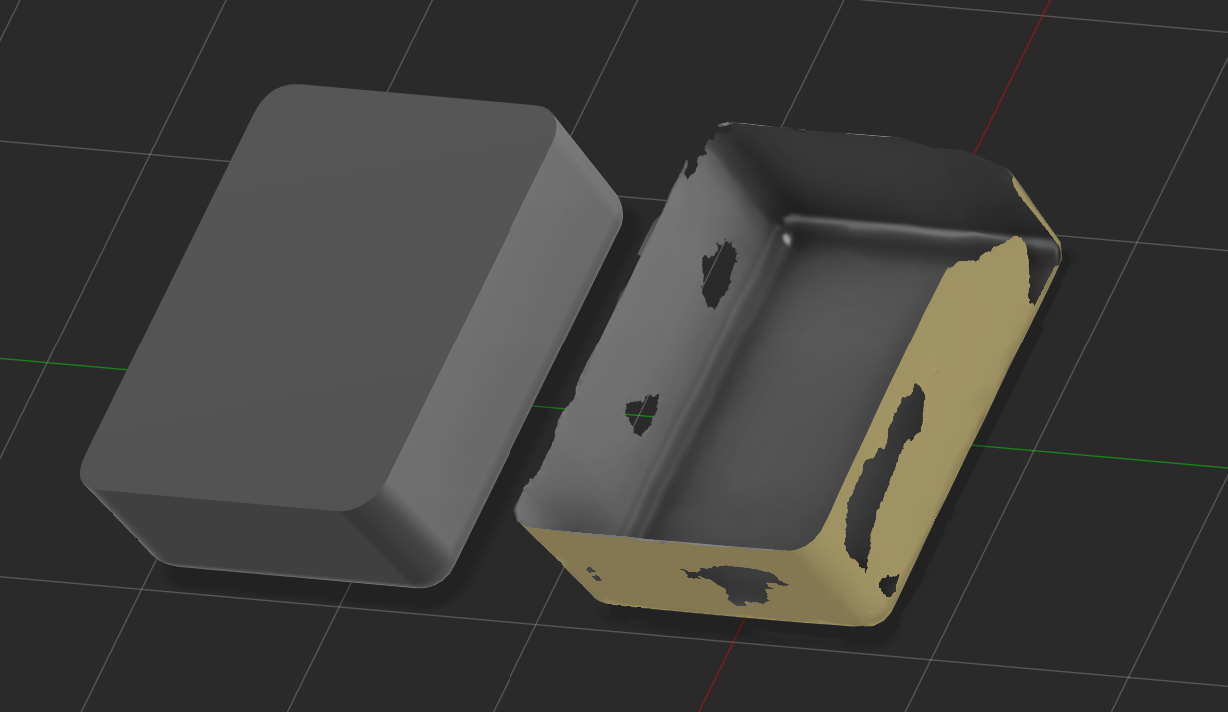
10/05/2026 at 04:17 • 0 commentsMy colleague sent me the file digitally but he had my case still so from the scan I did an initial fit pass, that's the grey material. I took these with me and instantly tested them when I picked up the case from my colleague, I wanted instant gratification and see if I was close in my designs.
![]()
Turns out, I was close, I ended up adjusting some of the radius corners and adjusted the xy dimensions a bit and then I did the pass in yellow.
![]()
There is a little play at the upper edge which seems bugger than it is due to the shadowing, I might try to tweak but it is super locked into place considering it's pressure fit right now. I also might consider doing a low friction glue specifically for polypropylene but it's very expensive so I if I can get this to lock in without glue, I'd like to try. Alternatively I am also considering some kind of wings, claws or other type of friction point I could design into the frame to be extended/set once the frame is in place, like a set screw or some other protrusion that doesn't penetrate the case...TBD. Also once I have this footprint locked in, I'll start to think about the frame attachments and modular component mountings, airflow, placements, orientation, wire guides, mount points, etc... RF will be the left side, battery in middle, compute on the right. The front (or bottom in this view) would be a storage space for probes, GPIO, antennas, etc
-
Inner Frame V1
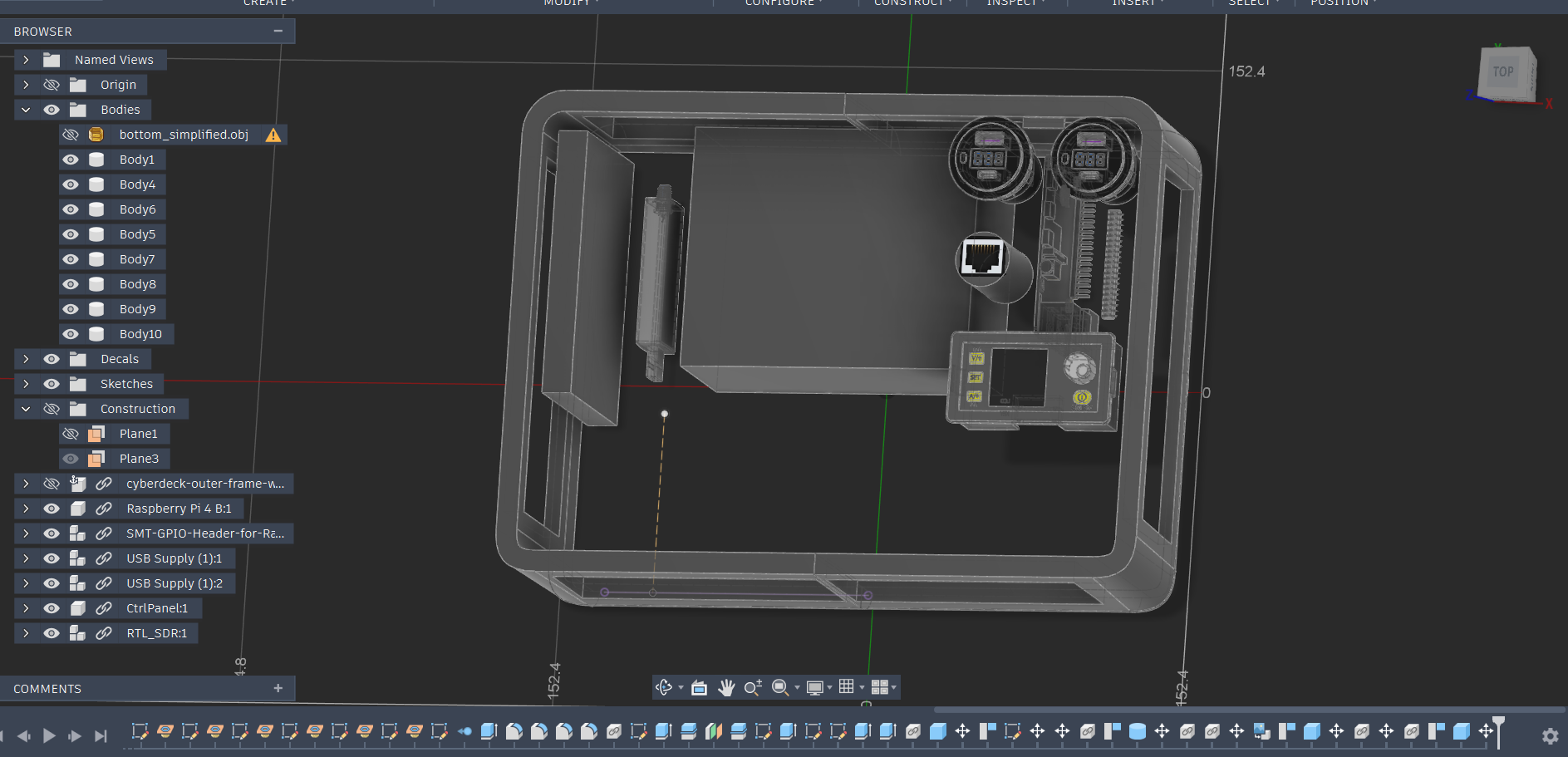
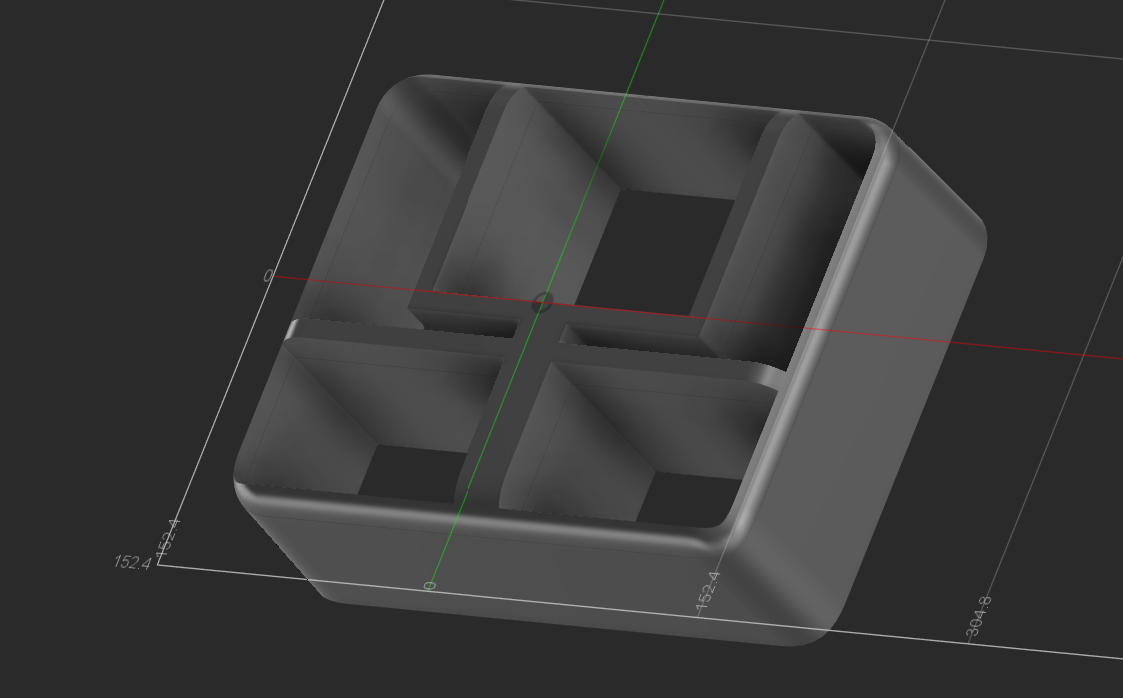
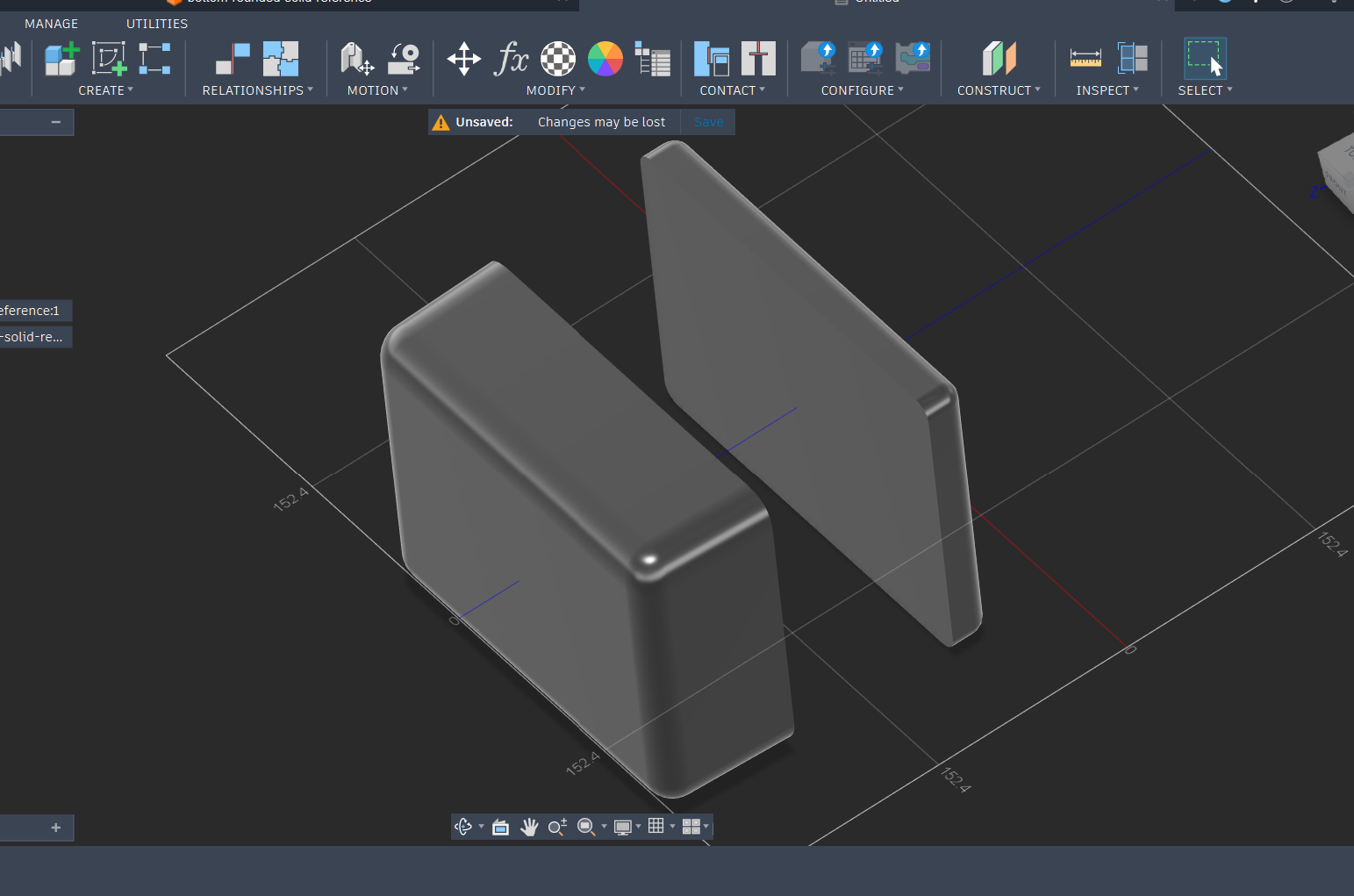
10/02/2026 at 04:39 • 0 comments1st pass at a monolithic frame fit to the scan volume with form fitting bottom radius
This will progressively get more complex as I start to divide the frame into levels, this treats it as one big insert, because of my 3D print bed, I'll have to eventually split it and print in halves
![]()
-
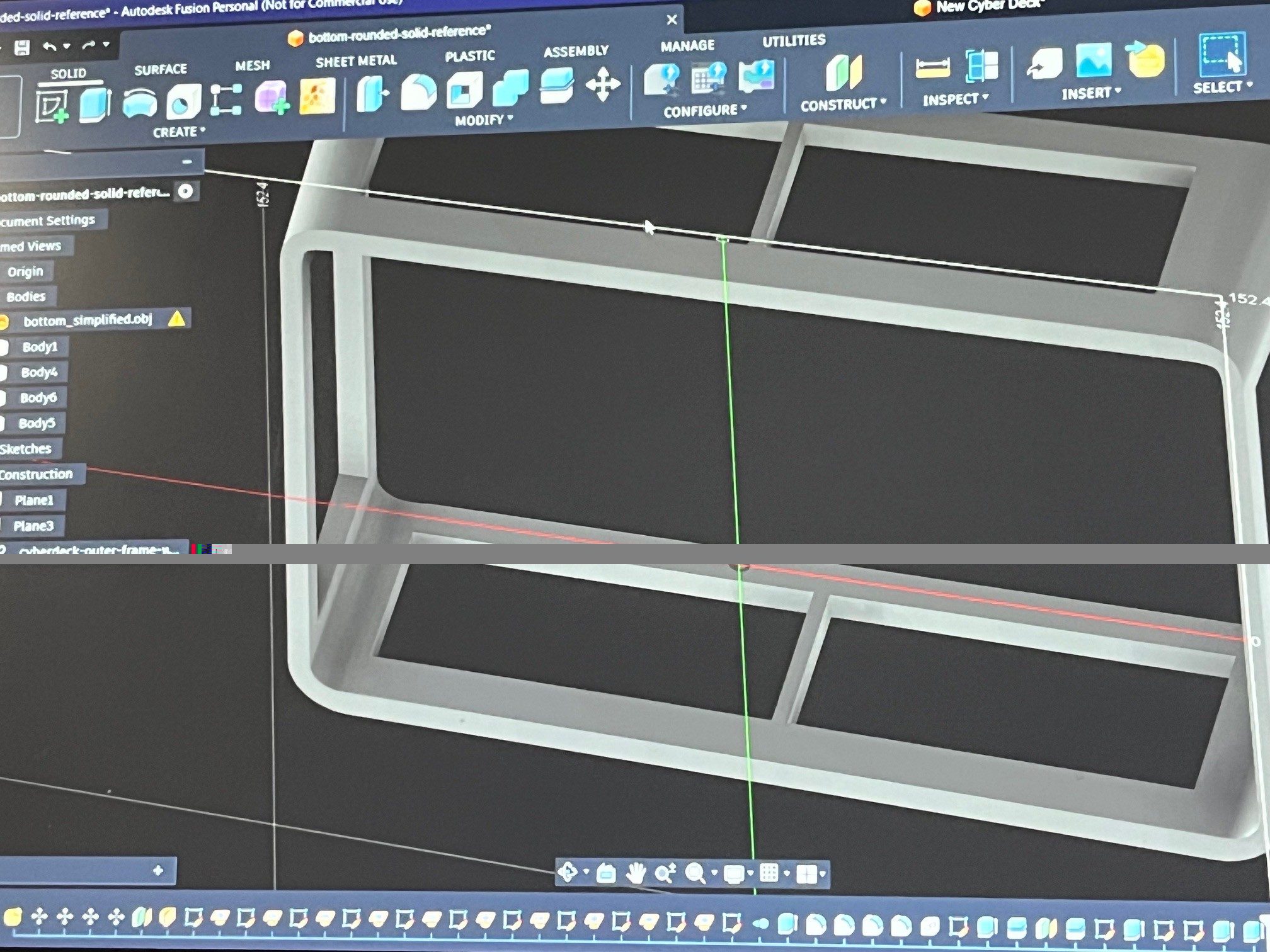
Case scan is modeled
09/27/2026 at 02:38 • 0 commentsCase has been scanned and is now an added data point to model against.
![]()
I'll use this solid to constrain the bounds of the interior frame model for the deck.
![]()
slow progress, I know but I'm chipping away at it
-
Scan if you can :) Interior Frame phase
09/16/2026 at 23:58 • 0 commentsHowdy, thanks for reading! I have definitely slowed (moreso than usual) but I have been actively working on solving the problem of internal structure/frame. I have been designing, printing, testing and iterating some ideas but it's been slow progress as I split time with other projects. I've printed probably 20 tests and still have a long way to go... I dropped off my case with a friend this week who is going to attempt to scan the interior, we'll see if that helps inspire efforts to create a solid and rugged internal frame. I plan to use TPU for AMS plastic for the internal frame, this should be more resilient and shock proof than PLA.
I believe I have sourced all of the parts, now I'm just kind of hung up as I work through how to design the internal frame with functional removable modules and built in storage. It's amazing how many permutations ones mind will work through as a design develops, I am trying to think 3-4 steps ahead and it just results in analysis paralysis...I want it to pressure fit, can you design a catch? Does everything slide in as one, does it come out in pieces? How do the pieces fit in, are there different levels of pieces, stacking over each other, how do you design for that, screens need attach points but sit on top, how do you carry that design through the various levels to the top, etc...am I the only one this happens to?
I'll update this log next week when I'll check in on how the scanning is going.
-
Cooling is a GO!
05/24/2026 at 03:35 • 0 commentsI've circled back and tested my pin straightening fix for the pwm controlled cooling fan. Unbelievably, my fix worked, the pins were soo tiny I was sweating it! The fan is now PWM controlled so it modulates speed as needed, this addresses my outstanding Pi cooling concern.
I've also been testing ADS-B tracking and SDR++ with an RTL-SDR module and I started off pretty impressed but over the course of the last month or two, ADS tracking seems to be glitching out. The RTL-SDR gets super hot so I am going to add a heat sink but it also could be my USB hat which seems to be somewhat unstable. I've also noticed my SSD disconnects with the slightest jarring of the usb cable so something going on there that will need to be hardened if this thing is supposed to be field ready.
I often find myself going back in my mind and reconsidering the original shielding and hardening requirements I started with. I also think about my abandoned efforts using the emf cloth and copper foil as an improvised shielding and as I think about how I could do better, I started to think about steel mesh products and how it could be both a rigid frame structure and shielding. Ran some numbers and realized the mesh structure needs to be pretty tight but if you layer different mesh types you can adjust the protection bandwidth. Going a step further, I found a steel product that is manufactured as a 5 layer sheet with this same concept and I believe I am re-converging on a potentially new solution, may not be for this project but something that's got me thinking.
Next Steps: update ADS B software. reposition ADS-B antenna, retest under load, observe thermal behavior, scrounge up a used heat sink to attach to RTL-SDR unit. retest with heat sink, compare and assess
-
Cooling
04/19/2026 at 21:27 • 0 commentsI added an active cooling system driven by the on board fan connector. It is a large heat sink that spans a number of the on board chips and has fins and a fan. Somehow I ended up jamming the pins and one got bent out of line so I had to try to straighten it under a microscope which went OK but I am about to do a test. Despite the pin being bent, the fan was still coming on, it just wasn't self modulating, it was just on 100%. We'll see how it goes post repair. I am hoping at a minimum the fan still spins when I test it, stay tuned.
-
USB, Power and Thermal Load
04/05/2026 at 20:39 • 0 commentsAs I have been integrating various peripherals, it has become clear to me that I'll have to do additional planning to mitigate heat, power and USB power draw. I really thought my power architecture was sufficient but it is looking like I may have to revisit that assumption.
I gutted and used a 294wh power unit with dedicated USB A and C outputs, raw DC outputs and charging inputs for line or solar. I am thinking I am going to have to create a USB switch for the individual peripherals to control how much is on the USB bus at any one time which will also impact power.
Thermally I always had intended to create ducted exhaust channels but I am realizing the RTL-SDR is creates a lot of heat just idle so I am thinking being able to turn devices on and off will help me manage it. I am also going to double down on oversized heat sink for both Pi and DIY something for the RTL-SDR. On the up side, I did get SDR++ installed and working and installed an ADS-B tracker as I am testing devices and such and that's been fun. :)
-
PCIe connection established
04/04/2026 at 20:21 • 0 commentsI suspected pcie needs to be enabled and it does. Now that I did that, I am seeing the interface so on to testing individual USB devices.