Georges Fayad
-
Finished prototype
05/07/2025 at 12:32 • 0 commentsIn this session we were able to make our boat run with the correct controls. we are able to steer using the dual rudders and we have both forward and backwards thrust from the motor. with all components fitting within the boat.
![]()
-
Final log
05/07/2025 at 11:36 • 0 commentsEverything was ready until the ESC controller broke and two precise soldering gave up, so now we're trying to find a pair of steady hands to fix it. Our final product should be presented today.

-
Week 9
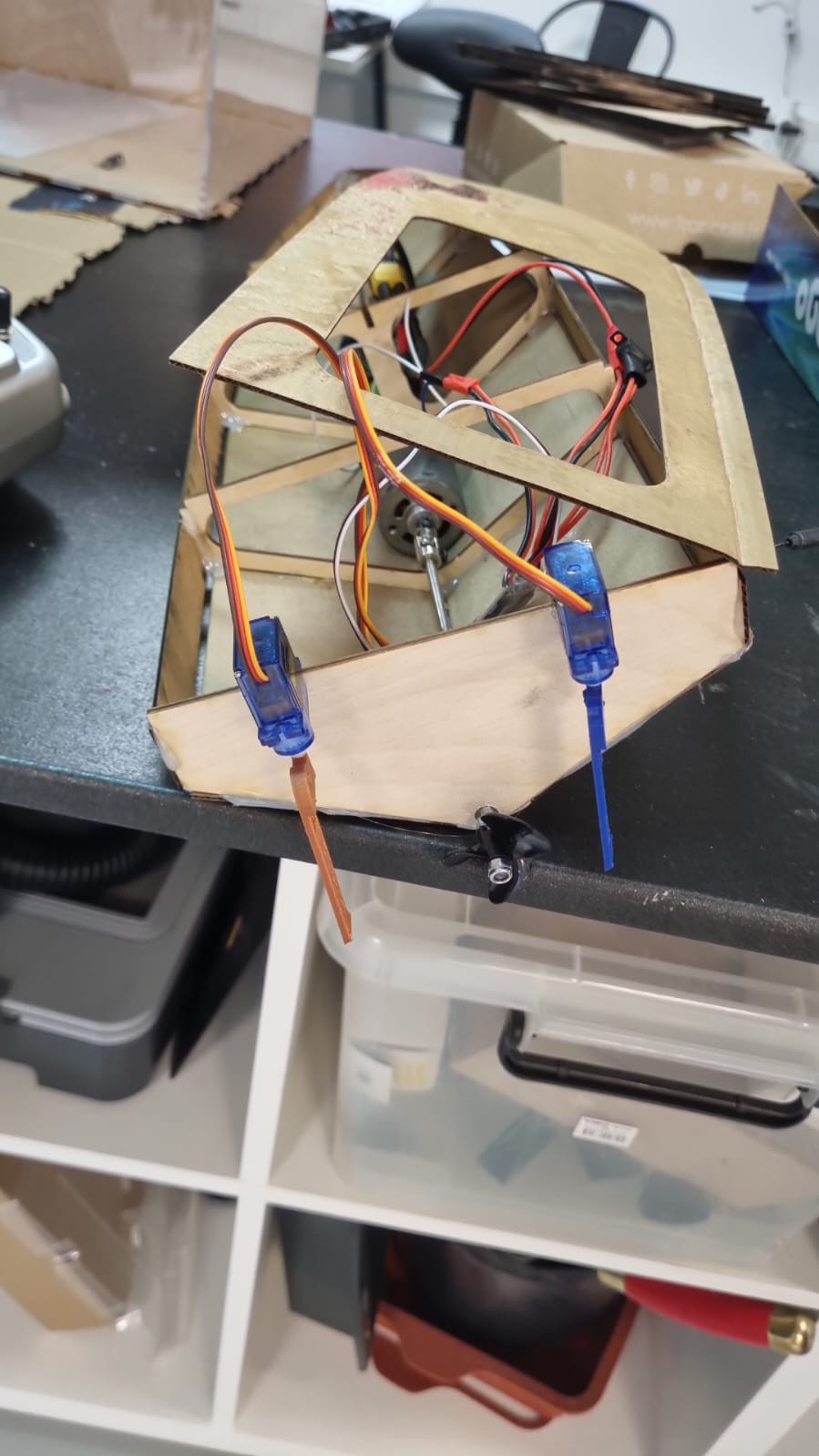
05/06/2025 at 11:27 • 0 commentsThis week we starting with the location of where to place each part within the boat. we were able to mount the dual rudders on the back of the boat. we were also able to mount the engine so that the drive shaft goes through the back transom. this allows us to be able to drive the boat as well as steer. This is shown within the pictures. also shown in the pictures is the 'top deck' to cover the interior of the boat. with the hole in the middle we are still able to turn on the motor and also work on other components.
![]()
-
Week 8
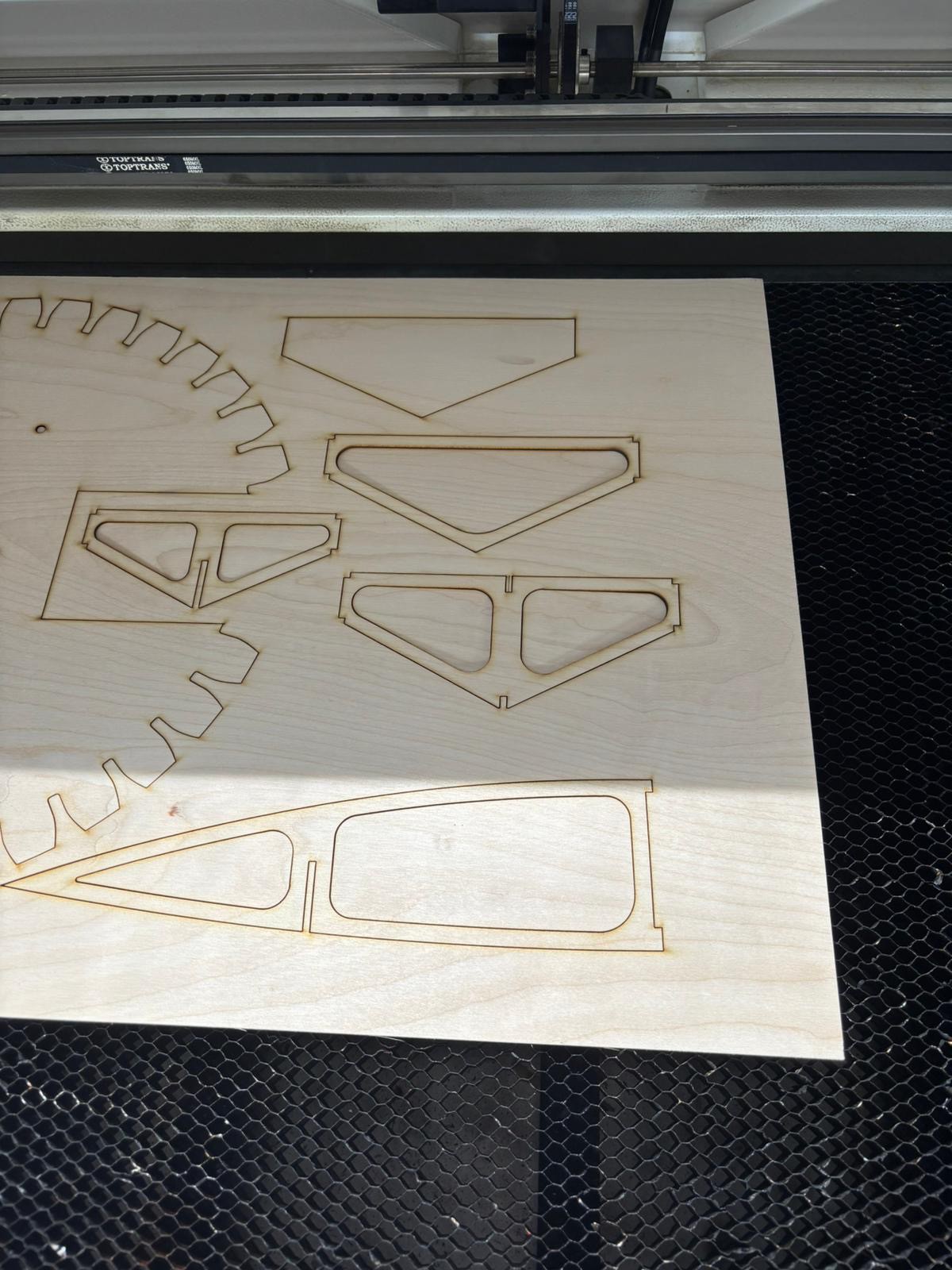
05/06/2025 at 11:16 • 0 commentsDuring this week our main goal was to create a prototype of the hull of the boat. We did this by using a laser cutter to be able to cut plywood to create the bulkhead and other supports for the hull. we created a rough prototype of the hull design with cardboard to make sure that our dimensions are accurate and to make sure that all of our components will fit within the boat without sacrificing any usability or balance.
Also pictured below is the laser cutting of the 'bulkheads' that are used to support the hull.
![]()
![]()
-
Week 7
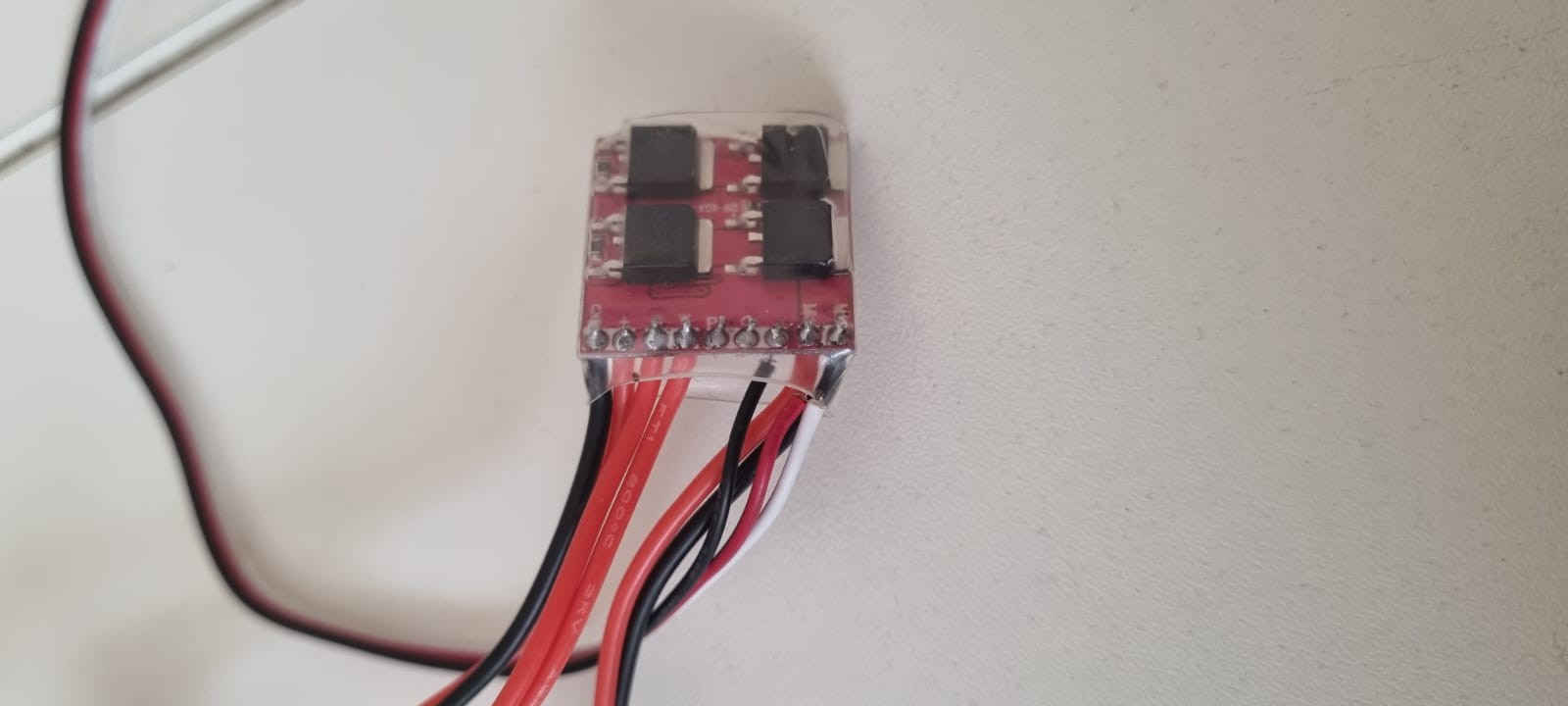
04/30/2025 at 13:51 • 0 commentsWe were able to connect the motor and the micro servo motors to a mini receiver that allows us to control them with a RC controller. This allows us to have both forward propulsion and steering control. Attached is the photos of the components and how they are connected.
![]()
-
week 4
03/12/2025 at 16:05 • 0 commentsToday we finished the Fusion model but the wood we used for the laser cuter was too resistant to bending so we're going to use kerf bending Technics. On the motor part we ended up on brush less for the water resistance.
Diamètre : Ø35mm
Longueur : 34mm
Tours par volt (KV) : 1200
Puissance : 475W
Diamètre de l'arbre moteur : Ø4mm
Poids : 109g
Type de moteur : brushless à cage tournante (outrunner)
Consommation de courant max. A : 37A
Recommandation de batterie : 2S ou 3S LiPoand we'll use propellers for propultion,
We have two choice for directions, either we use a servomotor of we use two brushless that we activate alternatively. Because we already have the servo we just have to command the brush less motors.
Днес завършихме модела Fusion, но дървото, което използвахме за лазерния резач, беше твърде устойчиво на огъване, така че ще използваме техника за огъване на бордюри. По частта на двигателя завършихме с по-малко четки за водоустойчивост.
Диаметър : Ø35mm
Дължина: 34 мм
Tours par volt (KV) : 1200
Мощност: 475W
Diamètre de l'arbre moteur : Ø4mm
Тегло: 109g
Тип на мотора : безчетков с турнантна клетка (outrunner)
Consommation de courant max. A : 37A
Recommandation de batterie : 2S ou 3S LiPoИ ще използваме витла за задвижване,
Имаме два избора за посоките, или ще използваме сервомотор, или ще използваме два безчеткови двигателя, които ще активираме алтернативно. Тъй като вече имаме сервомотор, трябва само да командваме двигателите без четки.
-
week 3
03/05/2025 at 16:03 • 0 commentsToday we did advance on two axis, first the hull model. With a new scrappy desing and some fusion sketches we got a pretty good view at the V1 of the project.
We also advanced on the motor axis, finding a model that can help having speed torque while being waterproof. The model we choose is a
Moteur Brushless RO-POWER TORQUE 3534 1200kv ROBBE
-
둘째 주
02/26/2025 at 15:54 • 0 comments두 번째 주에 인터넷에서 기존 설계도를 검색했지만 사용할 수 있는 설계도를 찾지 못했습니다.
We started our second week by looking for existent blueprints on the web, but couldn't find any that were relatable.
그러다가 Fusion 360을 사용하여 한 쪽에서는 엔진 작업을 하고 다른 쪽에서는 선체 스케치를 하면 작업을 더 효율적으로 나눌 수 있다는 사실을 깨닫고 직접 시도해 보기로 결정했습니다.
We then decided to try it ourselves when we realised that we could actually divide our work more efficiently by working on the engine, on one part and sketching the hull on the other, using Fusion 360.
-
Primera Semana
02/26/2025 at 15:14 • 0 commentsii Hola a todos !!
Hello everyone !!
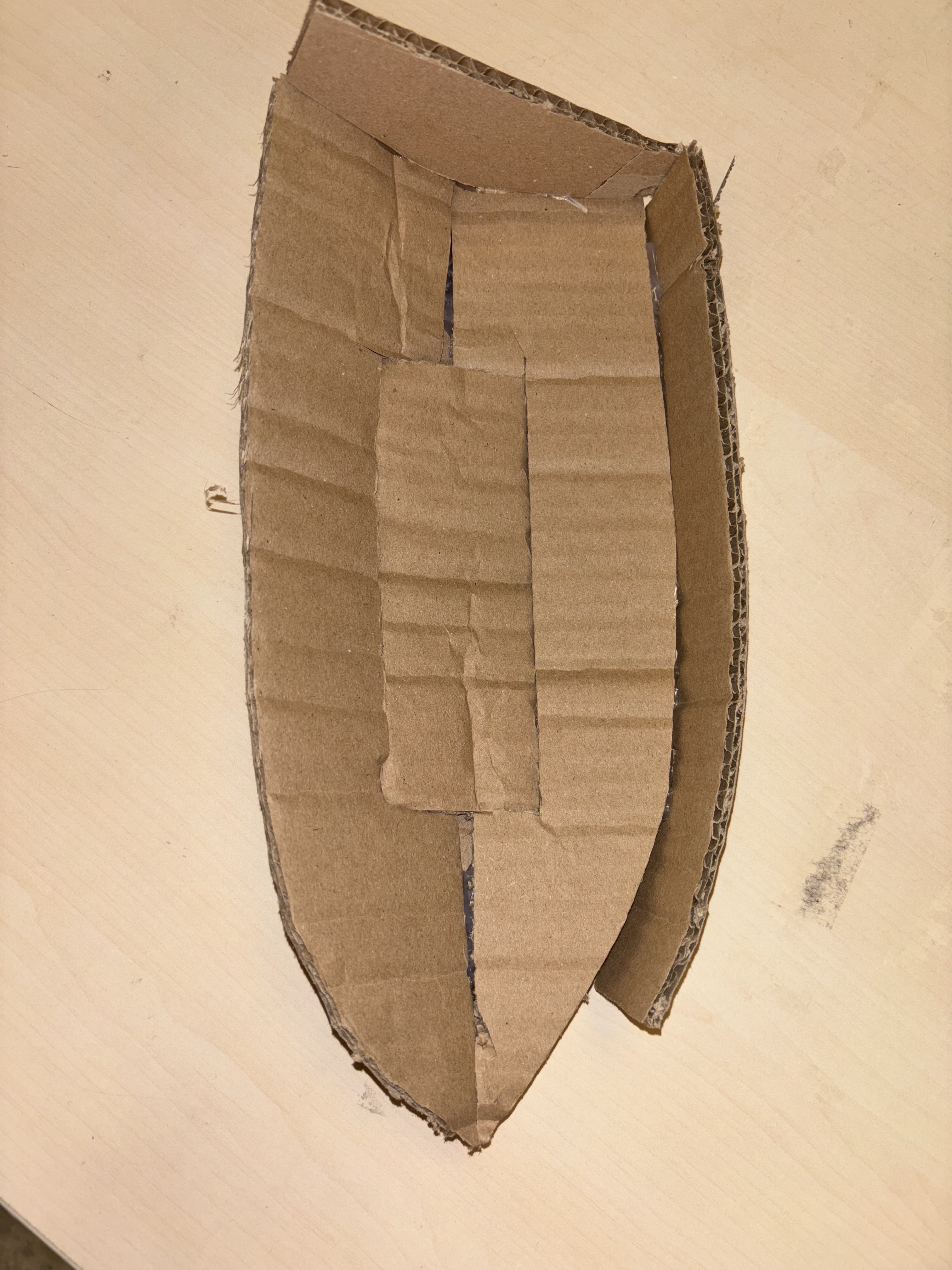
Durante la primera clase, hemos realizado nuestro primer intento de proyecto utilizando cartón. Fue bastante difícil ya que no teníamos ni idea de cómo hacerlo, pero aún así encontramos una manera de concretarlo al final, como se muestra a continuación :
During the first class, we have made our first project attempt using cardboard. It was pretty hard since we had no clue how to make it, but still found a way to concretize it at the end, like shown below :
![]()
Usamos un poco de pegamento para hacerlo mas fuerte, y curvamos el carton para que pareciera un verdadero barco de rc. Desgraciadamente, con lo tontos que somos, lo pusimos en agua para ver si flotaba, pero el barco se ahogo debido a que el carton absorbia agua, y asi perdimos nuestro prototipo.
We used a few gluestick to make it stronger, and curved the cardboard to make it look like a real rc boat. Unfortunatley, as stupid as we are, we put it on water to see if it floats, but the boat drowned due to the coardboard absorbing water, and so lost our prototype.
Aún así, nos dimos cuenta de que la forma del barco estaba bien, y que teníamos que trabajar en ella, y probablemente dibujar primero un plano 2D para poder imprimirlo.
We still learnt that the shape of the boat was fine, and that we need to work on it, and probably sketch a 2D blueprint first in order to print it.