Michal
-
Now v. 3.0
04/19/2025 at 11:29 • 0 comments![]()
In version 3.0 I had the PCB made and I reworked the program
-
Electronics
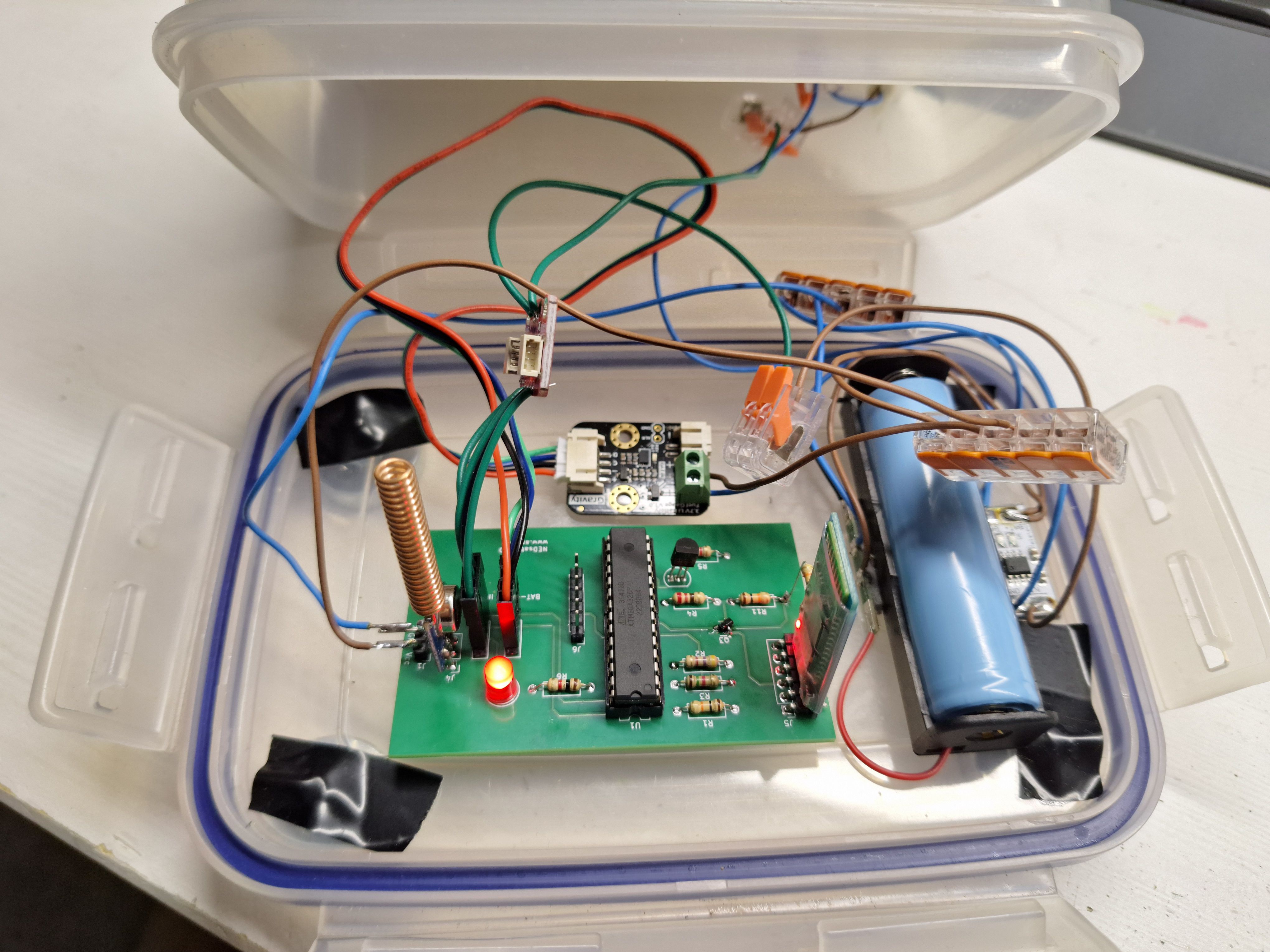
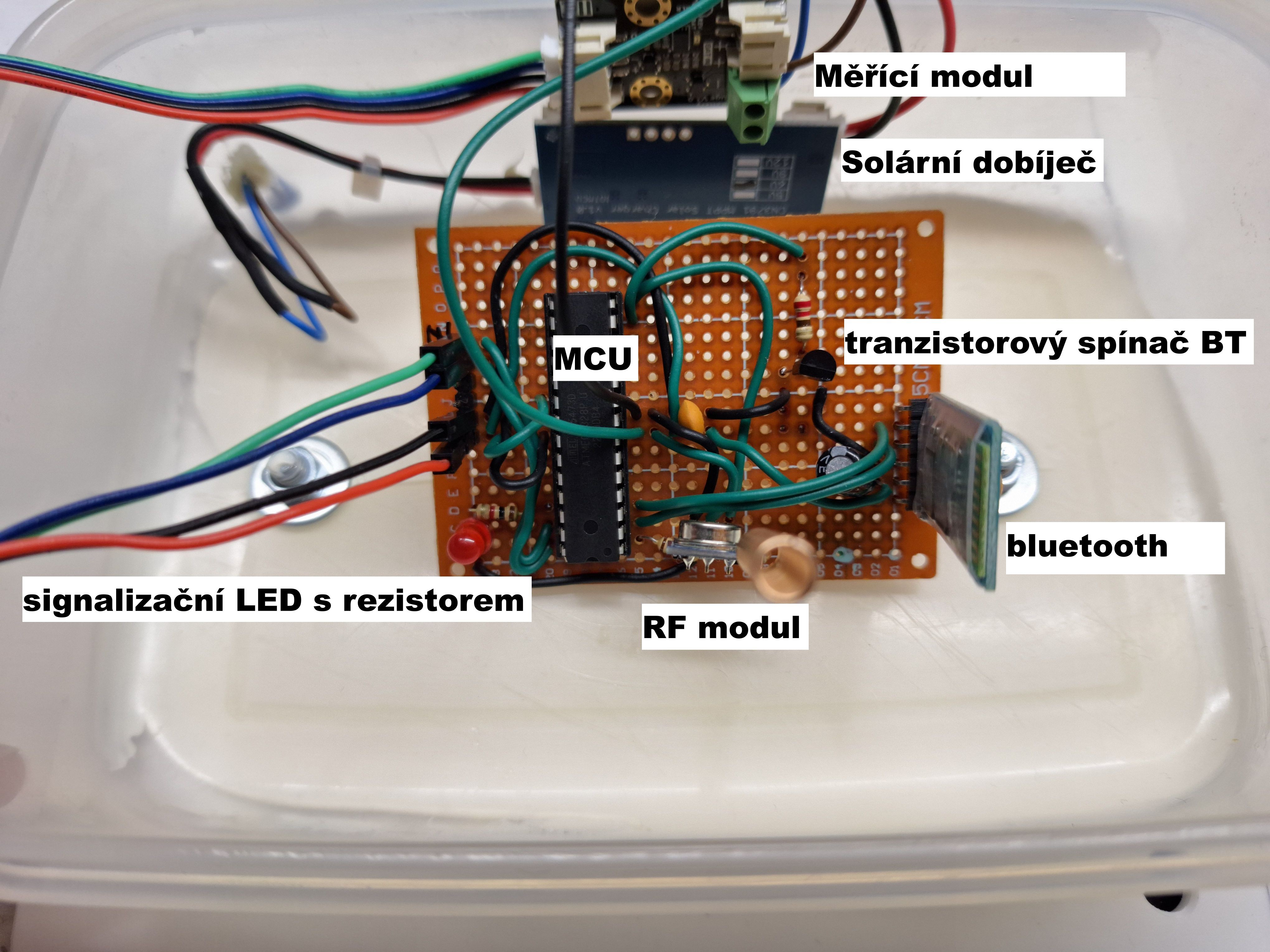
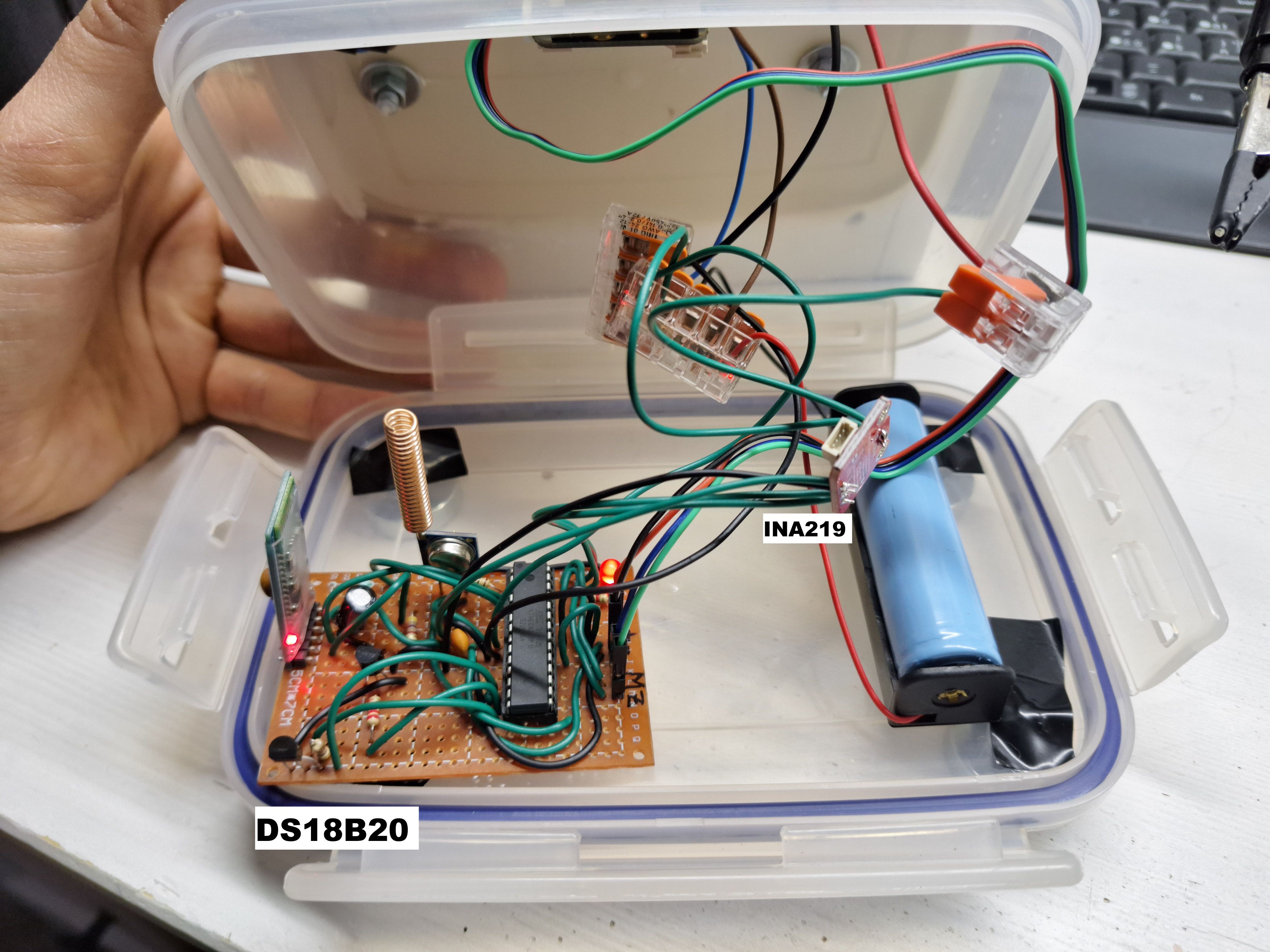
04/06/2025 at 04:19 • 0 commentsThe brain of the entire NEDsat is the Arduino UNO, or rather its ATmega328P chip clocked at 8MHz by an internal oscillator and powered directly from the battery.
The following sensors are used to measure the NEDsat parameters: DFRobot Gravity with a MAX17043 chip, which measures the battery status in mV and %; DS18B20 for temperature measurement and INA219 for measuring the current from the panel.The primary communication is the SRX882 RF module at 433MHz, which transmits the battery status in the form of PWM pulses (1 pulse = 5%) - I use an SDR receiver to capture the transmission.
Furthermore, if the battery charge is more than 50%, the RF transmission is followed by the activation of the HC-05 Bluetooth module and the transmission of the battery status in % and mV and the system temperature.
There is also one LED that flashes to the rhythm of the RF transmission and signals the activation of Bluetooth, a couple of capacitors for power supply and a pull-up resistor on the MCU reset pin.
![]()
![]()
-
Mechanics
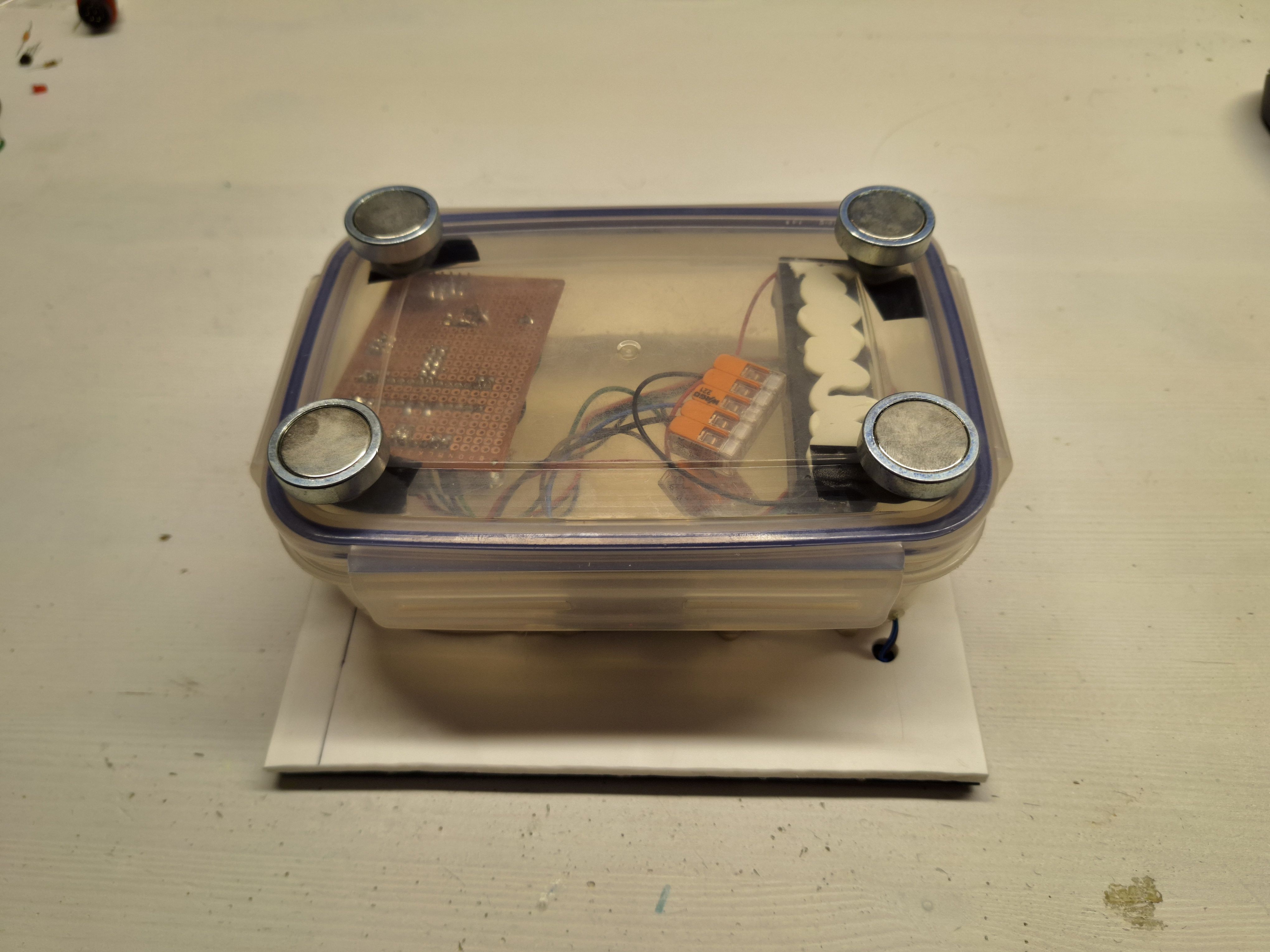
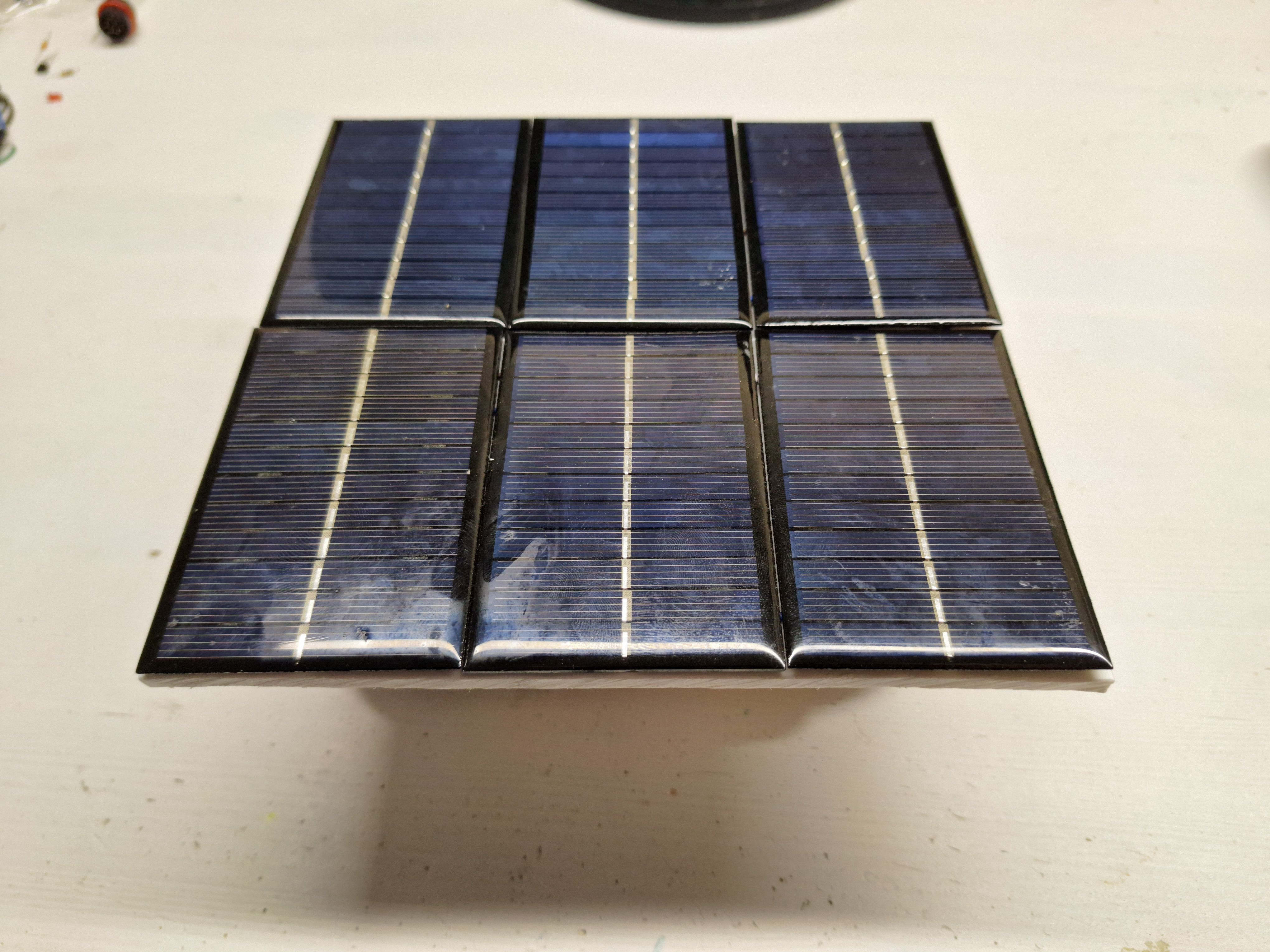
04/06/2025 at 04:12 • 0 commentsA plastic waterproof food container is used as the base, which ensures sufficient rigidity and protection from rain. Magnets are screwed into the bottom (or lid) for attachment to an iron base. The top is covered by a plastic plate with 6 waterproof 6V/1W solar panels connected in parallel. The electricity produced in the panels charges a 2200mAh li-ion battery.
![]()
![]()
NEDsat - terrestrial satellite
NEDsat v2.0: ultra-low-power solar satellite with battery, temperature and current monitoring, RF and Bluetooth data transmission.