• First Steps Toward the RFID Edition

    andriy.malyshenko09/09/2025 at 10:50 0 comments

    When I started sketching out Loud-ESP RFID Edition, I went back to the original Loud-ESP schematics to see what could be improved. The first targets were battery management and idle power draw, since I wanted the new board to be more efficient in portable use. I also redesigned the 3.3V power stage to make it more robust and reliable under load (especially with a low battery).

    On the I/O side, I switched the SD card from SPI to SDIO mode. This not only freed up some pins but also gave noticeably better performance in my tests. Around this time, someone reached out asking if I’d support the ESPuino firmware. That was the spark that pushed me toward building this board specifically for RFID-controlled audio. To meet ESPuino’s needs, I added 12 LEDs, 5 push buttons via a GPIO expander, and made the rotary encoder a permanent feature instead of optional like on the original Loud-ESP.

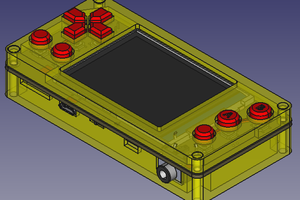
    From the start, I wanted this to be a DIY-friendly kit that would fit in an off-the-shelf enclosure (I have kids myself). I found a nice Bluetooth speaker kit that worked as a starting point, but it wasn’t a perfect match — I still had to add a charging port hole and drill button holes. I’m now considering designing a new enclosure inspired by that case, but with proper cutouts. A 3D-printed design might also be on the table, especially if someone from the community wants to collaborate.

    Given how crowded the board was, I decided not to integrate RFID radio directly on the board. Instead, I went with ready-made RFID modules, which plug in easily and avoid RF headaches. 

    This is still very much a work in progress — I’m testing the first prototype, gathering feedback, and adjusting the design step by step. The goal is to make it hackable, reliable, and fun to integrate into smart homes.