Hiroyuki OYAMA
-
Datasheet review and I/O adjustments
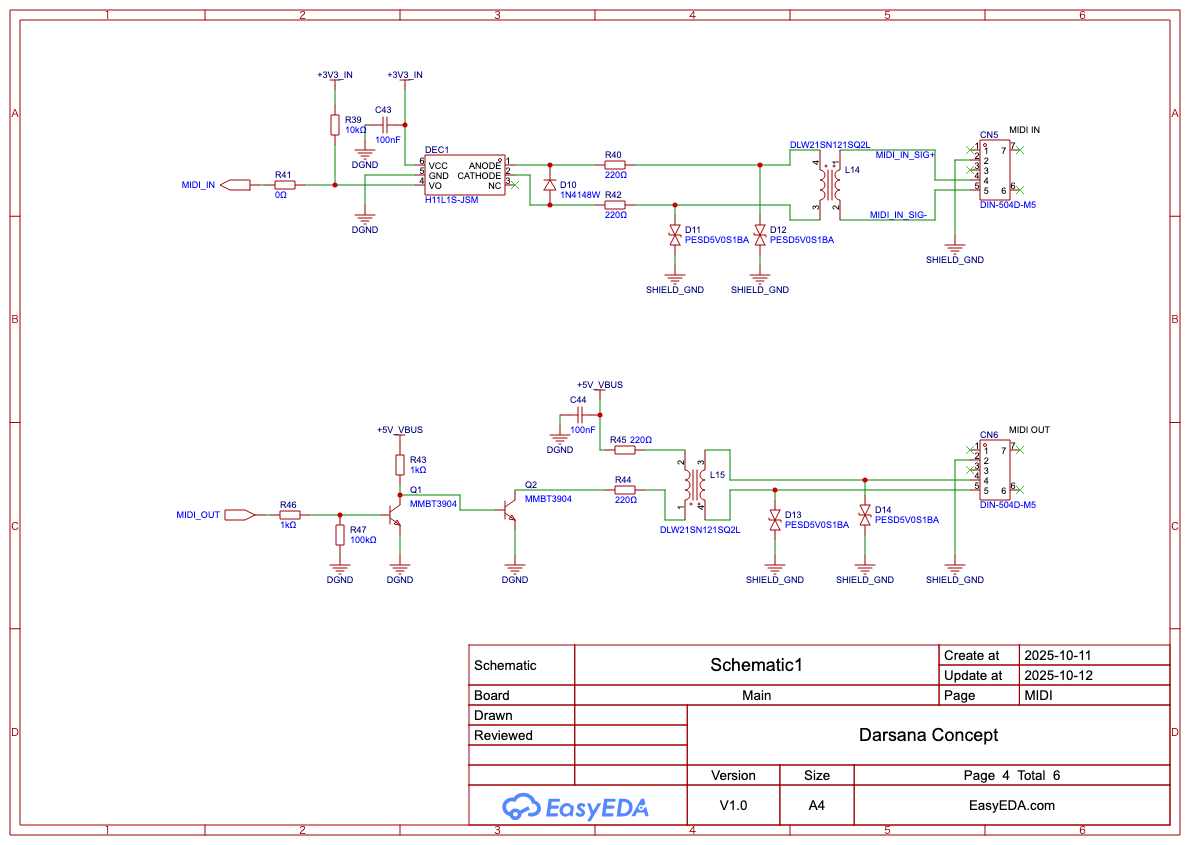
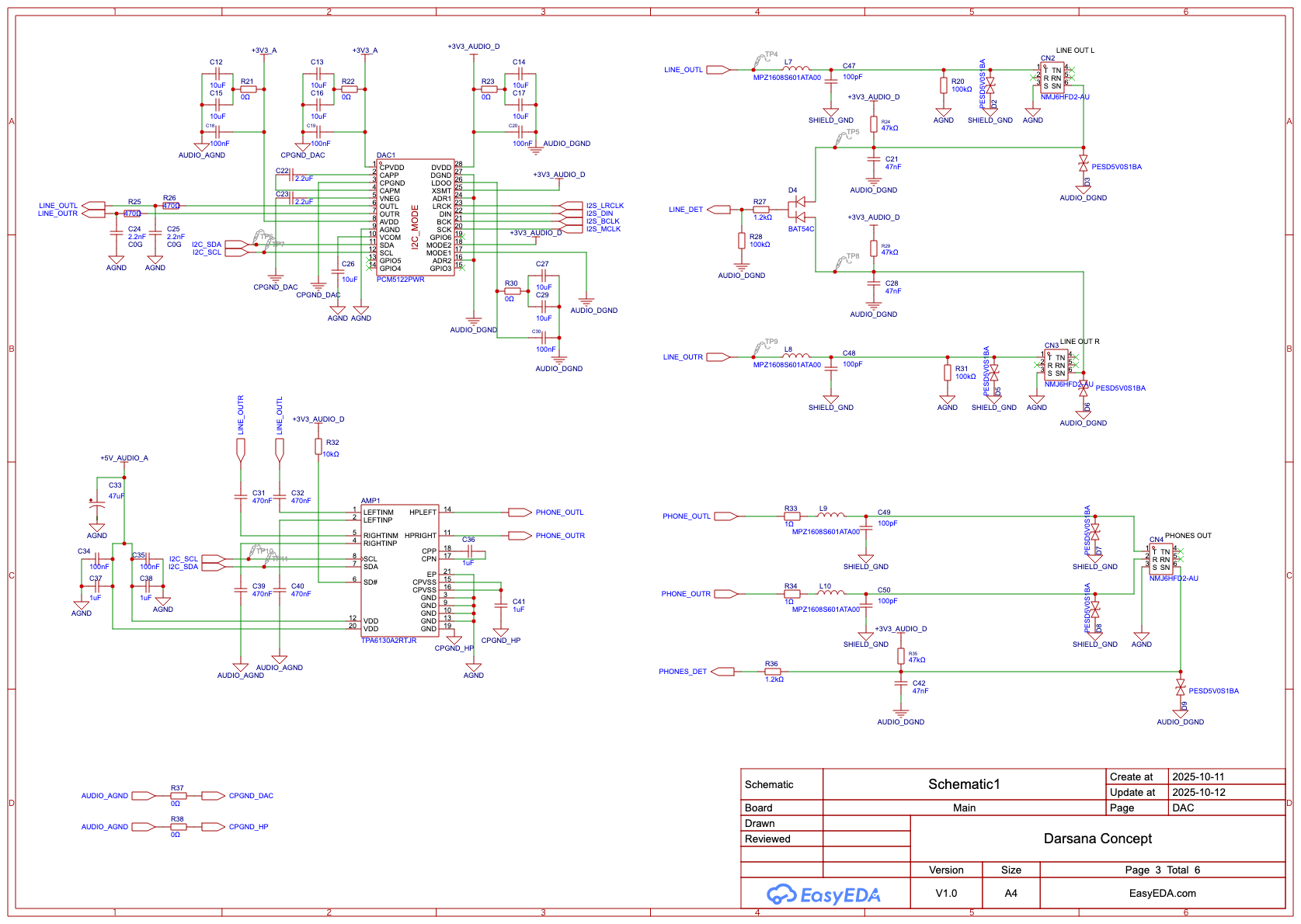
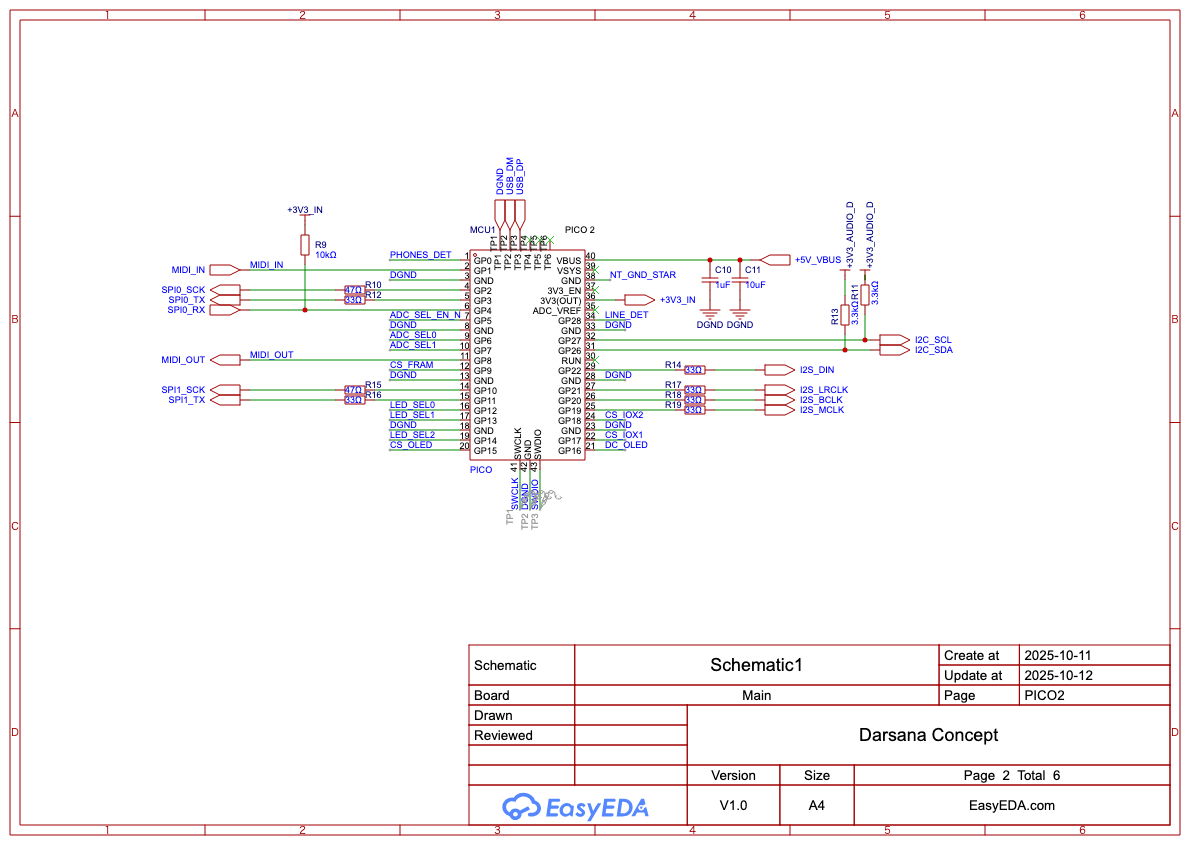
10/12/2025 at 14:17 • 0 commentsSpent the day checking every circuit against datasheets to match the reference designs.
Found and fixed several minor issues—and even a few critical ones.
Review always pays off.
Also:
- Line / Phones Out changed to 6.35 mm jacks.
- MIDI IN / OUT upgraded to full-size DIN-5. I like small parts, but here I prefer the big ones.
- SPI chip-select pins were rearranged for a cleaner layout and domain separation.
- Added provisions for EMI filtering on all external connectors — not needed yet, but ready when it is.
![]()
![]()
![]()
-
Power & USB Update
10/11/2025 at 15:20 • 0 comments- Designed the power circuit for the split-board configuration, separating the Main board (Audio + I/O) and the UI board, which carries multiple ADCs, 64 potentiometers, 32 key switches, and many LEDs — the most complex and costly part of the system.
By isolating the UI board, debugging becomes easier and re-spin cost is significantly reduced.
- During pin assignment cleanup, one GPIO line became available and is now assigned to UART1 TX for MIDI OUT.
- Added ESD protection for the USB Type-C data lines (PRTR5V0U2X-ES + ACM2012-900-2P-T002).
- Currently in datasheet and wiring verification phase before moving to PCB layout.
- Designed the power circuit for the split-board configuration, separating the Main board (Audio + I/O) and the UI board, which carries multiple ADCs, 64 potentiometers, 32 key switches, and many LEDs — the most complex and costly part of the system.
-
Every Pin Counts — Schematic Complete and Panel Layout Fixed
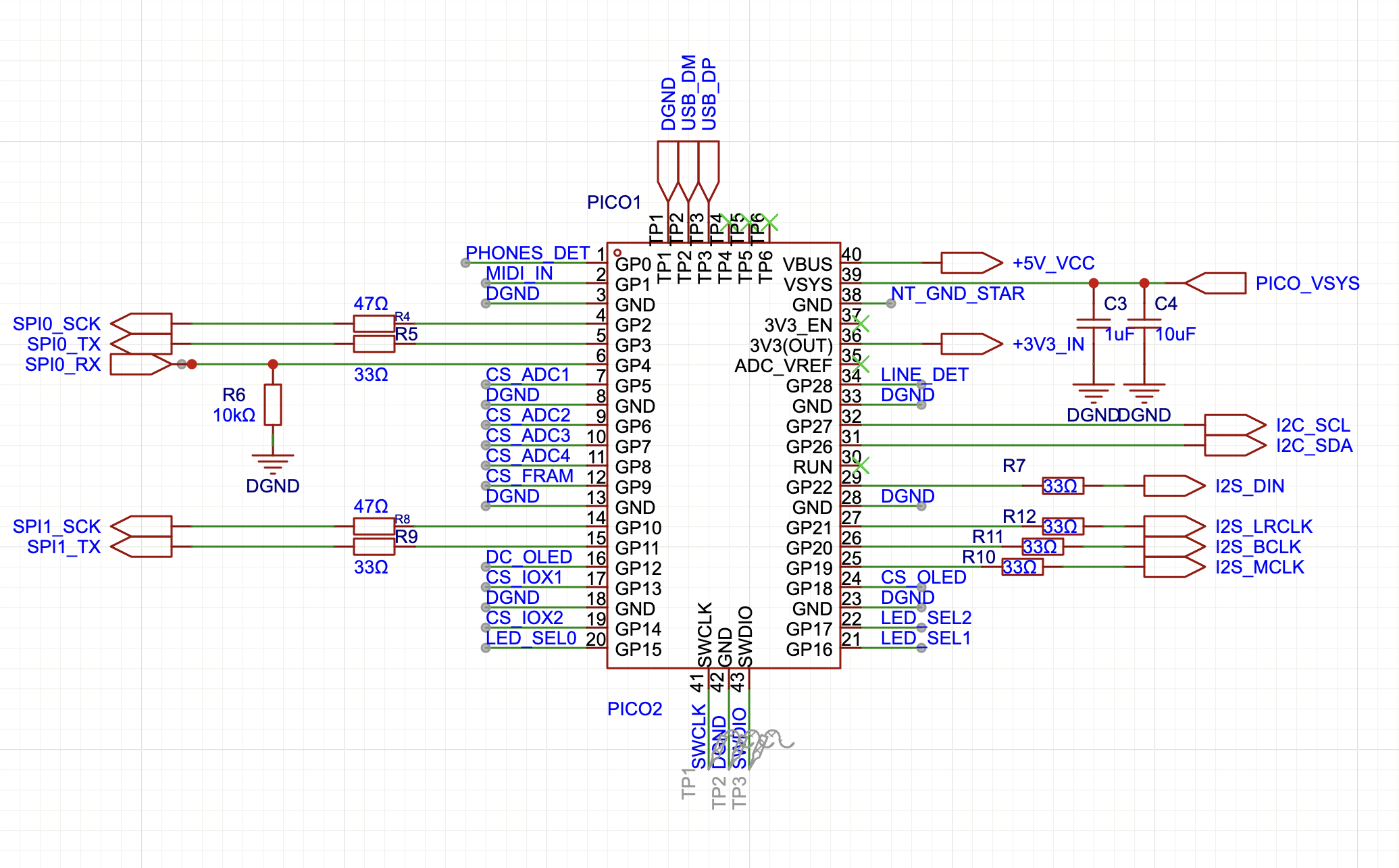
10/10/2025 at 12:48 • 0 commentsThe full schematic for Darśana is now complete — and the Pico 2’s GPIO pins are completely exhausted.
Every single pin now has a dedicated role: ADC channels for 64 knobs, SPI buses for LEDs and OLED, chip selects for four ADCs and two I/O expanders, I²S for the DAC, and even the line and phones detection inputs.
There are simply no free pins left.
![]()
At the same time, the number of parameters I wanted to control kept growing.
Designing Darśana became a constant balance between expressive control and hardware limits — a reminder that constraint can drive creativity.
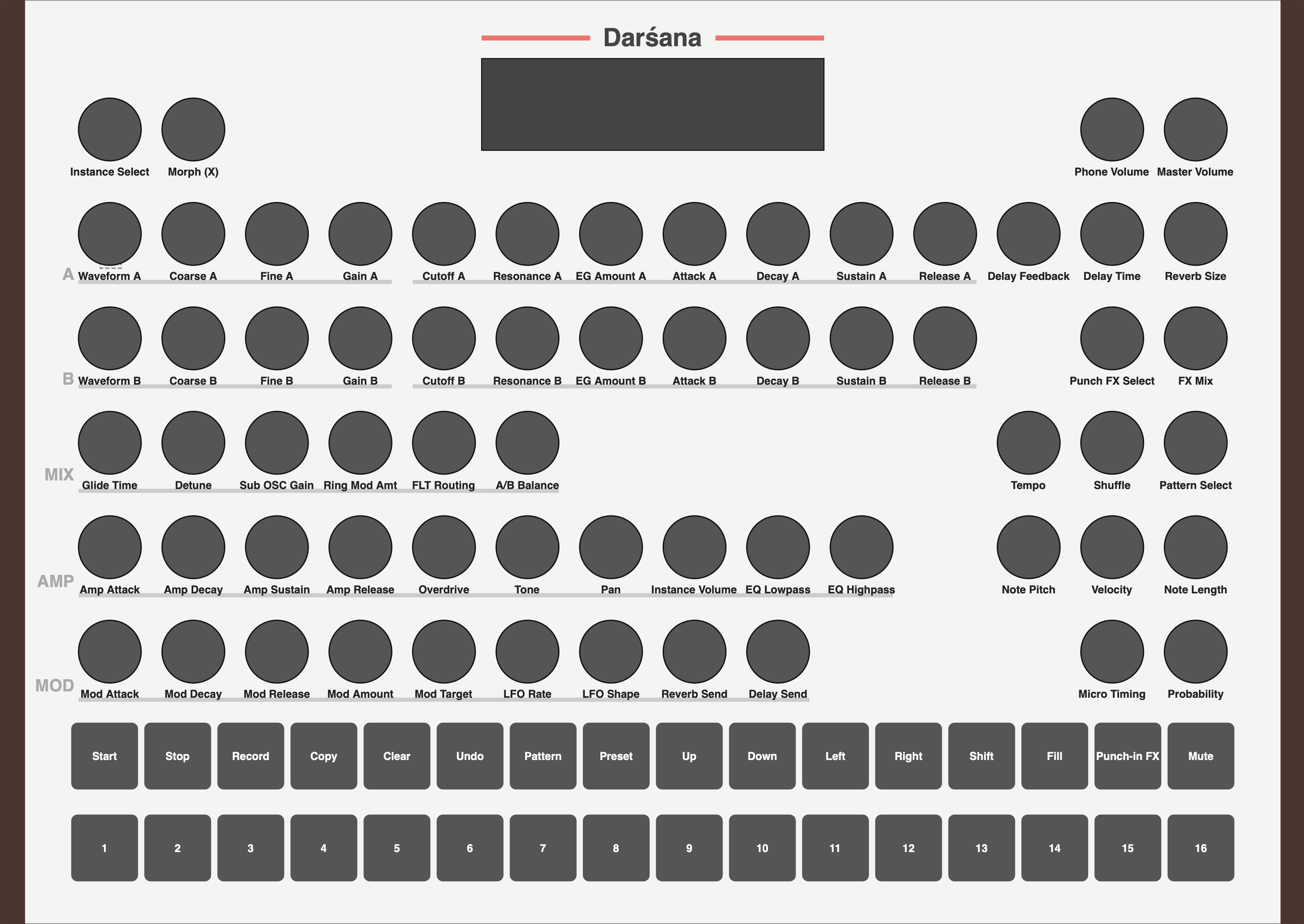
In parallel, the front-panel design reached its first complete layout.
The knob arrangement is now mostly fixed, giving a clear sense of how the instrument will feel in the hands.
Seeing the schematic and panel evolve together made the project finally start to feel real.
![]()
Next, I’ll carefully review the schematic again against all component datasheets, and then request an external design review before moving to PCB layout.
It’s the moment where ideas must prove themselves in actual copper and traces.
64-Knob Virtual-Analog Synth on Pico 2
A 64-knob virtual-analog synthesizer on Raspberry Pi Pico 2 — fully tactile, no menus, real-time control.