• Preliminary hardware plan

    WJCarpenter12/30/2025 at 20:59 0 comments

    I'm not planning to break much ground in the hardware design. I'll exploit what others have done before me, and I'll also make it easy on myself by using some pre-built components.

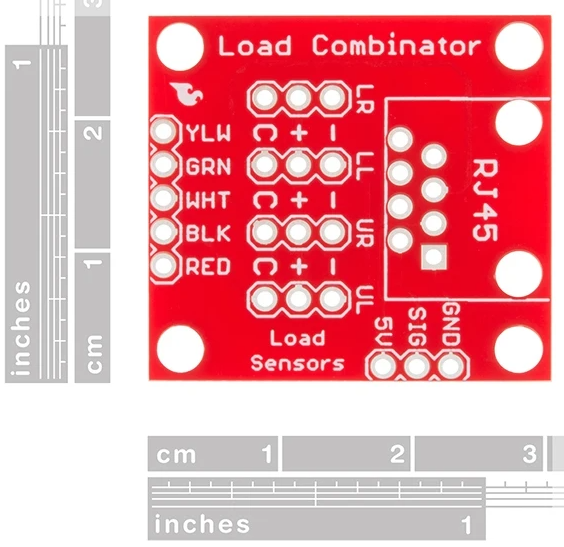
    For the Wheatstone bridge, I plan to use this SparkFun Load Sensor Combinator.

    That has a footprint for an RJ45 socket, which I'll use for connecting this board to the rest of the circuitry. A couple of years ago, for an unrelated project, I bought a couple dozen PCB mount RJ45 sockets that I never got around to using. When I grabbed them to check the dimensions, I discovered that they were top insertion orientation, which is a geometry that's not going to work in this scenario. So, I've now ordered some more PCB mount RJ45 sockets, but with side-insertion orientation. With that RJ45 socket, space will be tight if I attach the board under the scale, so I will probably have to provide some load sensor foot extensions of a quarter inch or whatever for ground clearance.

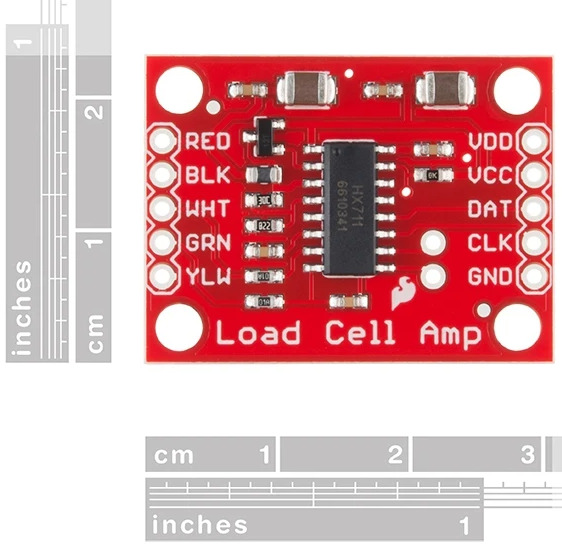
    The cable from that board will go to an amplifier board. For that amplifier, I'll use the SparkFun Load Cell Amplifier - HX711.

    That board does not have a footprint for the RJ45 socket, but it does expect the same signals as output by the combinator board.

    I want to show a local display of the gross and net weight measurements, and maybe a couple other things. I briefly considered getting one of those so-called Cheap Yellow Displays (CYD) that have an integrated ESP32. However, I've got tons of ESP8266 and ESP32 boards around here, and I've also got a few small color touchscreens. That won't make the tidiest design, but it saves me time and bother. I'm not sure yet if I'll need a power supply for some specialized voltage.

    I will almost certainly design a custom PCB that acts as a carrier for the amplifier, the RJ45 socket, the ESP32, the display, and a USB socket for power. I'll wrap all that into a 3D-printed enclosure to make a nice wall-mounted unit at a comfortable reading position.

  • The chop

    WJCarpenter12/30/2025 at 20:31 0 comments

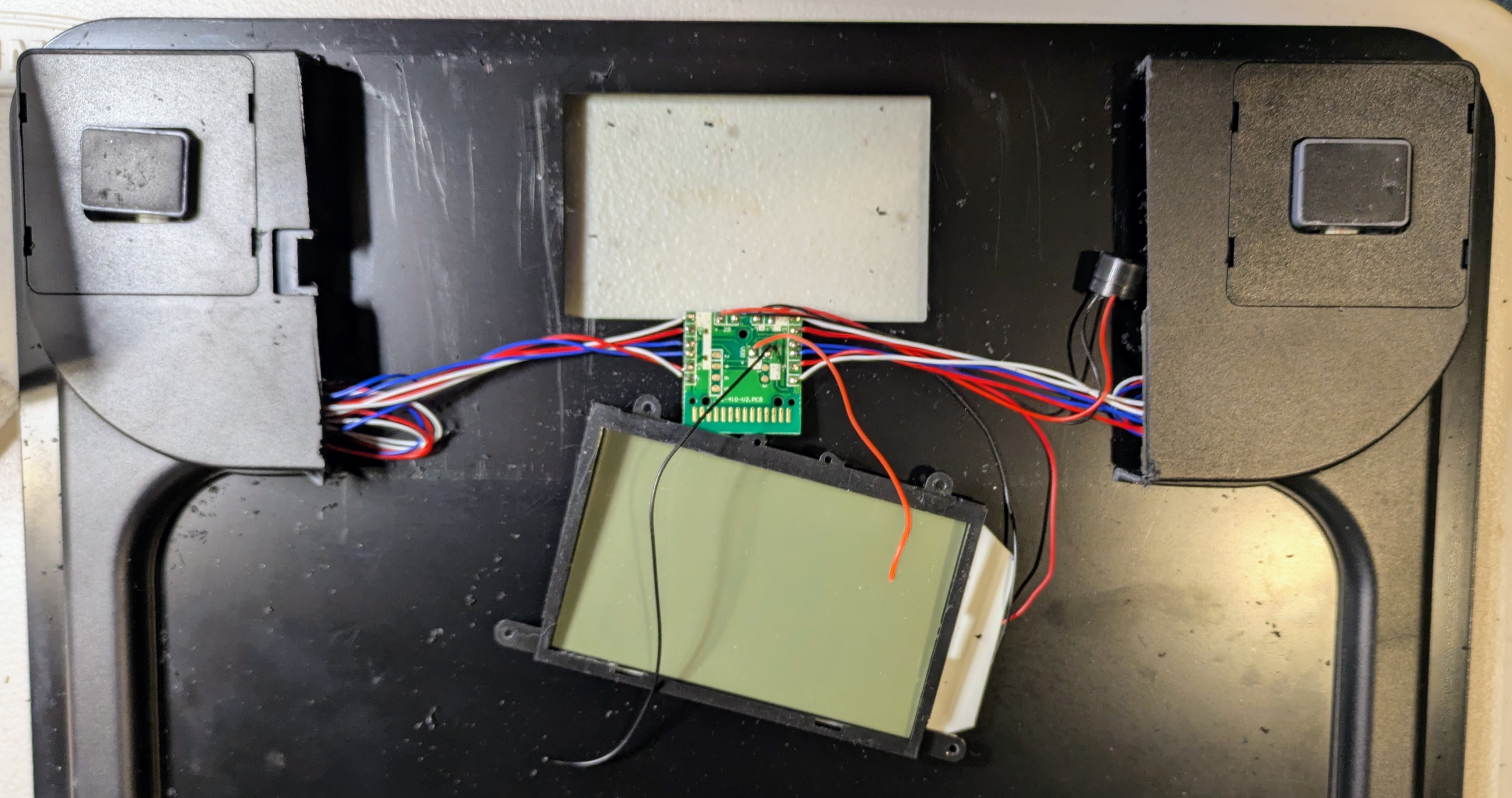
    I took the plunge and opened up the innards of one of our existing bathroom scales. After probing a little bit, I concluded that the extra sticky double-sided tape was only present under the 4 load sensor corners. That made it a straightforward matter to  remove a big chunk of plastic with a hacksaw and side cutters.

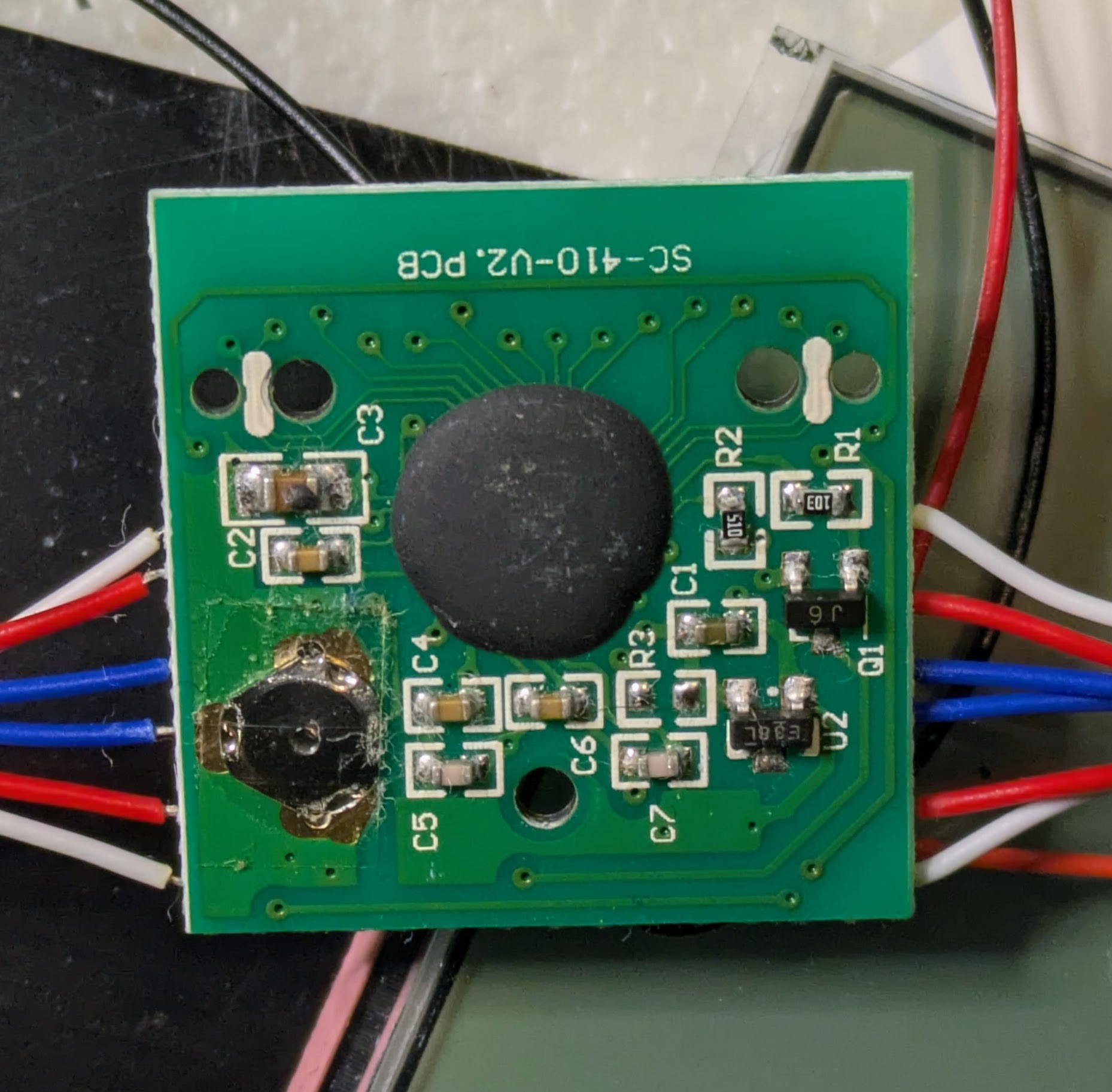
    Here's what it looks like after a barbarian hacked away at things. The free-floating red and black wires were the power leads from the battery compartment. I'll be discarding the display and controller board.

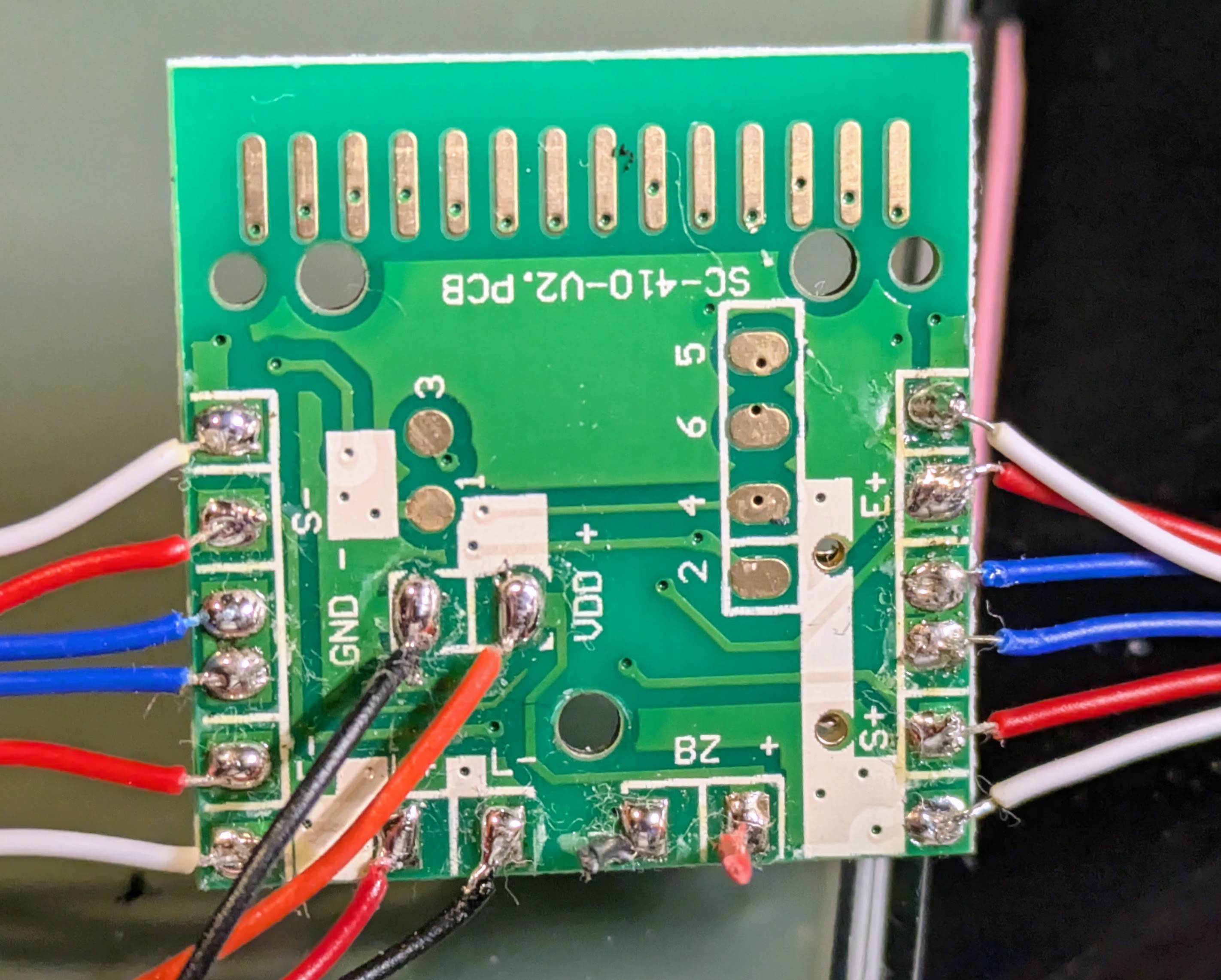
    Here's a close-up of the two sides of the controller board. The cut off "BZ" leads are from the small piezo buzzer (the scale beeped when its weight measurement stabilized). The manufacturer blobbed over whatever chip they were using, which seems like a pointless exercise in something to commonly understood already.

  • On the Make

    WJCarpenter12/26/2025 at 19:24 0 comments

    I have been slowly catching up on my unread back issues of Make magazine. By a kismet-style coincidence, I just now came across Charles Platt's Get a Grip article in issue 52. It's a design for a DIY carnival grip strength tester.

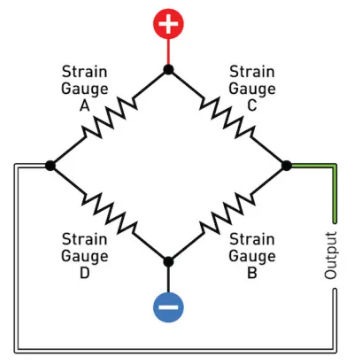
    The thing that caught my attention as I paged through the magazine was the diagram of a Wheatstone bridge, an integral part of any discussion of strain gauges and load cells.

    I probably won't be using any elements of this DIY approach, instead opting for off-the-shelf components. It was just startling for me to come across this within a day or two of starting to think about using bathroom scale load sensors.

  • It's a strain

    WJCarpenter12/24/2025 at 22:14 0 comments

    We have two electronic bathroom scales along with the one I just bought. I was hoping that at least one of them would be easy to disassemble so I could poke around and reverse engineer some stuff in order to interface an ESP32 or something. No such luck. All of them seem to be stuck together with some kind of strong double-sided foam tape or something. Not a single visible screw.

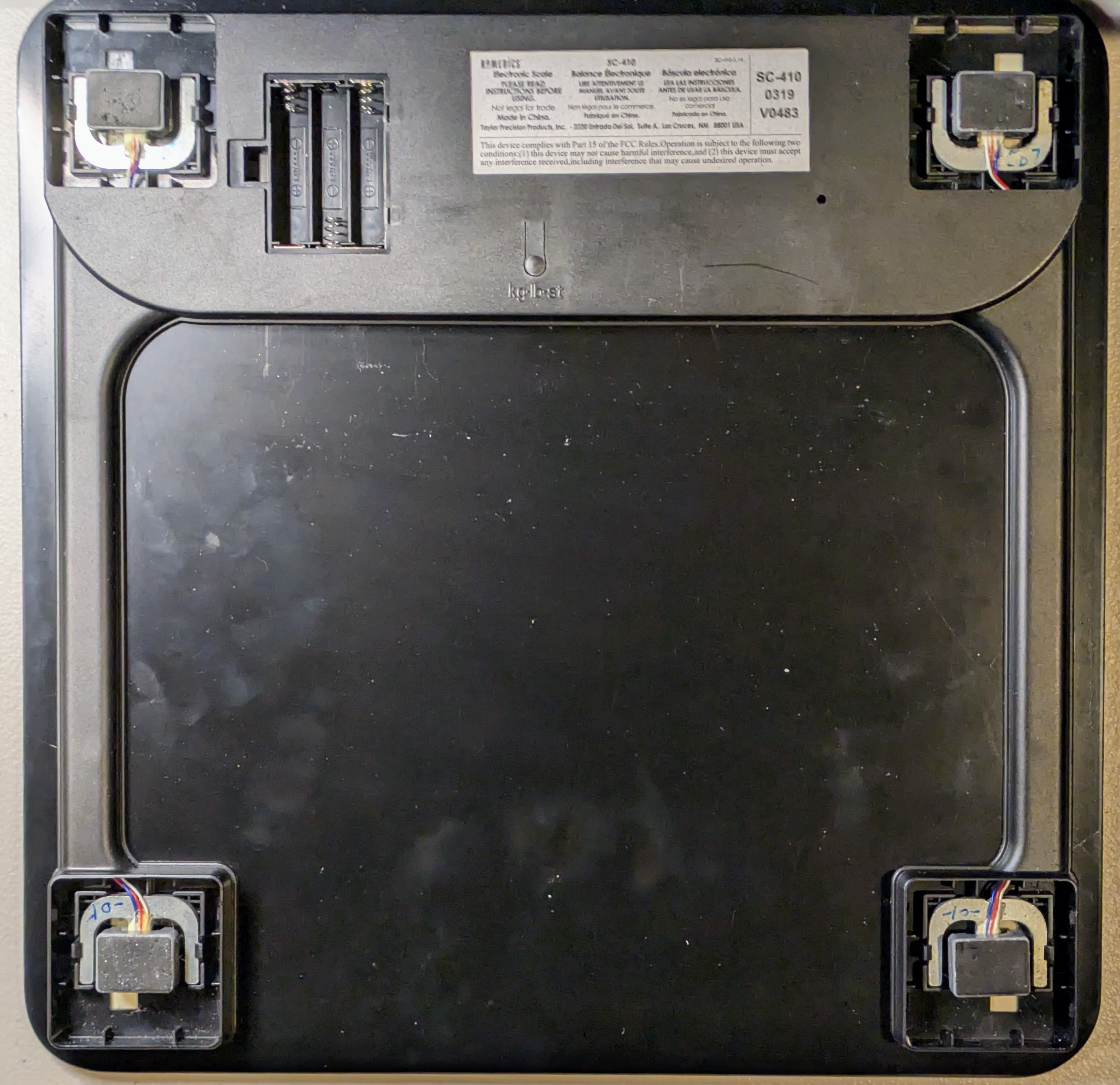
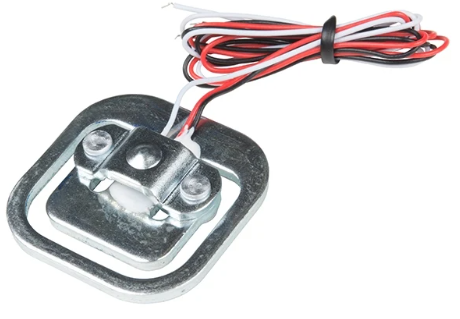
    For a while, I was thinking about taking my Dremel to the plastic casing and hoping that inside would be something wonderful (for me). I'm now changing my mind for a different approach. In all of the scales, there is easy access to the gadgets on the four corners. They all look like pretty generic load sensors similar to this one (available from Sparkfun  and many other places):

    The folks at Sparkfun have also provided some straightforward information for interfacing to load sensors, singly or in a quad setup.

    My new plan is to use one of the bathroom scales to be the source of the load sensors and also the mechanical platform to sit under the litter box. I'm still pondering what electronics components I'll use, but it will almost certainly be:

    1. Some kind of combiner board to take the separate load sensor input and provide a single output, to....
    2. A load sensor amplifier board. This seems to be a practical necessity due to the tiny electrical differences being measured. The output of that amplifier board will go to....
    3. Some ESP32 variant.

    This new plan means I can trigger the measurements as often as I want. The ESP32 gives me plenty of ways to feed data to my Home Assistant server. Hacking bathroom scale load sensors seems to be a well-trodden path, so not too much work for me there. The interesting parts will be the dynamic detection of the tare weight and the detection of "cat is present".

    One unknown for me is the accuracy of the load sensors for small weights. Our cat weighs about 15 pounds. The litter box and contents probably weigh less than 10 pounds. That's way less than the expected use case for bathroom scales. Will the sensing be linear at the bottom of the range? I guess I'll have to do some calibration steps to find out. Calibration steps will be needed in any case as part of the circuit fun.

  • An inexpensive smart scale

    WJCarpenter12/19/2025 at 23:43 0 comments

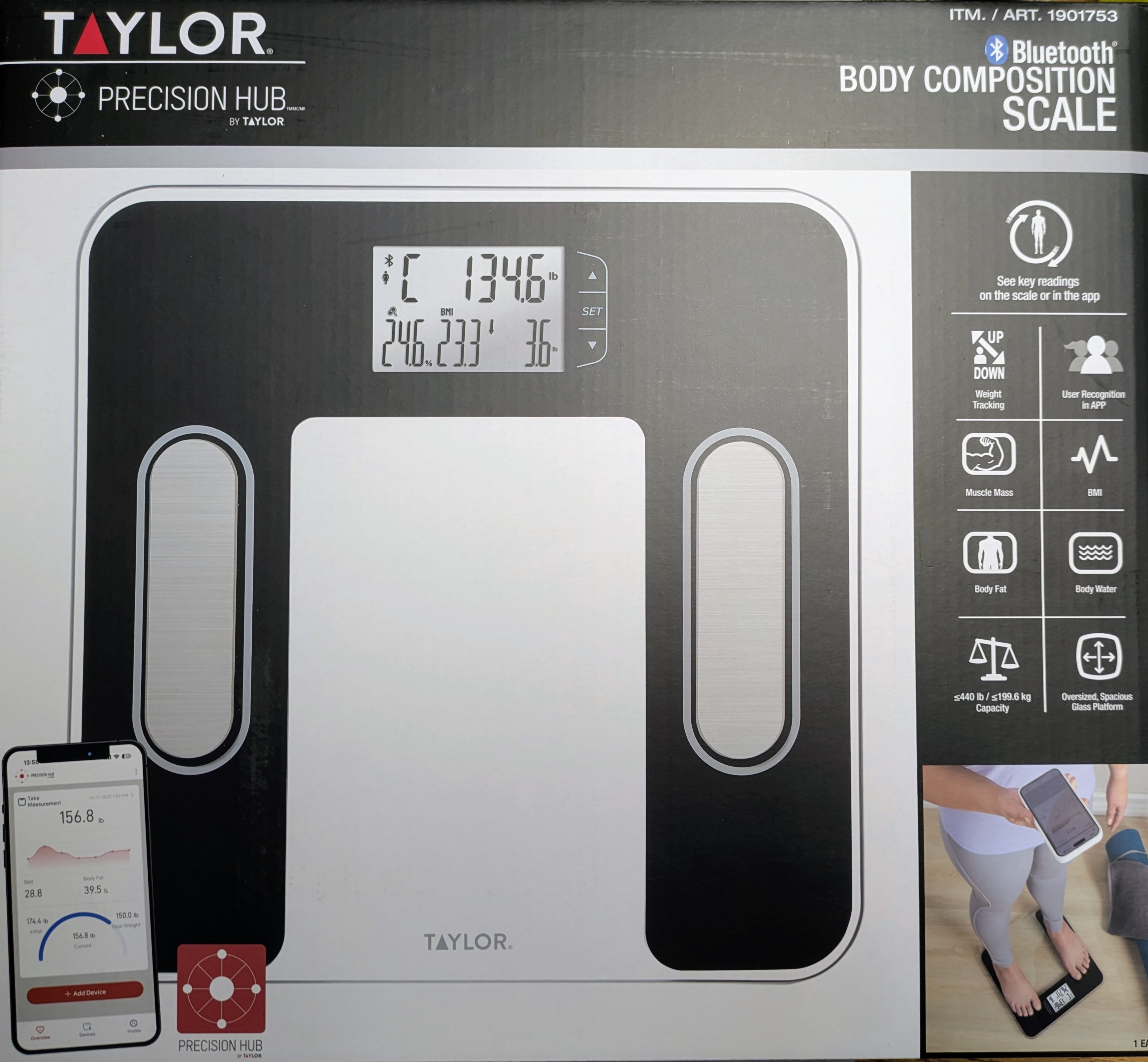
    I was at Costco today and came across this scale., It's got all the things and was only US$18, so I bought it. For this project, I don't need most of this, so my plan is to swap this in for the electronic-but-not-smart scale that we already had and hope that I can reverse engineer that existing scale for this.

    You know how Costco works, so if you are following along and think you might go get one of these for yourself, well, your local Costco might never have had it, or it might have had it for a one-off tiny slice of time.

  • A first run at design and challenges

    WJCarpenter12/19/2025 at 00:10 0 comments

    • I already have lots of smart home doodads with Home Assistant, so I probably want to be able to integrate the solution to HA somehow.
    • There are plenty of cheap electronic scales available at various prices, but I think I can get away with something under US$20.
    • For slightly more money, there are "connected" smart scales, almost all of which use Bluetooth to talk to a companion mobile app. A Bluetooth proxy can feed that info to HA if the underlying conversation is documented or has been / can be reverse engineered.
    • The OpenScale project has already done a lot of work reverse engineering Bluetooth protocols for smart scales. They also have an example of reverse engineering a non-Bluetooth scale and sending its reports using a small add-on processor.
    • The Catto Dashboard project (mentioned in this Hackaday blog item) is what got me thinking about this in the first place. They are getting data from a smart litter box, which we don't have, so it won't be immediately applicable. But there might be some ideas there that I can use.
    • One special requirement of putting the scale under the litter box is being able to get a tare weight so we can calculate the weight of just the cat. The tare weight changes as the litter is scooped clean daily and occasionally replenished.
    • I've seen two types of triggers for electronic scales. One type requires touching a button with a toe to turn the scale on. That obviously won't work for this scenario. (Our cat is not that trainable.) The other type turns on automatically when some amount of weight is put on it. That's great for getting the gross weight of the litter box plus cat, but it doesn't help for the tare weight problem. That leads me to think I'll need to go down the path of a custom hardware interface to the scale so that I can get the tare weight when the scale is idle.
    • One of the things I don't know is how the constant weight of the litter box might affect the scale's measurement accuracy. I've got my fingers crossed that it either doesn't complicate things or any complications can easily be overcome.
    • Electronic scales are almost always battery powered, and the batteries last a long time for their normal use case. I expect that will be thrown out of whack by the extra hardware interface components. I think I'll have to either add a bunch of extra batteries or draw mains power (probably via a USB charger). I don't think either of those will be an especially big problem.