szynyszyl
-
In the beginning was the Flux.
12/29/2025 at 01:31 • 0 commentsAnd so, out of nothing, something was born. The first tile, a swallow heralding the arrival of countless, utterly excessive, and completely unnecessary 3D prints.
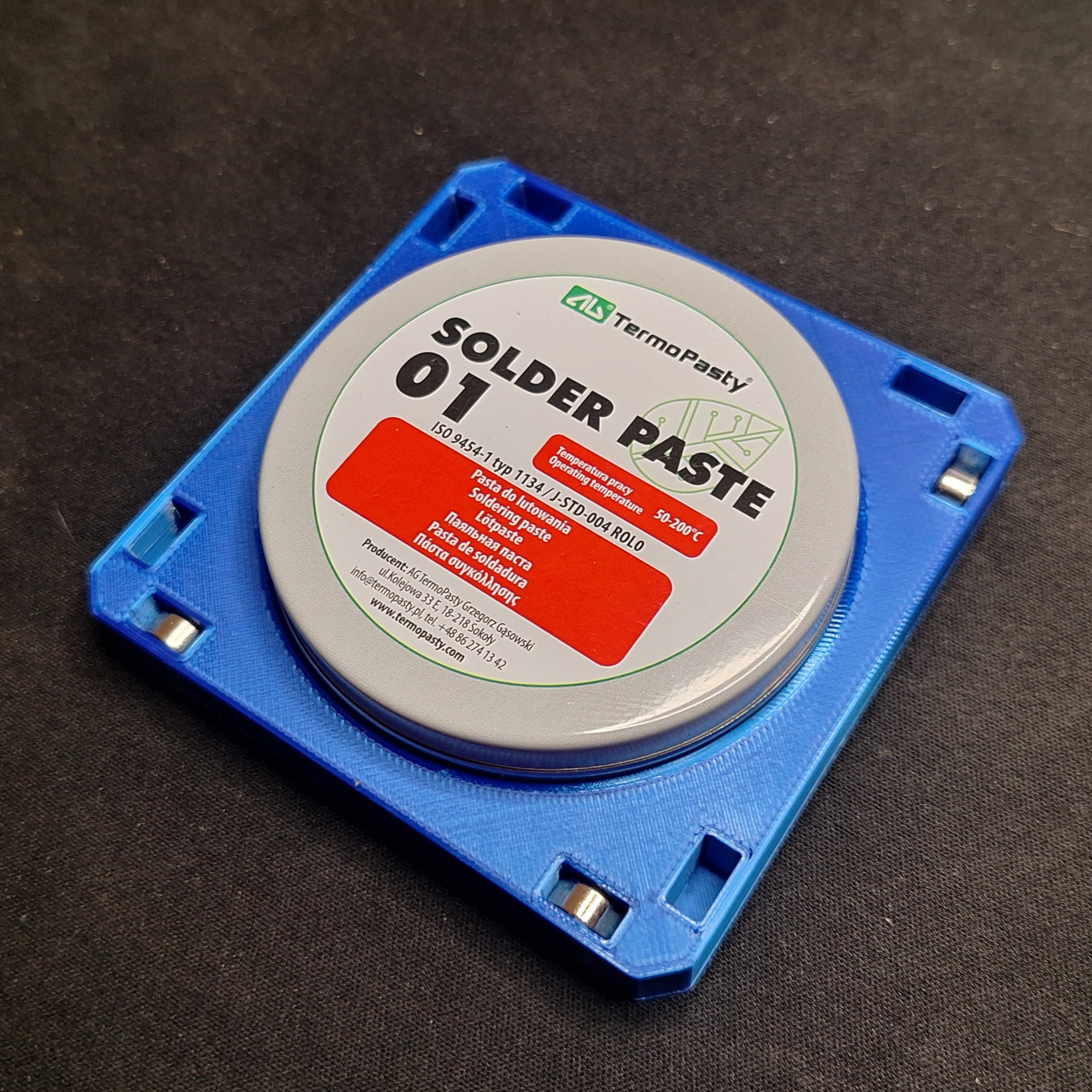
That’s basically where it all started. I always have a problem with losing solder paste jars, so I wanted to make a holder where I’d always keep one. The tray is designed for a round jar with a 66 mm diameter. An extra 0.5 mm of tolerance is added to the diameter so the jar doesn’t get jammed in the tray.
![]()
-
Rules… without them, we live with the animals.
12/29/2025 at 01:12 • 0 commentsRules should be simple. There shouldn’t be many of them, and they should be easy to remember. And in mechanical design, rules should be beautiful. Ugly rules are bad rules. A beautiful rule is a 10 mm base thickness for a tray. 7.62 mm would be an ugly thickness. Rules exist to be broken, but they should only be broken when it serves a purpose. Breaking rules just for the pleasure of destroying a beautiful system is like trampling fresh flowers growing in a forest clearing.
RULES:
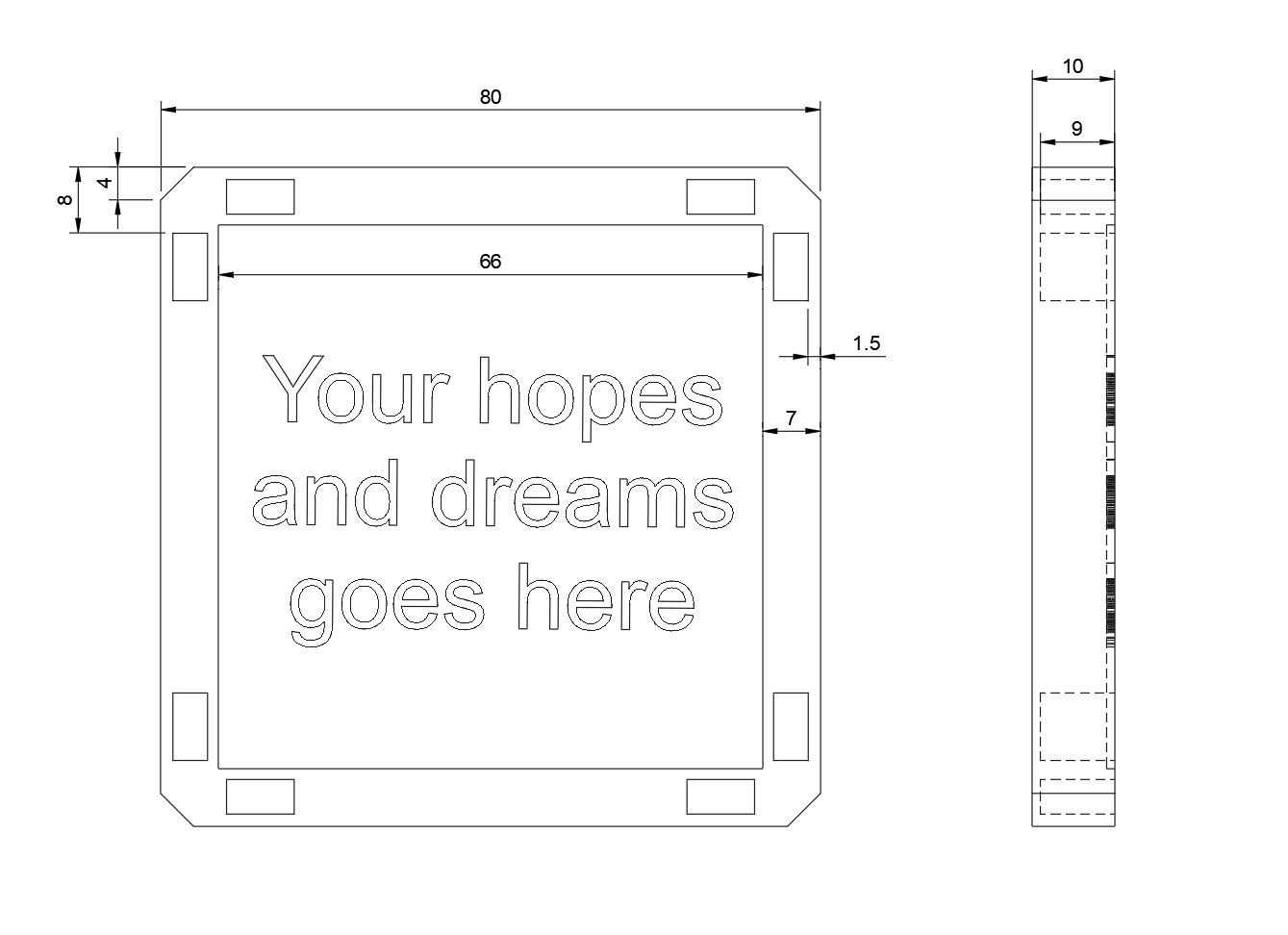
- Basic cell dimensions: 80 × 80 × 10 mm
- The space for magnets (or clips) starts 8 mm from the tray wall (8 mm is 1/10 of 80. That’s a nice rule).
- The magnet slot is 8 mm long, 4 mm wide and 9 mm deep (those were exactly the magnets I happened to have at home over the holidays. Not every rule has to come from deep research; some are happy accidents).
- Wall thickness at the magnets: 1.5 mm
- The trays have 4 mm chamfered corners. I don’t fully know why yet, but I’m sure it will be important. And it looks much better.
That’s all. And yet, that’s everything. A handful of rules to brand the wicked and reward the righteous.
![]()