 Silícios Lab

Introduction
Monitoring environmental variables is crucial for the efficiency and safety of numerous industrial processes and electronic systems. Ensuring that parameters such as atmospheric pressure and temperature remain within ideal limits is essential to maintain production quality, protect sensitive equipment, and optimize the performance of climate-controlled environments.
Many industrial processes, such as chemical synthesis, food preservation, and high-precision manufacturing, depend on strict atmospheric conditions. Deviations in pressure or unexpected temperature spikes can indicate cooling system failures, leaks in pressurized chambers, or even imminent hardware malfunctions.
Without continuous monitoring, these variations can lead to silent failures that only become apparent when the damage is already significant. Every hour of operation under inadequate thermal or pressure conditions not only risks the integrity of the equipment but also compromises the repeatability and excellence of the final product.
This lack of control can result in major impacts, such as:
- Premature Component Wear: High temperatures accelerate the degradation of electronic components and mechanical lubricants, leading to frequent and unplanned maintenance.
- Operational Losses: Inaccurate pressure readings in pneumatic or vacuum systems can cause process instability, resulting in wasted raw materials and high energy consumption.
- Product Non-Compliance: Environmental fluctuations can lead to batches that do not meet technical standards, resulting in rework, discards, and financial losses.
To address these challenges and enhance industrial sensing capabilities, we developed a specialized printed circuit board (PCB) integrating the ESP32 microcontroller with the BMP280 sensor. The ESP32 acts as the core of the system, providing the processing power and connectivity needed to read high-precision data from the BMP280 and transmit it to IoT platforms or local dashboards in real-time.
With the high-resolution data provided by the BMP280, managers and technicians can monitor environmental trends and receive instant alerts about abnormal conditions. This allows for proactive adjustments to HVAC systems, early detection of pressure drops, and a deeper understanding of the operating environment.
By implementing this solution, companies not only avoid the costs of environmental-related failures but also move towards Industry 4.0 standards, ensuring more predictable, sustainable, and profitable operations. Next, we will present the complete design of the printed circuit board presented below
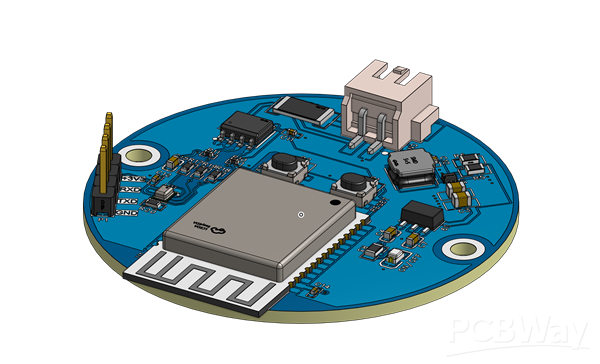
In the following sections, we will present the complete hardware design, schematic, and assembly details of this PCB.
I've just released the full project files for this ESP32 + BMP280 monitor, and you can download them for free! If you want to take your prototyping to the next level, I’ve got a gift for you: by creating a new account at PCBWay through the link, you get 5 units for free to manufacture your first project. Professional hardware has never been this accessible! Get the files and your free PCBs here!
Electronic Schematic of the Project
The electronic circuit of the printed circuit board is divided into 6 electronic blocks. All of them are presented in the figure below.
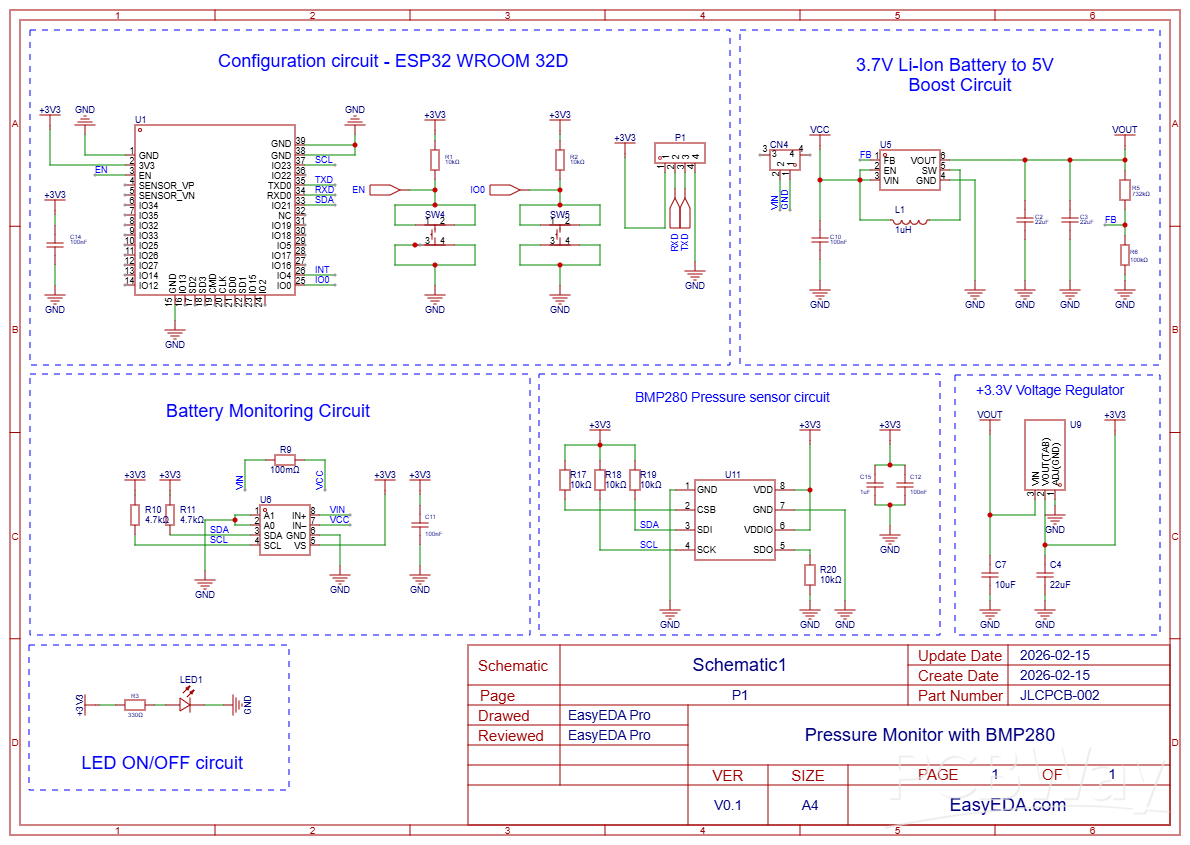
The heart of this project is the ESP32. It will be responsible for reading the signals from the BMP280 sensor and transferring this data over the internet. Its basic operating circuit is shown in the electronic schematic above. It consists of a set of buttons, decoupling capacitor and pins for code transfer (+3V3, TXD, RXD, and GND).
This electronic board aimed to be small, easy to attach anywhere and operate with low energy consumption using a Li-Ion battery. Below we have the connector for connecting a Li-Ion battery cell.
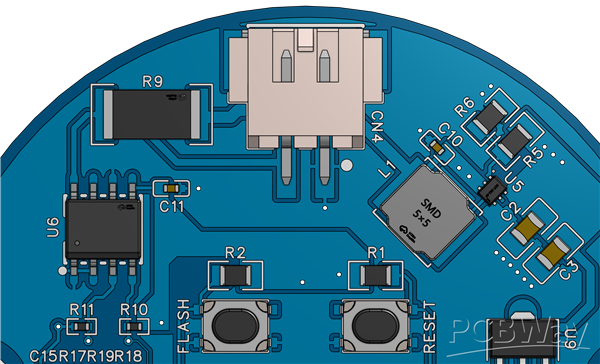
To ensure adequate power supply to the system, we used a DC-DC boost converter to raise the voltage to 5V and we used a +3V3 voltage regulator to regulate...
Read more »
 electronicsworkshops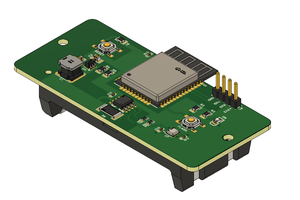

 Open Green Energy