 Motley
So with a working TFT, ToF and a Radiacode, I started to think about the housing and overall design for the project. I had wanted to go with a flip design originally, like the TNG Tricorder, but that was clearly out of the question if I wanted to be able to have the Radiacode 110 in there, whilst a ridiculously small footprint for what it is and what it does, it's length means that if I were to add flip to the omni-corder, it would still have to be really long. So I scrapped that idea and have gone with just a chunky unit. First design was just a box with space for the screen and a slot for the Radiacode to slide into. A key consideration in this whole design is that I want to be able to take the Radiacode out easily so that I can use it standalone still.
The second iteration of this came after I started to flesh out the UI concept a bit more. I decided that rather than having everything on the touchscreen as I had planned at the start, I'd add some physical buttons for the mode and page switching. I thought this would give the device a nice retro-futuristic vibe, be practical and free up UI screen space and be a direct call-back to the TNG tricorder design.
So that's what's happening with that.
First concept was to have everything slot in from the top, then have a 'cap', housing sensors, connect to the top to finish it off.
Next itiration was to create a layerd approach to the unit, still with the cap idea.
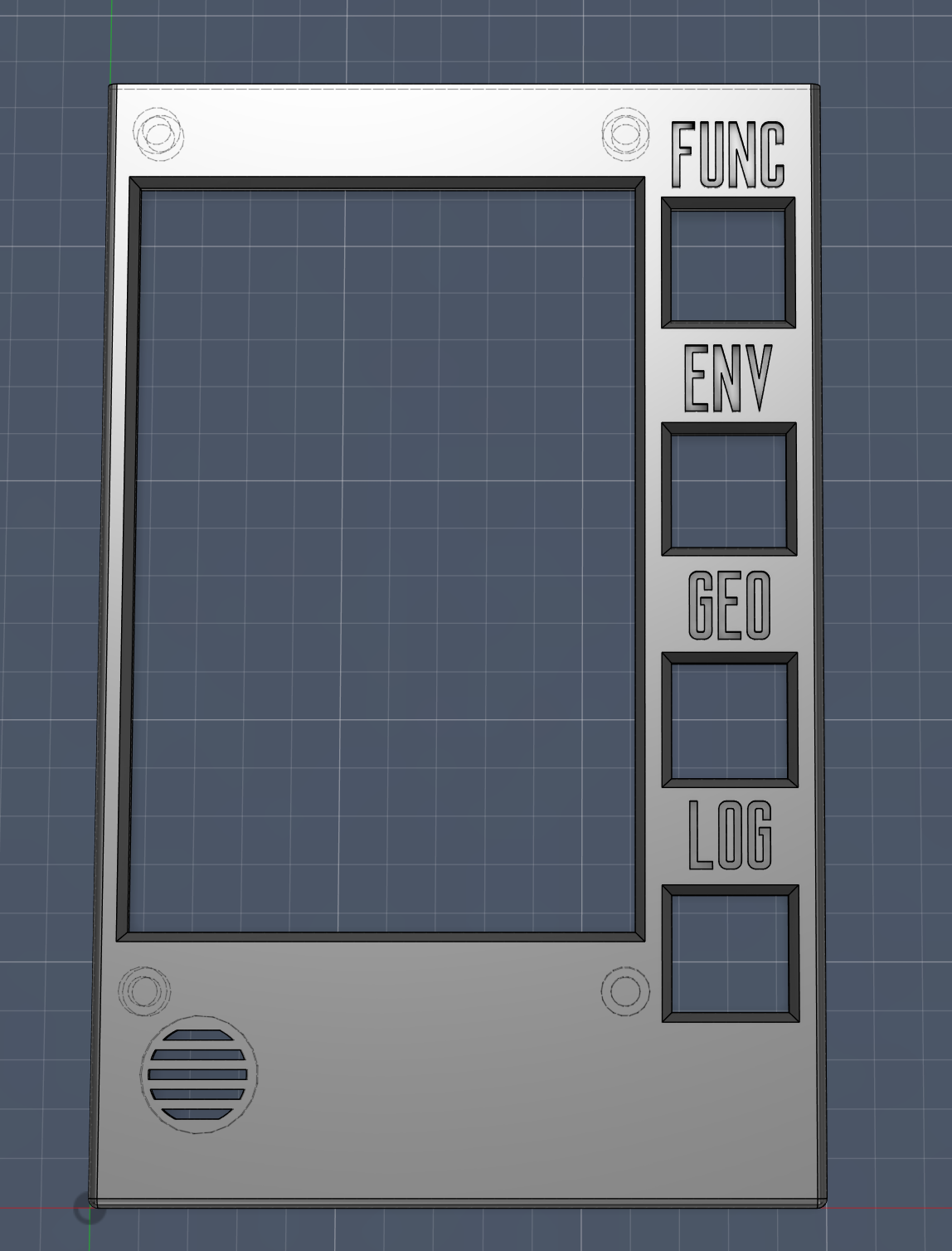
Now I'm working on a third iteration, where I'm scrapping the whole cap concept and leaning fully into the layers idea and since the entire project direction recently switched to using 3 ESP32 boards rather than one, a complete design overhaul is needed.
I've ordered all but a couple of the components now. Haven't got the range finder, speaker or UV indexer yet.
Everything else should arrive in a week or two.
Next log should give some update about the new design and some new component testing. Hopefully all the camera woes will have been sorted and I'll be able to start testing those.
Discussions
Become a Hackaday.io Member
Create an account to leave a comment. Already have an account? Log In.