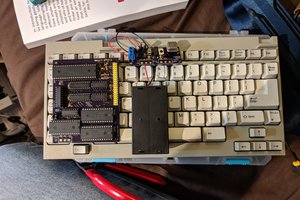
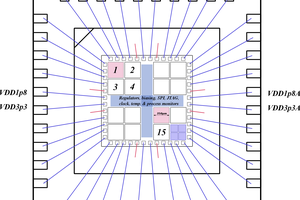
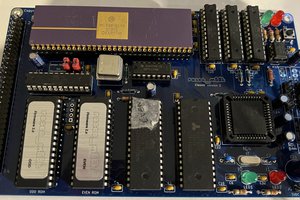
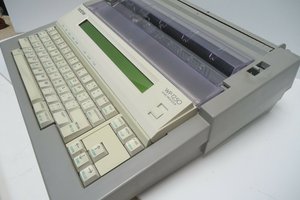
LH72001 by Sharp is a 16-bit single-chip PC XT class embedded engine. The main goal is to gather and save a technical documentation and to reverse engineer the missing parts. If the things will go good enough, the next step is to build a working system based on this chip. This is also a call for help, so if you have anything related to this chip, please contribute.
Files
DSAIH000114436-LH72001.pdf
A new product information with block diagram, pinout, pin description and electrical characteristics [7 pages]
Adobe Portable Document Format -
415.92 kB -
03/28/2026 at 11:41
There is really not so much about this chip. So far I've found just one tiny information on page 431 of the May issue of "Electronics World + Wireless World" from 1992 (PDF).
In general LH72001 is the V20 core from NEC, a usual set of chips present on the PC XT main board like DMA, interrupt controller, timer, and other. In addition there are included keyboard controller, printer interface and glue logic between the chip and ROM/RAM.
I've found by accident the PDF with the new product information that includes block diagram, pinout, pin description and electrical characteristics but nothing more, no timing details, no registers map.
I also have 20 pieces of this chip, which seems to be enough to start with, without worrying about losing research material.
What I don't have at the moment is the logic analyser with the decent amount of channels. 8 or 16 channels seems to be not enough to make a progress without wandering.
If anyone want to help or want to do his own research, I can share the chips.
Interesting find. Perhaps one of the first tasks is to design a breakout board for the chip, as experimenters will not be able to connect to a QFP-160 otherwise. Even soldering will be a challenge, it would need reflow. Good luck, have fun, and keep us updated.
I have ordered an universal breakout board for qfp160 just to start with anything, but it is a good point with the dedicated breakout board. I didn't thought about it in the first place. Thx!
Interesting find. Perhaps one of the first tasks is to design a breakout board for the chip, as experimenters will not be able to connect to a QFP-160 otherwise. Even soldering will be a challenge, it would need reflow. Good luck, have fun, and keep us updated.