 Arnov Sharma
-
11FINAL ASSEMBLY
![]()
![]()
![]()
![]()
![]()
![]()
![]()
![]()
![]()
![]()
![]()
![]()
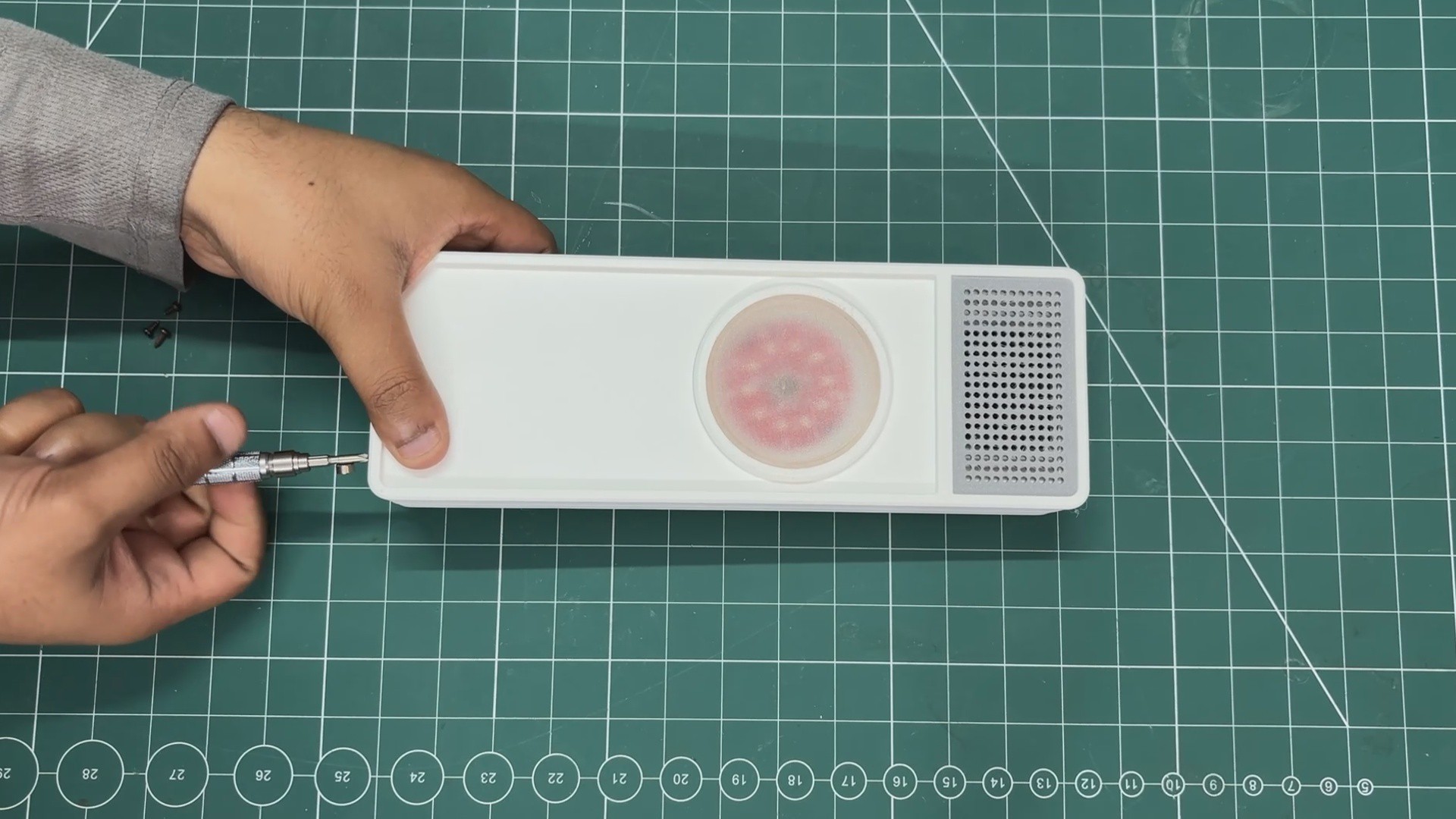
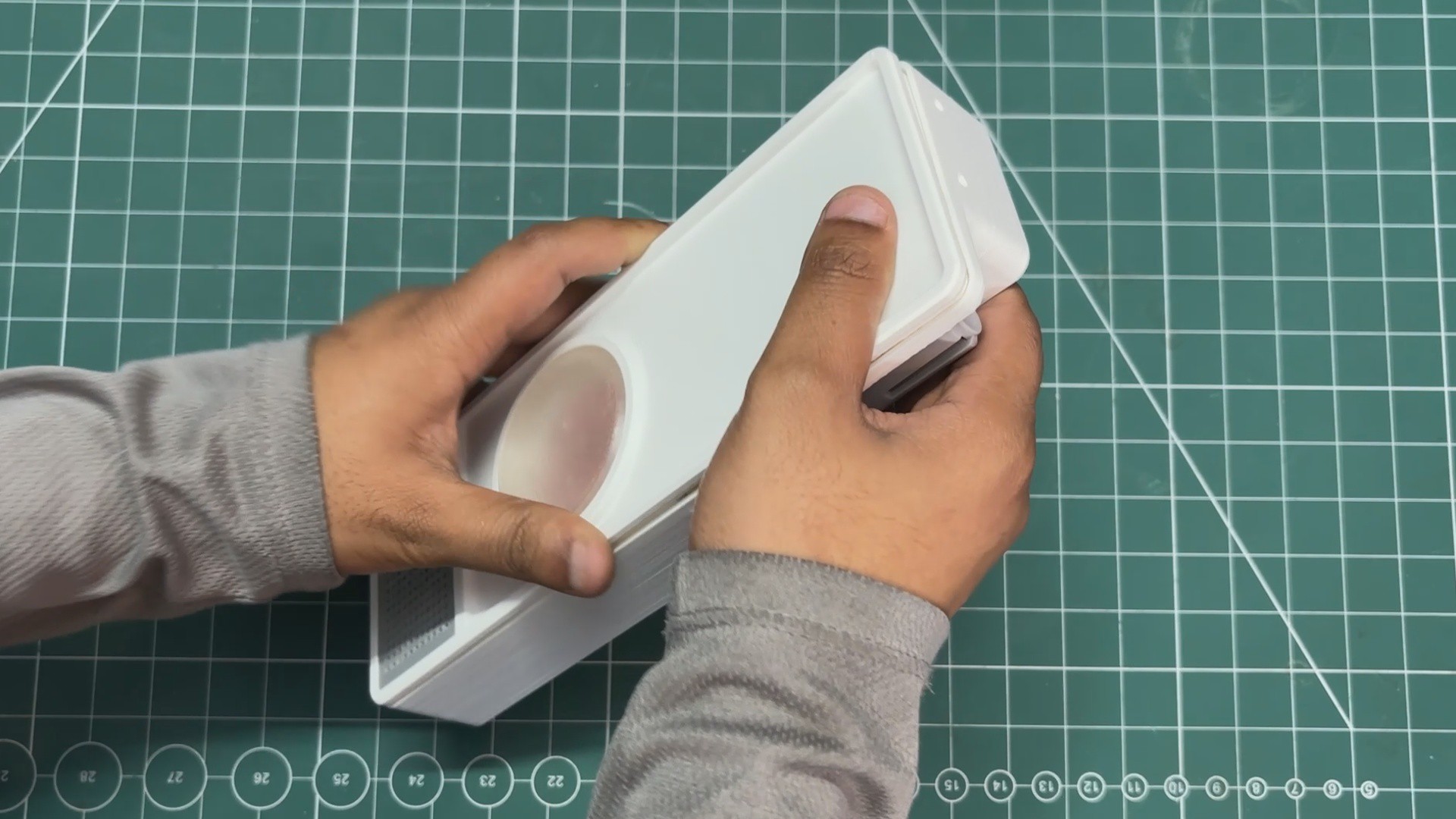
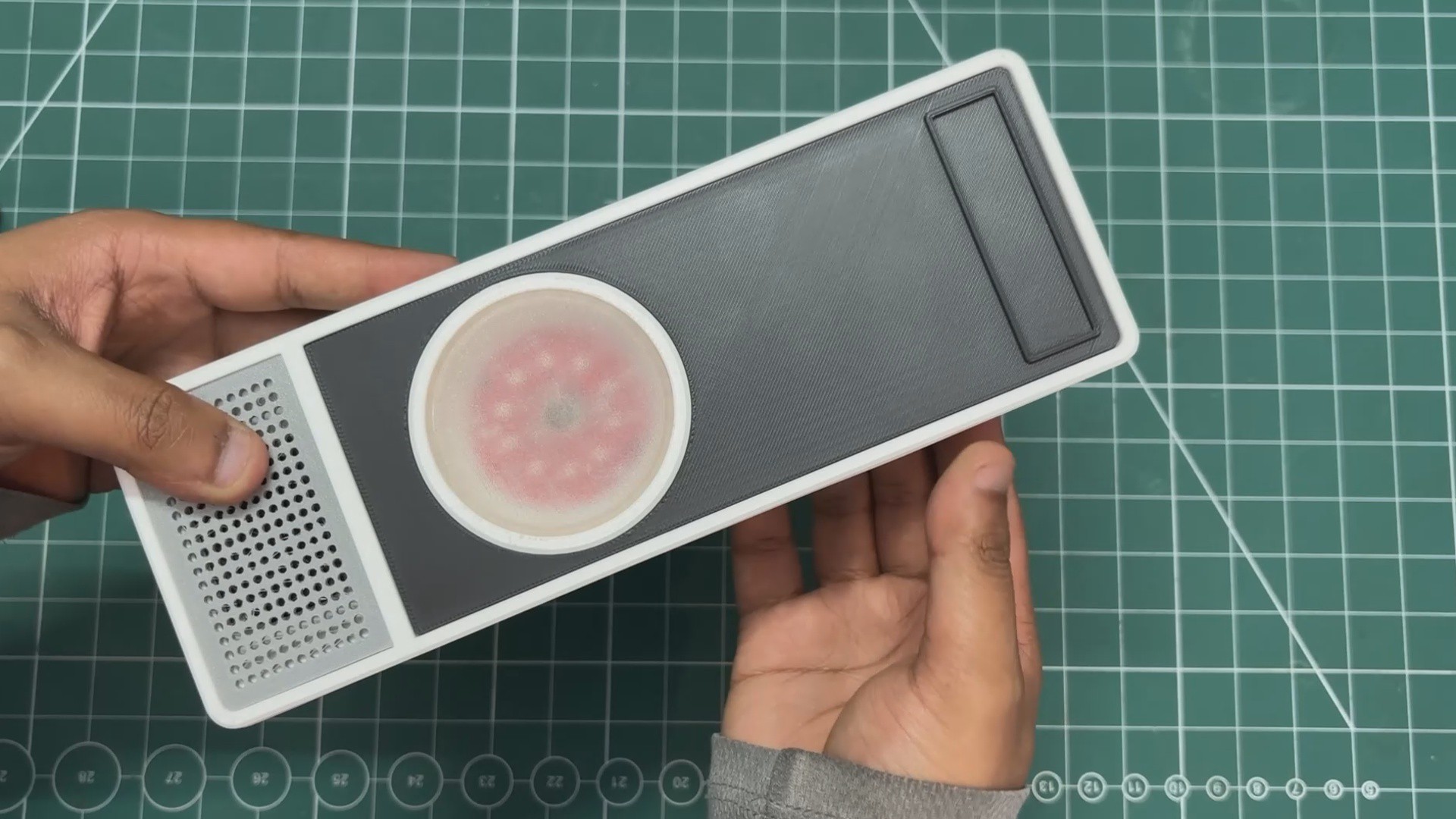
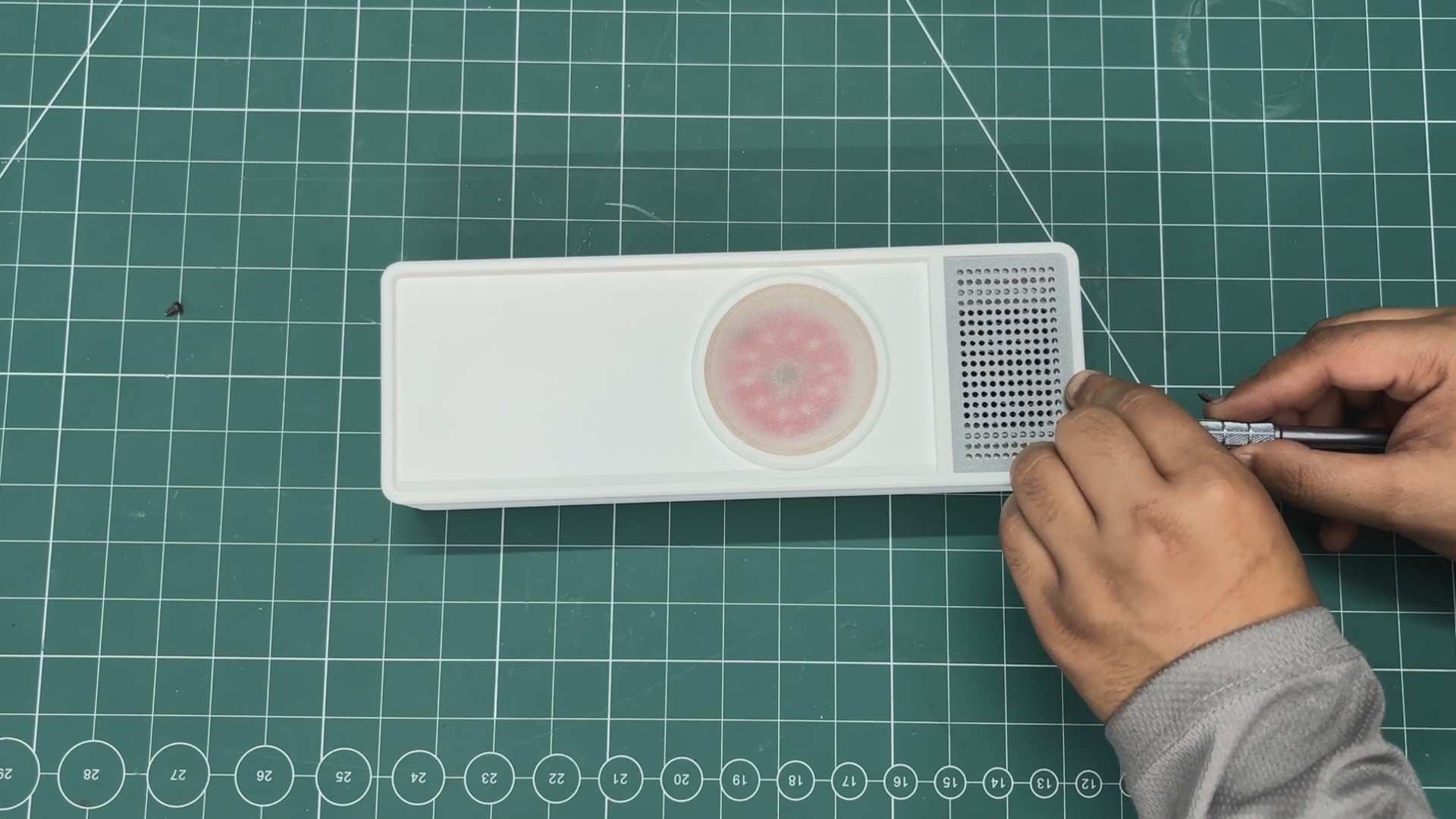
- After finalizing the code, we assembled the back body with the front body. Both parts are then secured together using two M2 screws on the top side and two M2 screws on the bottom side
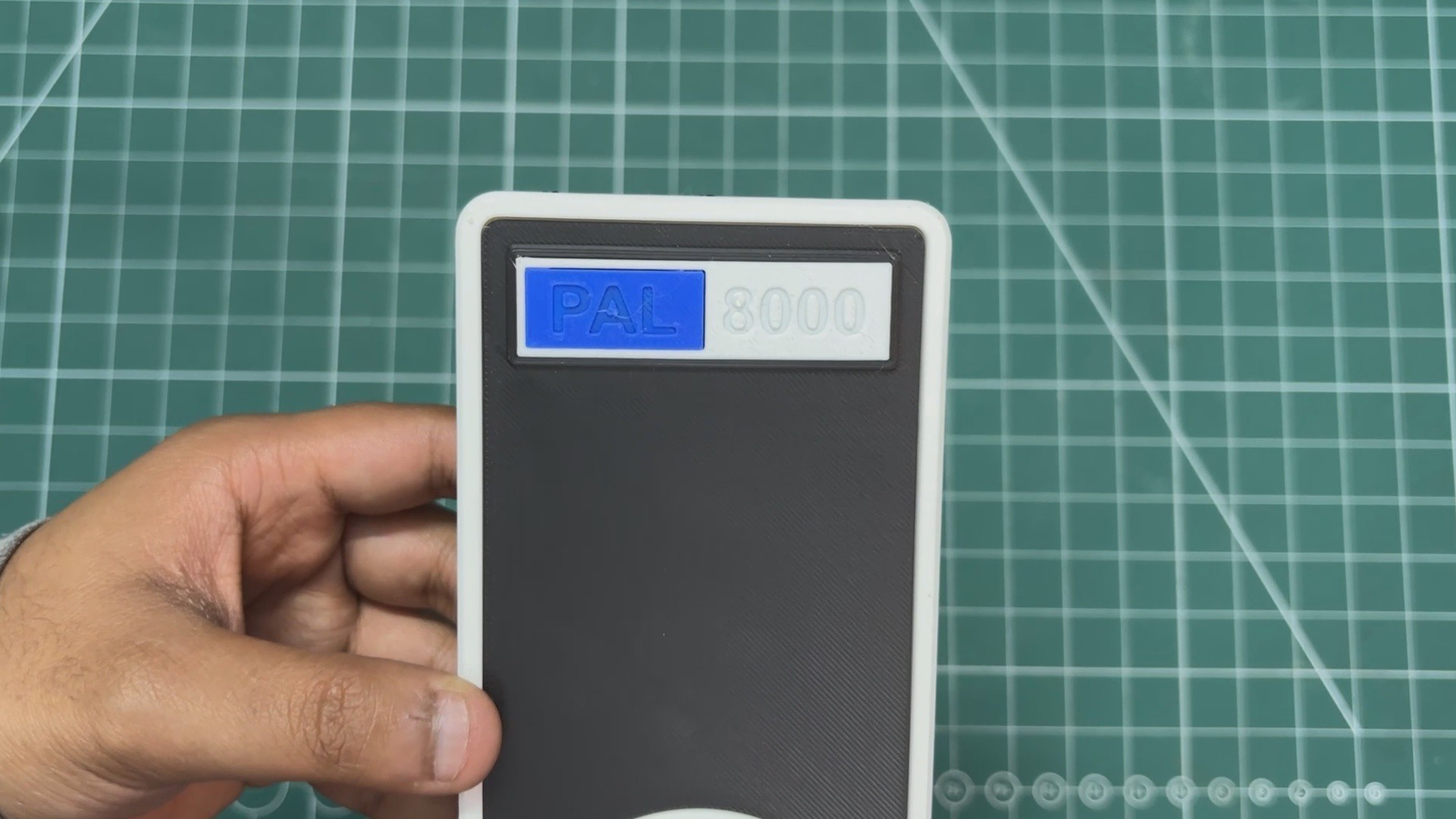
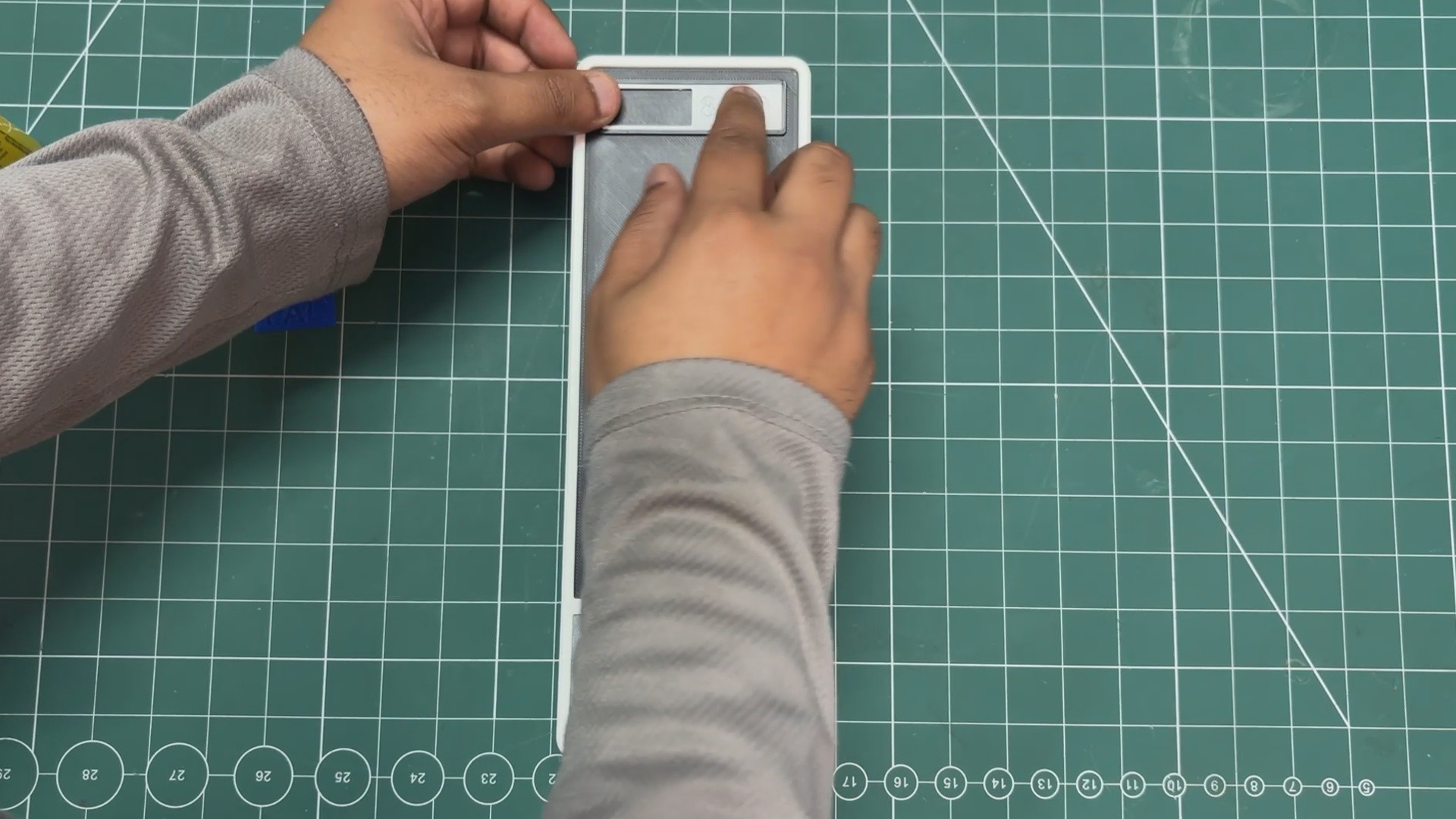
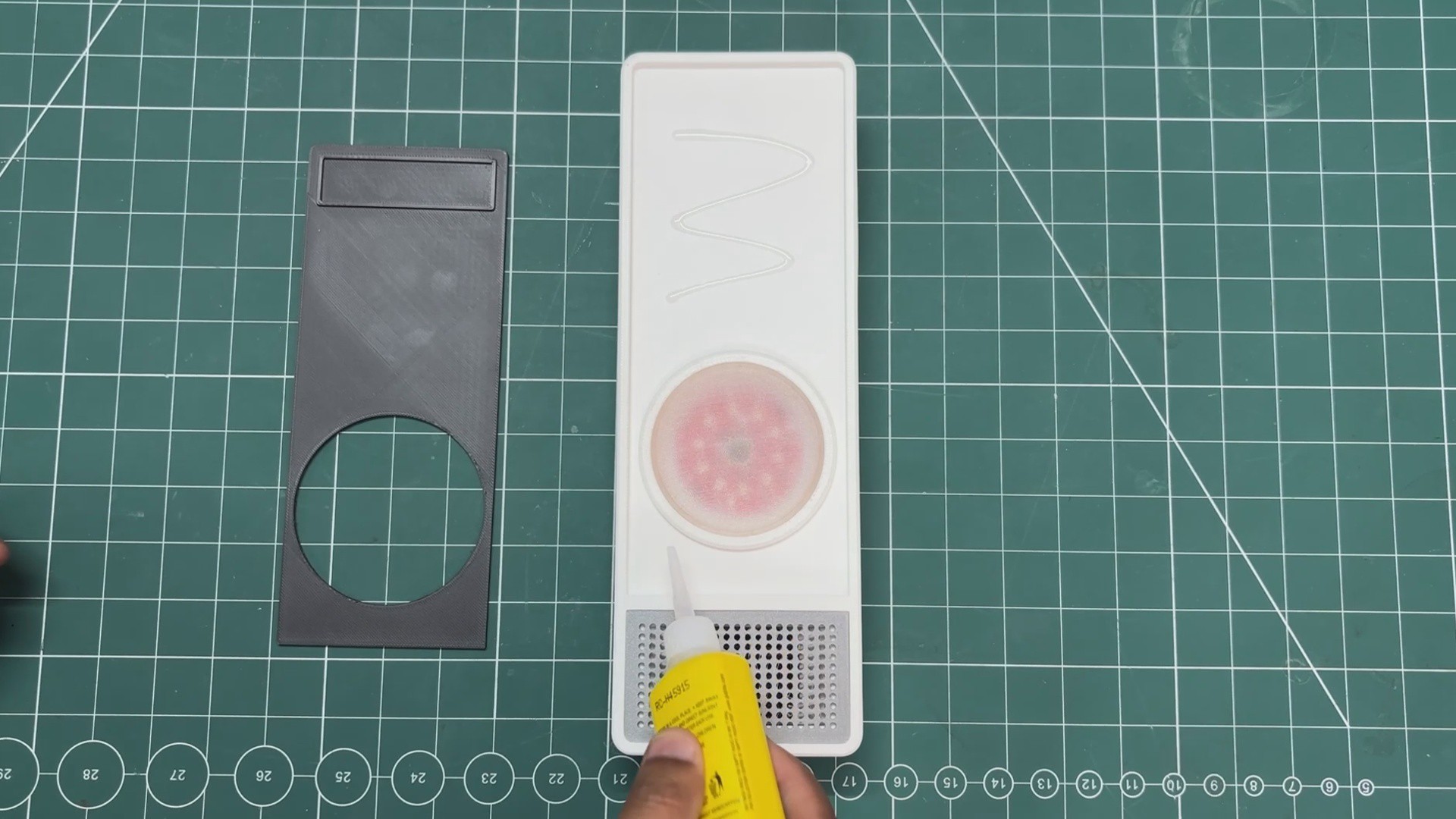
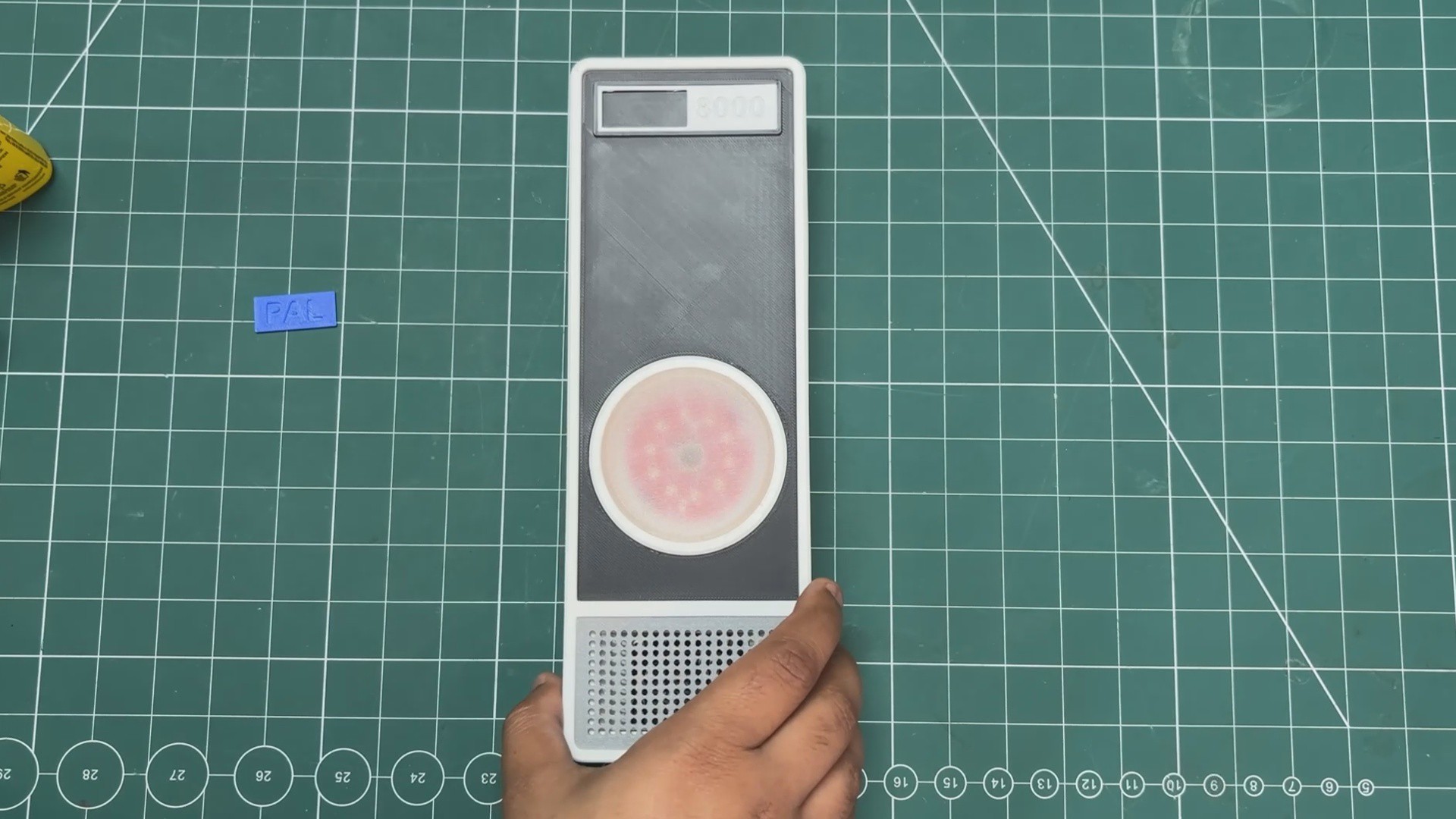
- At last, we added a few greeble parts for the aesthetic of the device to make it resemble HAL 9000. We applied a small amount of super glue to the front body and placed the black cover part, securing it in place.
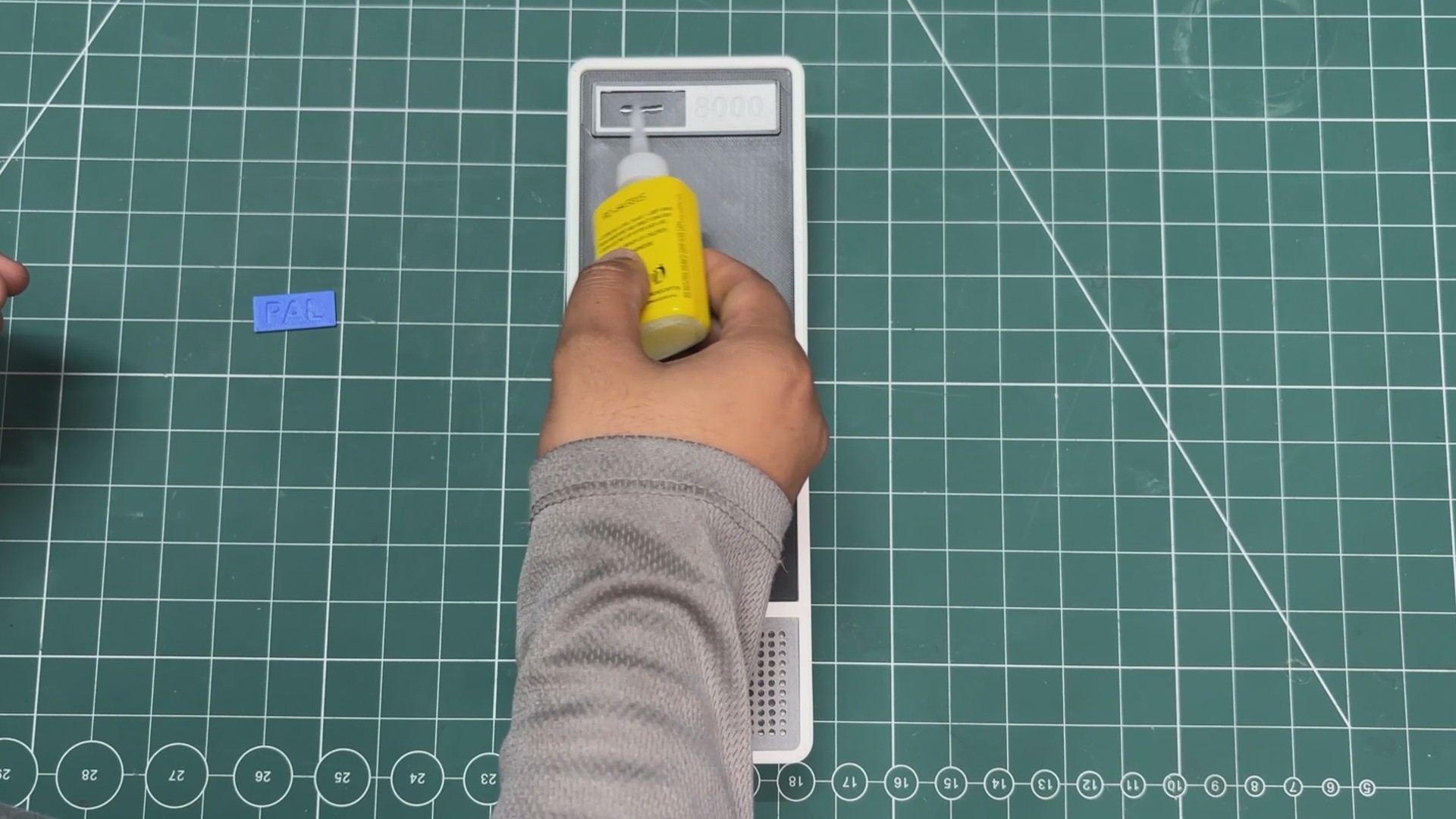
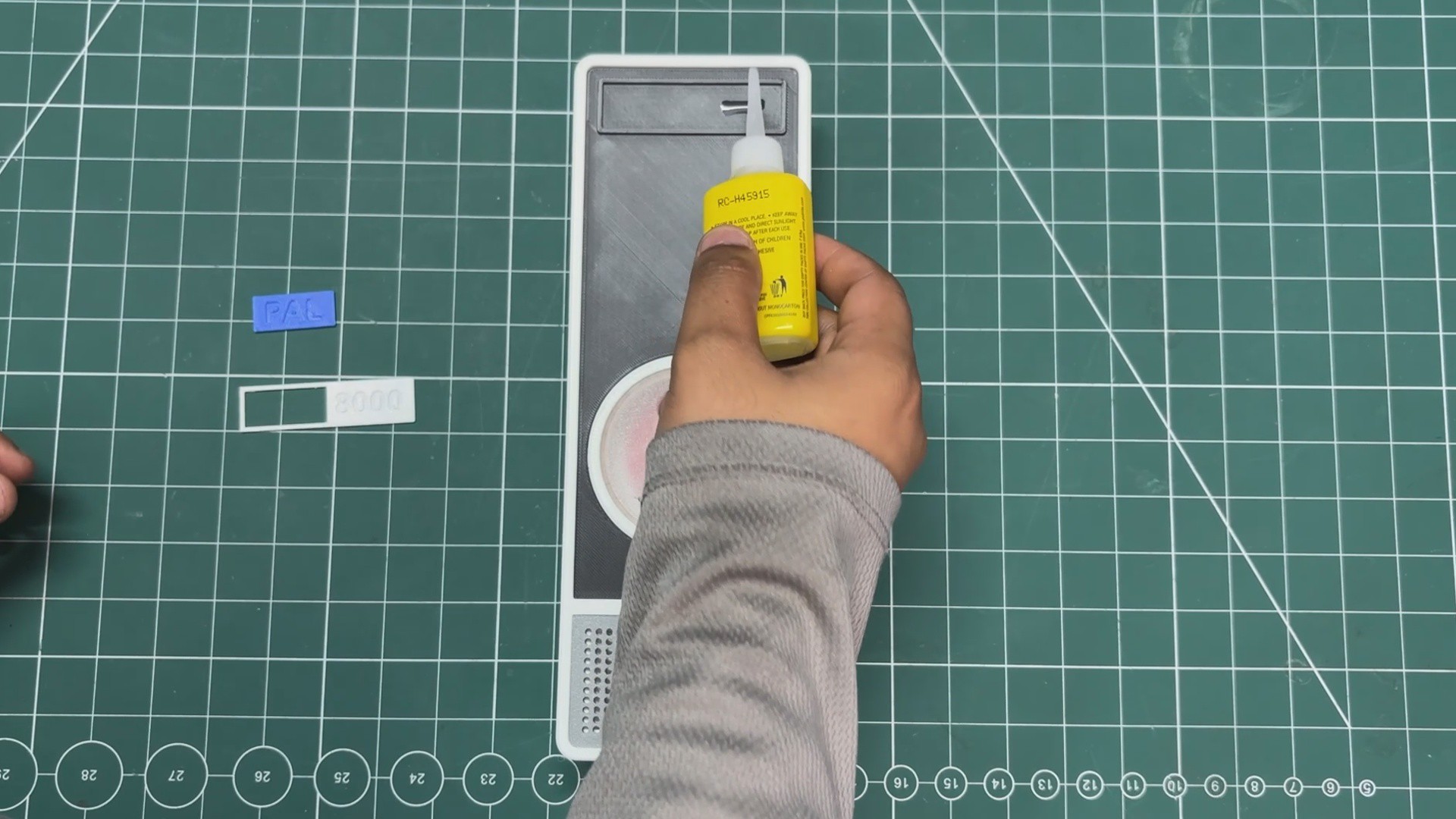
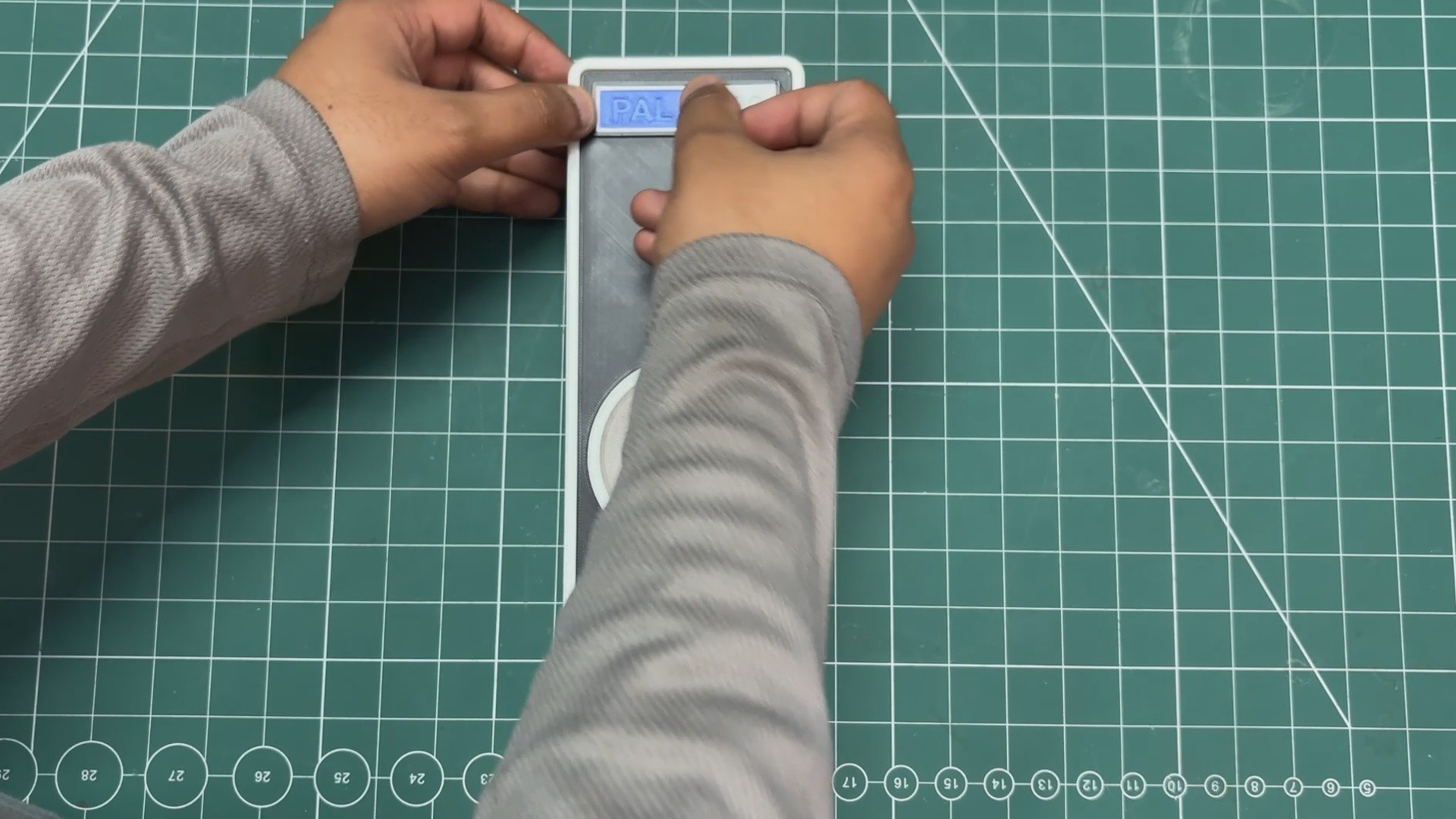
- Next, we applied super glue to the top section of the black cover and attached the “8000” nameplate.
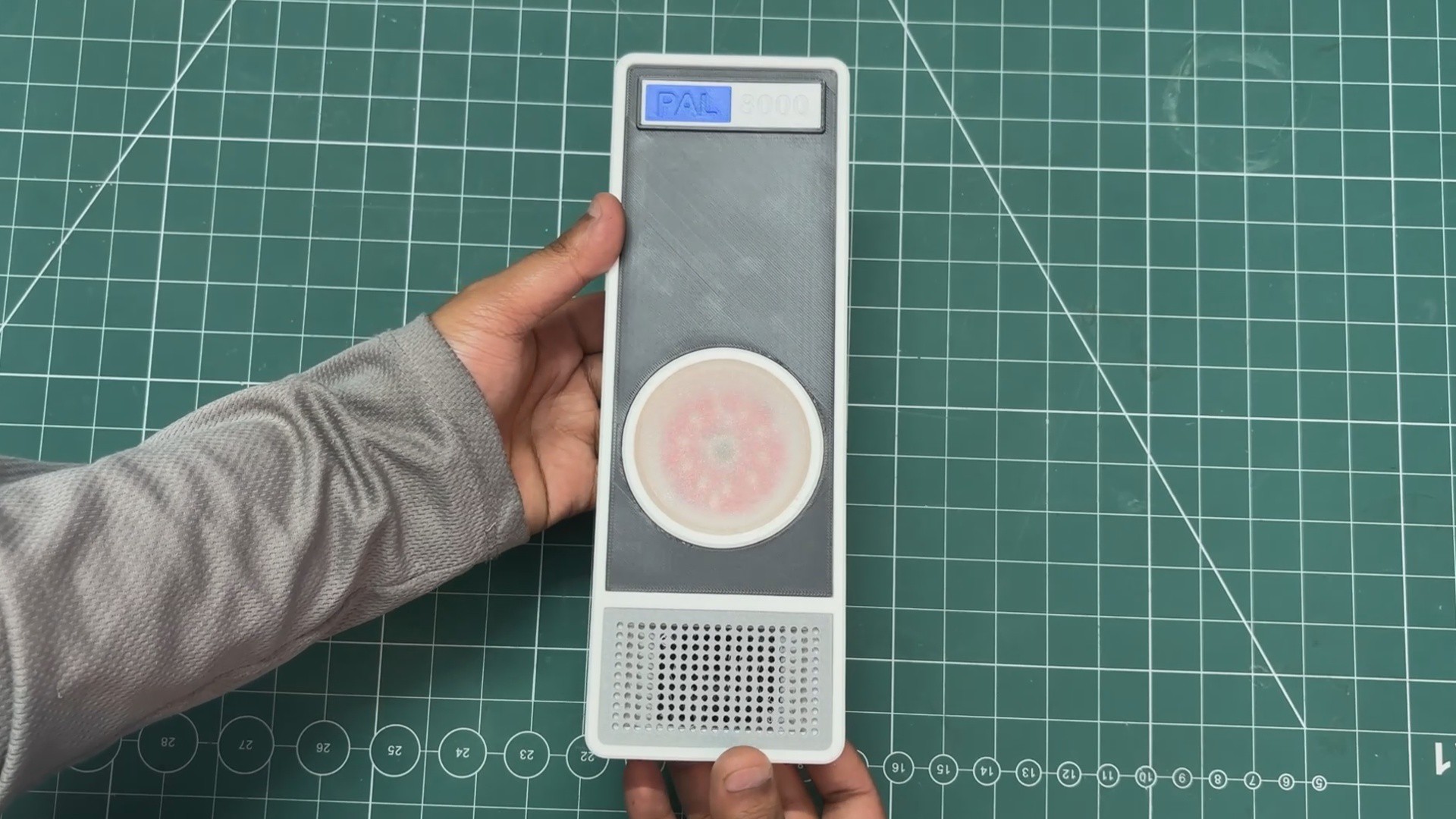
- Right beside it, we added more super glue and positioned the final “PAL” nameplate. This completes the project.
-
12RESULT
![]()
![]()
![]()
![]()
![]()
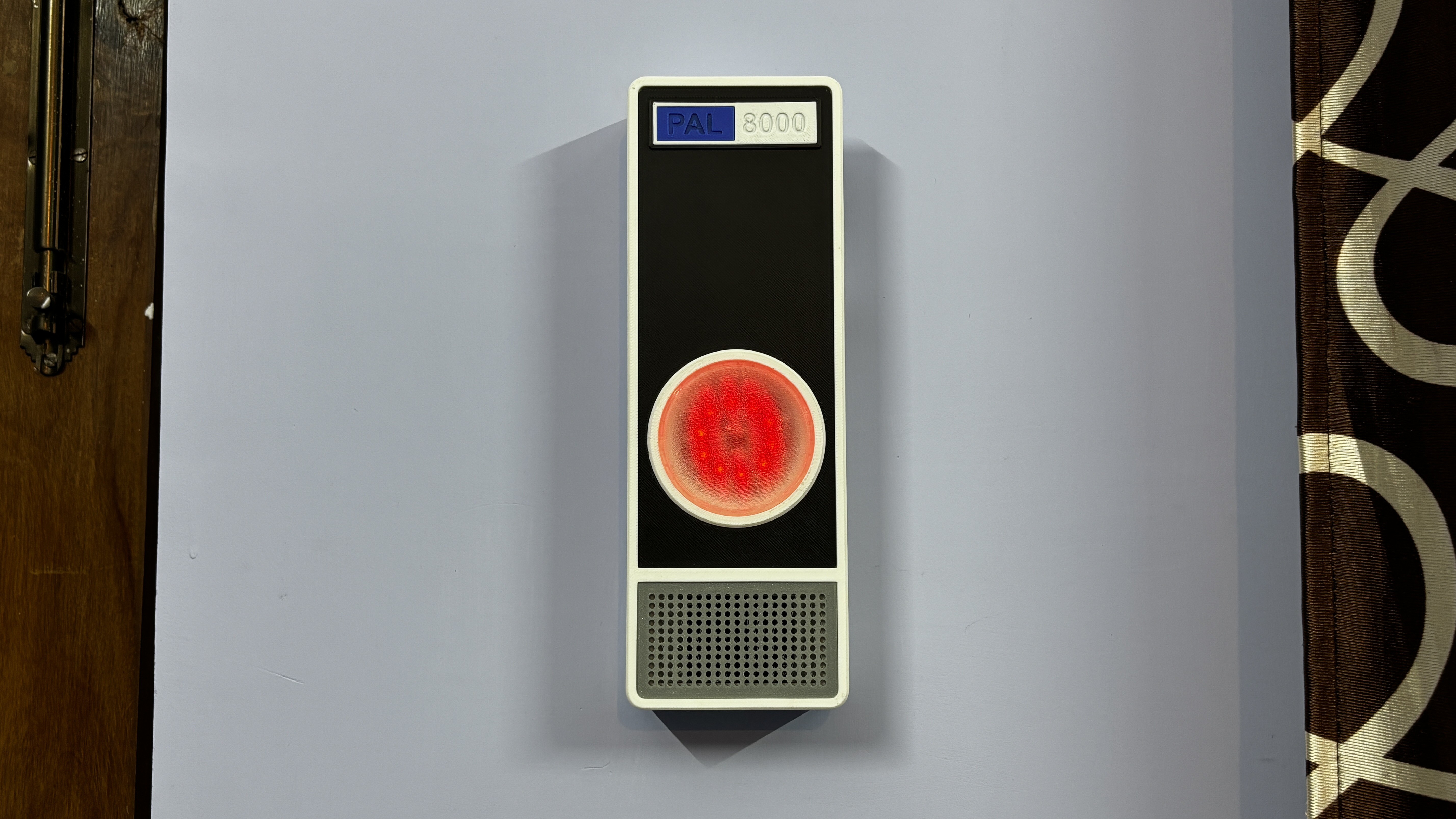
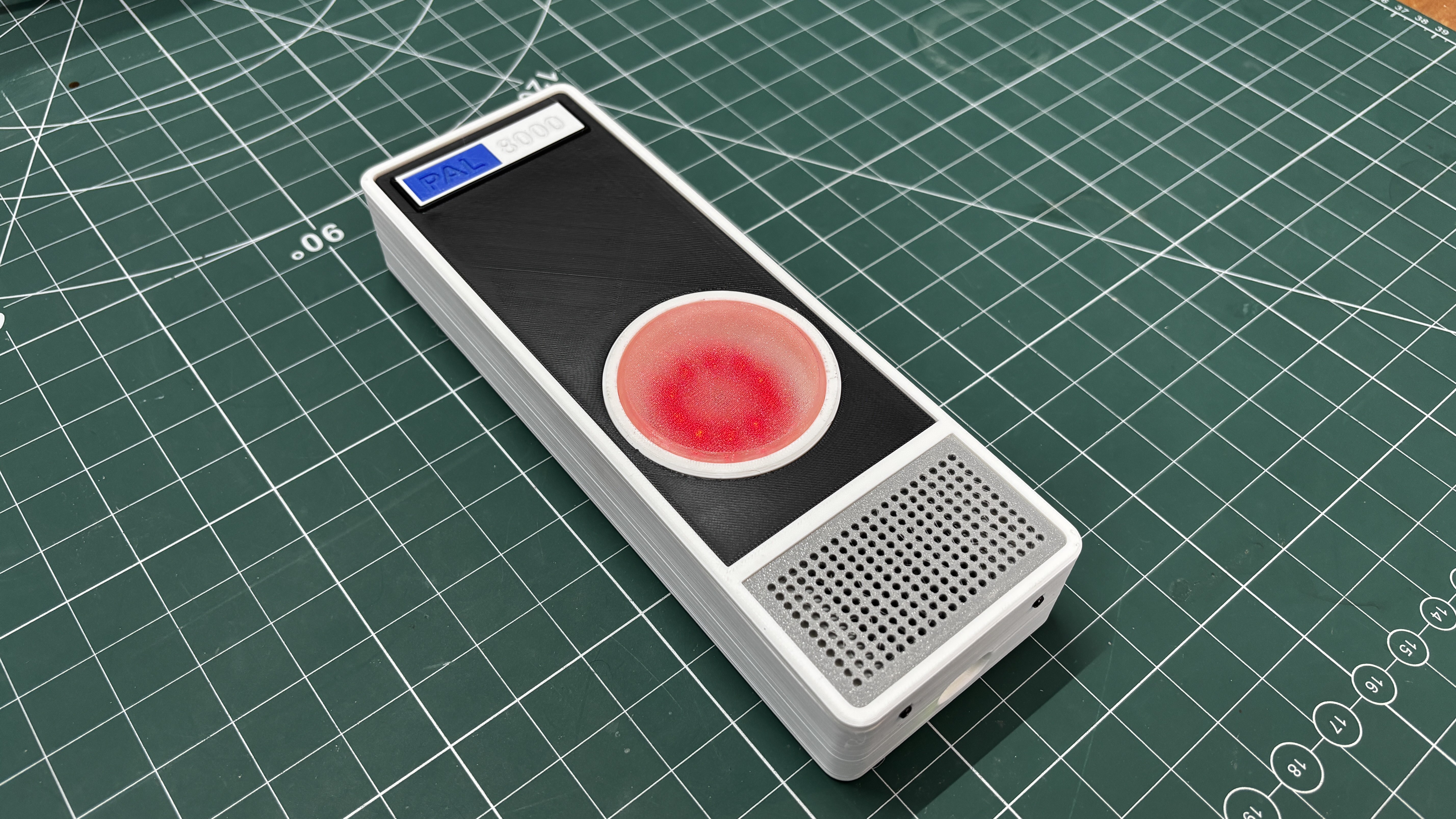
Here is the result of this interesting and eerie build, PAL 8000.
A device that is mounted on a wall, watches the air around you, and speaks to you in a calm, unsettling voice that feels just a little too composed for comfort.
The moment you power it on, the red eye slowly lights up, and then it speaks, introducing itself in that calm, deliberate voice before settling into its watch.
Every 30 seconds, it reminds you it is still there; every minute, it reports what it finds in the air, and the eye breathes the whole time, never fully dim, never fully bright. It is part air quality monitor, part conversation piece, and part tribute to one of the most iconic fictional AIs ever put on screen.
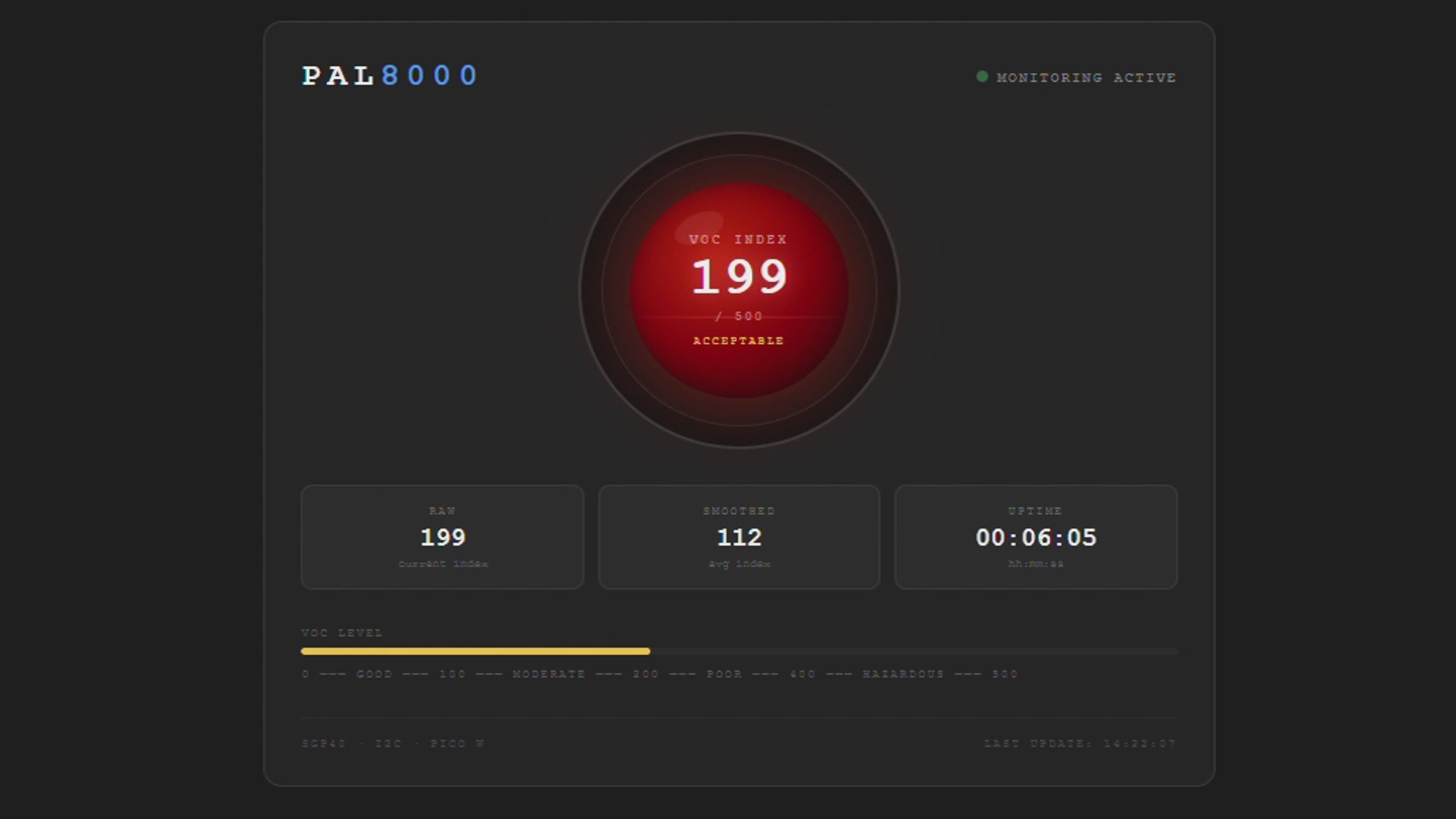
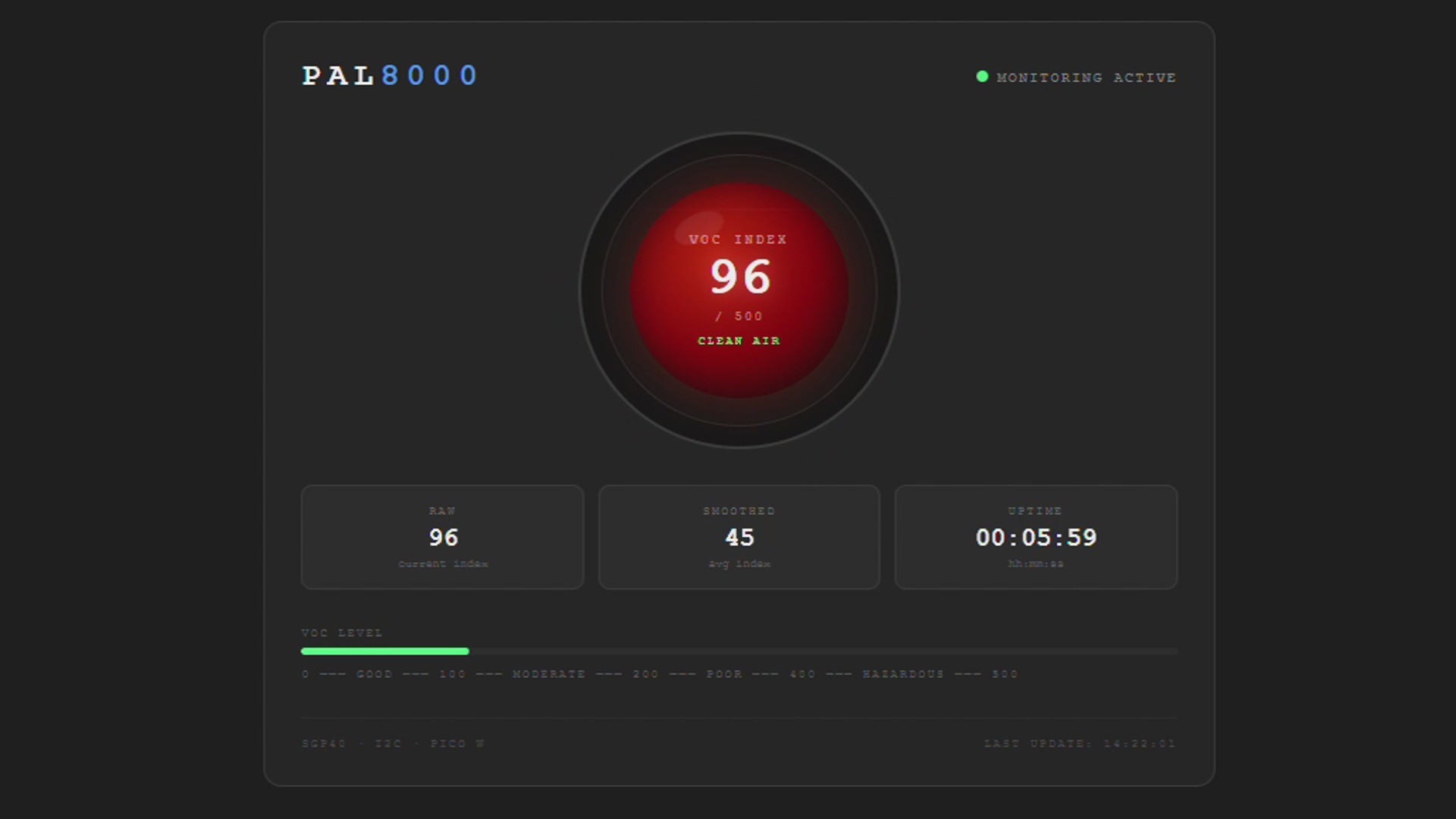
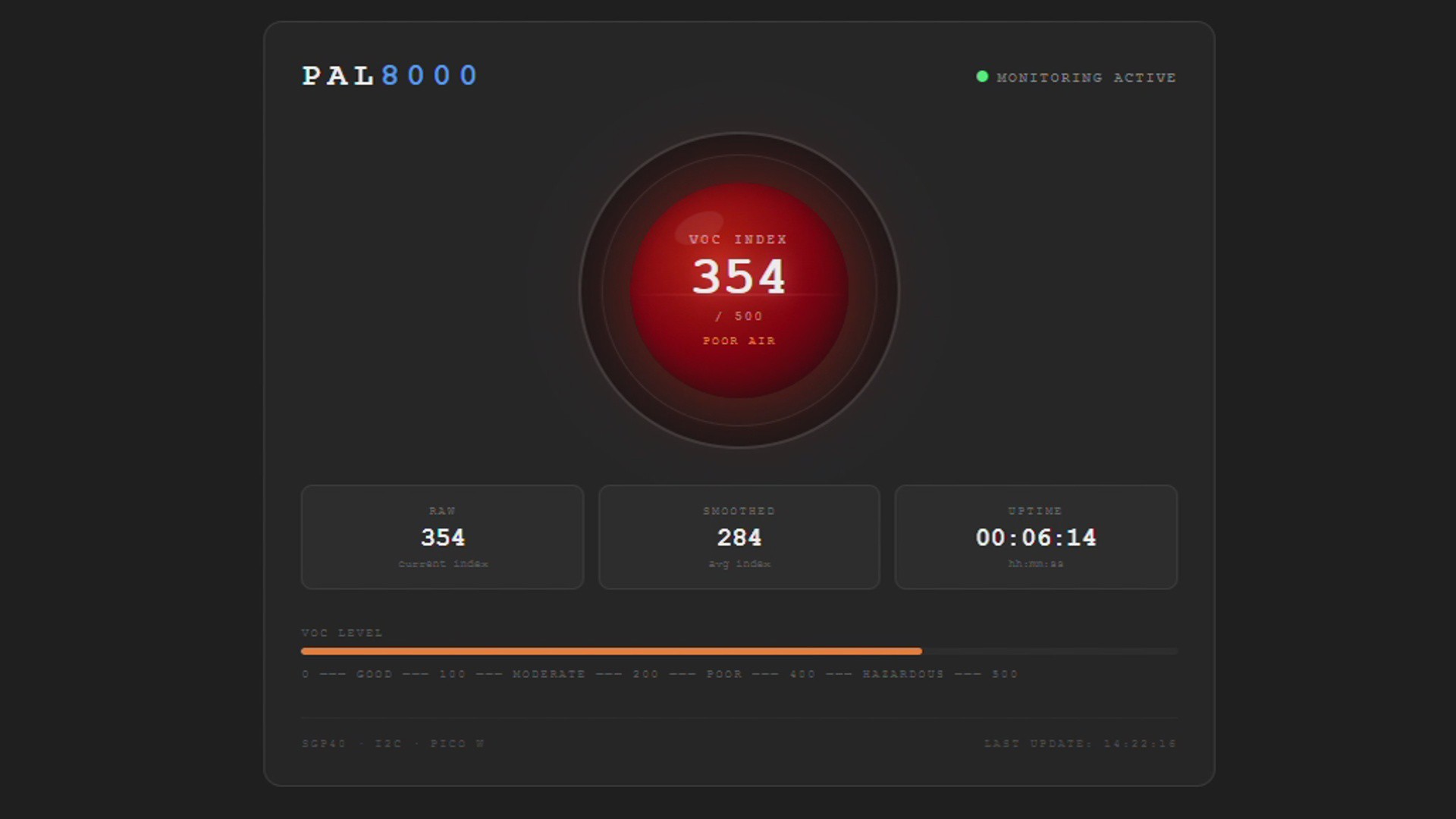
To actually test it and push the VOC readings up, I lit an incense stick and held it close to the SGP40 sensor. My room normally sits comfortably under a VOC index of 100, well within the clean air range, but the moment the incense smoke reached the sensor, the reading spiked sharply, and PAL 8000 responded exactly as intended: the voice shifted, the tone changed, and suddenly the device felt a lot more like a warning system than a wall ornament. It was the moment the whole build clicked into place.
This project is working quite well, but I already have ideas for version 2. The first improvement will be to significantly expand the audio clip library and build a proper character tree, a branching if-else dialogue system inspired by the kind of dialogue logic used in video games, where the device's response depends not just on one reading but on a combination of conditions.
More sensors will be added, too, and PAL 8000 will react differently based on each sensor value, creating something that feels far more alive and reactive than a simple threshold trigger.
The idea can go much further than this. Making an AI chatbot version is honestly the easy route: swap the Pico for a single board computer, add a speaker and a microphone, and you are mostly there. Someone already built BMO from Adventure Time that way, so building HAL 9000 with full conversational AI is not an impossible ask.
But that was never my goal. My goal was to take a different route, to see how much personality and character you could build into a device using nothing but logic, pre-recorded audio, and a well-thought-out dialogue tree. No language model, no cloud dependency, no internet required to hold a conversation. Just code, clips, and careful writing. And honestly, for a first version, PAL 8000 makes a pretty convincing case that the old-fashioned way still works.
For now, PAL 8000 version 1 is complete, and version 2 is already being planned. If you have questions about the build, want to replicate it, or just want to share your thoughts, drop a comment or feel free to reach out directly. I am always happy to talk about this stuff.
Thanks for reaching this far. Peace out.
PAL 8000 - Room Air Quality Meter
A Talking Room Air Quality Meter that talks and looks like HAL 9000 from the space odyssey 2001
Discussions
Become a Hackaday.io Member
Create an account to leave a comment. Already have an account? Log In.