Close
0%
0%

EWNA Hackathon Team 6

YAPUNOV -
You Are Protected Using Nonvisual, On-device Vigilance

Similar projects worth following
A Reliable, Recoverable, and Fault-Aware Acoustic Safety System
Github: https://github.com/vincent8264/Yapunov

Why This Matters?

Imagine this: 

  • An elderly person is home alone
  • A smoke alarm goes off, glass suddenly breaks, or someone falls in another room
  • But… Nobody is watching

But the home can still recognize that something unusual may have happened. Danger at home is often heard before it is seen. 

These sounds can signal that something is wrong, but no one can watch every room all the time—and always-on cameras introduce privacy concerns. 


Idea: What if your home could listen for danger? 

We want to build an Edge AI acoustic safety system that is reliable, recoverable, and fault-aware

Using a single microphone, the system listens for important sounds in the home, recognizes potentially dangerous events, and responds locally without continuously streaming audio to the cloud. 

One microphone. Local intelligence. Reliable safety without constant surveillance.

From Sound to Action

When a potentially dangerous event occurs, the system turns sound into a signal for action:
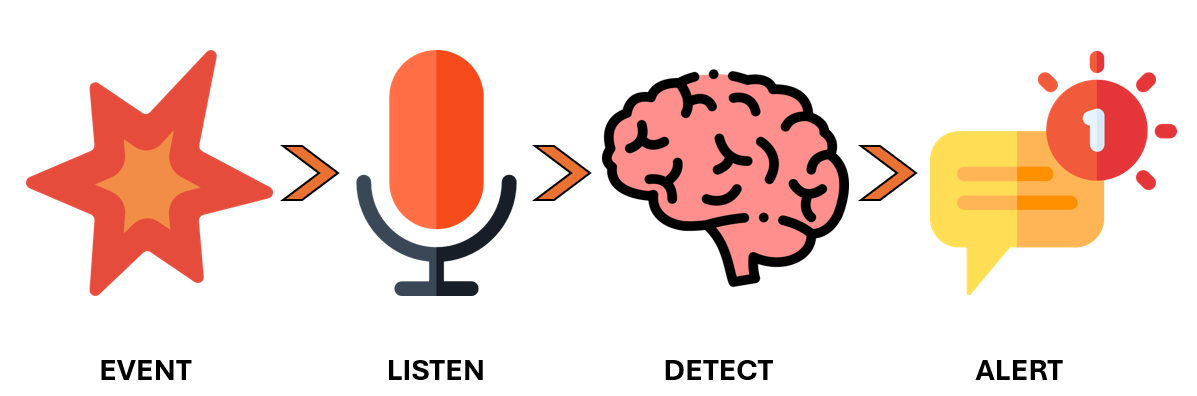
Fall Thud → Fall Detected

Glass Break → Intrusion / Accident

Smoke Alarm → Fire Warning

But detecting danger is only useful if the safety system itself can be trusted. 

Our system is designed around three principles:
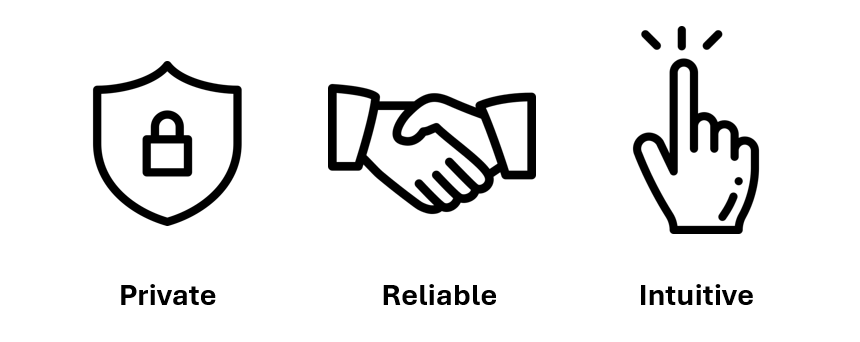
  • Private — it should protect the user without constantly sending sensitive audio elsewhere. Sound is processed locally on the device whenever possible, reducing unnecessary exposure of what happens inside the home. 
  • Reliable — it should consistently monitor for important acoustic events. If a temporary failure occurs, the system should recover gracefully and resume operation when possible. It should also recognize when part of the system is no longer functioning correctly rather than silently assuming everything is working. 
    • For example: 
      • 🎙️ Microphone failure → Detect abnormal or missing microphone input → Report a sensor fault rather than treating silence as “safe”
      • 📶 Wi-Fi disconnected → Continue local detection → Preserve or queue alerts until connectivity returns, or use a local alert mechanism
      • Power interruption → Preserve system state and recover automatically when power returns; with backup power, critical monitoring can continue during the outage
    • A safety system should not only detect hazards. It should also know when it cannot reliably detect them
  • Intuitive — it should make its behavior easy to understand at a glance. Clear visual feedback and simple alerts should help users know when the system is active, when something unusual has been detected, and when the system itself needs attention.

For example: 

🎙️ Microphone failure → Detect abnormal or missing microphone input → Report a sensor fault rather than treating silence as “safe”

📶 Wi-Fi disconnected → Continue local detection → Preserve or queue alerts until connectivity returns, or use a local alert mechanism

Power interruption → Preserve system state and recover automatically when power returns; with backup power, critical monitoring can continue during the outage

A safety system should not only detect hazards. It should also know when it cannot reliably detect them

From Detection to Early Warning

So far, these examples respond after an event has occurred.

But what if sound could also warn us before an accident happens?

Some sounds are not emergencies themselves, but may indicate that risk is increasing. Continuous running water, for example, could indicate an unattended faucet or leak. If it continues for an unusual amount of time, the system could issue a warning before water accumulates and creates a slipping hazard.

Instead of only asking:

What happened?

the system can also ask:

What sounds unusual—and could it become dangerous
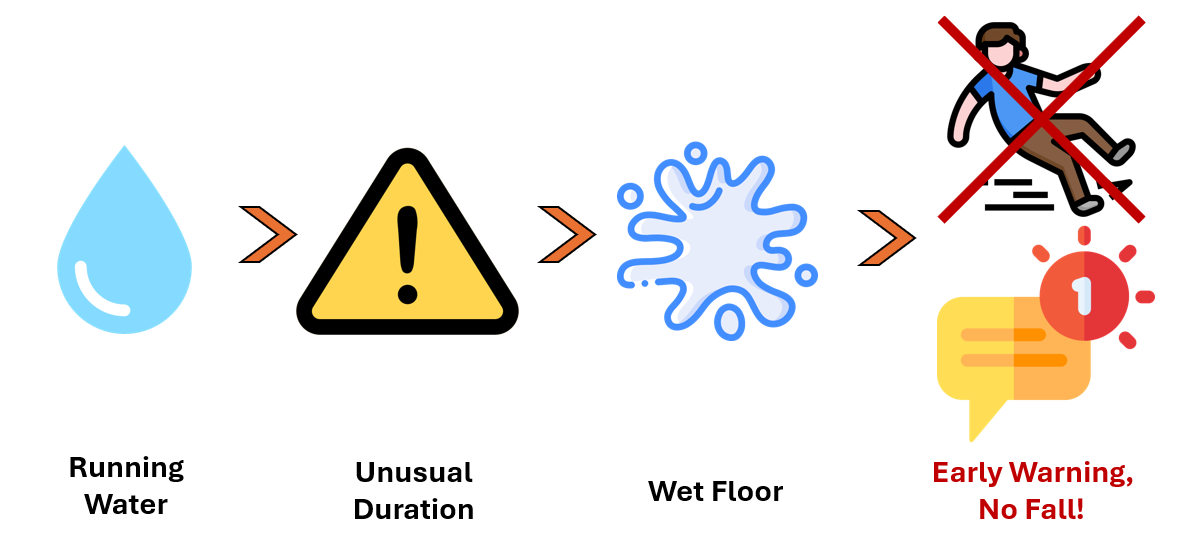
The goal is not only to hear danger when it happens, but to recognize the acoustic signals that may precede it.
Show, Don’t Tell ...

Read more »

ewna_Block_diagram.jpg

Hardware Block Diagram

JPEG Image - 207.09 kB - 09/23/2026 at 19:39

Preview

Email loop edit.pdf

Edit your emergency contact

Adobe Portable Document Format - 565.48 kB - 09/23/2026 at 19:27

Preview

Music-2.gif

Dance with the music!

Graphics Interchange Format - 45.13 MB - 09/23/2026 at 19:14

Preview

mail.png

Emergency!! Save your grandma asap

Portable Network Graphics (PNG) - 243.83 kB - 09/23/2026 at 19:05

Preview

good.JPG

Everything is good!

JPEG Image - 3.68 MB - 09/23/2026 at 19:05

Preview

View all 10 files

  • 1 × Microcontroller Board Arduino UNO A 4 GB
  • 1 × Microphone MOVO USB-M1 Mircophone for PC or Mac
  • 1 × USB-C Hub Belkin 5-Port USB-C Hub with Dual USB-C Ports
  • 1 × Power Bank Self-prepared, with USB-C Power Output
  • 1 × Server

  • Yapunov log 5

    superNicole0906an hour ago 0 comments

    As the hackathon approaches its final stage, we focused on organizing our Hackaday project page and preparing our final presentation.

    We reviewed our project logs, updated the project description, and organized the major features we developed throughout the hackathon, including sound classification, emergency email alerts, device disconnection monitoring, and risk prediction.

    We also prepared the final demonstration flow so that our presentation clearly explains the complete system:

    Microphone → YAMNet sound classification → risk/emergency analysis → Arduino UNO Q → alert

    Our final goal is to demonstrate how edge AI can continuously monitor sounds in the home, recognize emergencies, identify developing risks, and notify caregivers when assistance may be needed.

  • Yapunov log 4

    superNicole0906an hour ago 0 comments

    Detecting an emergency is important, but preventing an emergency before it happens can be even more valuable.

    We therefore added a risk detection feature based on sound patterns over time. Instead of reacting to a single sound event, the system continuously monitors repeated environmental sounds.

    For example, YAMNet can recognize water-related sounds such as dripping or running water. A single water drip is usually normal, but if the system continuously detects water sounds over a certain period of time, it may indicate a possible water leak.

    The system can then generate an early warning before the situation develops into a more serious problem.

    This adds a second layer of home safety:

    Emergency detection → respond to danger

    Risk prediction → identify potential danger early

  • Yapunov log 3

    superNicole0906an hour ago 0 comments

    We added another safety feature to improve the reliability of our system.

    Since the microphone and Arduino UNO Q are essential for detecting emergency sounds, a hardware disconnection could prevent the system from monitoring the environment correctly. To address this issue, we added a connection monitoring function.

    If the microphone or Arduino UNO Q becomes disconnected, the system will detect the failure and automatically send an email notification to the emergency contact.

    This allows the caregiver to know not only when an emergency sound occurs, but also when the monitoring system itself is no longer functioning properly.

  • Yapunov log 2

    Wei-Chen Kao21 hours ago 0 comments

    USB Hub arrived! We tested our first basic pipeline on the hardware: Microphone audio input -> YamNET classification -> alert if classified label falls under danger classes. The hardware worked successfully which was really great.

    We also added two new features 
    1. Jump soundwave during idle: When the model isn't detecting danger, the LED will display the live audio spectrum, which makes the system more "lively"!. As soon as danger is detected, the screen will switch to icons describing the event

    2. email notification: Sends email alerts when an event is detected, each message includes the event, confidence, device name, and local timestamp

  • Yapunov log 1

    Wei-Chen Kaoa day ago 0 comments

    Finished ML model selection and testing - A pretrained audio-classification model YAMnet https://huggingface.co/STMicroelectronics/yamnet

    For now, we use the three classes - smoke_alarm, glass_break, and fall_thud as the "danger" labels, the others are normal

    Model ran successfully on our laptops, but the arduino board is still setting up on the app lab. We're aiming to deploy on the board ASAP

View all 5 project logs

Enjoy this project?

Share

Discussions

Similar Projects

Does this project spark your interest?

Become a member to follow this project and never miss any updates