Wells Workshop
-
LocalTalk is listening
a day ago • 0 commentsThe second port is to support LocalTalk networks. There's a super rare LocalTalk Option Card for ImageWriter II which is both rare and incredibly expensive. AirWriter now adds this functionality to any unmodified ImageWriter printer!
When a vintage Mac opens the Chooser, AirWriter is detected by the Mac as an AppleTalk ImageWriter II and happily prits to it now!!
-
Paper out
a day ago • 0 commentsWhen the printer runs out of paper, AirWriter now pauses the job and the phone tells you to check paper and SELECT. At one point I added an extra printing feature and the iPhone just sat at "Waiting" forever, so that came back out. Cancelling a job halfway through a line also used to make the next page print garbage. Now it resets the printer before the next job.
-
Boards are here
a day ago • 0 comments![]()
![]()
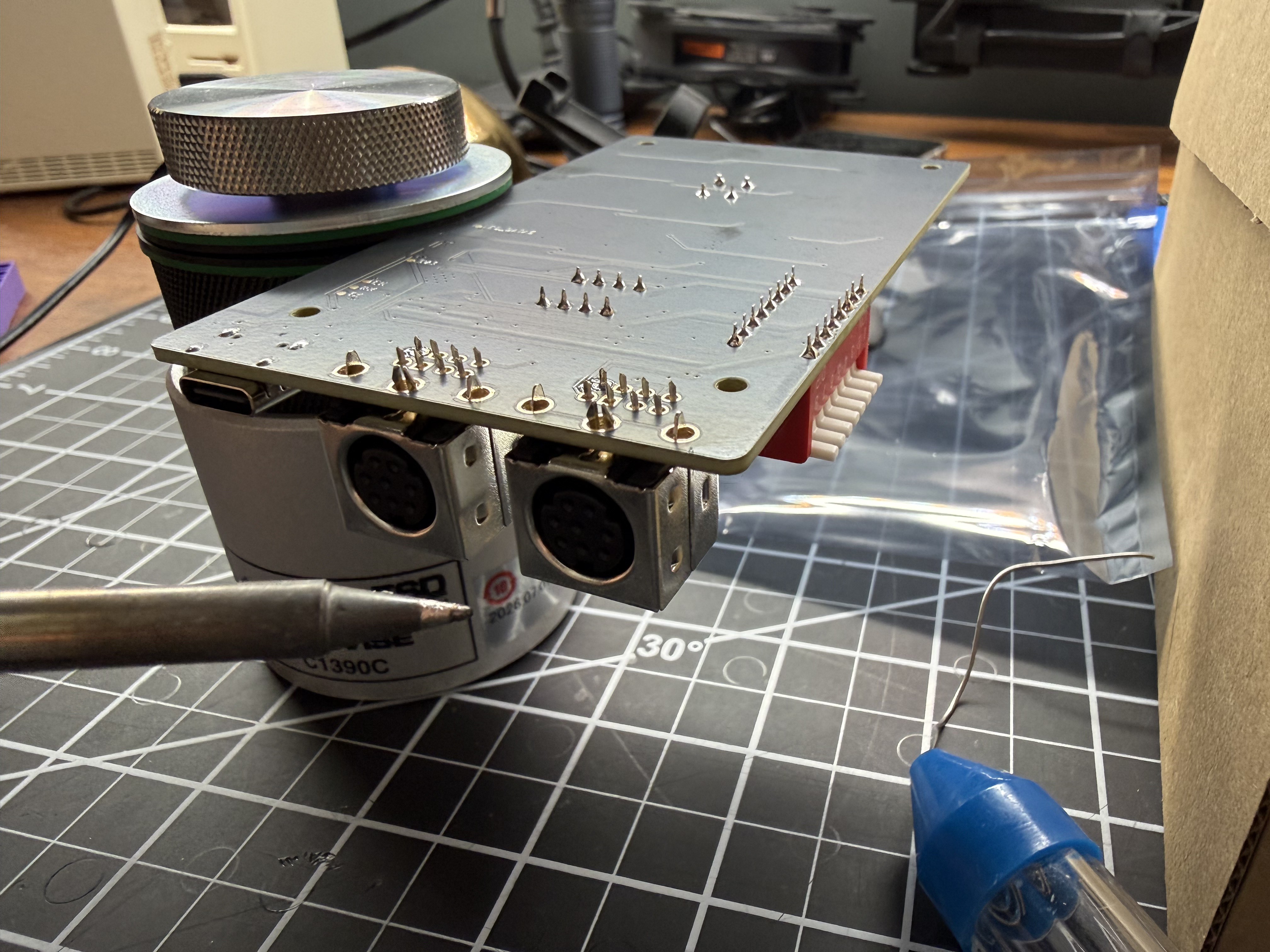
The boards came back from PCBWay, and I soldered on the two mini-DIN ports by hand. The LocalTalk chip is a PIC, and rather than buy a programmer I had the ESP32 program it right in its socket. That took a couple of tries.
The first print came out exactly the same as the laptop version, byte for byte, which was a relief. A full-page photo from my iPhone takes about two minutes to print. I also printed a case for it, which took a few rounds to get right. The board slides in past a flexible wall on one side.
-
The art panel
a day ago • 0 comments![]()
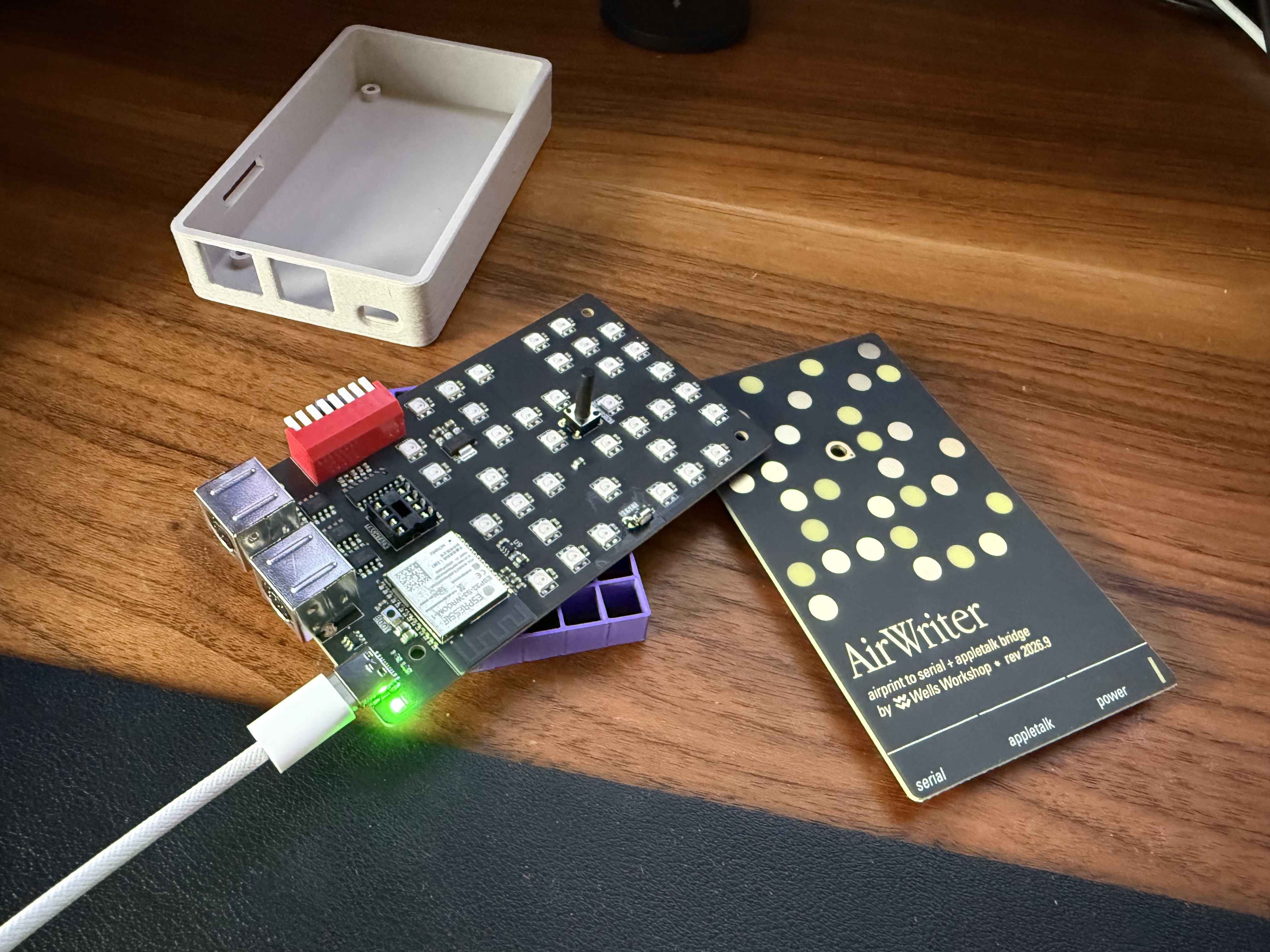
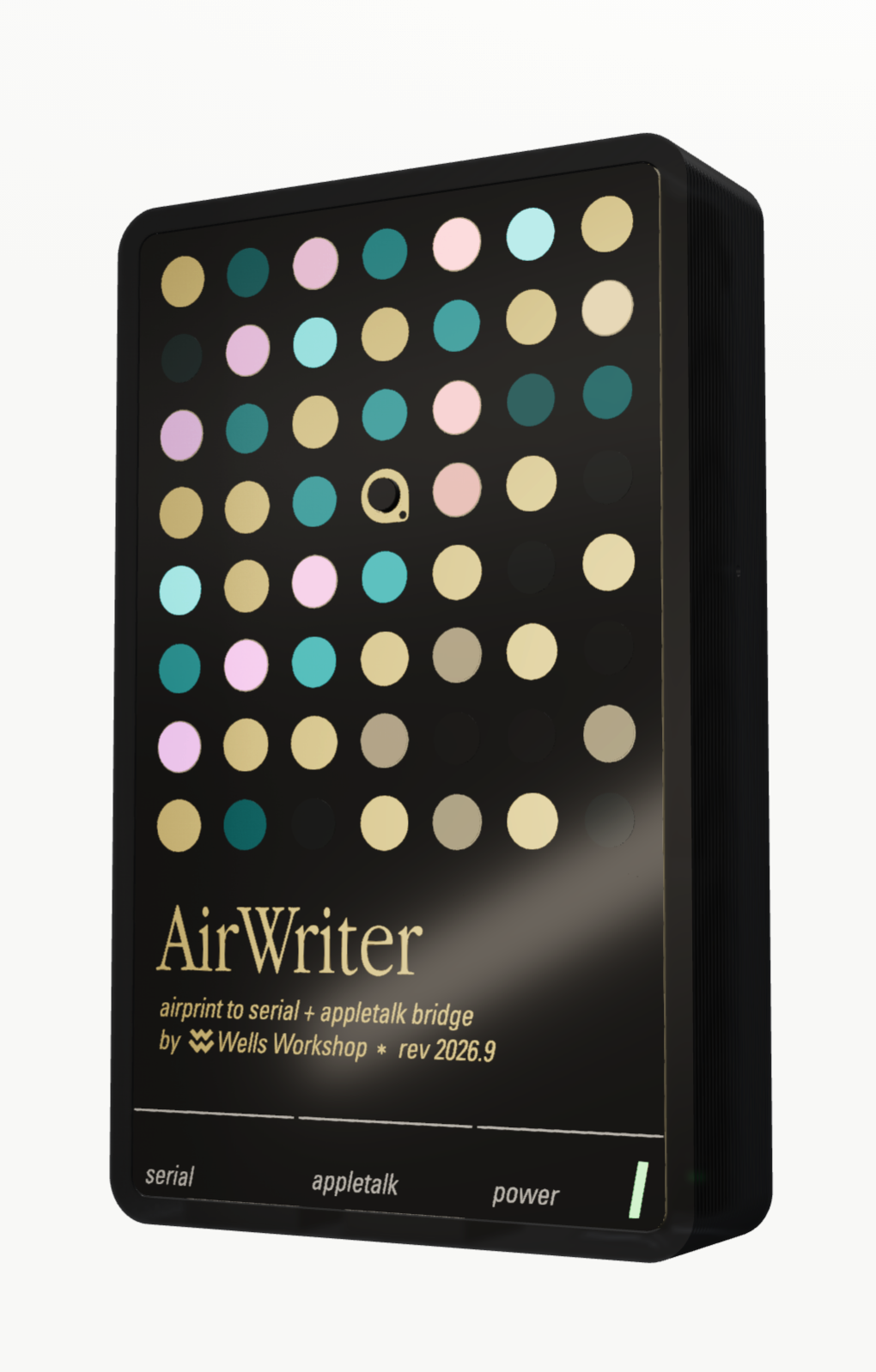
I tried a few looks for the front before landing on this one. It's a second PCB that snaps off the same panel as the main board and has no components at all. I draw the art in Figma, and a script turns the export into a KiCad board, with each colour mapped to a PCB material. Bare FR4 lets the LEDs through in full colour, soldermask turns them teal, and the gold dots stay dark.
The first version would have leaked light everywhere, because black soldermask lets teal light through. So the back of the panel is solid copper, with holes only behind the dots that are meant to light up.
-
Printing to nothing
a day ago • 0 commentsThe boards were weeks away, so I started on the firmware without them. I set up a fake printer on my laptop, printed to it from my iPhone and saved what came through. That gave me a real AirPrint job to test against, and the whole pipeline got built and tested on the laptop first, then on an ESP32 devkit. Long before the boards arrived, the devkit was showing up in the iPhone's print sheet, with no printer attached.
AirWriter
A fun (and beautiful) little device that adds AirPrint and AppleTalk to the Apple ImageWriter II over Wi-Fi