Anteneh Gashaw
-
Piston plate downward push
05/07/2025 at 10:17 • 0 comments![]()
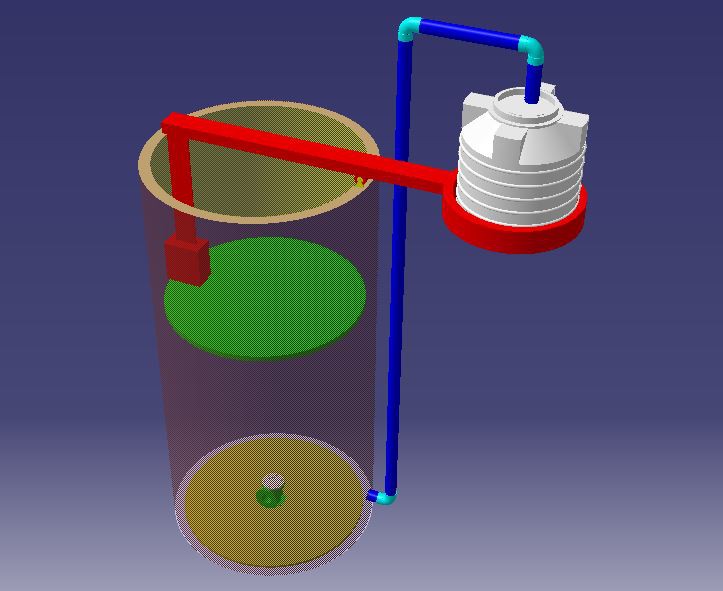
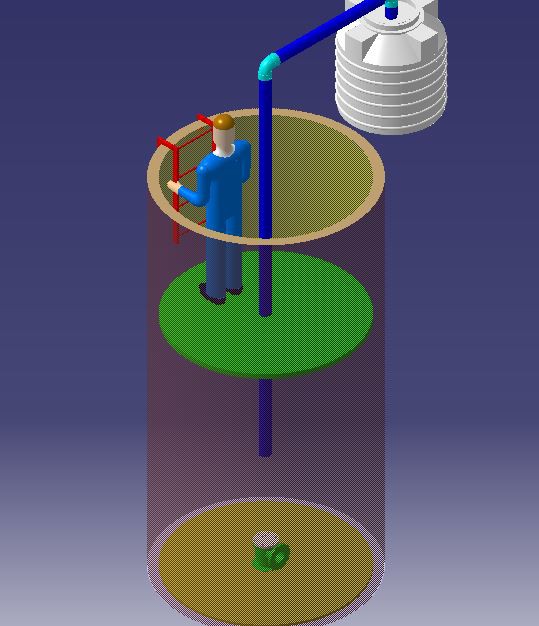
This new design is about using a weight balance system to push the piston downward incase weight of person is not enough to overcome the pressure of the water in the well. This will automate the whole system avoiding a person contact by using the water tank as a counter balance weight when enough weight water enters in to it. In opposite side of the weight balance there will be a load of X Kg enough to push water in the well to Y meter depth. Ideally the load weight and the water tank full of water have same weight. When the water tank is empty the load in the well will push the ground water down ward filling the water tank. As the water tanks starts to fill up it will start pulling the load up balancing the weight which will act as an automatic filling mechanism. When people use the water in the water tank the load will start pushing the piston down ward starting the filling process again.
3D model is not in actual size shown here.
-
Competitive Superiority
04/30/2025 at 18:59 • 0 comments![]()
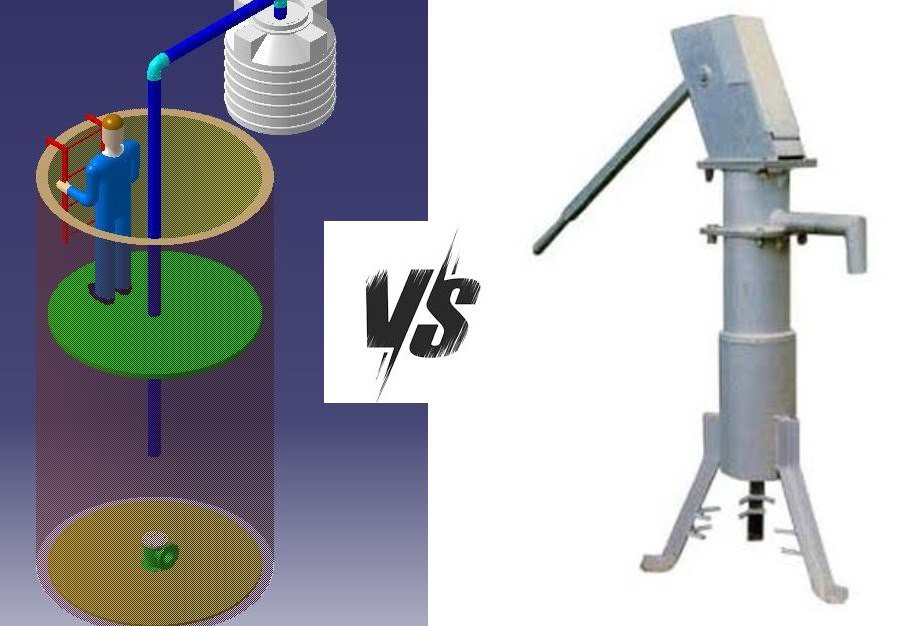
It is with tangible reasons when we say our well will be game changer. The following are the reasons why we need to switch from hand pump to this version of water well.
Rural women face several challenges when relying on hand pumps for water access, including physical strain, maintenance difficulties and the potential for pollution or contamination. Lack of proper maintenance, including spare parts and trained personnel, also contributes to these struggles. Specific challenges include:
• Physical exertion:
Pumping water can be physically demanding, requiring significant effort, especially for women who may already be burdened with household chores and other work.• Maintenance and repairs:
Hand pumps can be prone to breakdowns, and repairs can be time-consuming and costly, especially in remote areas where spare parts and skilled technicians may be scarce.• Water quality:
While hand pumps can provide access to deeper, potentially safer groundwater, improper installation, maintenance, or overuse can lead to contamination, posing health risks, especially for vulnerable populations like children and pregnant women.• Lack of community participation:
Insufficient community involvement in the maintenance and management of hand pumps can hinder their sustainability and effectiveness.• Limited resources:
In some cases, inadequate funding or lack of technical support from agencies responsible for hand pump installations can impede their proper functioning and maintenance, leading to breakdowns and delays in water access. -
Piston plate return analysis
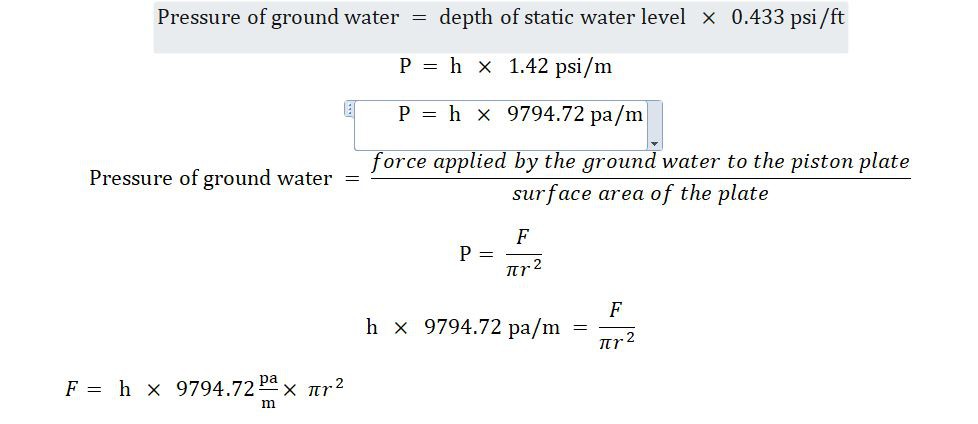
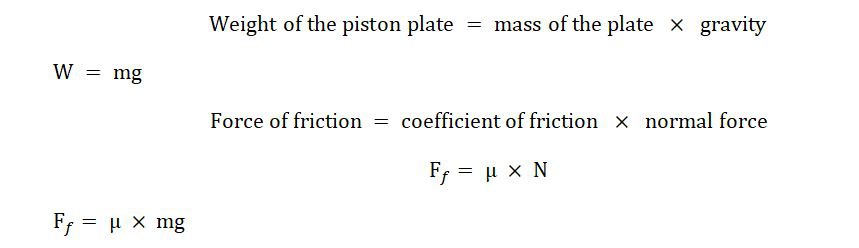
04/29/2025 at 09:33 • 0 commentsIt is expected that the ground water upon returning to the static water level will push the piston up resetting the system. To verify the return capacity
![]()
![]()
![]()
Assuumptions
- The standard diameter for water wells typically falls within the range of 1 to 1.8 meters, so let us take 1.8 meter diameter well
r = 0.9m
- The static water level in a well typically falls within a range of 2 to 5 meters below the ground surface, so let us take 5 meter depth well
h= 5m
- The coefficient of friction for standard piston seals generally falls within a range of 0.2 to 0.8, so let us take the highest for safety which is 0.8
µ = 0.8
At static water level the summation of all forces excluding the weight of the person should be zero
![]()
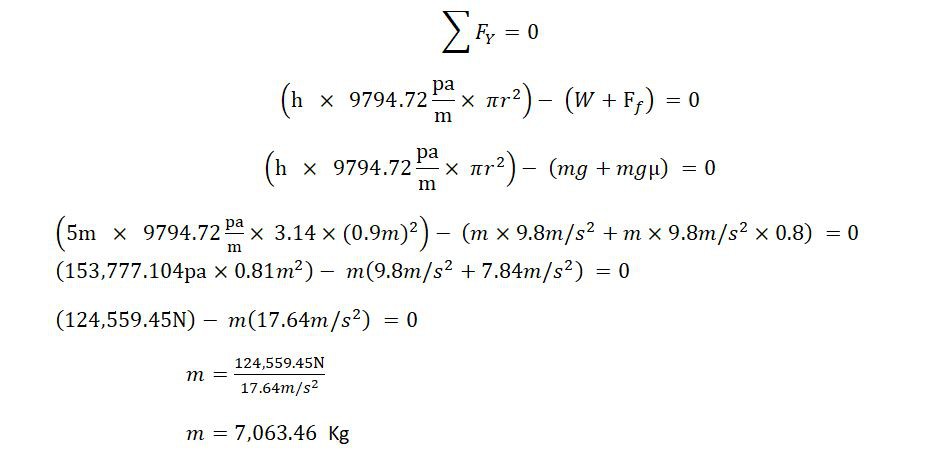
Therefore as long as the mass of the piston is less than 7,063.46 kg for standard well, the ground water will push the piston plate. The weight of sheet metal used for a piston depends on the material and thickness. For common materials like steel or aluminum, the weight per square meter (kg/m²) varies with thickness. Steel sheets weigh between 7.85 and 10.21 kg/m².
Since the well diameter here is 1.8 meter giving 2.5 m² and taking the weight 10.21 kg/m² for safety, the mass of the piston plate will be
m = 2.5m² * 10.21 kg/m²
m = 25.525 Kg
Which tells us the design is safe.
-
Groundwater disappearing prevention from excessive water pump
04/25/2025 at 13:42 • 0 commentsGroundwater can disappear or be significantly reduced due to excessive pumping, a process called groundwater depletion. When water is withdrawn faster than it's replenished, the water table (the upper level of the groundwater) lowers, potentially causing wells to dry up. The disappearing of groundwater due to excessive pumping can be prevented through a combination of monitoring, regulation, and sustainable practices which are dependent on responsible consumption of operators and there is no system that could force them not to pump excessive water from the well, until now
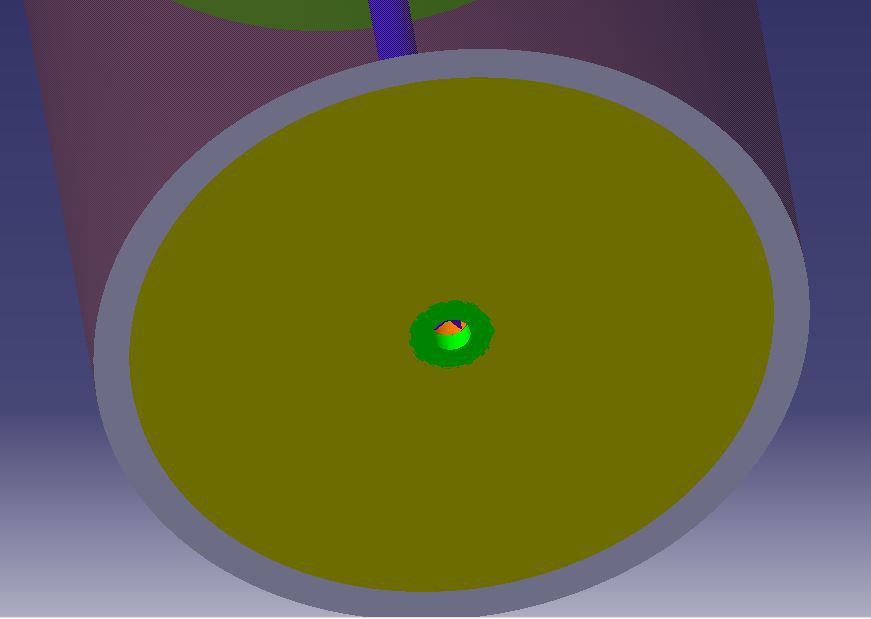
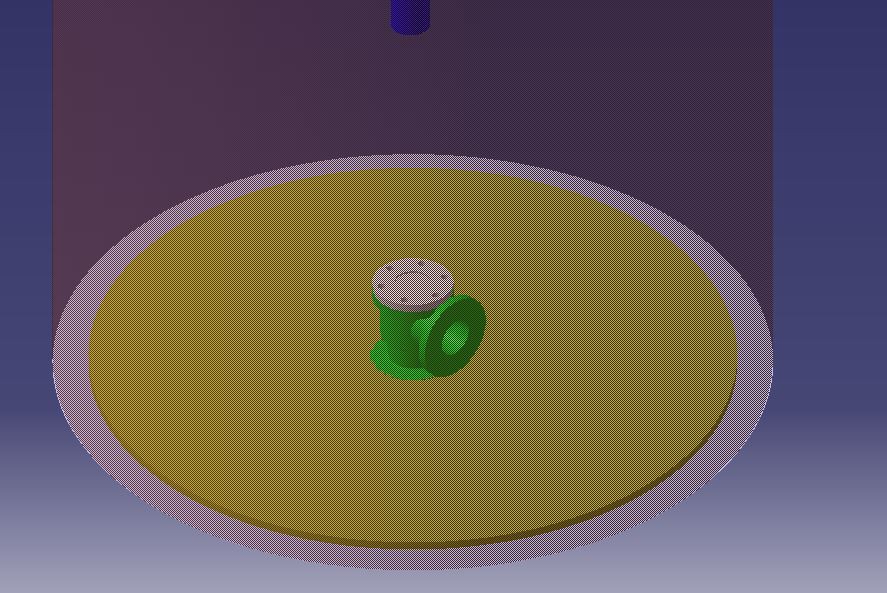
This water well is also equipped with non-return valve at the base of the cylinder where ground water can enter the well but not out of it which only force user to use the water available at the cylinder rather than over pumping the ground water distributing the water table.
![]()
![]()
![]()
Water well design 5.0
New kind of water well that doesnt need any power source except weight of people to pull water out from ground up by using pascal’s law.