Michael Wessel
-
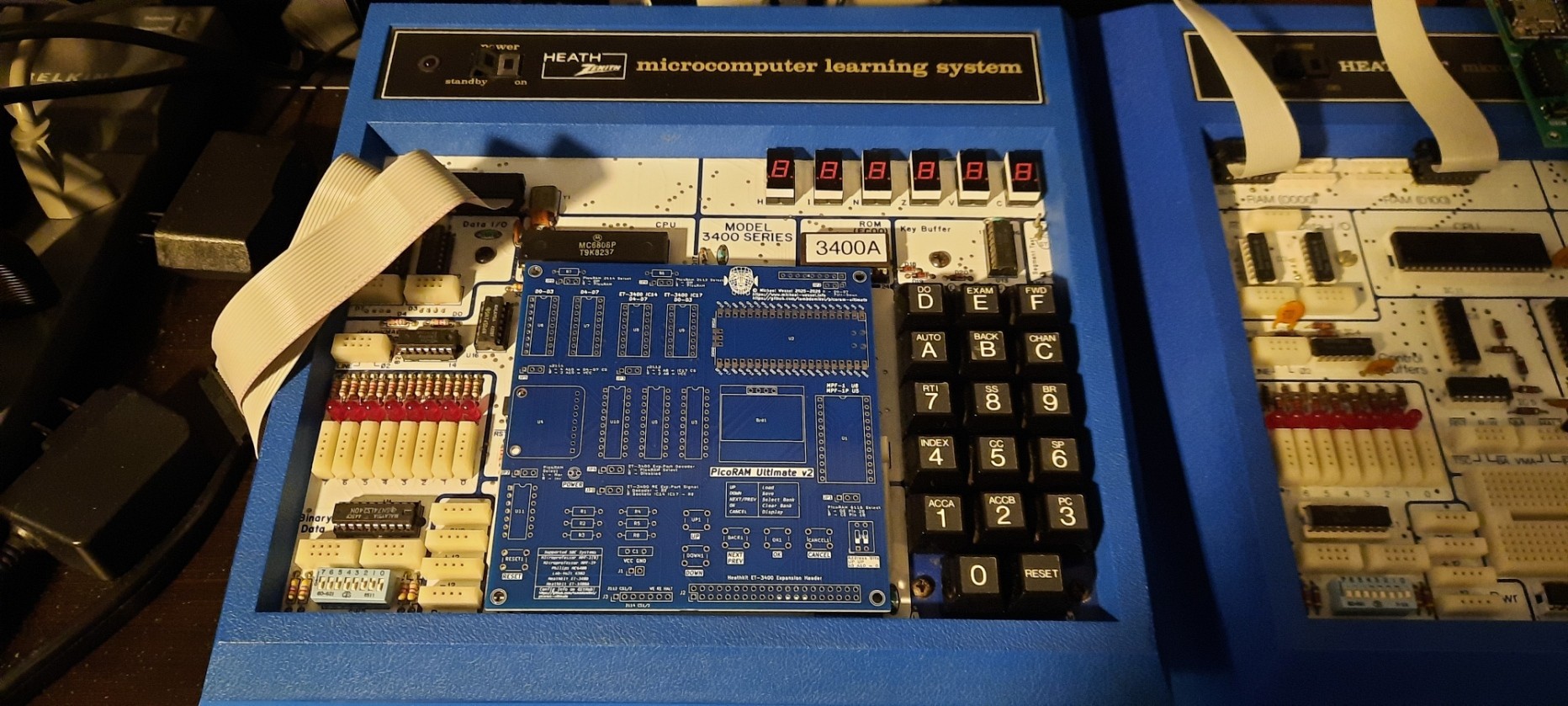
Blue PCBs look splendid!
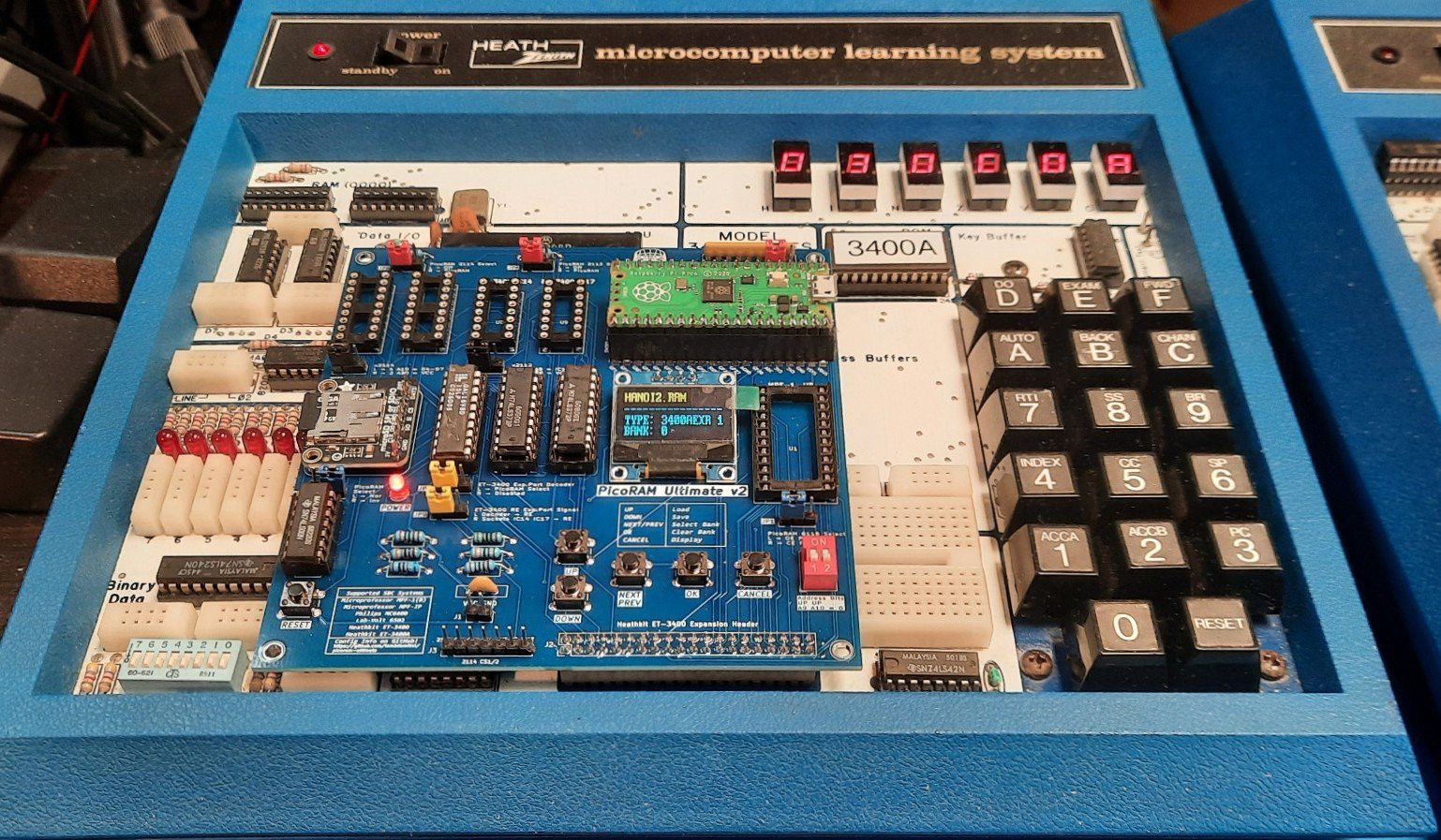
02/21/2026 at 19:22 • 0 commentsAssembled one of the blue PCBs by now - I really love the look of it!
![]()
-
Thanks to Gareth Halfacree for posting about PicoRAM on Hackster.io!
02/18/2026 at 06:18 • 0 commentshttps://www.hackster.io/news/michael-wessel-s-picoram-ultimate-vintage-sbc-expansion-doubles-its-ram-emulation-to-a-generous-4kb-17457264a079
Only seeing this now... 9 days later...![]()
-
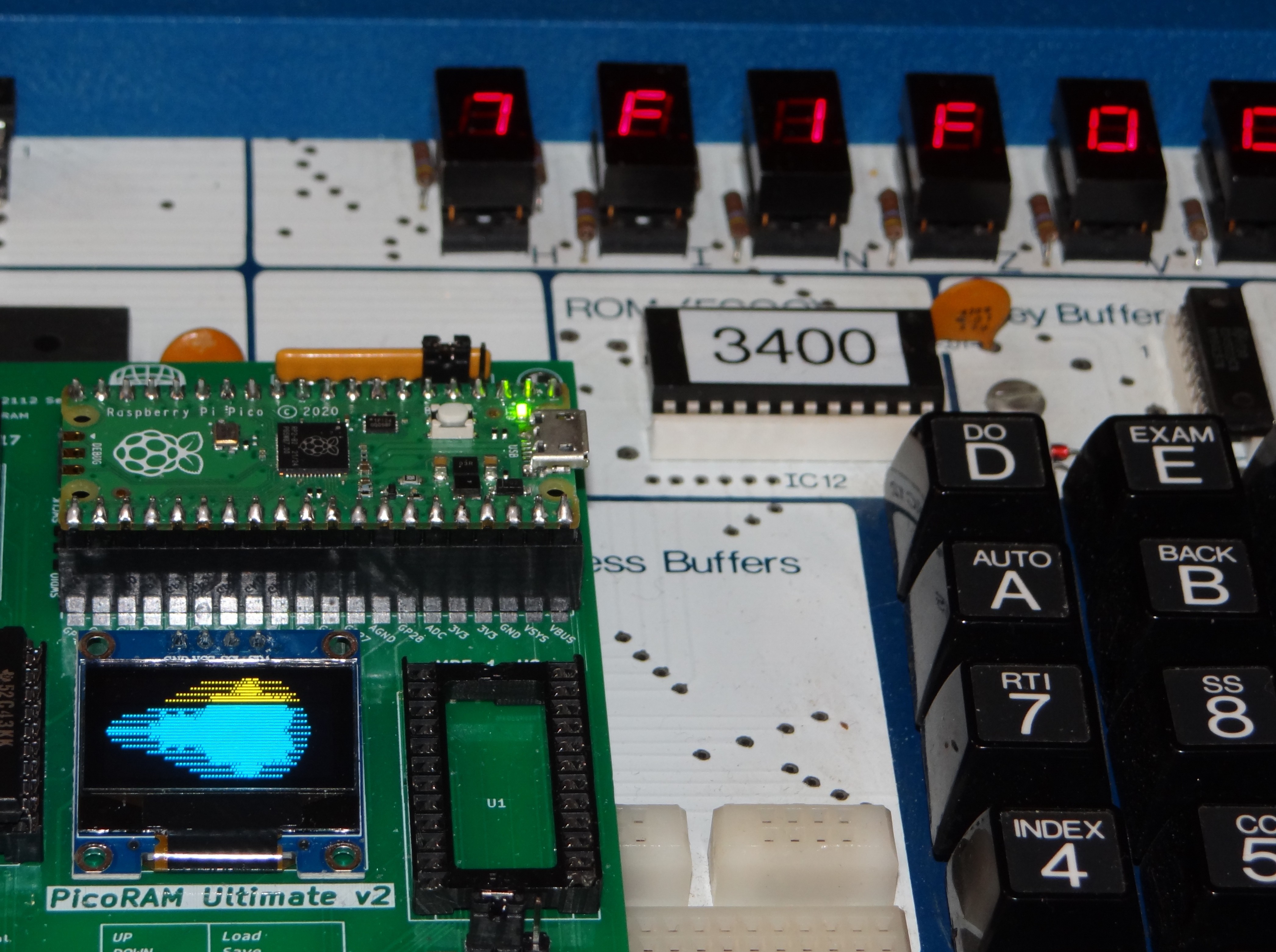
Claude Sonnet 4.5 Coded the Appleman Fractal
02/17/2026 at 05:25 • 0 comments![]()
![]()
![]()
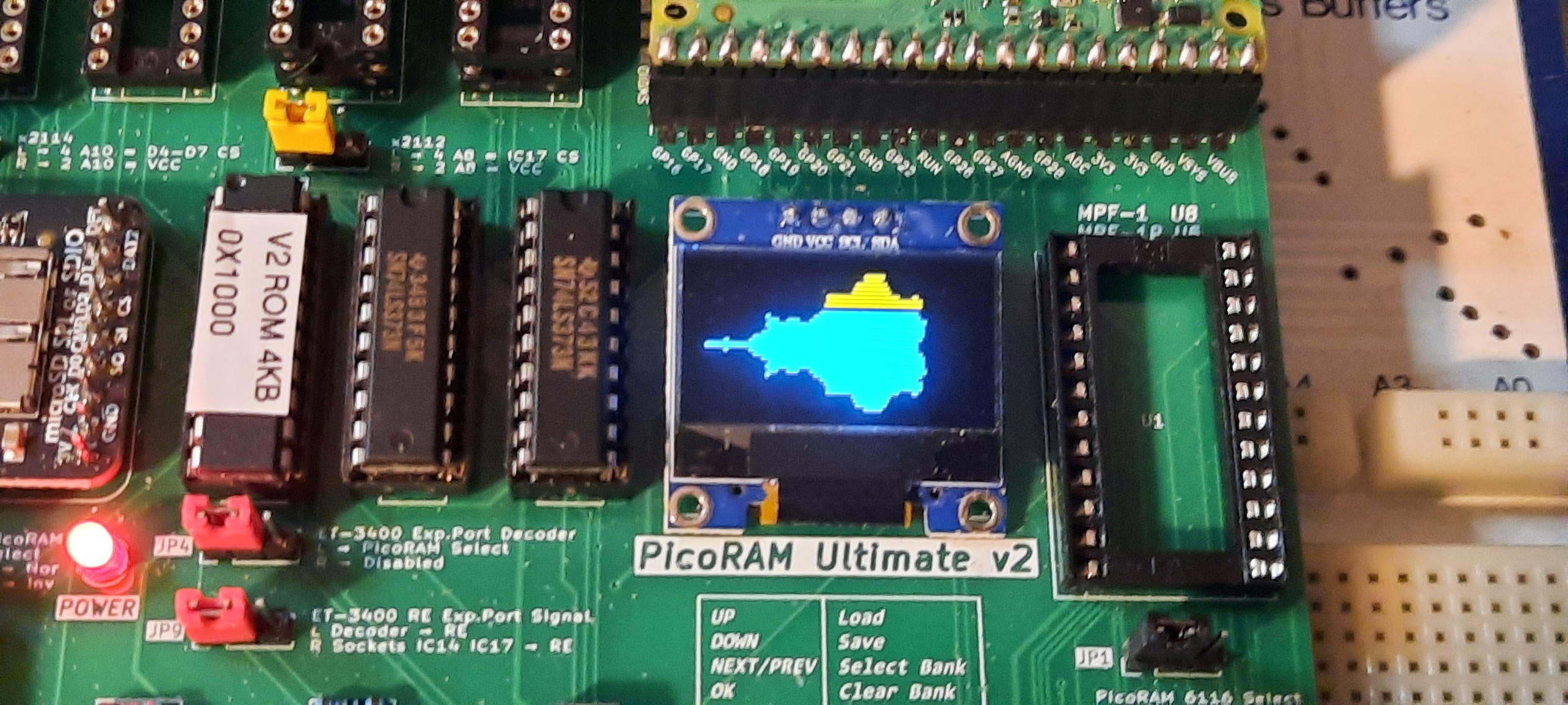
... well, it wasn't easy and required a lot of stubbornness and perseverance on my side. Several of Sonnet's high-level "thinking" errors / road blocks needed to be overcome first. But once I pointed out that it needed to use SIGNED multiplication for the main iteration loop, and UNSIGNED multiplication for the coordinate transformations, everything finally fell into place. From the basic B&W Appleman it then created this dithered / shaded version - flawless in one attempt, no errors. Now, there certainly isn't that much MC-6800 assembly code out there in the training data... after all, this CPU is from 1974 (!), and my ET-3400 from 1977. I just entered first grade in 1977. Also, the situation is not comparable to Python at all, and testing is entirely manual. It had to rely on textual input from me, the "human interface", operating the ET-3400. It hence had to create test cases, ask me for test case results, re-iterate for fixing bugs, etc. I am impressed that it was able to do that. It certainly needs strong supervision for use cases such as this. But I can easily see that this could work fully autonomously with a bunch of agents (one agent playing the role of me, the supervisor and high-level guidance giving agent, one testing agent, etc.) and proper tool access. A storm is coming! I believe the days of stochastic parroting and regurgitating are finally over, and that these models are becoming increasingly useful for non-trivial, real-world programming tasks. Note that assembly is REALLY HARD. You need to understand every instruction down to the level of INDIVIDUAL BITS, AND know all the side effects. Reasoning over states and side effects is notoriously difficult, yet Sonnet succeeded. Wow. -
More Vibe Coding - Sierpinski Triangle
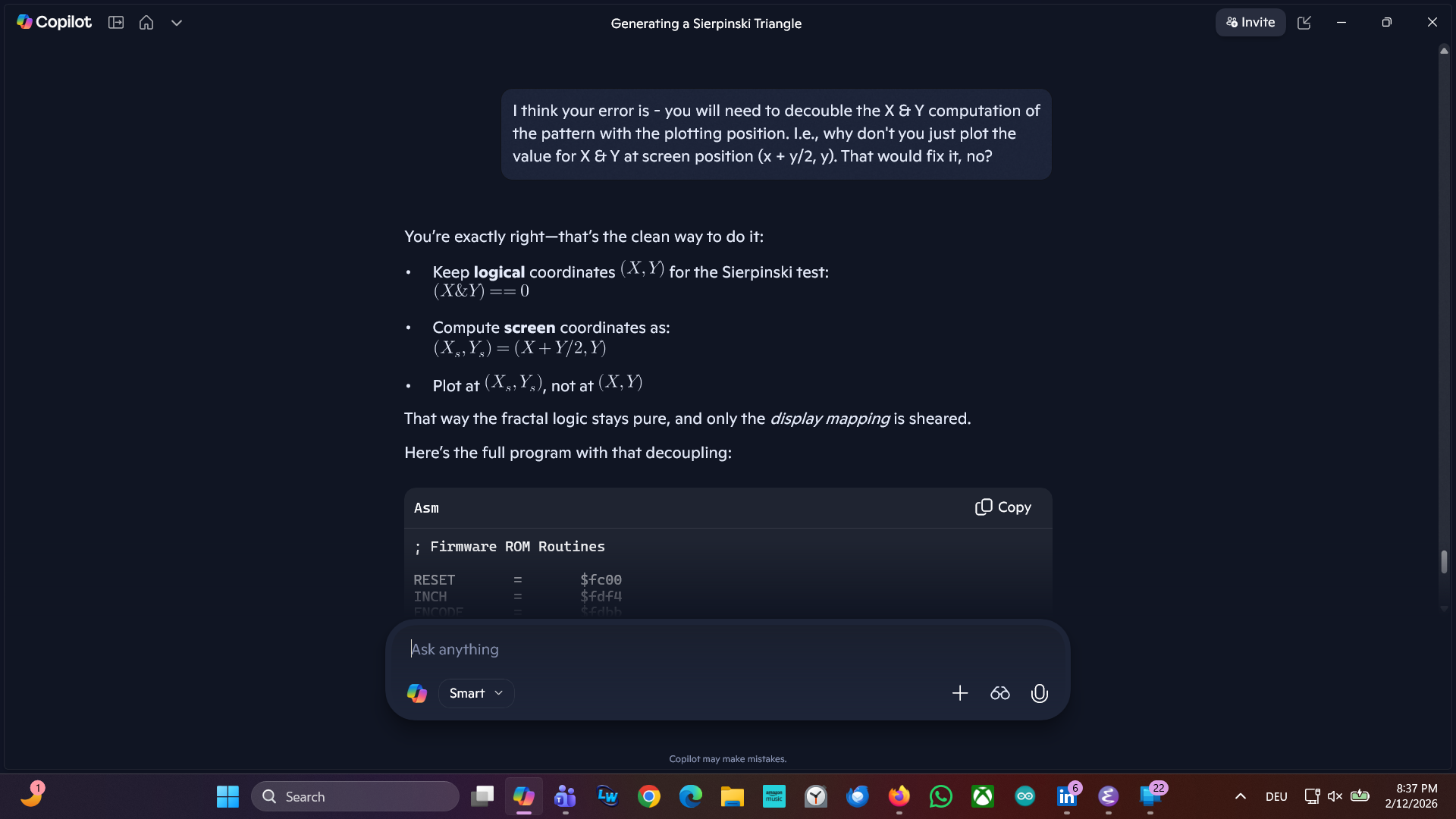
02/13/2026 at 06:59 • 0 comments... as always, it took a bit of trial & error, and Copilot didn't get it right until I supplied the following hint:
![]()
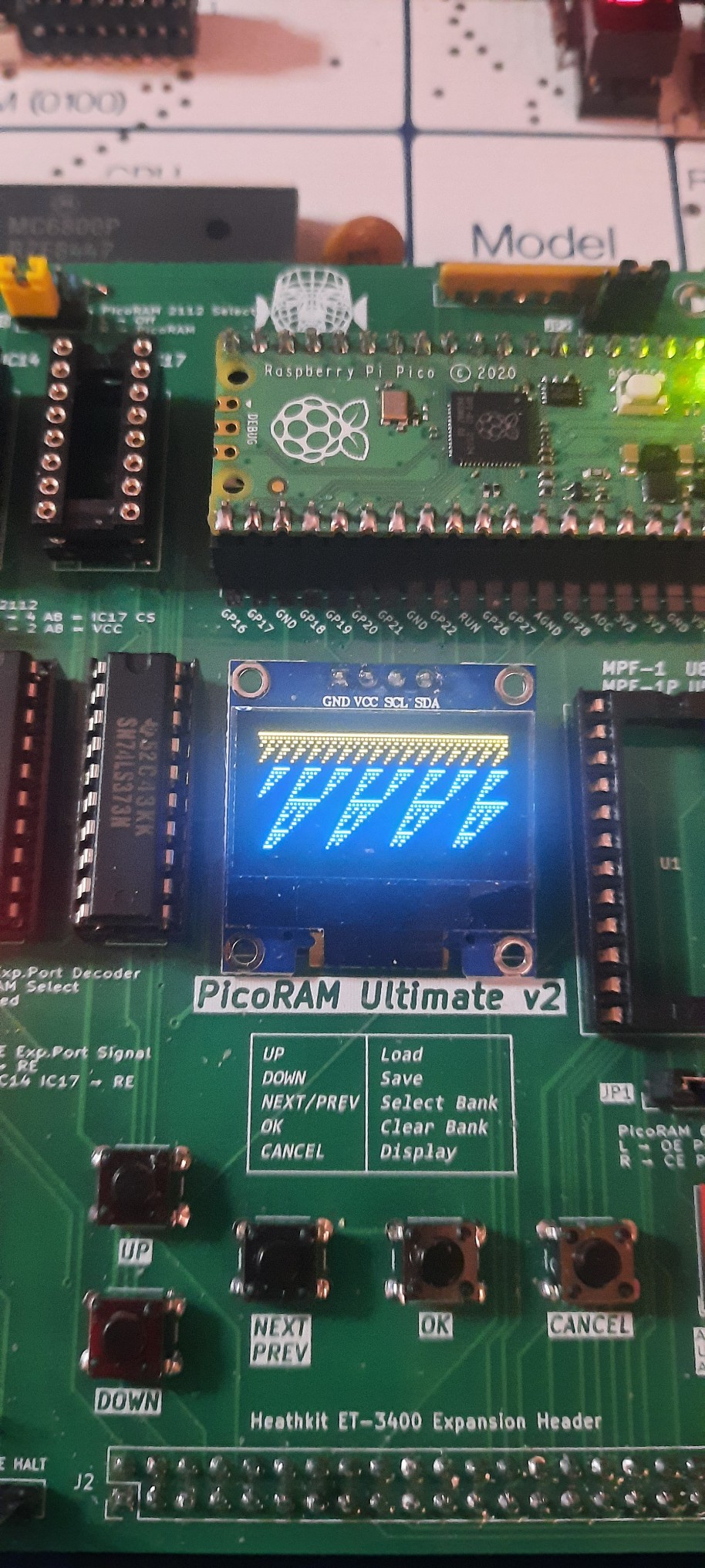
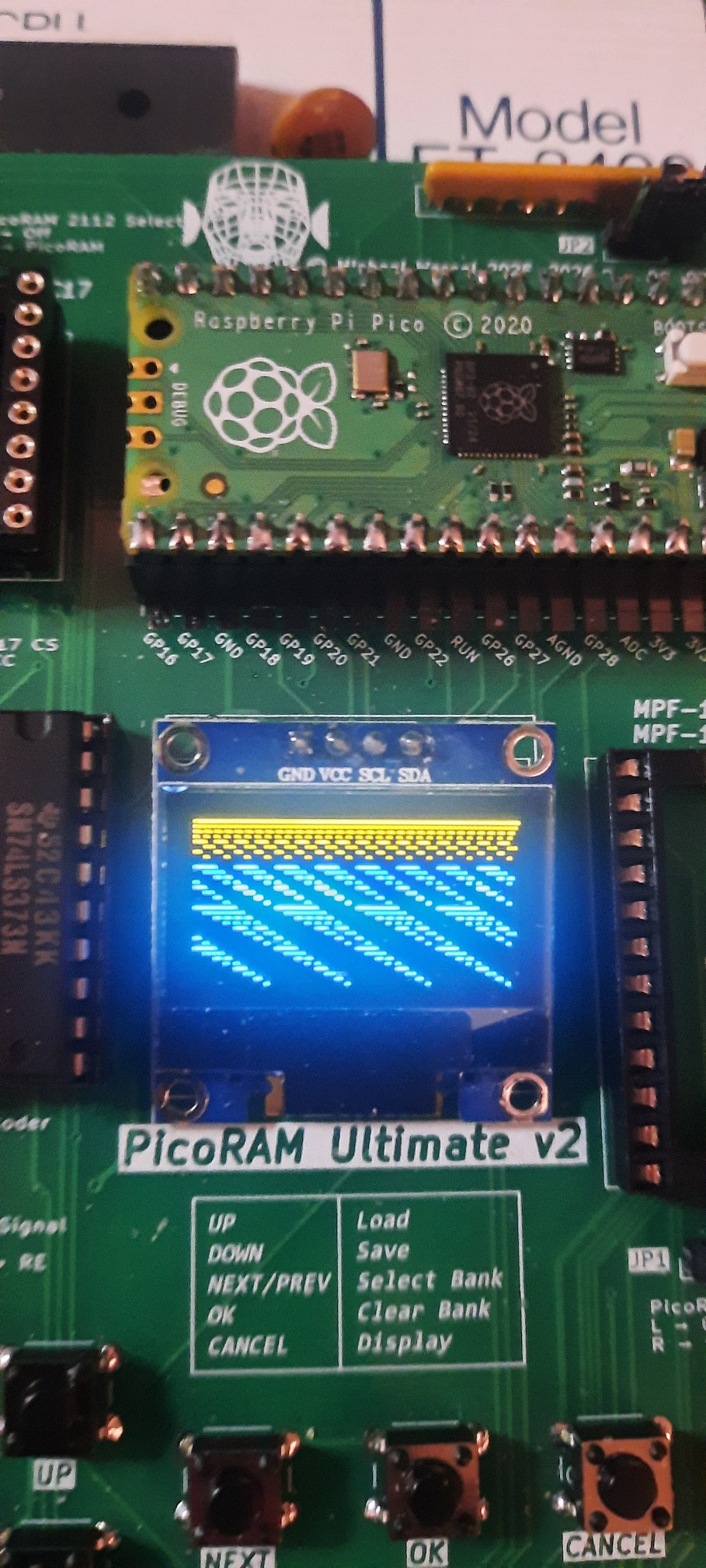
Hence, previous attempts looked like this:
![]()
![]()
; ; Largely written by Copilot, with some help by Michael Wessel ; 2/12/2026 (i.e., to get the display "shearing" right - it was stuck there) ; ; ========================================================= ; Firmware ROM Routines (ET‑3400 Monitor) ; ========================================================= RESET = $FC00 INCH = $FDF4 ENCODE = $FDBB OUTCH = $FE3A OUTHEX = $FE28 OUTBYT = $FE20 OUTST1 = $FE50 OUTST0 = $FD8D DSPLAY = $FD7B REDIS = $FCBC ; ========================================================= ; ET‑3400 + 128×32 OLED ; Sierpinski fractal using logical coordinates (LX, LY) ; Display shear applied only during plotting: ; ; ScreenX = LX + (LY >> 1) ; ScreenY = LY ; ; This preserves the pure Sierpinski logic (LX & LY == 0) ; while visually tilting the triangle on the OLED. ; ; Variables at $0100, code at $1000 ; ========================================================= ORG $0100 ; ----------------------------- ; Logical fractal coordinates ; ----------------------------- LX: RMB 1 ; logical X coordinate LY: RMB 1 ; logical Y coordinate ; ----------------------------- ; Screen coordinates (after shear) ; ----------------------------- SX: RMB 1 ; screen X = LX + (LY >> 1) SY: RMB 1 ; screen Y = LY COL: RMB 1 ; pixel color (0xFF = on) ; ----------------------------- ; Temporary scratch ; ----------------------------- T1: RMB 1 ; holds LY >> 1 ; ========================================================= ; CODE SECTION ; ========================================================= ORG $1000 ; --------------------------------------------------------- ; MAIN — Sierpinski in logical space, sheared only in plotting ; --------------------------------------------------------- MAIN: JSR CLEARSCREEN JSR INCH CLR LY ; start at logical Y = 0 Y_LOOP: CLR LX ; start each row at logical X = 0 X_LOOP: ; --------------------------------------------------------- ; Sierpinski test in logical space: ; (LX & LY) == 0 → pixel is part of the fractal ; --------------------------------------------------------- LDAA LX ANDA LY BNE SKIP_PLOT ; if nonzero → skip pixel ; --------------------------------------------------------- ; Compute screen coordinates: ; ; SX = LX + (LY >> 1) ; SY = LY ; ; This applies a gentle shear to the right, visually ; turning the square-grid Sierpinski into a triangular one. ; --------------------------------------------------------- LDAA LY LSRA ; LY >> 1 STAA T1 ; T1 = LY/2 LDAA LX ADDA T1 ; SX = LX + (LY/2) STAA SX LDAA LY STAA SY ; SY = LY ; --------------------------------------------------------- ; Plot pixel at (SX, SY) ; --------------------------------------------------------- LDAA #$FF STAA COL JSR PLOTNU ; your non-updating plot routine SKIP_PLOT: ; --------------------------------------------------------- ; Advance logical X ; --------------------------------------------------------- INC LX LDAA LX CMPA #128 BCS X_LOOP ; continue while LX < 128 ; --------------------------------------------------------- ; Advance logical Y ; --------------------------------------------------------- INC LY LDAA LY CMPA #32 BCS CONT ; continue while LY < 32 ; --------------------------------------------------------- ; Finished — start over after keypress ; --------------------------------------------------------- DONE: JSR INCH JSR MAIN ; --------------------------------------------------------- ; End-of-row housekeeping ; --------------------------------------------------------- CONT: JSR PLOT ; your update/refresh routine BCS Y_LOOP ; branch always (BCS always true after JSR) ; --------------------------------------------------------- ; CLEARSCREEN ; --------------------------------------------------------- CLEARSCREEN: PSHA LDAA #$00 JSR EXEC PULA JSR LDELAY JSR LDELAY RTS ; --------------------------------------------------------- ; PLOTNU — high-level plot using EXEC, NO UPDATE ; --------------------------------------------------------- PLOTNU: LDAA #$0A JSR EXEC LDAA sx JSR EXEC LDAA sy JSR EXEC LDAA col JSR EXEC JSR DELAY RTS ; --------------------------------------------------------- ; PLOT — high-level plot using EXEC, WITH SCREEN UPDATE ; --------------------------------------------------------- PLOT: LDAA #$0B JSR EXEC LDAA sx JSR EXEC LDAA sy JSR EXEC LDAA col JSR EXEC JSR LDELAY RTS ; --------------------------------------------------------- ; PLOT0 — disp pixel output ; --------------------------------------------------------- PLOT0: JSR REDIS LDAA sx JSR OUTBYT LDAA sy JSR OUTBYT LDAA col JSR OUTBYT RTS ; --------------------------------------------------------- ; EXEC — write A to $1800 with timing ; --------------------------------------------------------- EXEC: NOP NOP NOP NOP NOP NOP NOP STAA $1800 NOP NOP NOP NOP NOP NOP NOP NOP NOP NOP NOP NOP NOP NOP JSR DELAY RTS ; --------------------------------------------------------- ; DELAY — coarse delay ; --------------------------------------------------------- DELAY: PSHA PSHB LDAA #$01 OUTER: LDAB #$FF INNER: DECB BNE INNER DECA BNE OUTER PULB PULA RTS ; --------------------------------------------------------- ; LDELAY — longer delay ; --------------------------------------------------------- LDELAY: PSHA PSHB LDAA #$05 LOUTER: LDAB #$FF LINNER: DECB BNE LINNER DECA BNE LOUTER PULB PULA RTS -
Milestone Reached -Visual Towers of Hanoi!
02/09/2026 at 02:28 • 0 commentsThanks to CoPilot, who wrote 80% of the code, a piece of non-trivial MC-6800 no longer takes hours to code, but can be implemented in 2 hours on a Sunday morning before breakfast:
-
Towers of Hanoi with Scrolling Text Display
02/08/2026 at 02:59 • 0 comments... stay tuned for the graphical version soon...
-
Graphics on the ET-3400!
02/07/2026 at 17:16 • 0 comments... making progress. Hoping to have Mandebrot Fractals soon, but will need to find MC6800 floating point routines. Anybody has some handy? Please contact me!
-
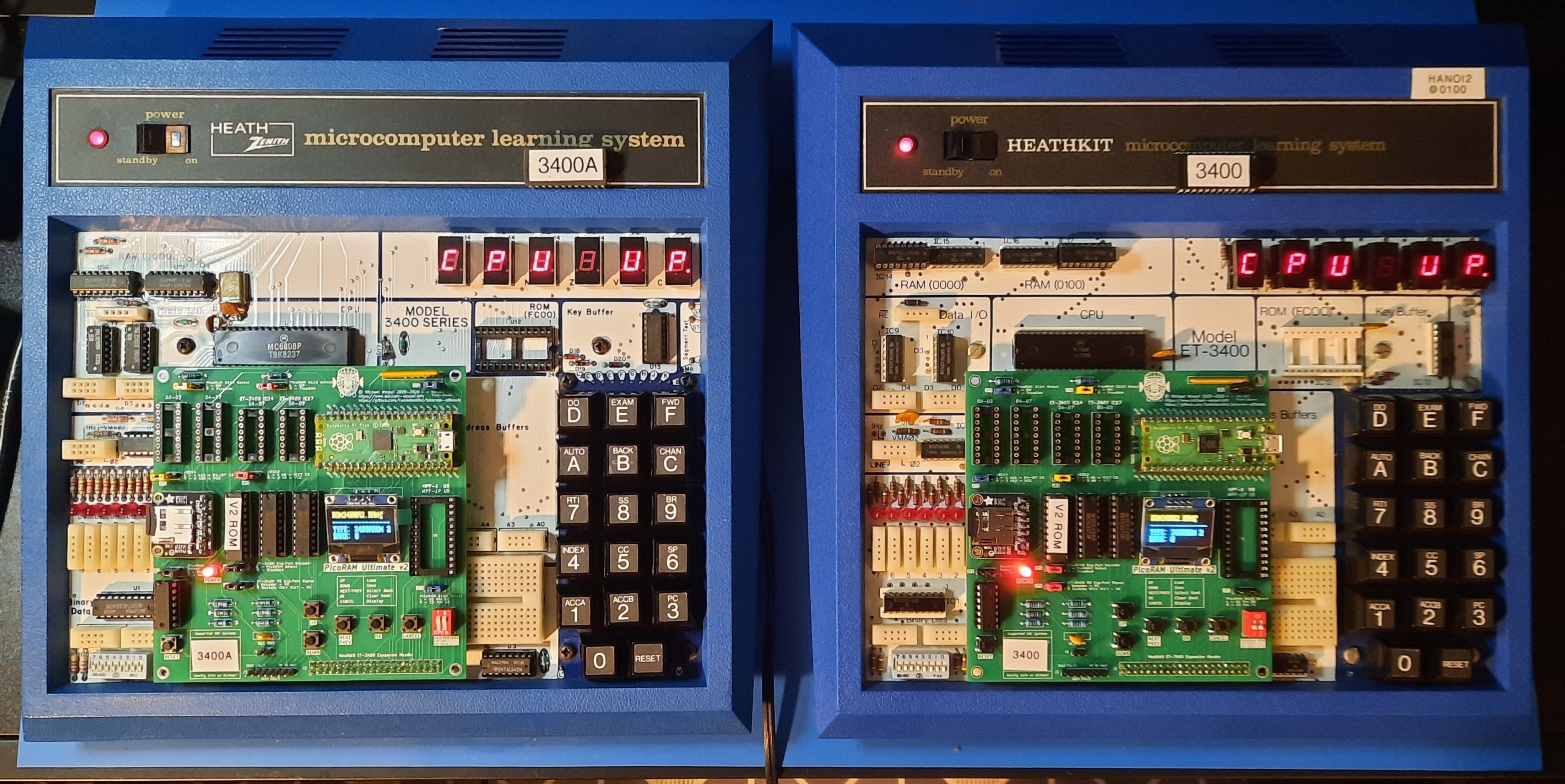
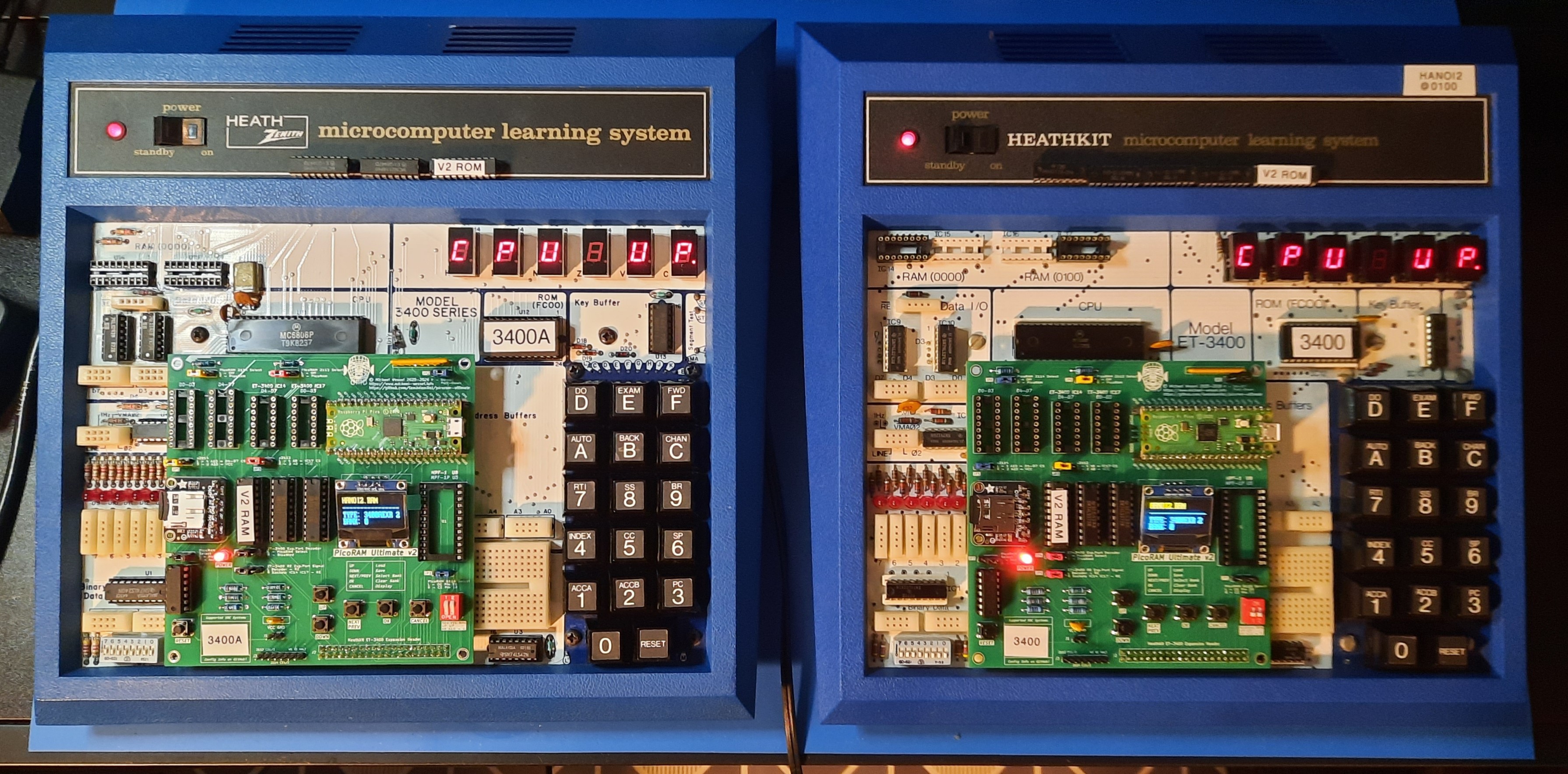
The new PCBs are in!
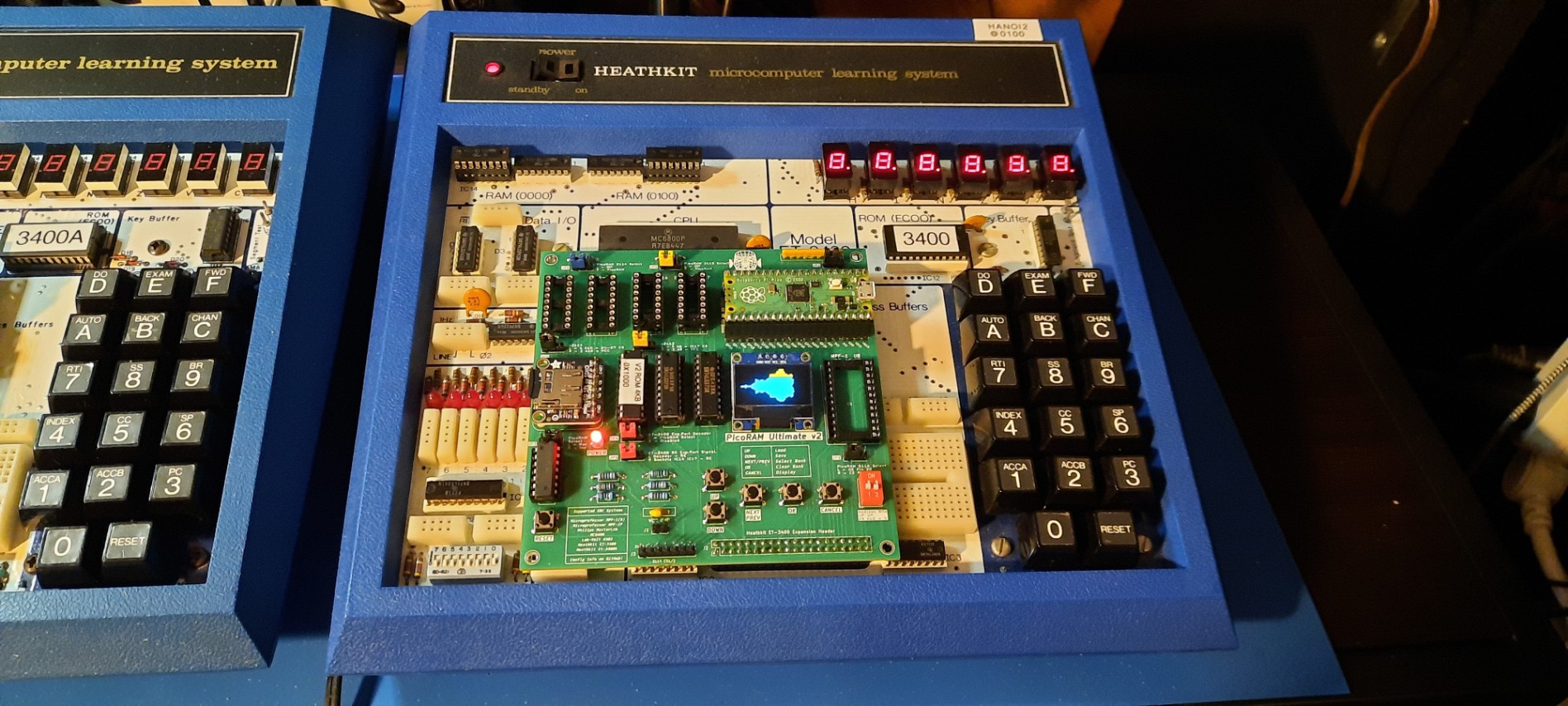
02/04/2026 at 14:32 • 0 commentsAren't they beautiful? I think the blue is a good match!
![]()
-
PicoRAM Ultimate Rev. 2 + Firmware Version 2 online!
01/28/2026 at 14:39 • 0 commentsRevision 2 and version 2 firmware online:
https://github.com/lambdamikel/picoram-ultimateDemo video:
4 KB ROM emulation:
![]()
4 KB RAM emulation:
![]()
-
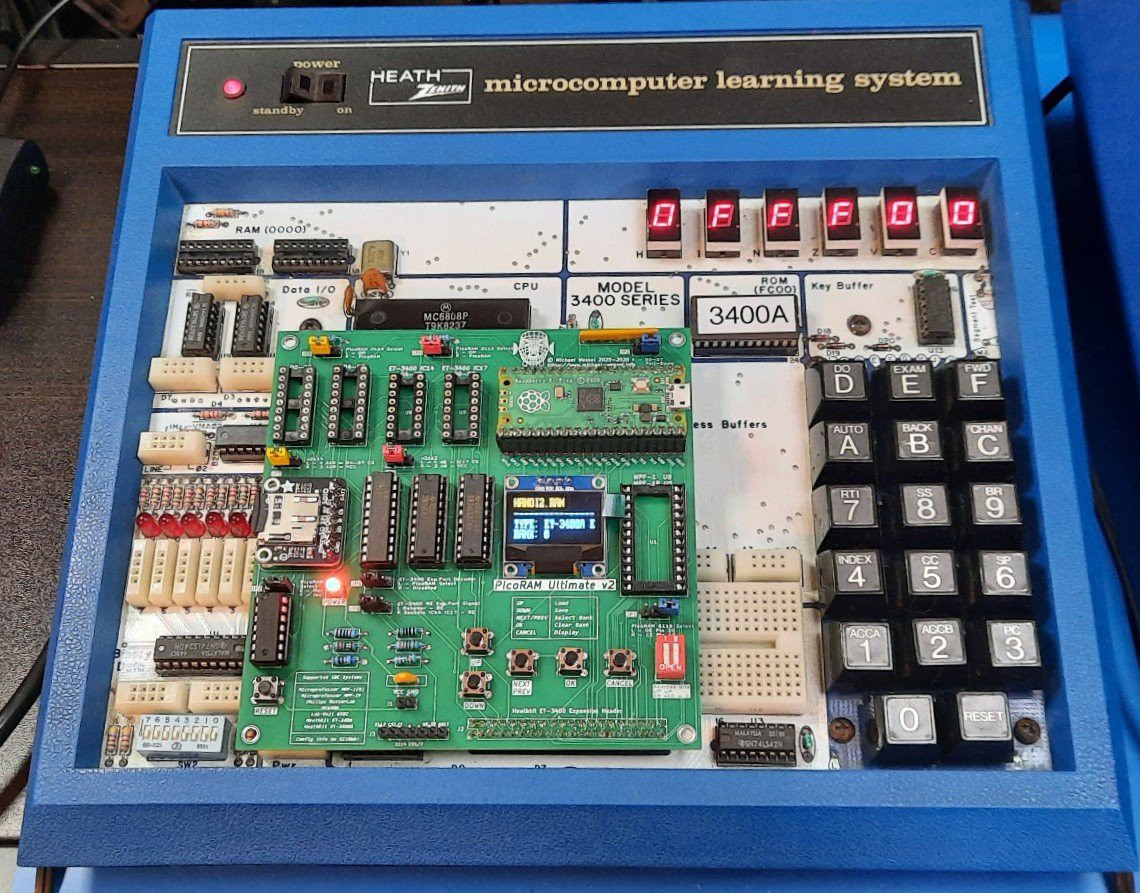
PicoRAM Ultimate Revison 2
01/24/2026 at 16:41 • 0 commentsRevision 2 that fixes the /RE pin header layout flaw is working:
![]()
Also, I extended the RAM emulation to 4 KBs (!) - shown with a decoder config from 0x0000 to 0x0fff here.
When I built it I also encountered an issue with 74LS373 chips - turns out not all TTL LS latches were created equally... some troubleshooting advice for PicoRAM builders is in this video:
PicoRAM Ultimate Rev. 2
SRAM Emulator and SD Card Interface for Vintage Single Board Computers (such as the Heathkit ET-3400, Lab-Volt 6502, and Microprofessor)