 Jake Wachlin
Logs:
0%
0%
Potato Powered Microcontroller
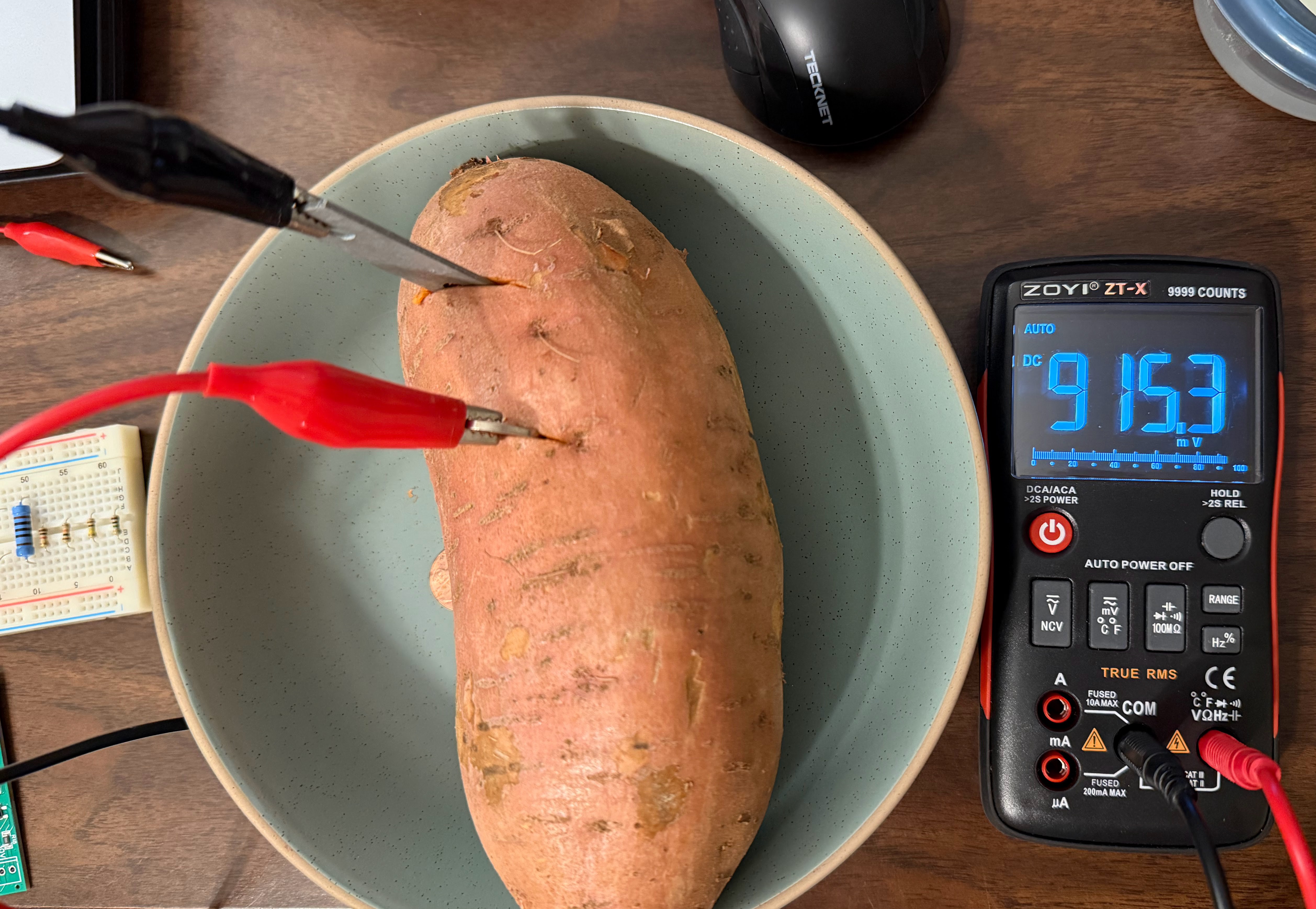
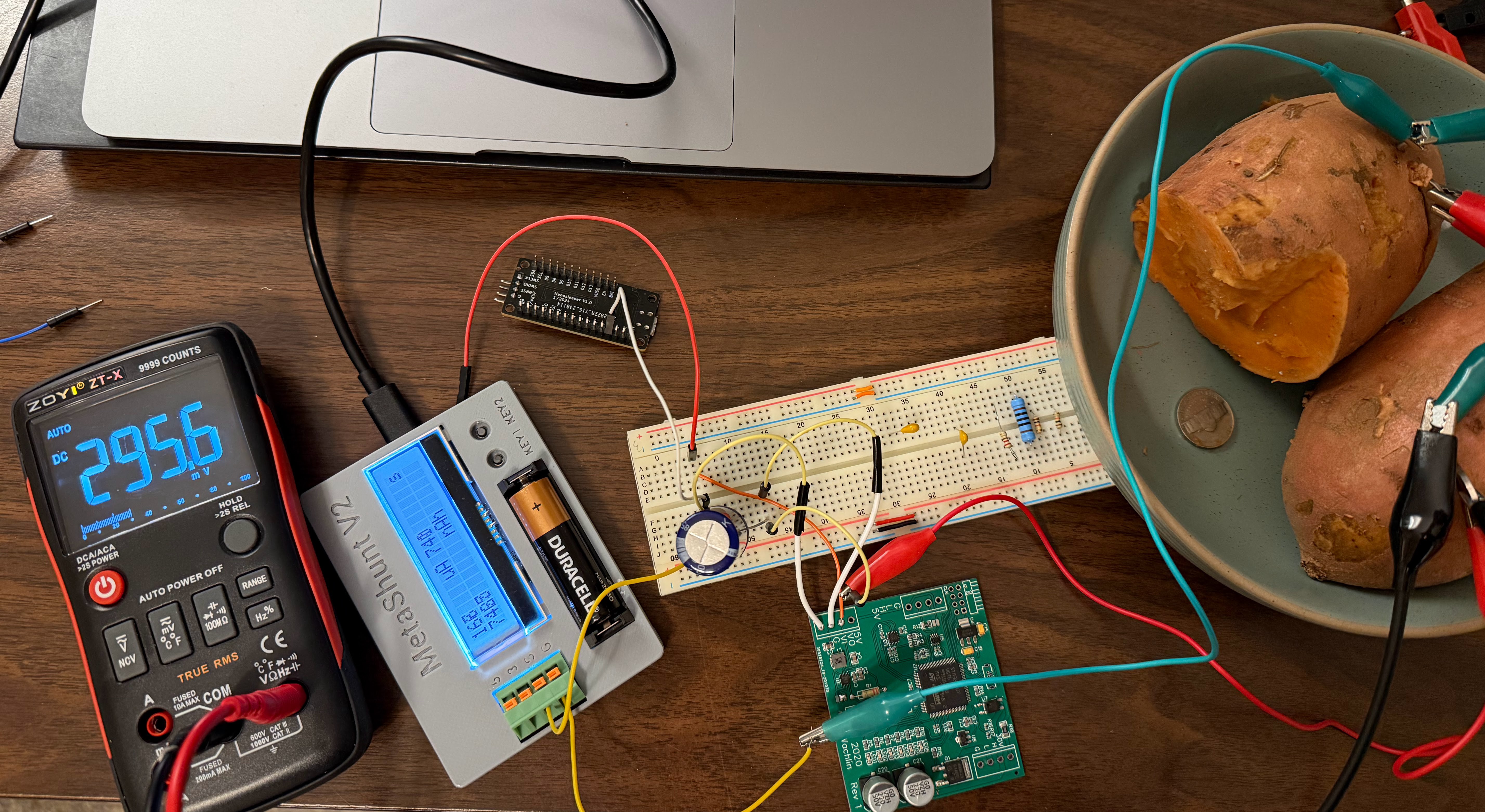
Attempting to run a microcontroller for an extended period with a potato battery
Become a Hackaday.io member
Already have an account? Log in.
Just one more thing
To make the experience fit your profile, pick a username and tell us what interests you.
Pick an awesome username

hackaday.io/
Your profile's URL: hackaday.io/username. Max 25 alphanumeric characters.
Pick a few interests
Projects that share your interests
People that share your interests

 Jasper Sikken
 Sagar 001
 George
 Patrick Van Oosterwijck
Interesting project! As far as TI's boost converters go, the TPS61299 is probably the best for this application, just looking at Iq=95nA.
If intermittent operation of the MCU is ok, you could try building a charge pump from discrete transistors, like @bobricius has done here: Ultra low power energy harvester from BPW34.
When I tried that circuit, I had to add a P-MOS transistor to the output (controlled from the NPN's collector), to avoid leakage current into the MCU below its operational voltage. Haven't tried it with a real "harvesting" source such as a solar panel or a potato, though...