Nelectra
-
Day-Night Cycles
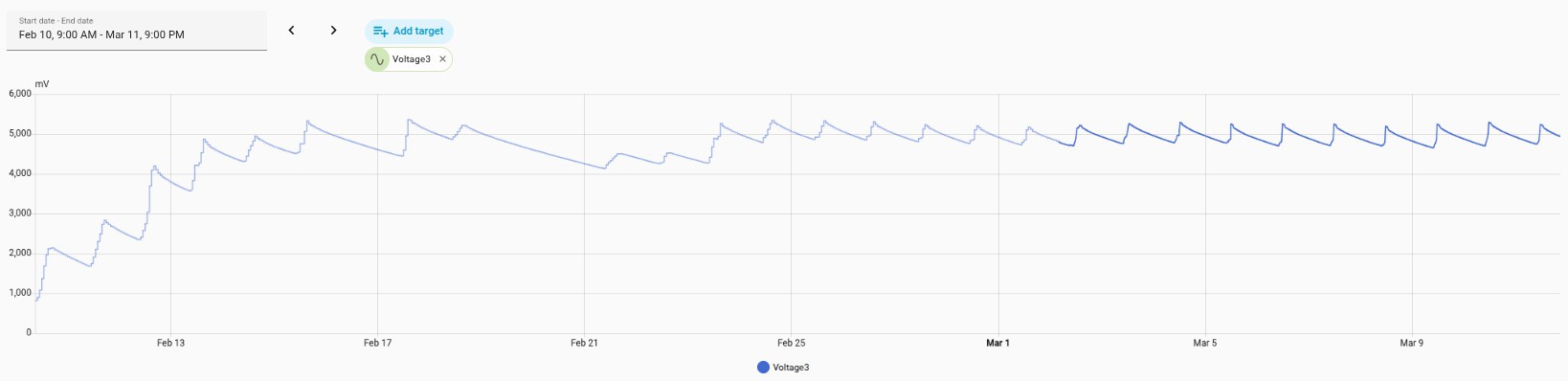
2 hours ago • 0 commentsA long-term measurement shows the typical charge and discharge behavior following day–night cycles. Even under cloudy conditions, the supercapacitors are charged close to their maximum voltage levels.
In this example, the ESP32-C3 operates in continuous deep sleep mode. Between February 19 and February 20, snowfall occurred in Bratislava, covering the solar panel. As a result, the supercapacitors could not be recharged for three days.
Despite this, the voltage did not drop below 4.1 V, demonstrating the system’s robustness under unfavorable environmental conditions.
![]()
-
Maximum Runtime Without Sunlight
2 hours ago • 0 commentsIn a continuous deep-sleep scenario, the system can operate for several days without sunlight.
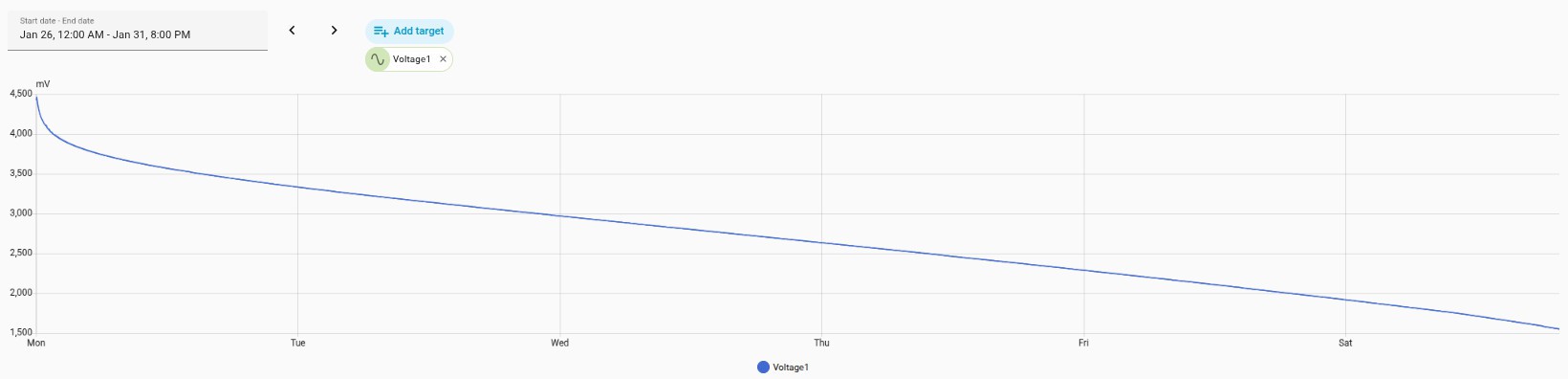
In this first experiment, a simplified firmware was used to keep the system in permanent deep sleep. The fully charged supercapacitors powered the ESP32-C3 through a DC/DC converter, operating down to an input voltage of approximately 1.5 V. Below this threshold, the converter disables output regulation and the ESP32-C3 can no longer maintain a stable supply.
Under these conditions, total runtime reached nearly 6 days.
This test demonstrates the feasibility of multi-day autonomous operation using only harvested solar energy stored in supercapacitors, without any battery buffer.
![]()
For data logging, a custom-built hardware device was used to measure the supercapacitor voltage. The data samples were stored and visualized using the Home Assistant environment.
-
Real-World Test – First Prototype
2 hours ago • 0 comments![]()
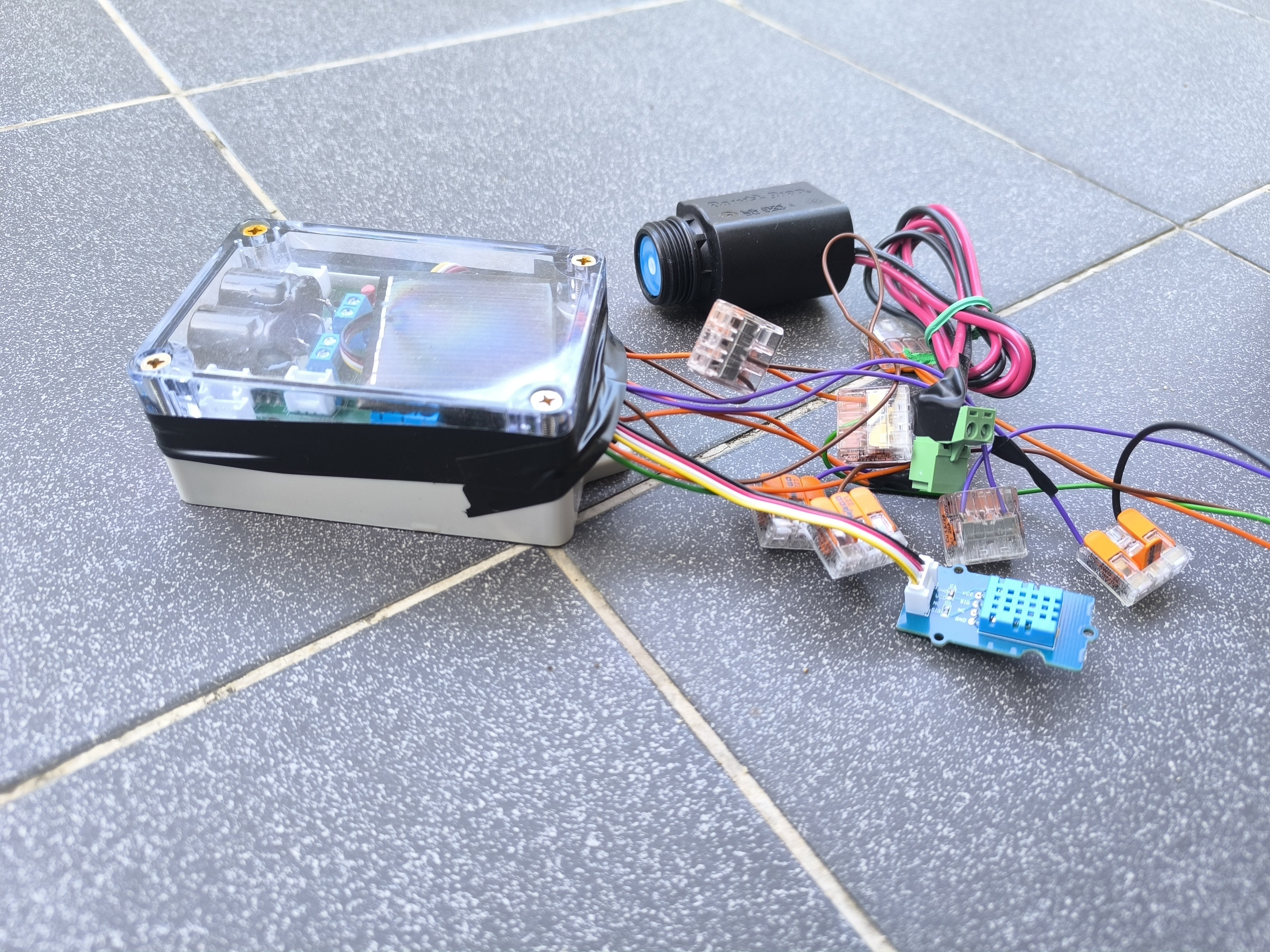
In the first real-world test, the system was connected to a 9 V DC latching solenoid valve (Rain Bird) and a DHT11 temperature and humidity sensor.
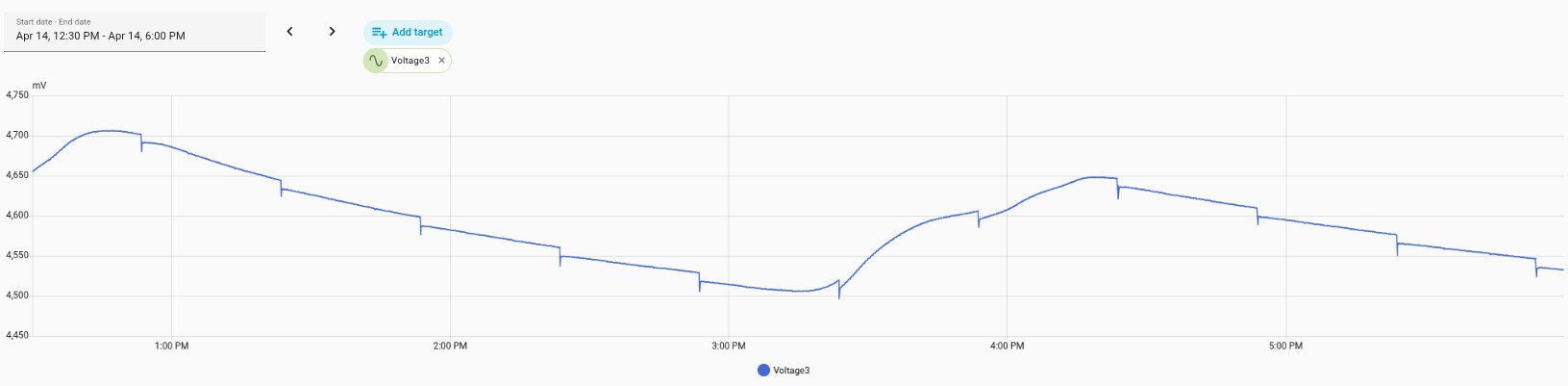
The node communicated with a receiver (XIAO ESP32-C3) every 10 minutes. In addition, the solenoid was actuated in both directions every 30 minutes, with each switching event lasting approximately 1 second.
This setup was used to evaluate the energy of real actuator operation under typical outdoor IoT conditions.
The measurements show that each solenoid actuation caused the supercapacitor voltage to drop by approximately 11 mV, corresponding to an energy consumption of about 550 mJ at ~4.5 V.
These results confirm that even high-power mechanical switching can be supported within a supercapacitor-based, battery-free energy budget when duty cycles are properly managed.
This makes it suitable for applications such as remote irrigation systems where latching valves are used to minimize energy consumption.
![]()
![]()
Supercapacitor Solar IoT for High-Power Actuation
Stores solar energy in supercaps to deliver 24V bursts—even after days without sunlight.