 Ken Yap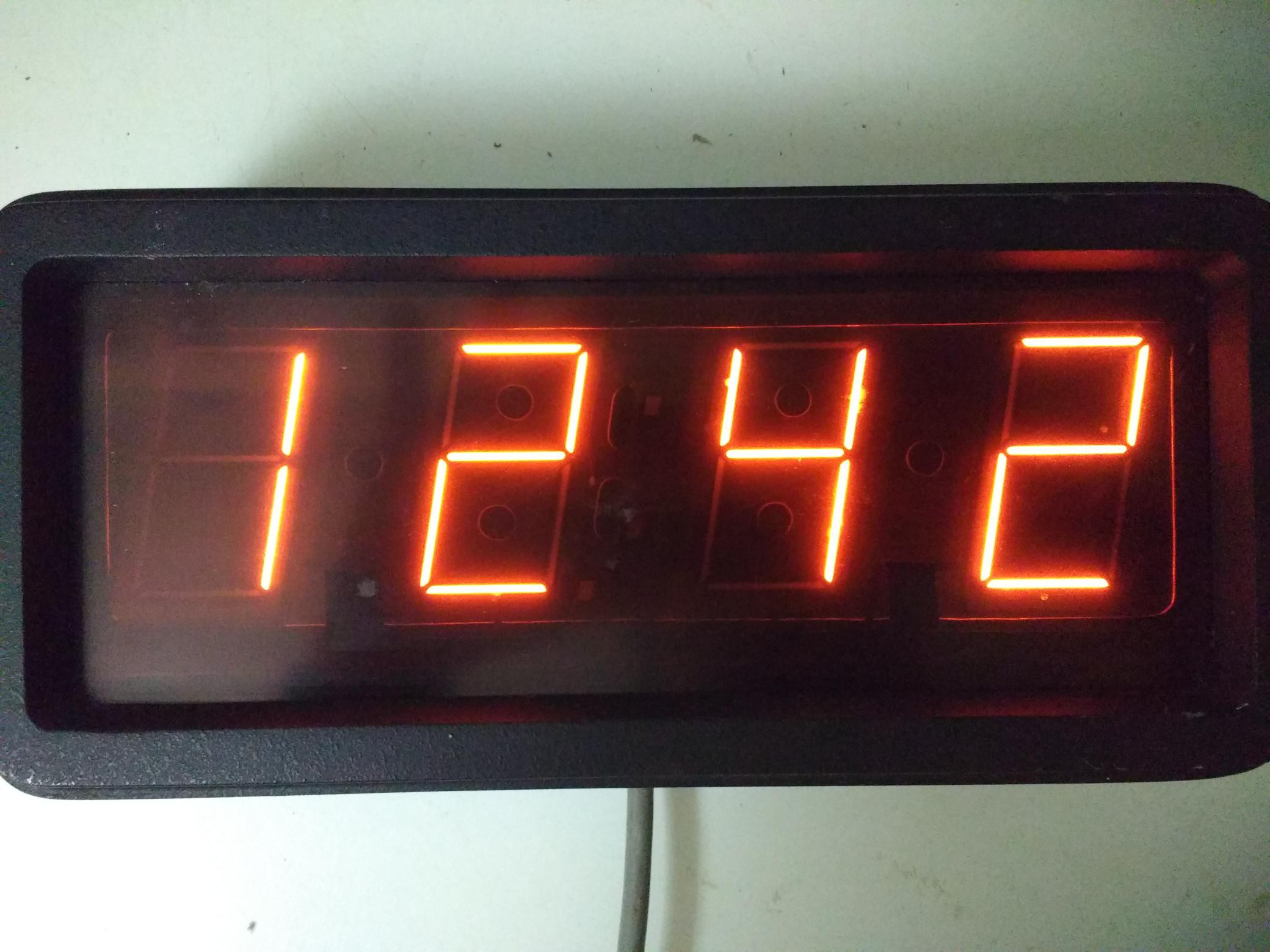
This project #Restoring a Beckman neon display clock is what got me started on MCUs several years ago. It contained an 8048 family MCU and I wrote code to replace the original firmware. I managed to live within the limitations of assembly language, 1kB code space, 64B RAM, and 13 I/O pins, several lost to using external ROM. Definitely no high level language.
As it turned out I had quite a few of the 8048 family, and the related 8041/2 family chips in my junk box. I think the '48s came from full height 5¼ inch floppy drives, and the '42s came from PC keyboard controllers. I put them to use in projects like #8042 clock #8042 metronome and 8048 clock. No that last link is not a mistake, the instruction set is almost the same for the '48 and the '42 so the code is usable for both.
Well that was a good way to use up those chips. I have to say there are quite hardy and resisted many accidents. But boy were they power hogs.
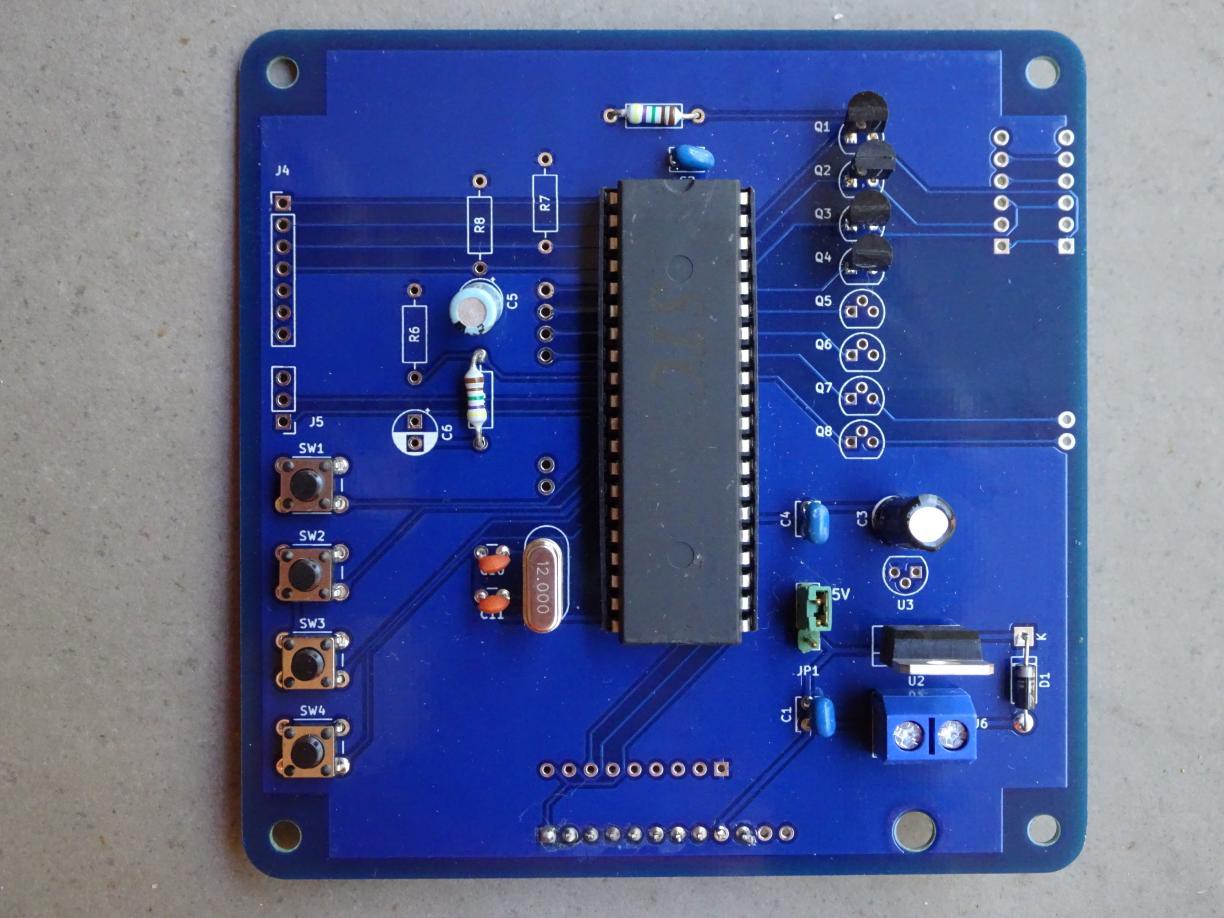
As we know Intel came out with the 8051, the successor to the 8048. The breakthrough improvement was putting peripherals in the I/O address space rather than having specific instructions for each I/O port. The '51 has gone on to be probably the most durable MCU family and descendants live on as programmable cores for many chips.
It actually is a fairly decent MCU to learn on. The hardware and instruction set are easy to understand and there is even C language support in the form of the GPL Small Device C Compiler (SDCC) and commercial offerings. Descendants have increased the clock rate to be tens of times faster than the original. Some are one-chip wonders only needing a handful of passives for a working system like this. The one above is a STC89C52 workalike for the 8052 with flash ROM for code, but otherwise a drop-in equivalent, used in #89C52 clock board. I used this dev board with them: #Adventures with a STC89C52 development board. Other projects using a '51 include #Ancient 12 hour display and #Modularnixie.
But ultimately, it's an 8-bit MCU with all the attendant limitations. (Some expanded architectures like the '251 were developed.) So I used up the handful of MCUs and dev boards I bought and bade them farewell.
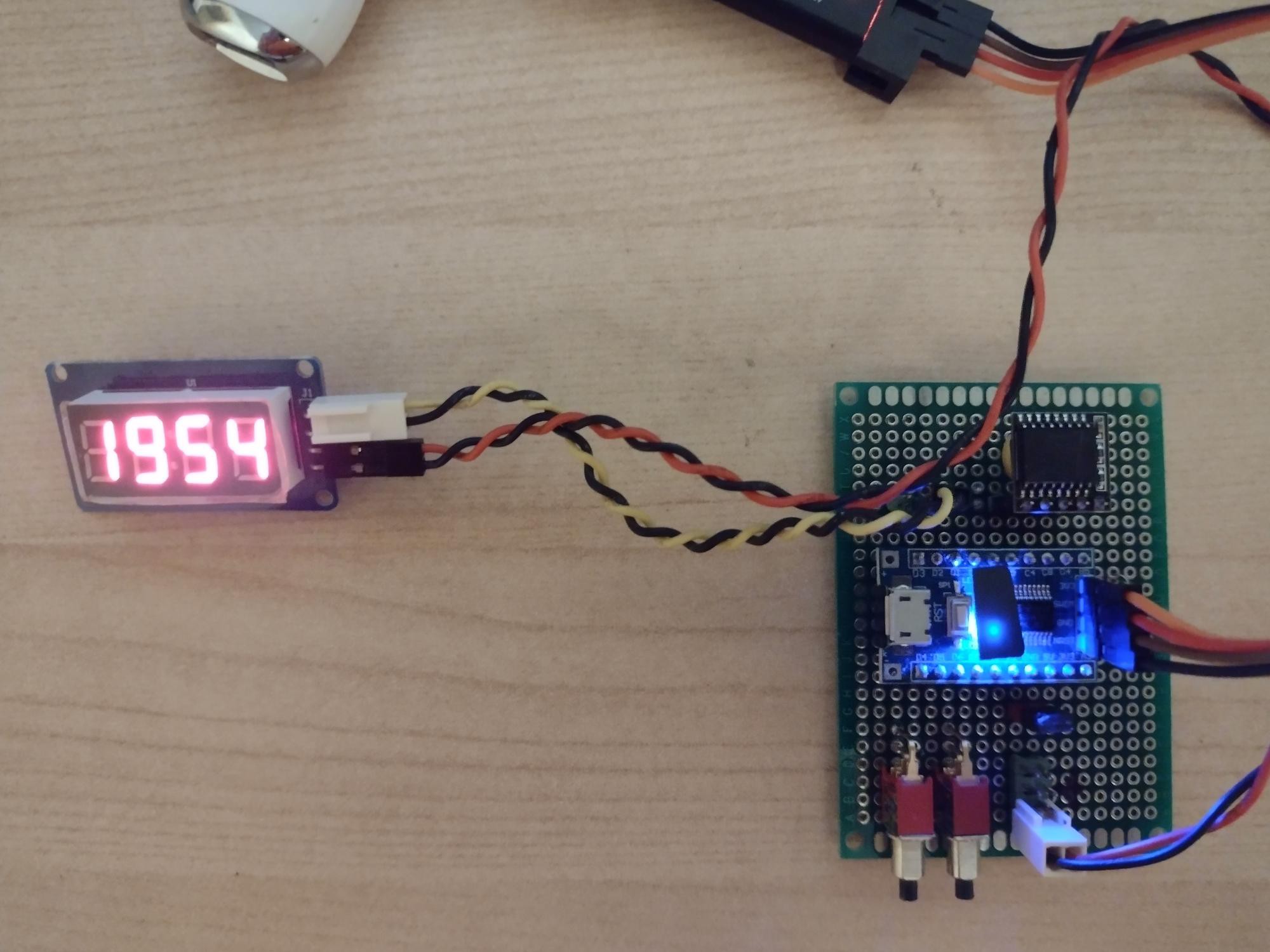
Next cab off the rank was the STM8 which I got interested in thanks to #eForth for cheap STM8S gadgets. They appear in the millions if not billions in small gadgets. You probably have a few around the house. (An interesting development was that 8051 derivatives started to muscle in on the STM8 based gadgets by coming out with pin (but not architecture) compatible models, presumably because the '51 core architecture was free to reimplement.) Modules are readily available from AliExpress and the per MCU price was between 10 and 20¢, although it was a while before my SMD soldering skills were up to doing TSSOP-20.
This has a decent architecture and is also well supported by SDCC. It has a good selection of on-chip peripherals including standards like I2C which wasn't in the '51 descendants until well into its reign. The GPIO pins can do true bidirectional and true push-pull in addition to other modes like hi-Z and open drain, unlike the 8051's weak pullup. The HAL takes a bit of getting used to but it is worth it.
I liked this MCU and used it in #Repurposing an old nixie thermometer, #Third life for a radio alarm clock, and the driver for #Vertical LED digit display boards. I still have a few chips but won't be starting any new projects with them.
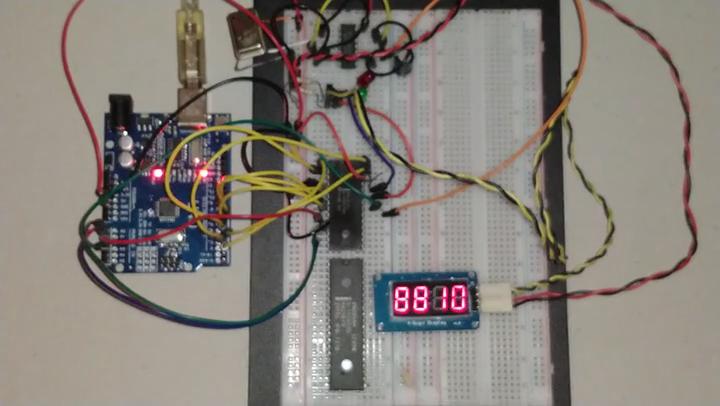
The AVR family is represented by the Arduino models I have. Strangely I haven't done any projects with them because I think of them as test equipment which I used frequently, as a driver in the above photo. One drawback is that they have 5 V GPIO which means I have to turn to the ESP32 Arduino lookalikes that work with 3.3 V logic.
I did have a couple of early DIP AVR chips for which I managed to nut out the details of to use in this project, and this project. The architecture is decent, it manages to get gcc support but it's still basically an 8-bit MCU.
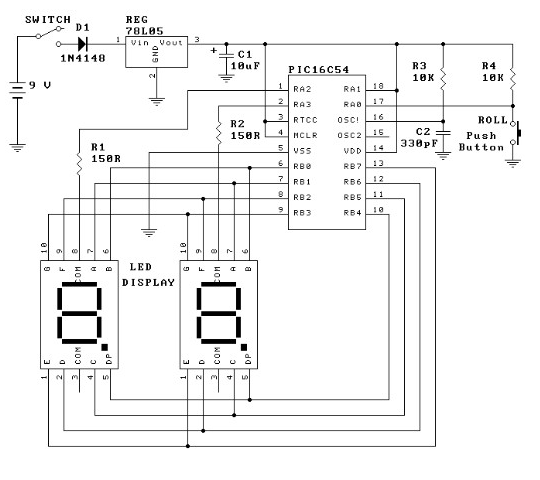
A couple of ancient PIC MCUs in my junk box caused me to look for projects to use them in, but ultimately I decided this family wasn't worth getting involved with. I know that the family is very broad and there are many models specialised for niches, but somehow I can't bring myself to like them.
To finish off
I should mention some CPU families that I have. CPUs are more trouble to use in projects than MCUs because you have to add peripheral chips to make them useful which adds to parts count and board space. And besides, I am not nostalgic about retro boxes. If I want to have the feel of CP/M or DOS, I can fire up an emulator.
I have 8085s and Z80s which I have developed SBCs for but haven't tested yet. Similarly many 8088s. I may need a few round tuits to proceed with them.
I was tempted to delve into the 6502 family as I have memories of the KIM-1, but I don't actually have any CPU chips. I was tempted to dip my toes with the WDC 65C816 which I like the look of, but decided not to go there.
I had some 68000 CPUs but gave them away to not have to ponder what to do with them.
In a following log I will describe the current 32-bit MCUs I have and how I hope to use them.
Discussions
Become a Hackaday.io Member
Create an account to leave a comment. Already have an account? Log In.