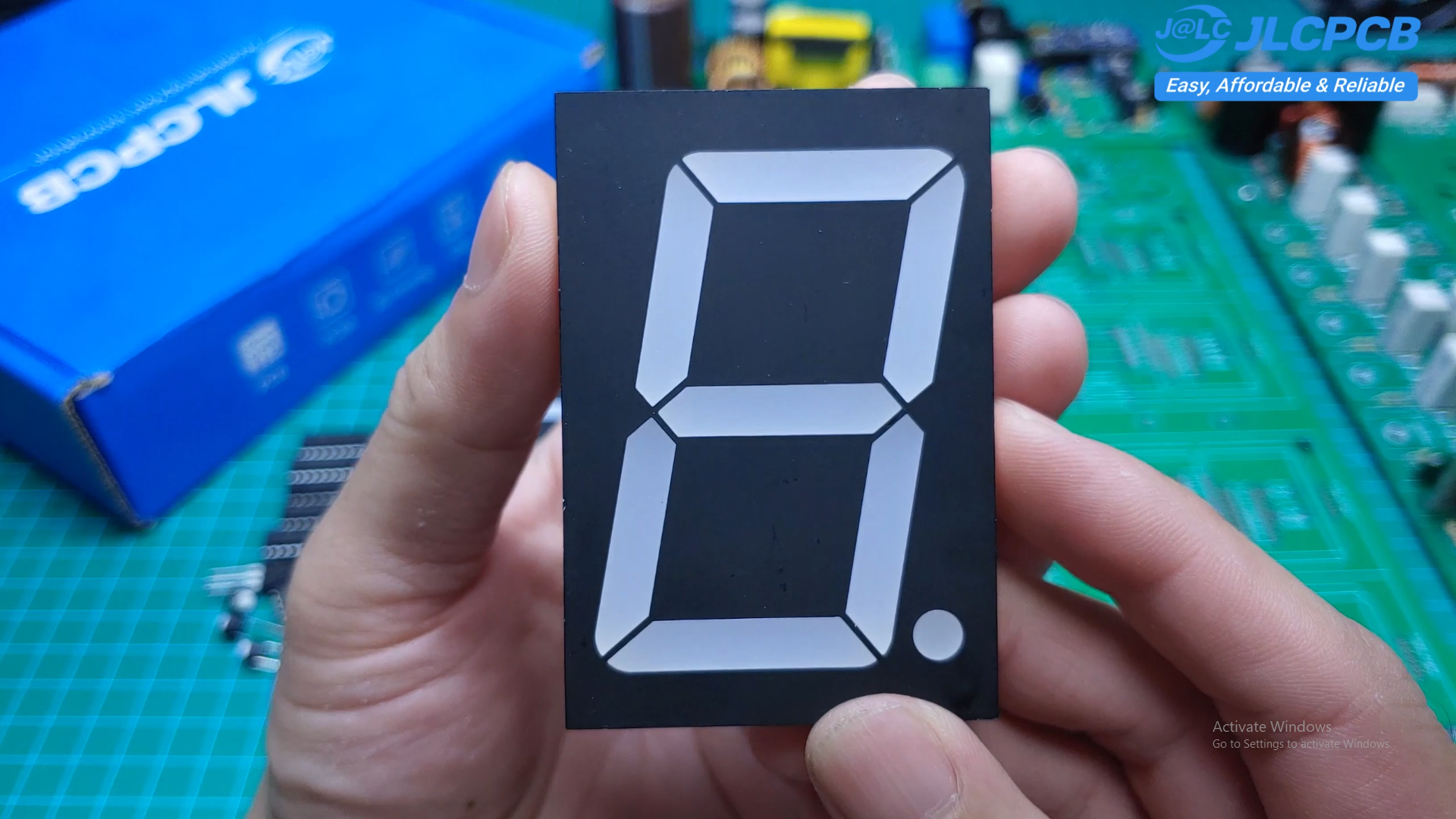
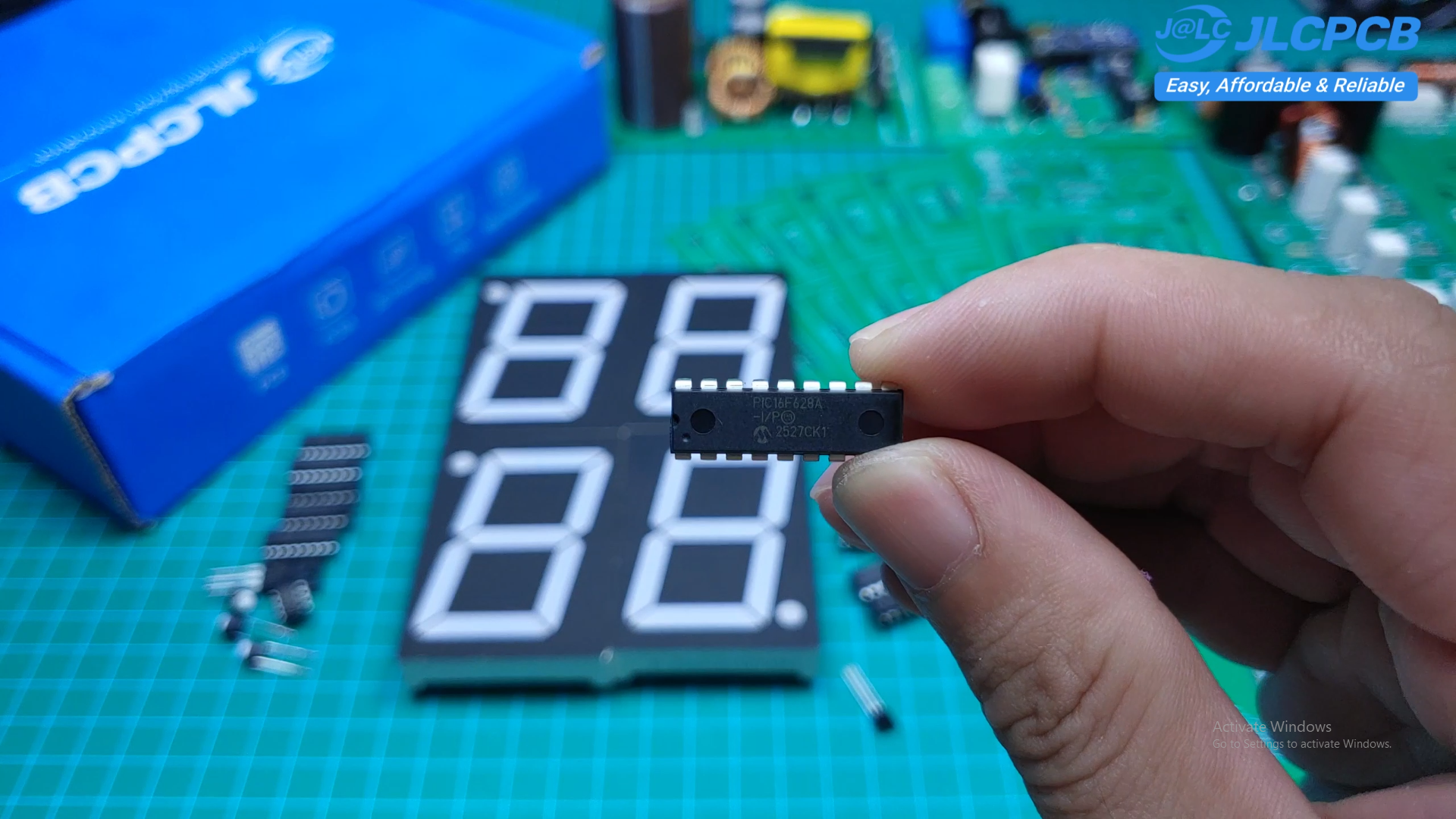
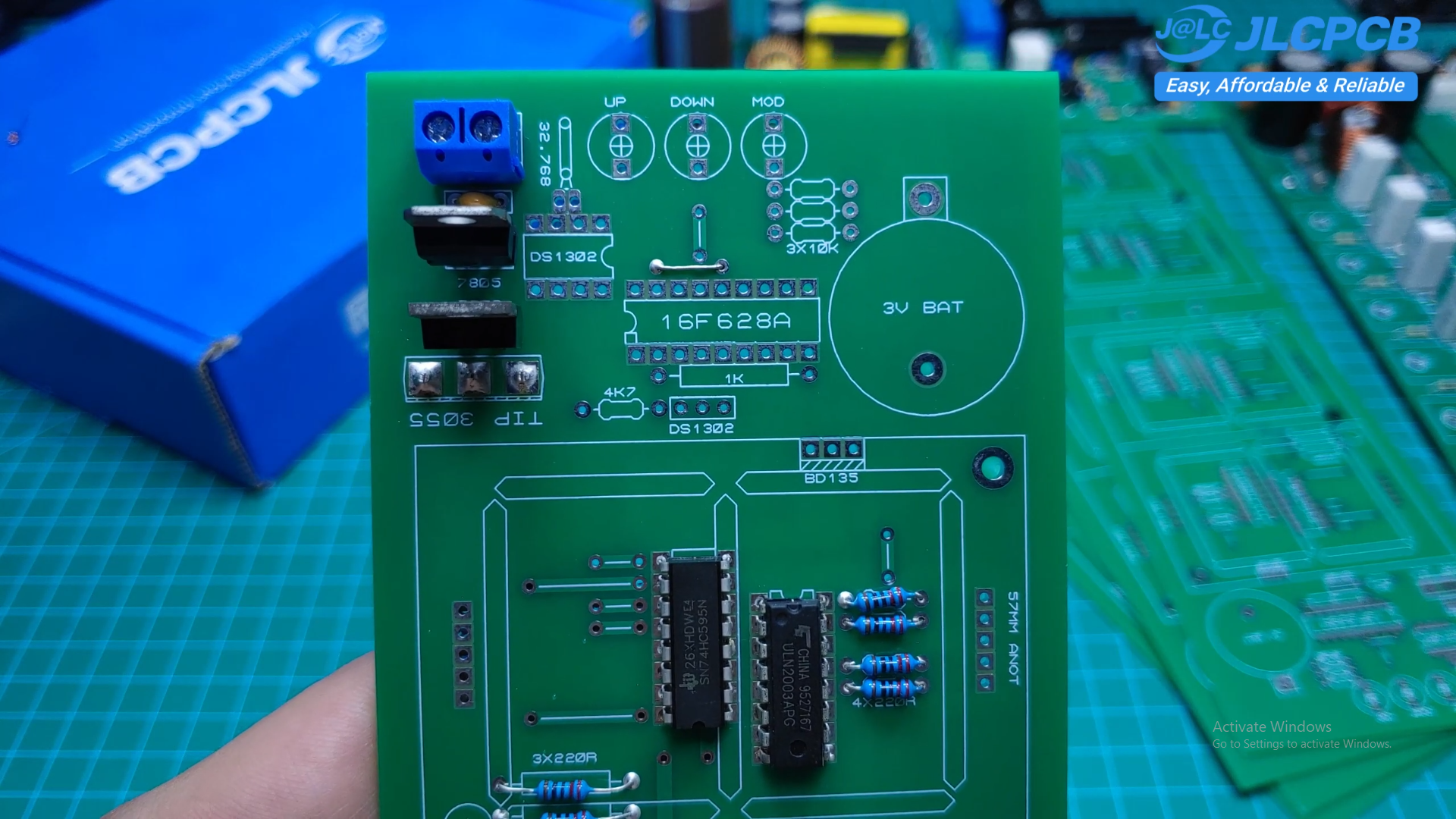
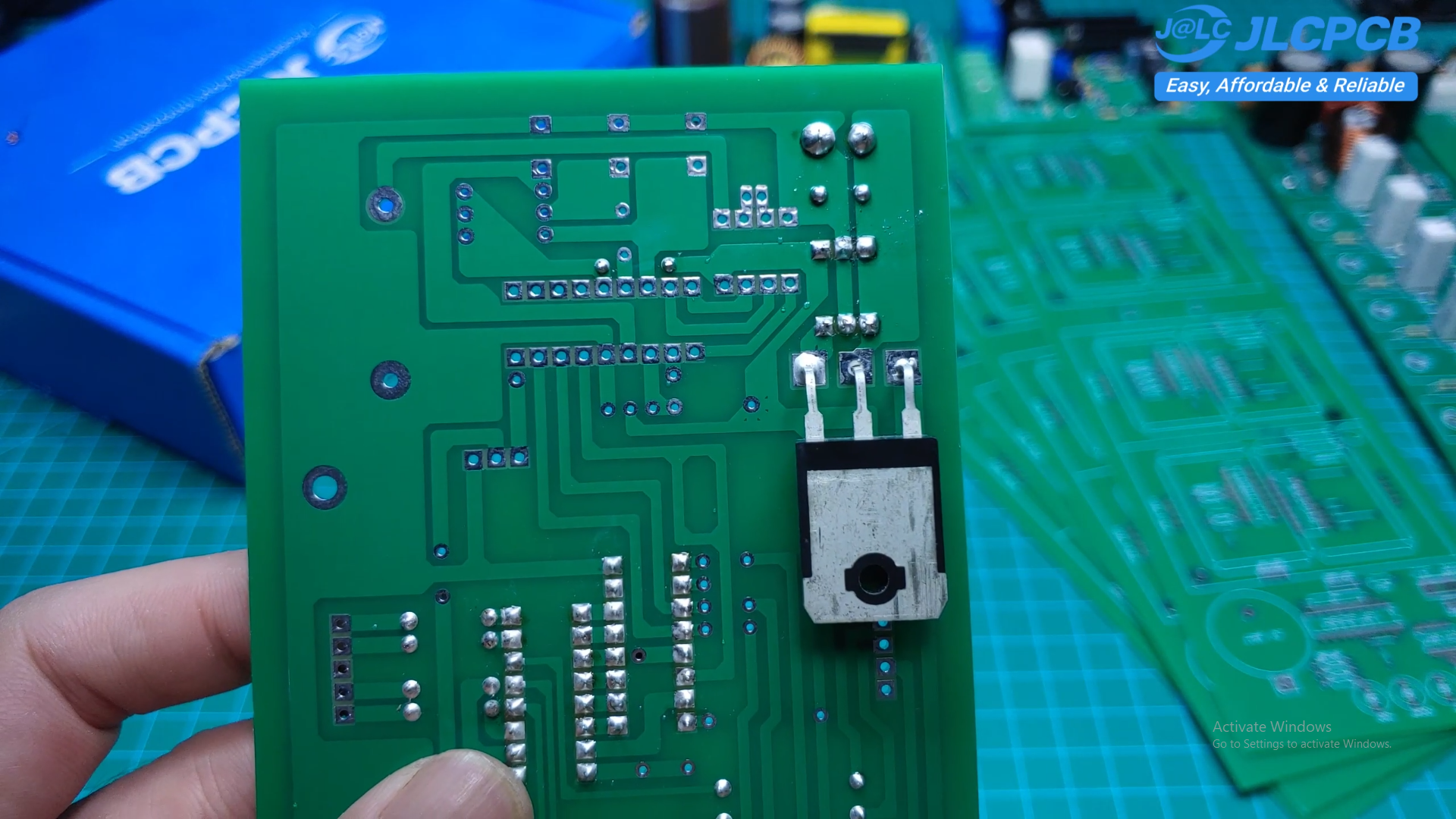
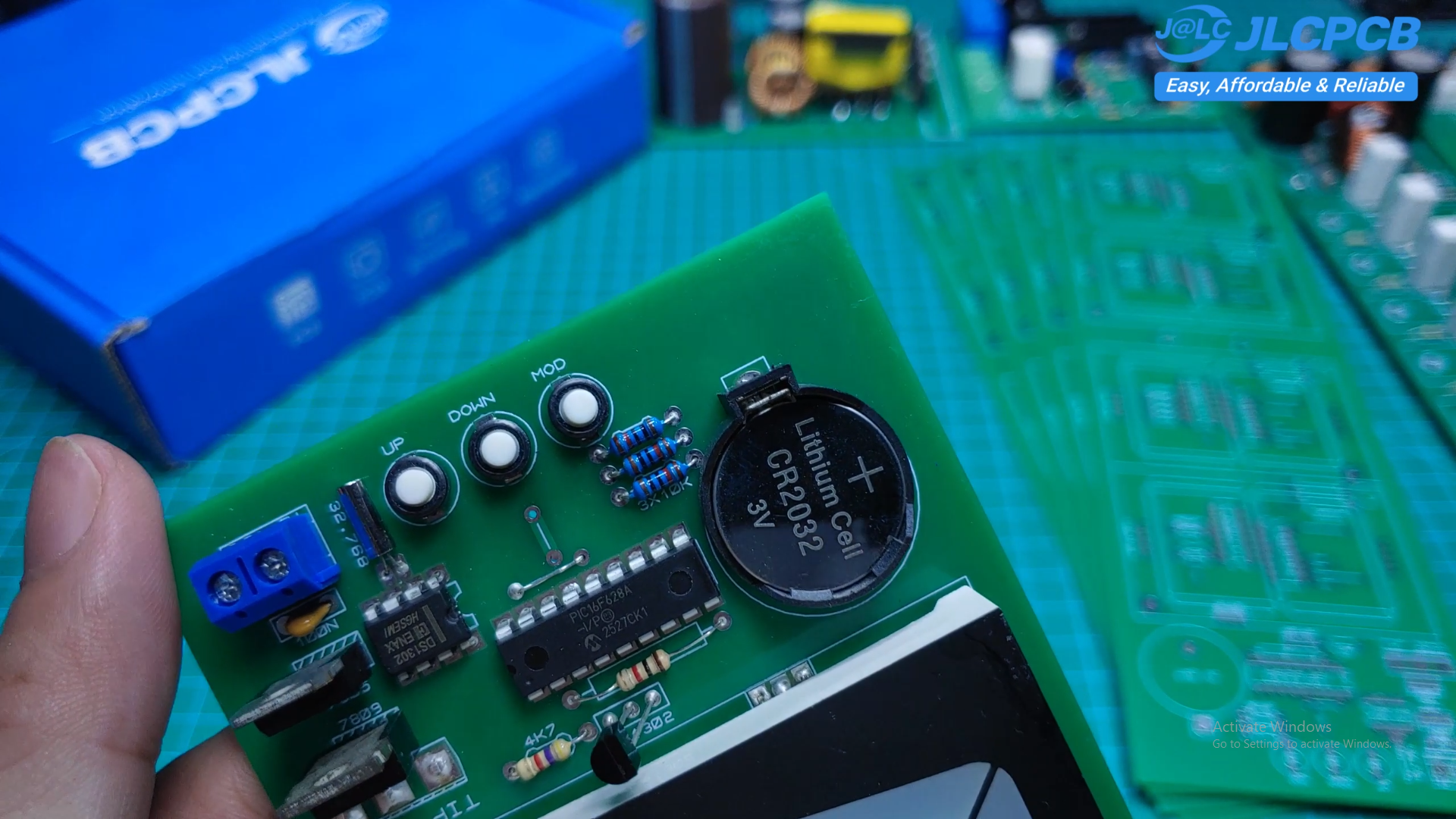
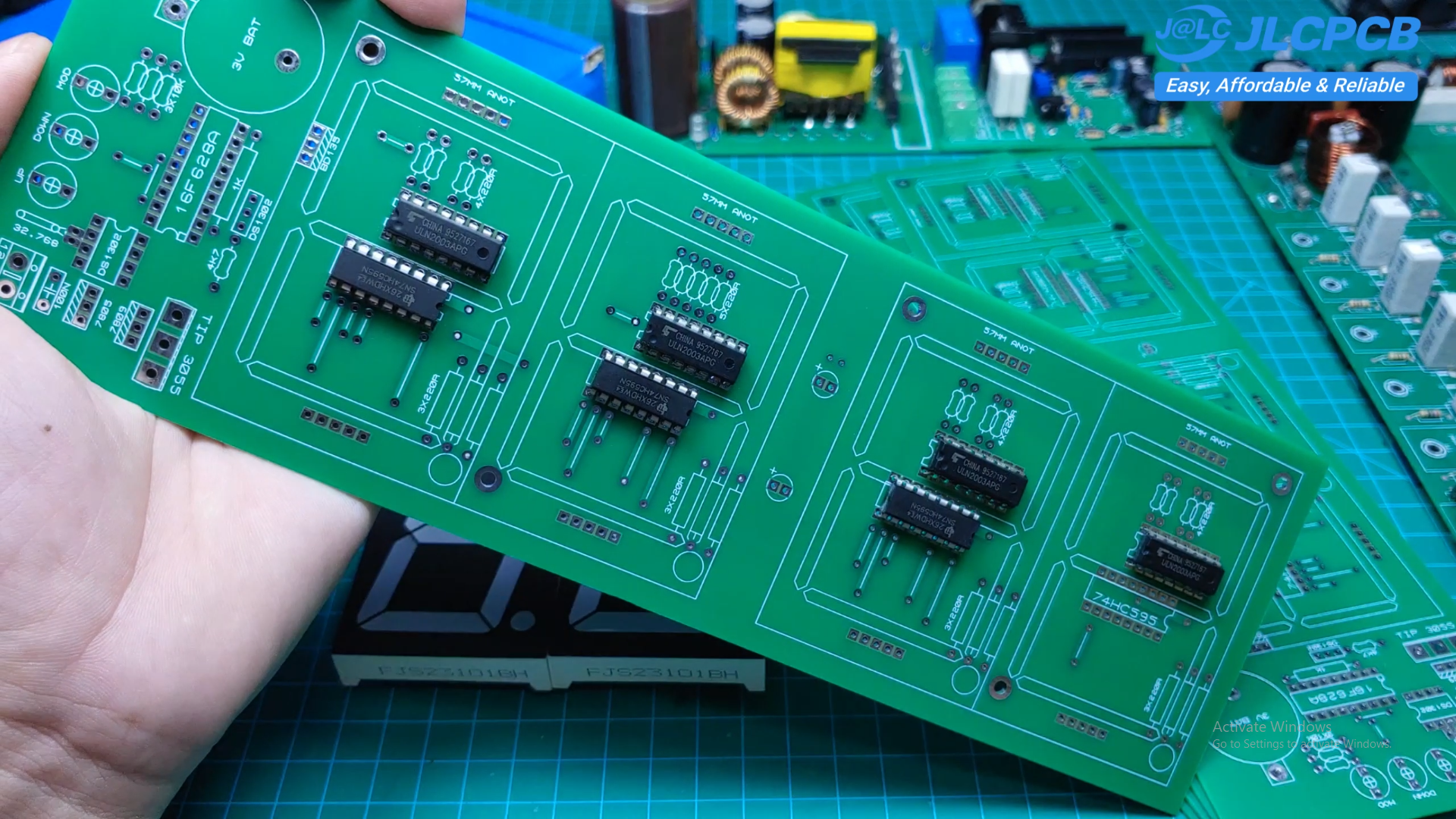
This project is a 3-Inch 4-Digit LED Digital Clock designed around the PIC16F628A microcontroller. The goal was to build a simple, reliable, and low-cost clock using commonly available components while maintaining excellent visibility with large 3-inch seven-segment LED displays. With PCB from JLCPCB
Besides displaying the current time, the clock also measures ambient temperature using the DS18B20 digital temperature sensor. Timekeeping is handled by the DS1302 Real-Time Clock (RTC), with a CR2032 backup battery ensuring that the time is preserved during power outages.
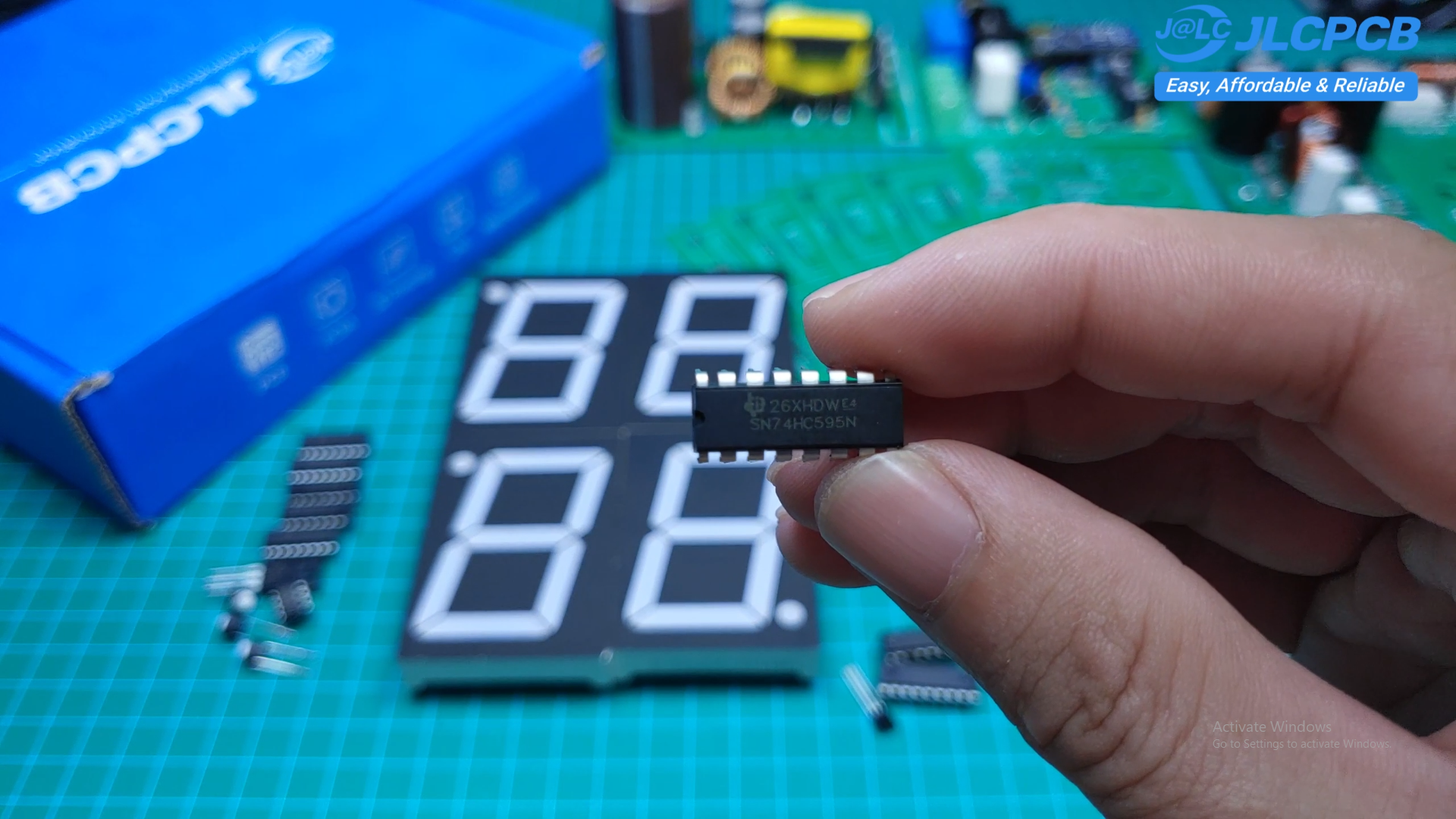
One interesting aspect of this design is that the large LED displays are driven using only 74HC595 shift registers and ULN2003A Darlington driver arrays, without requiring dedicated LED driver ICs. This keeps the hardware simple, inexpensive, and easy to reproduce.
This project is a 3-Inch 4-Digit LED Digital Clock designed around the PIC16F628A microcontroller. The goal was to build a simple, reliable, and low-cost clock using commonly available components while maintaining excellent visibility with large 3-inch seven-segment LED displays.
Besides displaying the current time, the clock also measures ambient temperature using the DS18B20 digital temperature sensor. Timekeeping is handled by the DS1302 Real-Time Clock (RTC), with a CR2032 backup battery ensuring that the time is preserved during power outages.
One interesting aspect of this design is that the large LED displays are driven using only 74HC595 shift registers and ULN2003A Darlington driver arrays, without requiring dedicated LED driver ICs. This keeps the hardware simple, inexpensive, and easy to reproduce.
2
Hardware
The project consists of the following major components:
PIC16F628A Microcontroller
Four 3-inch Common-Anode 7-Segment LED Displays
4 × 74HC595 Shift Registers
4 × ULN2003A Driver ICs
DS1302 Real-Time Clock
DS18B20 Digital Temperature Sensor
CR2032 Backup Battery
Push Buttons for Time Adjustment
5V Logic Supply
9V LED Supply
The circuit uses two separate voltage rails:
5V for the microcontroller and logic circuitry
9V for the LED display
This allows the large LEDs to achieve good brightness while keeping the logic section stable.