Close
0%
0%

PSU-EXT

Open hardware and firmware that sit inline with a bench power supply, adding live measurement, protection, and SCPI control.

Similar projects worth following
PSU-EXT started as a way to give an existing bench power supply capabilities it didn't ship with. The current build is an inline hardware module (ESP32-S3, isolated measurement front end) paired with a browser dashboard — live telemetry, protection controls, an SCPI console, and a scripting IDE for automation. Every part of it, hardware through software, is open source.


Overview

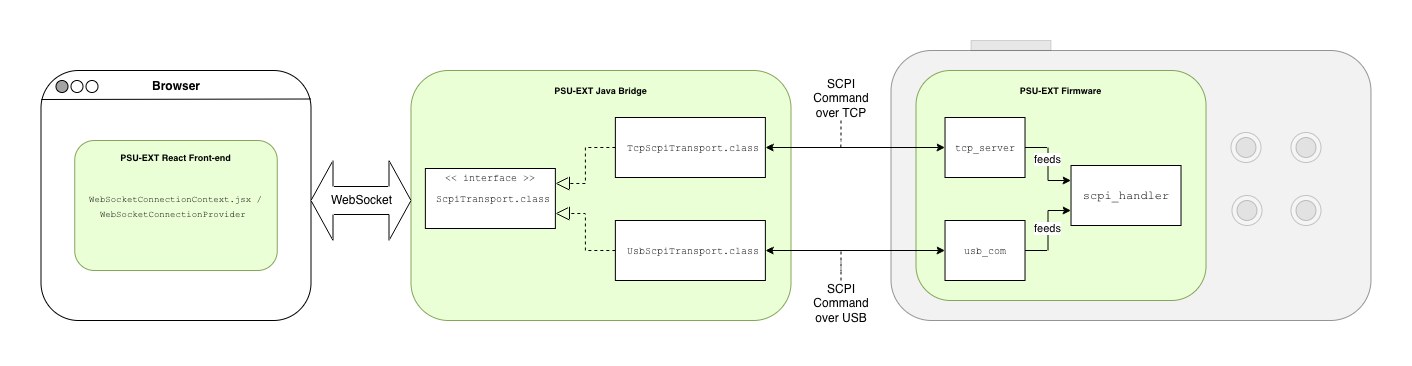
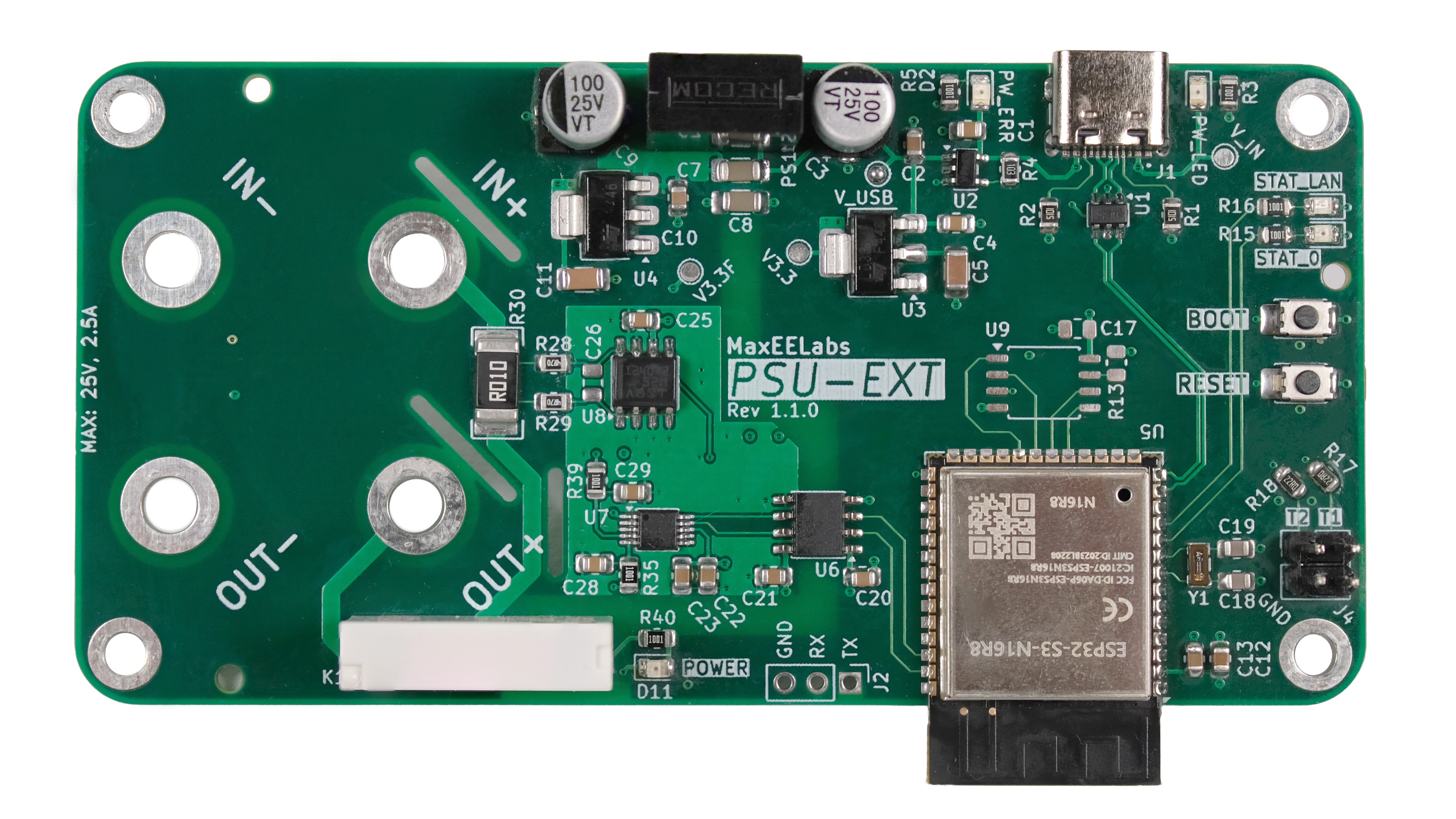
PSU-EXT sits inline between a bench power supply and whatever it's powering. It measures voltage, current, and power, switches the output on and off through a relay, and speaks SCPI — the command language bench instruments use — over both USB and Wi-Fi/TCP.

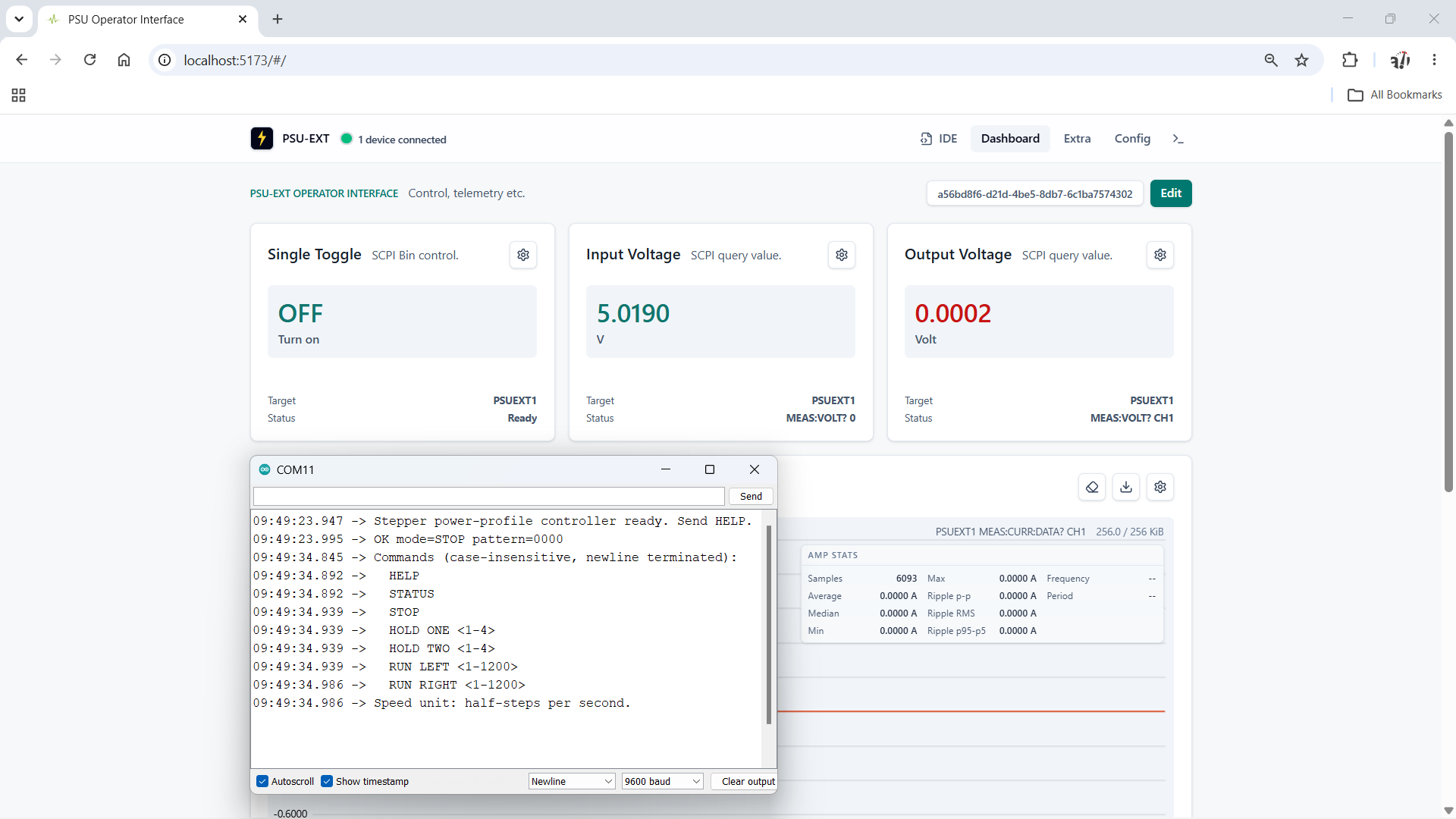
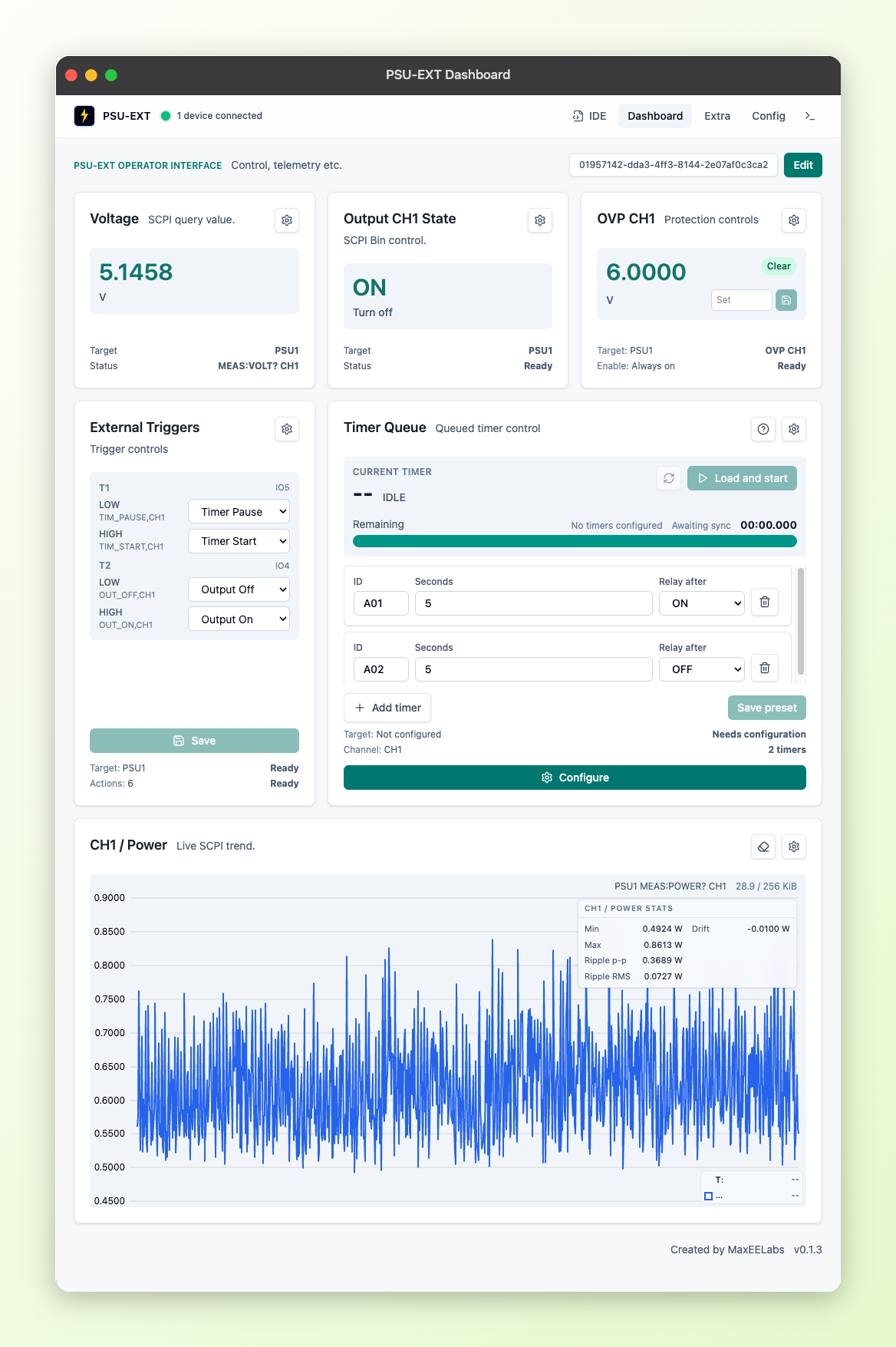
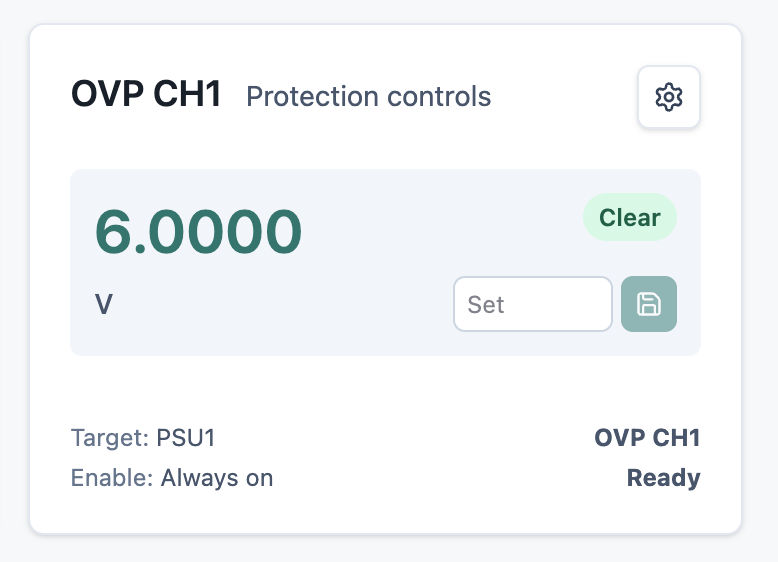
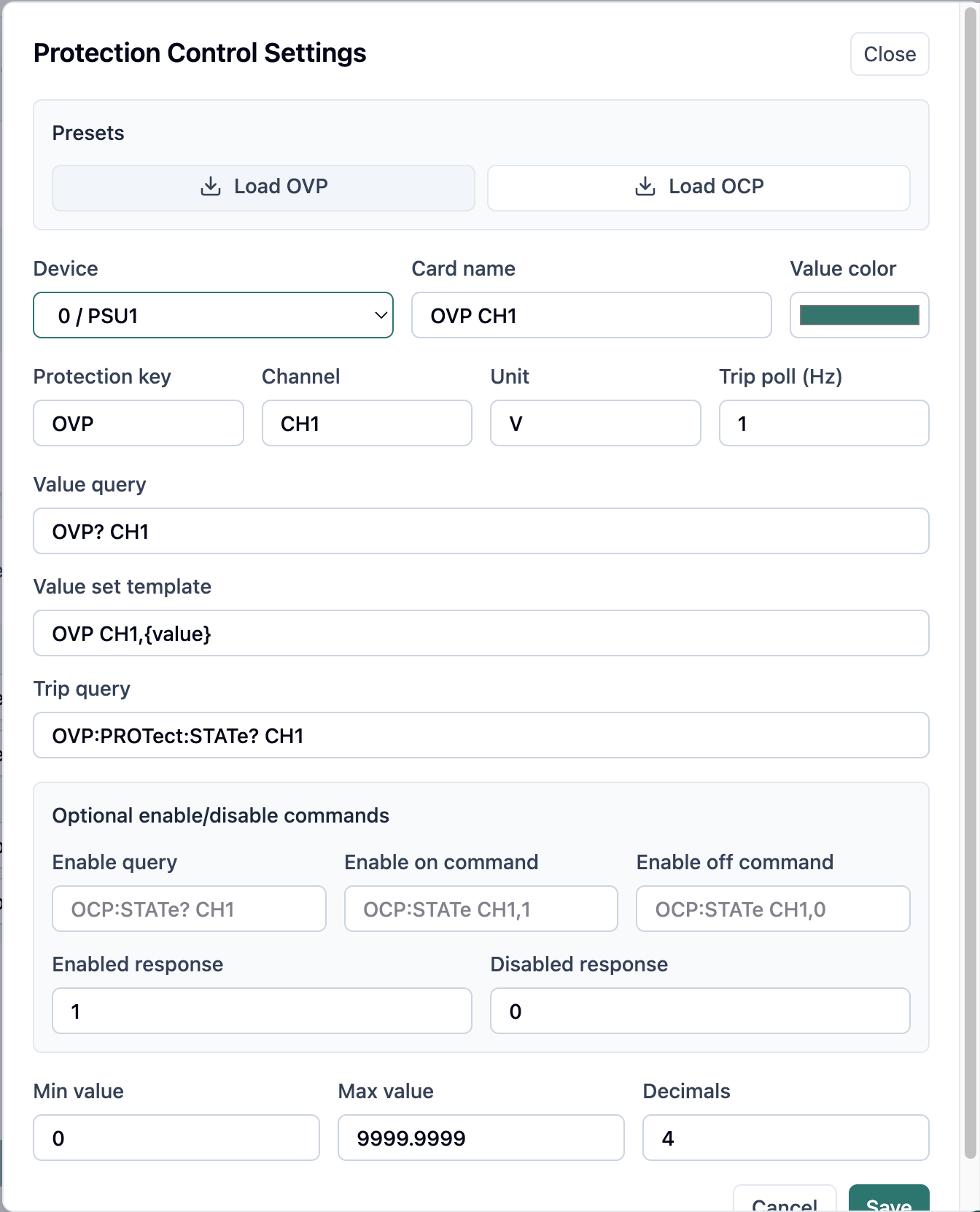
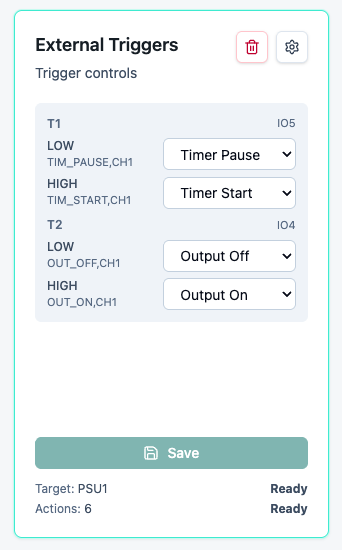
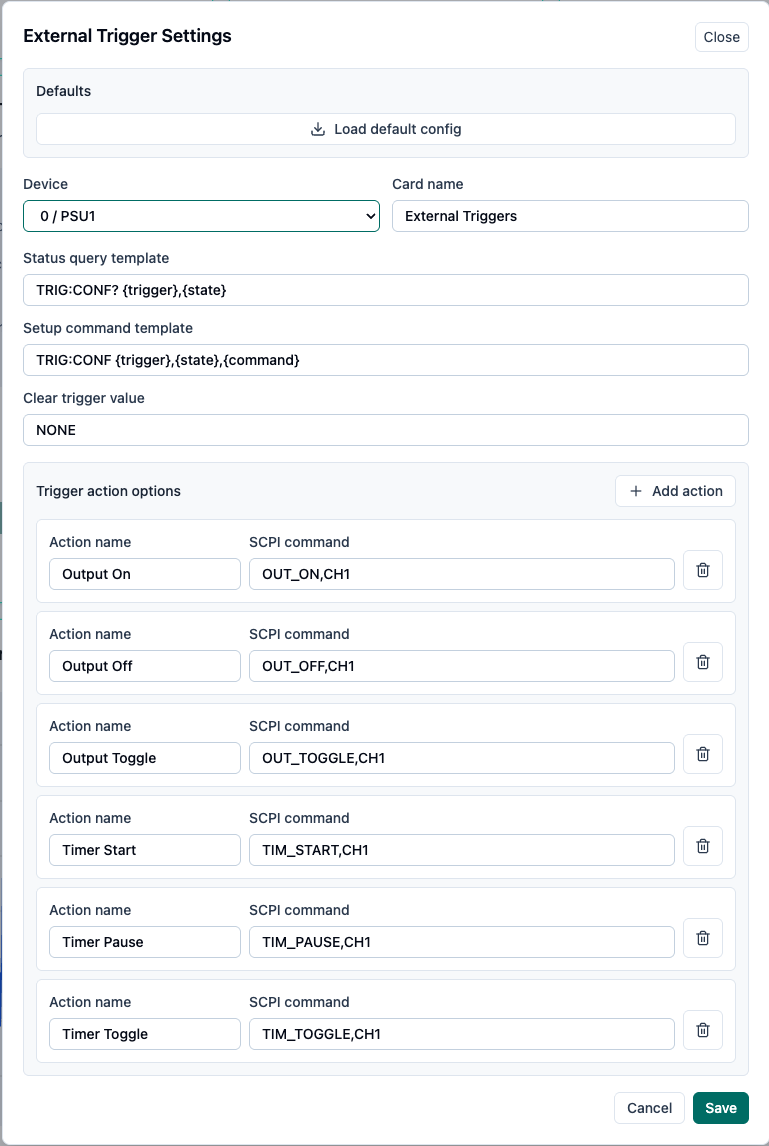
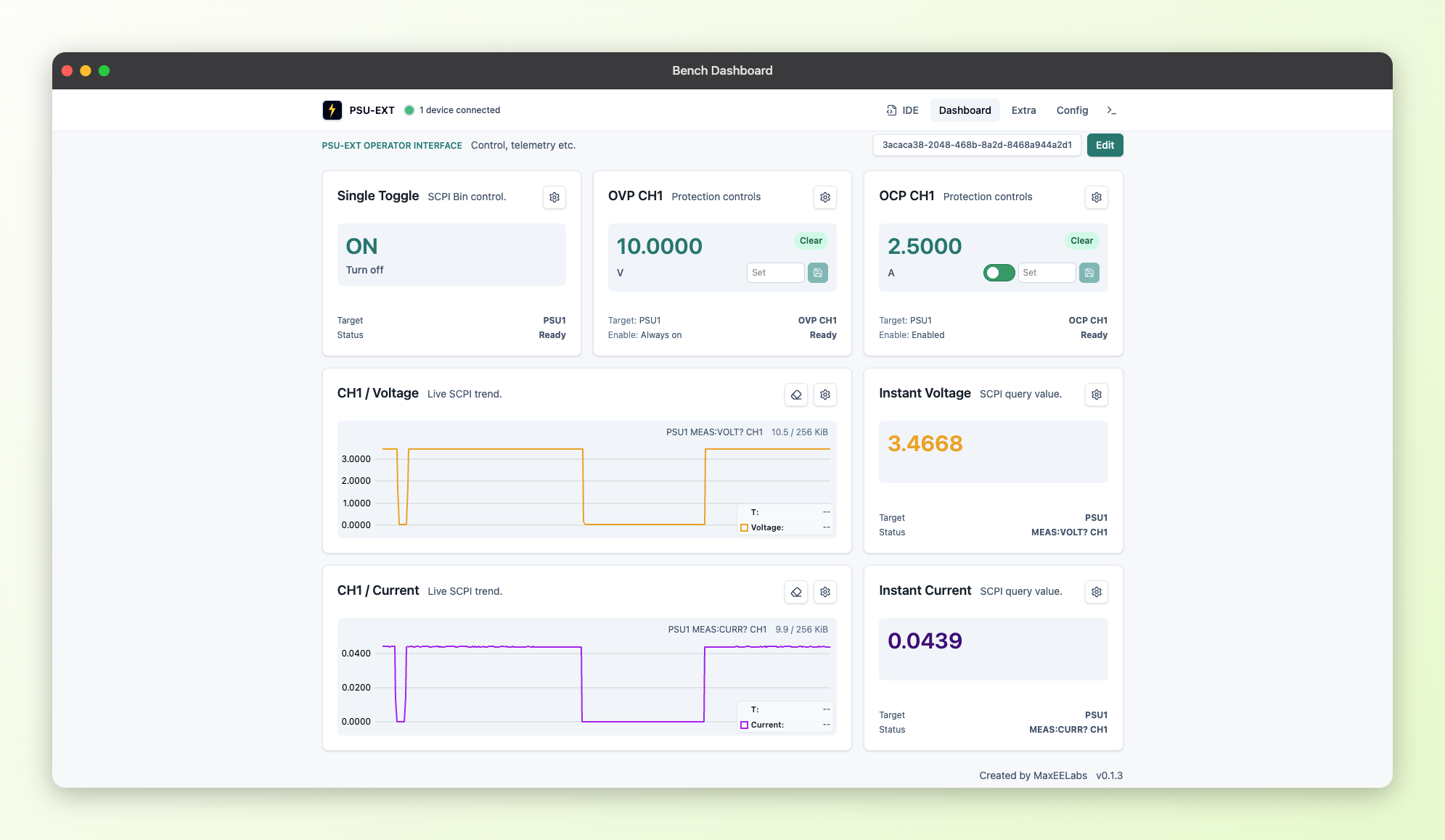
A browser dashboard sits on top: live telemetry widgets, OVP/OCP protection controls, a raw SCPI console, and a JavaScript scripting IDE for running sandboxed automation sequences against the device. Hardware, firmware, and the dashboard's backend and frontend are all in the open.

It started from a plain annoyance: our own bench PSU already did the one thing it needed to do — supply power — but everything around that was manual. Watching the display meant standing at the bench. Logging meant writing numbers down. Scripting anything wasn't really on the table. PSU-EXT is what we built to sit inline and take care of that part.

Spec at a glance:

Operating range0–25 V, 0–2.5 A
Board size100 × 50 mm (3.94 × 1.97 in)
Control connectionUSB-C (power and data)
ControllerEspressif ESP32-S3
Measurement front endADS1115 ADC + INA240 current-sense amplifier
IsolationIsolated I²C bus + isolated DC-DC (measurement domain)

Current Status — Crowd Supply Pre-Launch

PSU-EXT is a working prototype today. The board, firmware, and dashboard already work together end to end: you can measure, control, calibrate, and script against a real unit right now.

Our Crowd Supply pre-launch page is live: crowdsupply.com/maxeelabs/psu-ext. Please subscribe if you're interested in the project.

In the meantime:


The Journey We've Been Through

PSU-EXT didn't show up finished. Getting it to this point took a real string of steps — here's what that looked like, behind the scenes:

✔  March 2026 — The idea lands, resonates, and won't let go: what if our own bench PSU didn't have to be replaced to get remote control and telemetry?
✔  March 2026 — Start of hardware development: first board work begins.
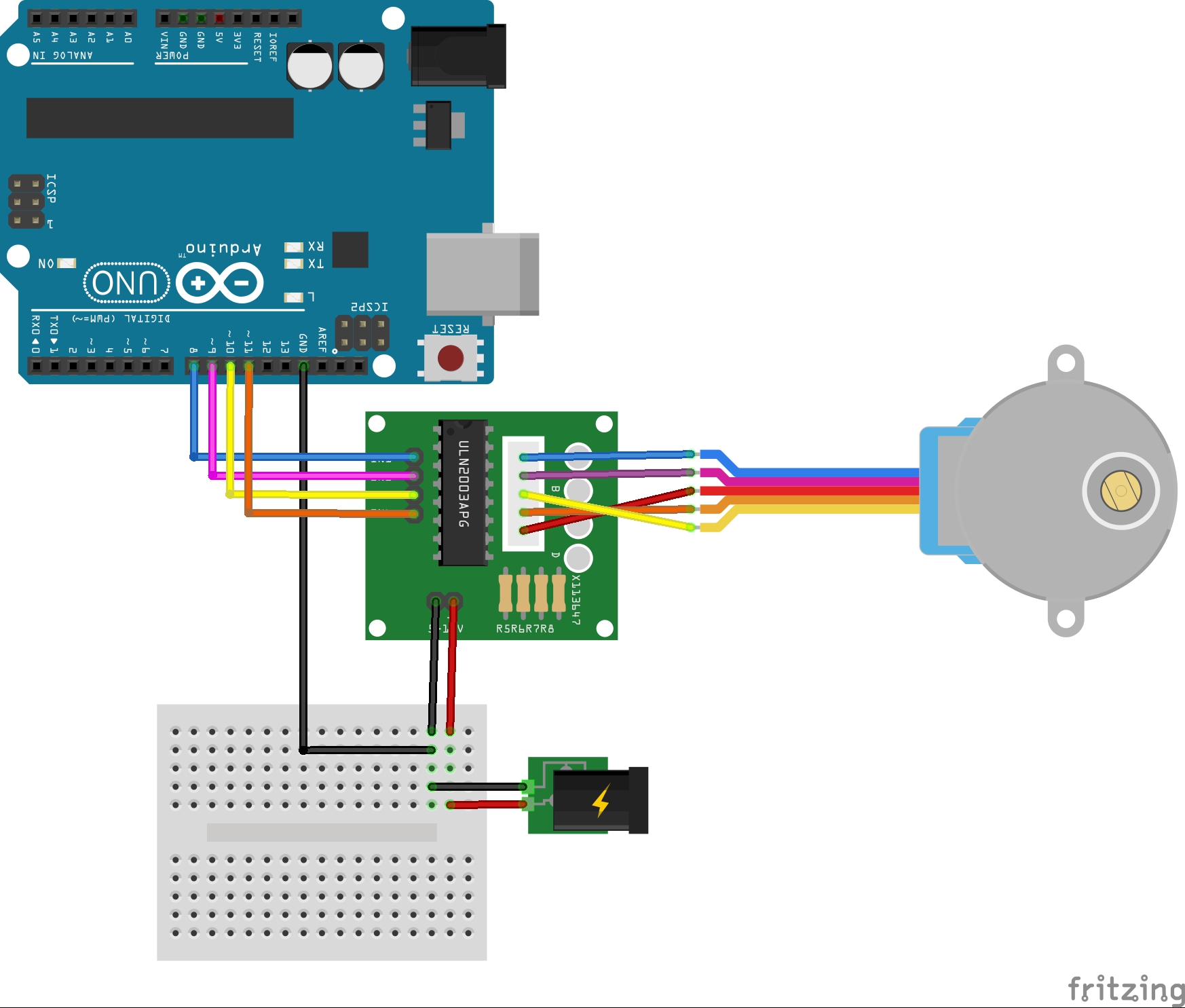
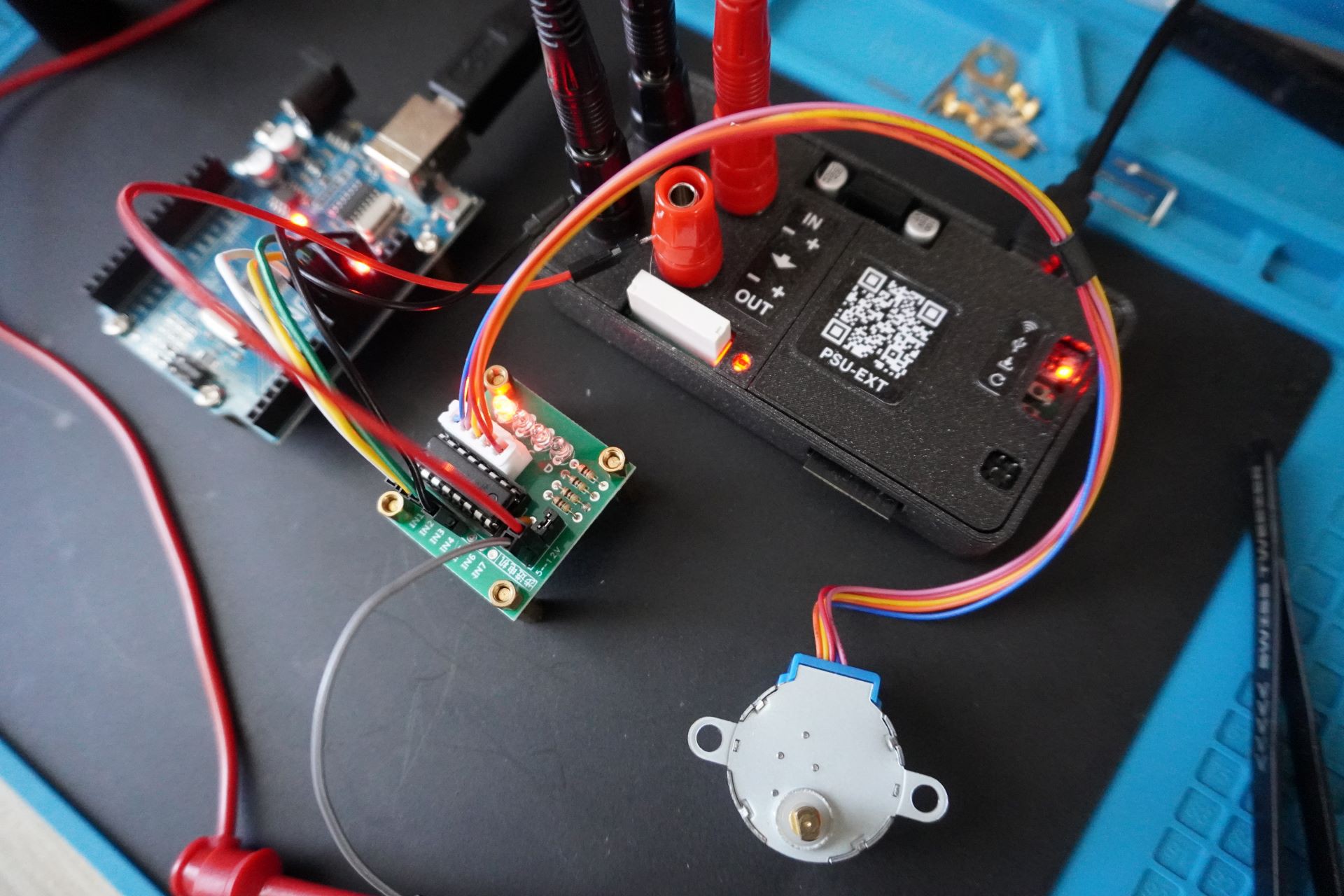
✔  April 2026 — First prototype on breadboard
✔  April 2026 — Start of software development: live telemetry widgets in the browser, first version.
✔  May 2026 — First PCB revision.
✔  June 2026 — Enclosure: PSU-EXT moves off the bare board and into its own case
✔  July 2026 — JavaScript IDE for scenarious autoamtion
✔  August 2026 — Hardware, firmware, and software all published in the open.
✔  August 2026 — Crowd Supply pre-launch page goes up: crowdsupply.com/maxeelabs/psu-ext. The campaign itself is still ahead.

→  August 2026 - And we're here while the journey continues... Stay tuned!
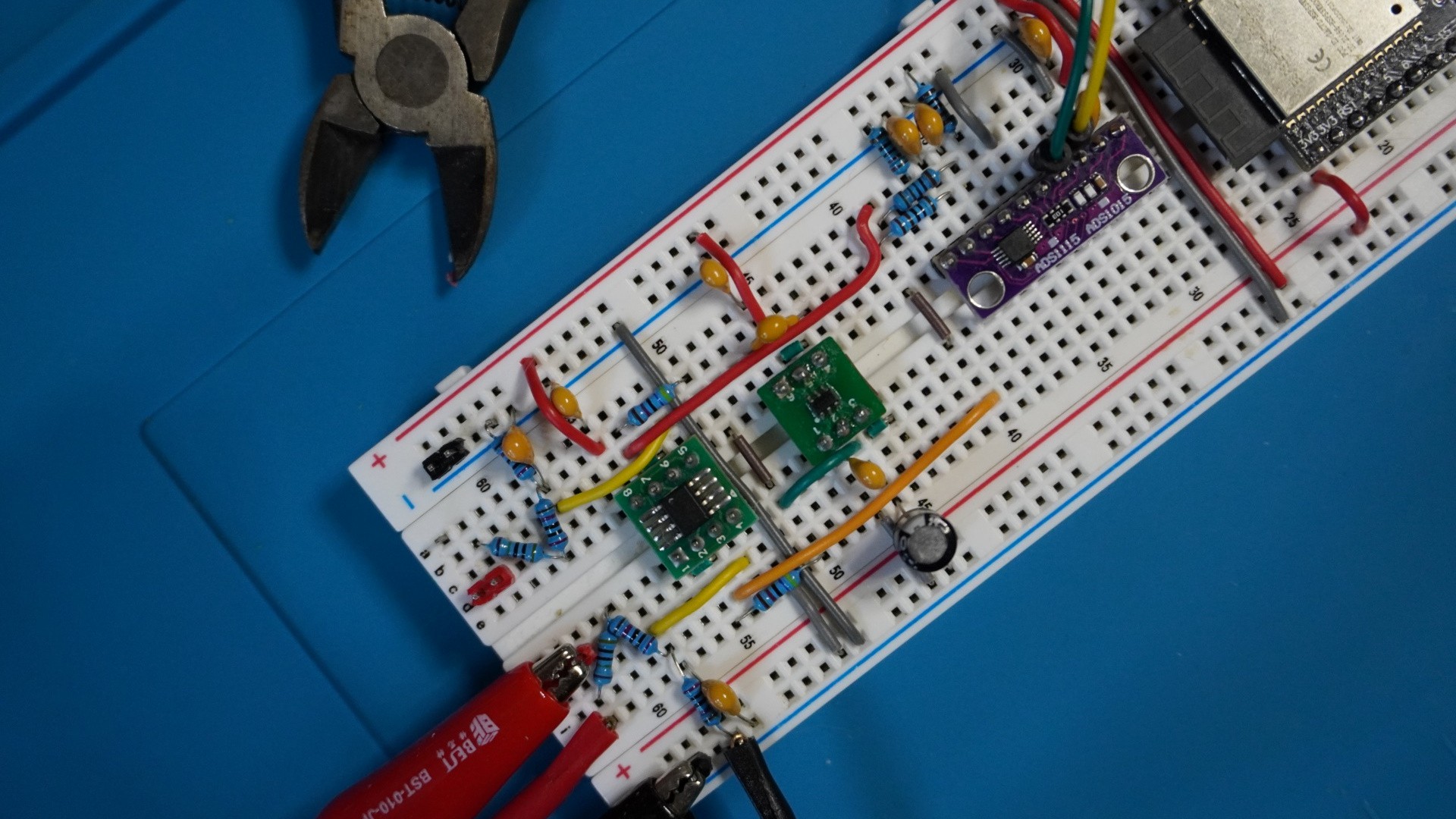

  • 1 × ESP32-S3-WROOM-1-N16R8 A high-performance wireless microcontroller module
  • 1 × RFM-0505S DC-DC Converter
  • 1 × INA240A2DR Current-sense amplifier
  • 1 × ISO1540DR A low-power, bidirectional digital isolator
  • 1 × AP22818BKCWT-7 Single-Channel High-Side Switch

View all 17 components

  • How We Got Here

    Dzmitry Dydyshka3 days ago 0 comments


    Pro"log"ue

    We keep coming back to the same starting point: a bench PSU that already does its one job well. It supplies voltage, it supplies current, and it's been sitting on the bench doing exactly that for years. The problem was never the PSU — it's everything around it. Watching it means standing there. Logging it means writing numbers down by hand, or propping a phone up to film the display. Automating it usually means buying a whole new instrument and retiring the one that already works.

    We didn't want to go that route, so this project started small and has been growing outward from that one decision since.

    Extend, don't replace.

    A programmable PSU solves remote control by replacing the instrument you already own — that's the default answer, and it means the supply you already know, already trust, already paid for, goes in a drawer. We want the opposite: keep the PSU right where it is, and extend it in place instead of swapping it out. That's the constraint everything else here has to work around.

    And it shouldn't be locked down.

    Fine — but if we're keeping the PSU, we're not going to hand anyone a closed box either. A lot of "programmable" gear ships with closed firmware and a fixed feature set: whatever the vendor decided you get is what you get. That's not extension, that's a different flavor of lock-in. So the hardware, the firmware, and the software all stay open.

    So it should speak SCPI.

    Open is good, but open and mute doesn't help anyone driving a test bench. It needs to speak SCPI — the command language real instruments use for remote control. Give it SCPI over USB, then. Done?

    Not quite. We add TCP too!

    Most SCPI-capable gear is USB-only, or LAN-only — pick a lane and stay in it. We didn't see a reason to pick one. The same commands work whether you're plugged into a laptop on the bench or reaching the module over Wi-Fi from across the room.

    Control isn't enough — make it automatable.

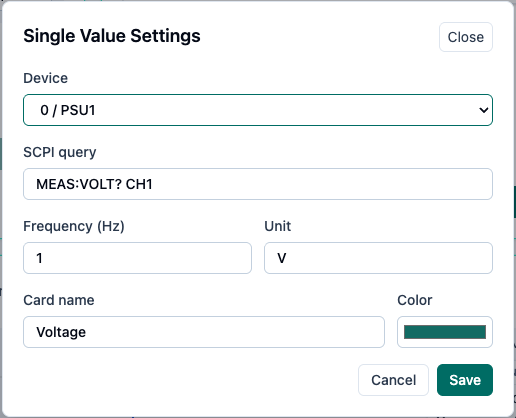
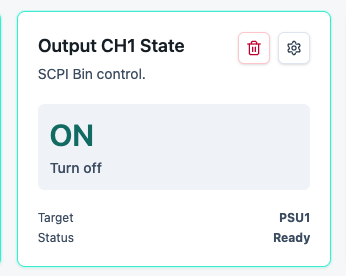
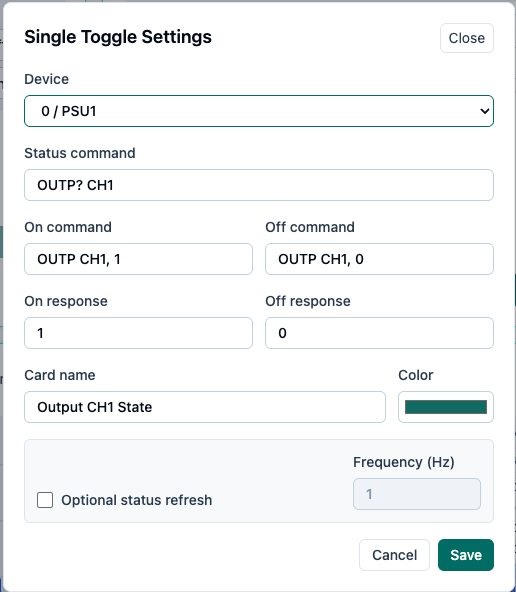
    SCPI commands get you remote control, but remote control by hand is still someone standing at a keyboard instead of standing at a bench — that's relocation, not automation. On top of the commands, there's a scripting IDE and reusable dashboard widgets: something that runs a sequence and shows you the result, instead of waiting for you to type the next line.

    And don't stop at this one PSU.

    Once those widgets exist, why should they only know about this one instrument? They don't — they adapt to other SCPI-capable gear too. 

    Somewhere along the way, the project stopped being about one bench PSU at all, and that's still where the scope keeps expanding.


    What PSU-EXT Is: One Module, Firmware, and a Dashboard

    Concretely, here's where that thinking has landed so far. PSU-EXT sits inline between a bench power supply and a load, measures voltage, current, and power, and controls the output path with a relay. That's the current physical shape the five points above have taken.

    "PSU-EXT" isn't just that board, though — it's three pieces that work together, each its own repo:

    - Hardware — the module itself
    - Firmware  — runs on the module
    Software  — the companion stack that talks to the firmware over USB or the network

    Separate repos, one product, moving in parallel.

    Here's what it's built on right now:

    Operating range0–25 V, 0–2.5 A
    Board size100 × 50 mm (3.94 × 1.97 in)
    Control connectionUSB-C (power and data)
    ControllerEspressif ESP32-S3
    Measurement front endADS1115 ADC + INA240 current-sense amplifier
    IsolationIsolated I²C bus + isolated DC-DC (measurement domain)
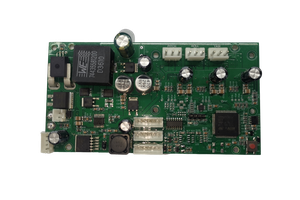
    PSU-EXT Board

    PSU-EXT Board

    And here's what runs it today:

    Capability

    What it provides

    Firmware & softwareOpen hardware, firmware, and software — not closed or vendor-locked
    Control transportsSCPI over both USB CDC and Wi-Fi/TCP
    AutomationBuilt-in scripting IDE and reusable dashboard widgets
    Instrument scopeWidgets adapt to other SCPI-capable gear too, not locked to this one instrument
    PSU-EXT Dashboard
    PSU-EXT Dashboard

    What...

    Read more »

View project log

Enjoy this project?

Share

Discussions

Does this project spark your interest?

Become a member to follow this project and never miss any updates