ElectroScope Archive

Why This Project?
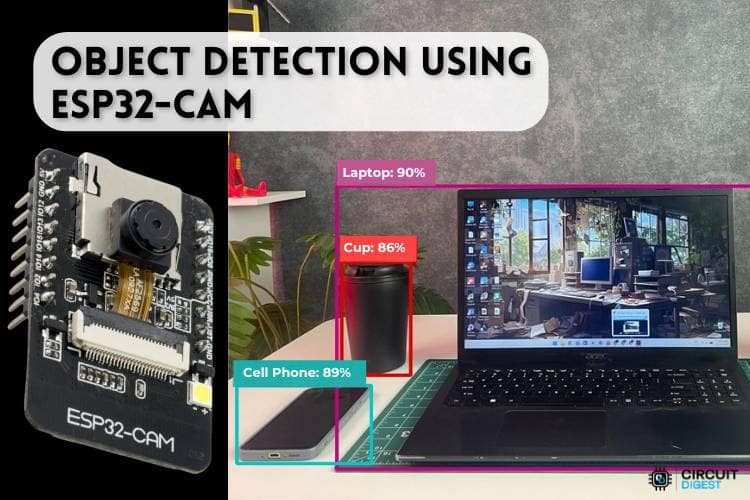
The ESP32-CAM is one of the most affordable Wi-Fi-enabled camera modules available, making it an excellent choice for embedded vision projects. Although its processing power is limited, combining it with cloud AI enables sophisticated object detection without needing a dedicated GPU or AI accelerator.
Potential applications include:
- Smart home monitoring
- Inventory tracking
- Classroom AI demonstrations
- DIY security systems
- Robotics and automation
- Remote monitoring projects
Hardware Used
- ESP32-CAM module
- FTDI USB-to-Serial programmer
- Jumper wires
- Micro USB cable
- 5V power supply
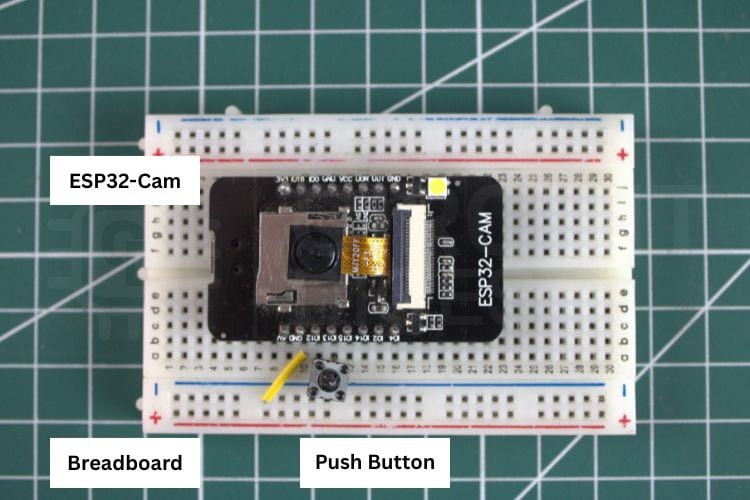
- Breadboard (optional)
Software and Tools
- Arduino IDE
- ESP32 Board Package
- Wi-Fi network
- CircuitDigest Cloud Object Detection API
- Serial Monitor for debugging
How It Works
The ESP32-CAM initializes the camera and connects to a Wi-Fi network. Whenever an image is captured, it is compressed and transmitted securely to the cloud inference server.
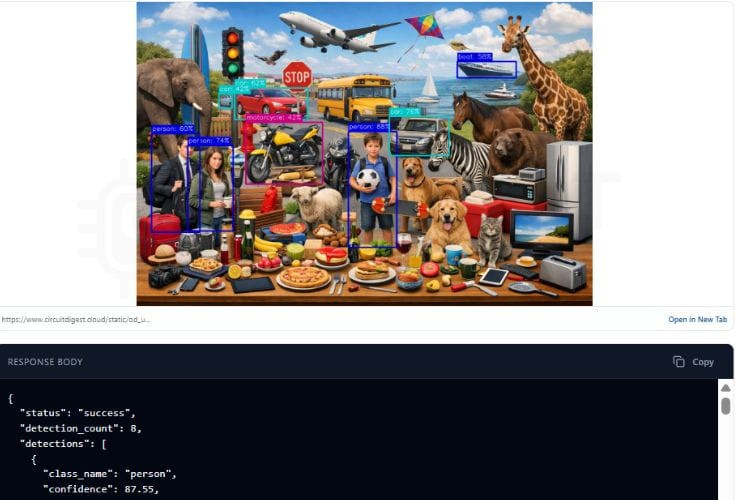
The cloud service processes the image using an object detection model and returns information such as:
- Detected object names
- Confidence scores
- Bounding box coordinates
The ESP32 receives the response and displays the results through the Serial Monitor. The same information can also be integrated into dashboards, automation systems, or IoT applications.
Project Workflow
- Power up the ESP32-CAM.
- Connect to the configured Wi-Fi network.
- Initialize the onboard camera.
- Capture an image.
- Upload the image to the cloud detection service.
- Receive object detection results.
- Display or use the detected object information for further automation.
Highlights
- Low-cost AI vision platform
- Wi-Fi-enabled image transmission
- Cloud-based object detection
- Minimal hardware requirements
- Easy to customize for different applications
- Suitable for beginners and advanced makers alike
Challenges
One of the biggest considerations was balancing image quality and upload speed. Larger images improve detection accuracy but increase network latency. Optimizing camera settings helped achieve a practical balance between response time and recognition performance.
Reliable Wi-Fi connectivity is also important because the inference process depends on successful communication with the cloud service. Build intelligent IoT Projects using ESP32, cloud AI, computer vision, machine learning, and wireless networking with comprehensive project tutorials.
Possible Improvements
Future versions of the project could include:
- Live video streaming
- MQTT integration
- Telegram or email notifications
- Detection history logging
- Multiple camera support
- OLED display for local results
- Home Assistant integration
- Edge AI using TensorFlow Lite when supported hardware is available
Conclusion
This ESP32-CAM object detection project demonstrates how inexpensive embedded hardware can take advantage of cloud-based artificial intelligence to perform object detection with minimal local processing. It provides an approachable starting point for anyone interested in combining IoT, computer vision, and machine learning in practical maker projects.
Whether you're building a smart surveillance system, a robotics platform, or simply exploring AI projects with embedded systems, this project offers a flexible foundation that can be extended in many different directions.
Find the latest ESP32 projects with complete source code, hardware guides, cloud integration, and practical applications for embedded developers.
 Himanshu Dada
 mircemk