 Arnov Sharma

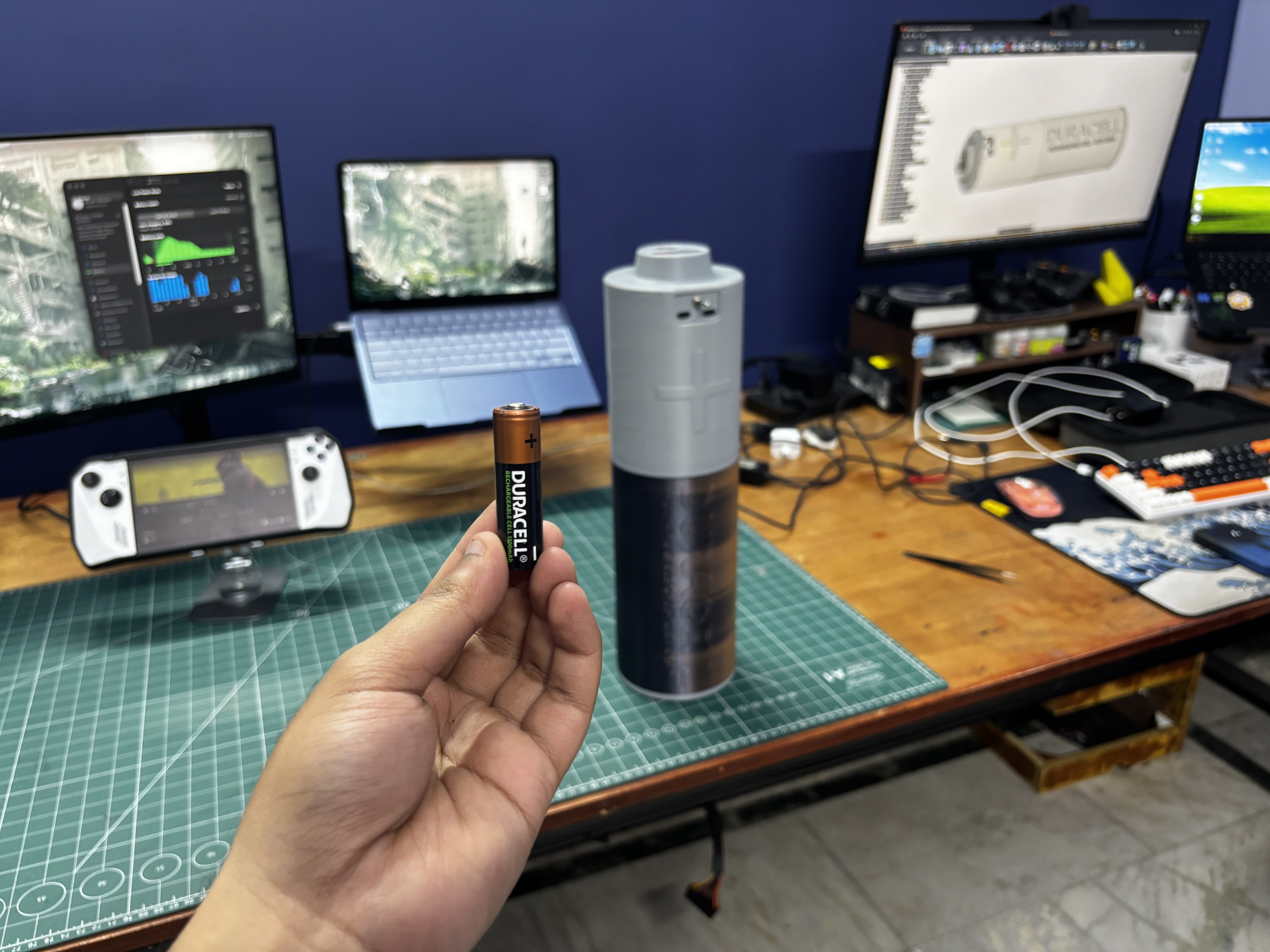
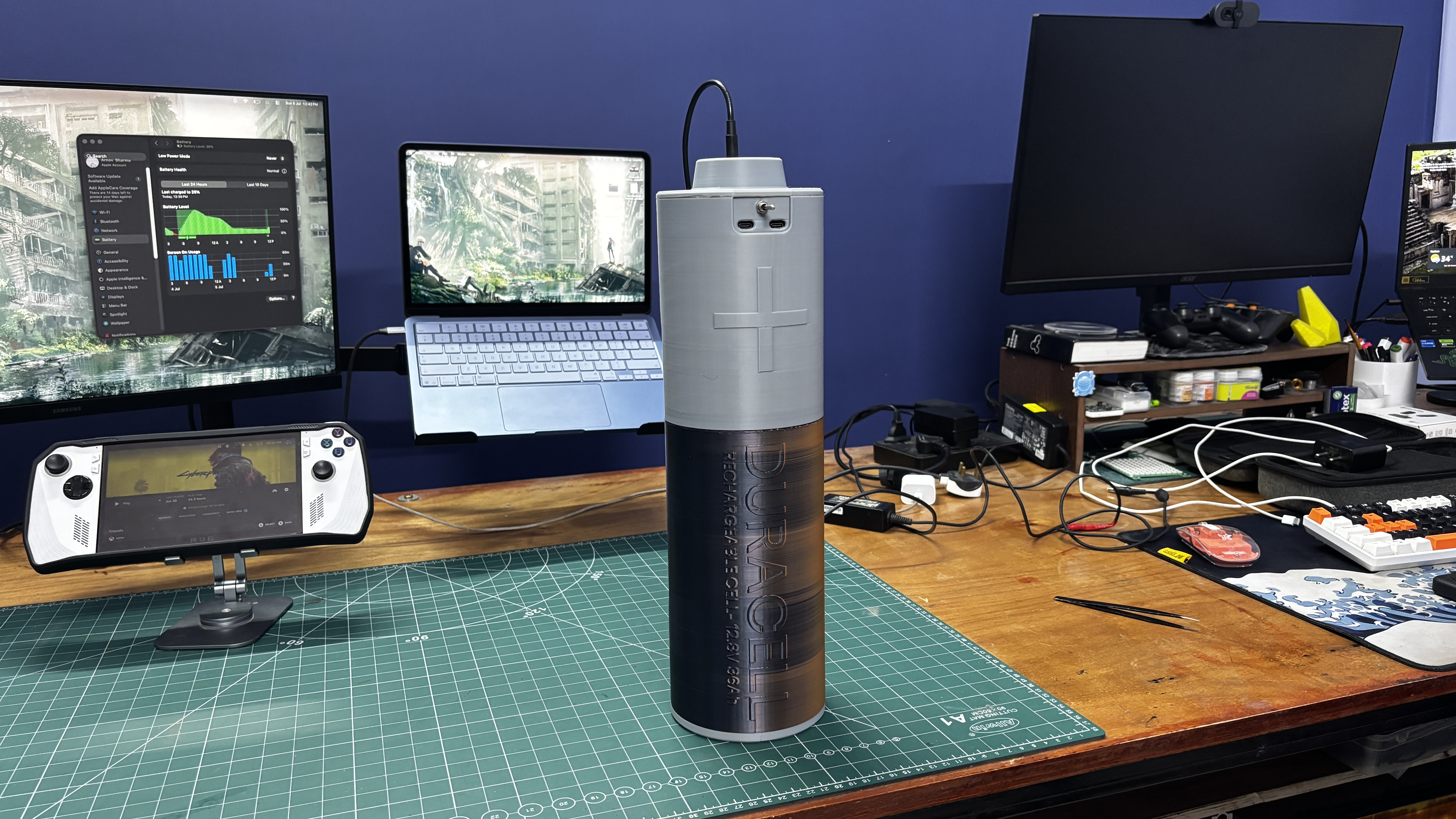
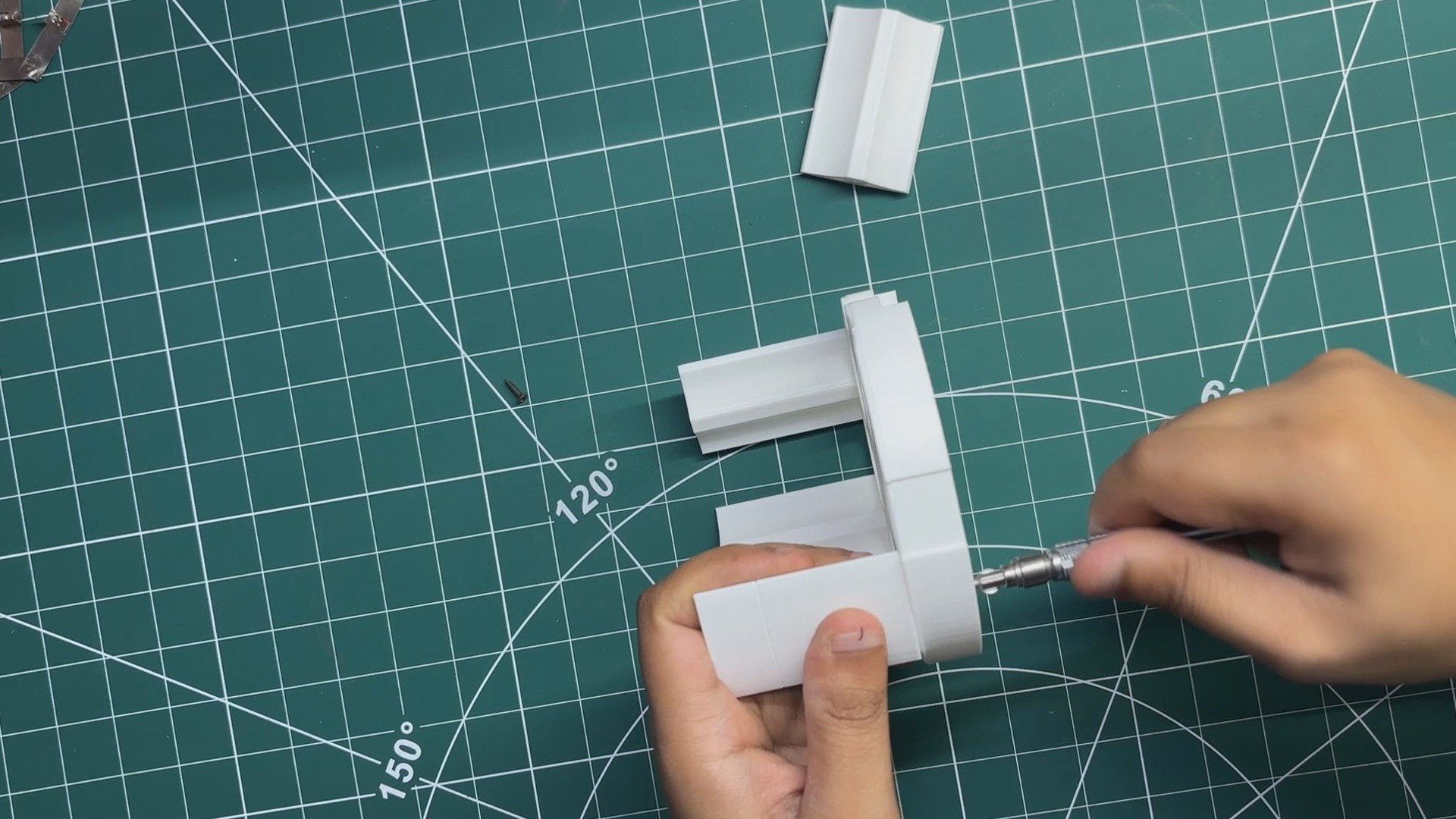
For the design of this project, I wanted to create something truly different from a regular battery pack enclosure. So, I modeled the entire battery pack to look like a ridiculously oversized Duracell AA battery.
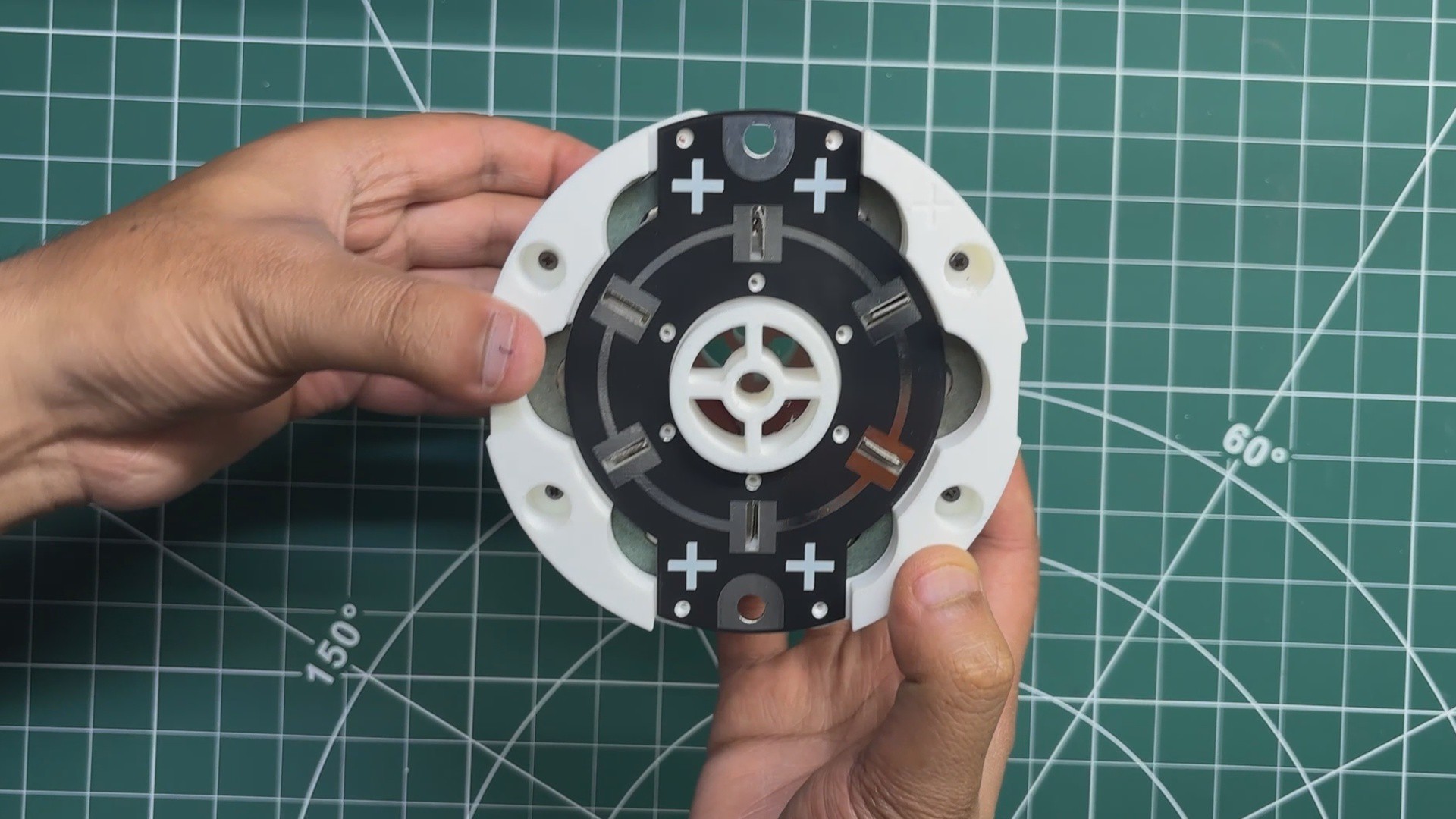
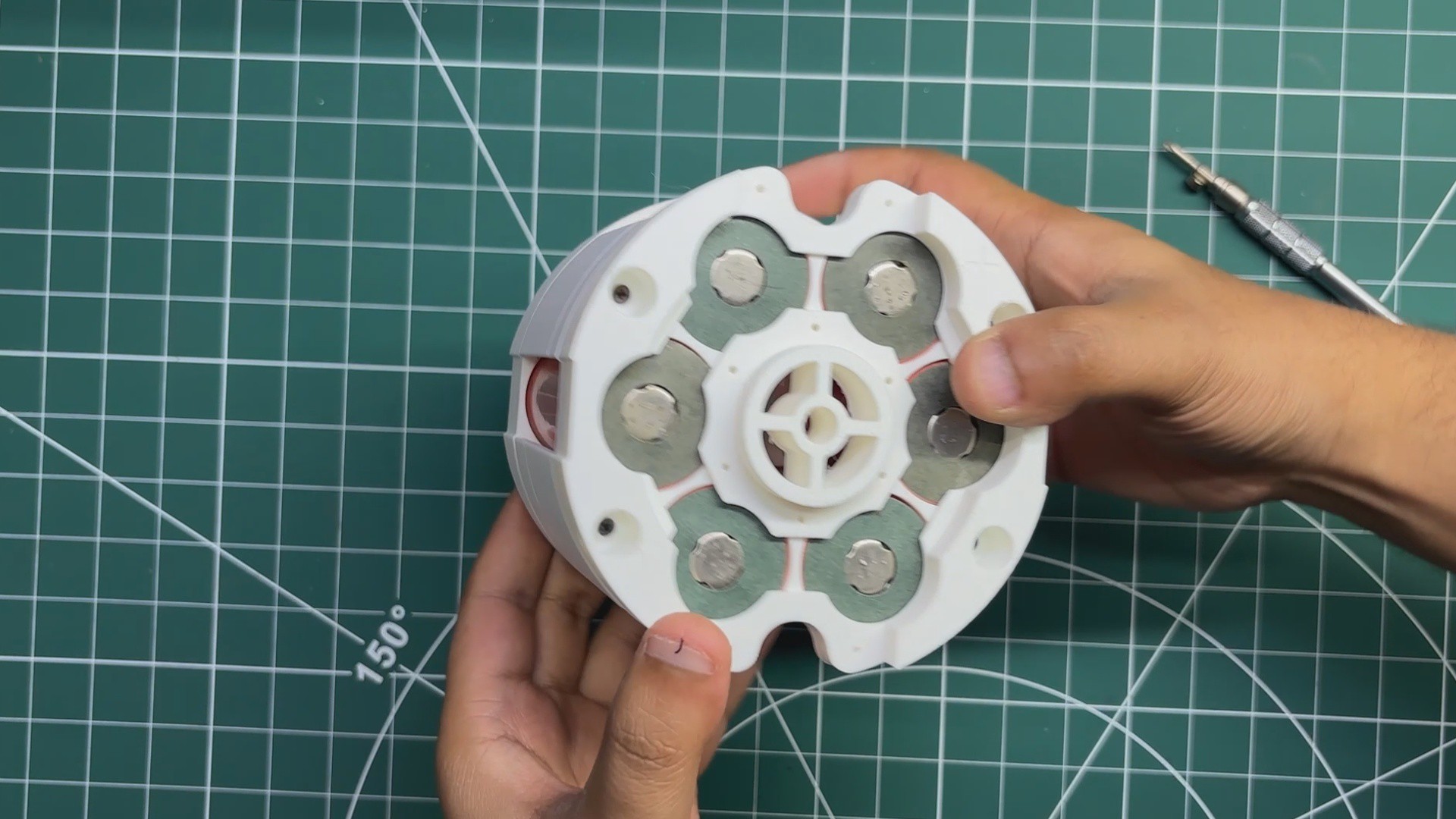
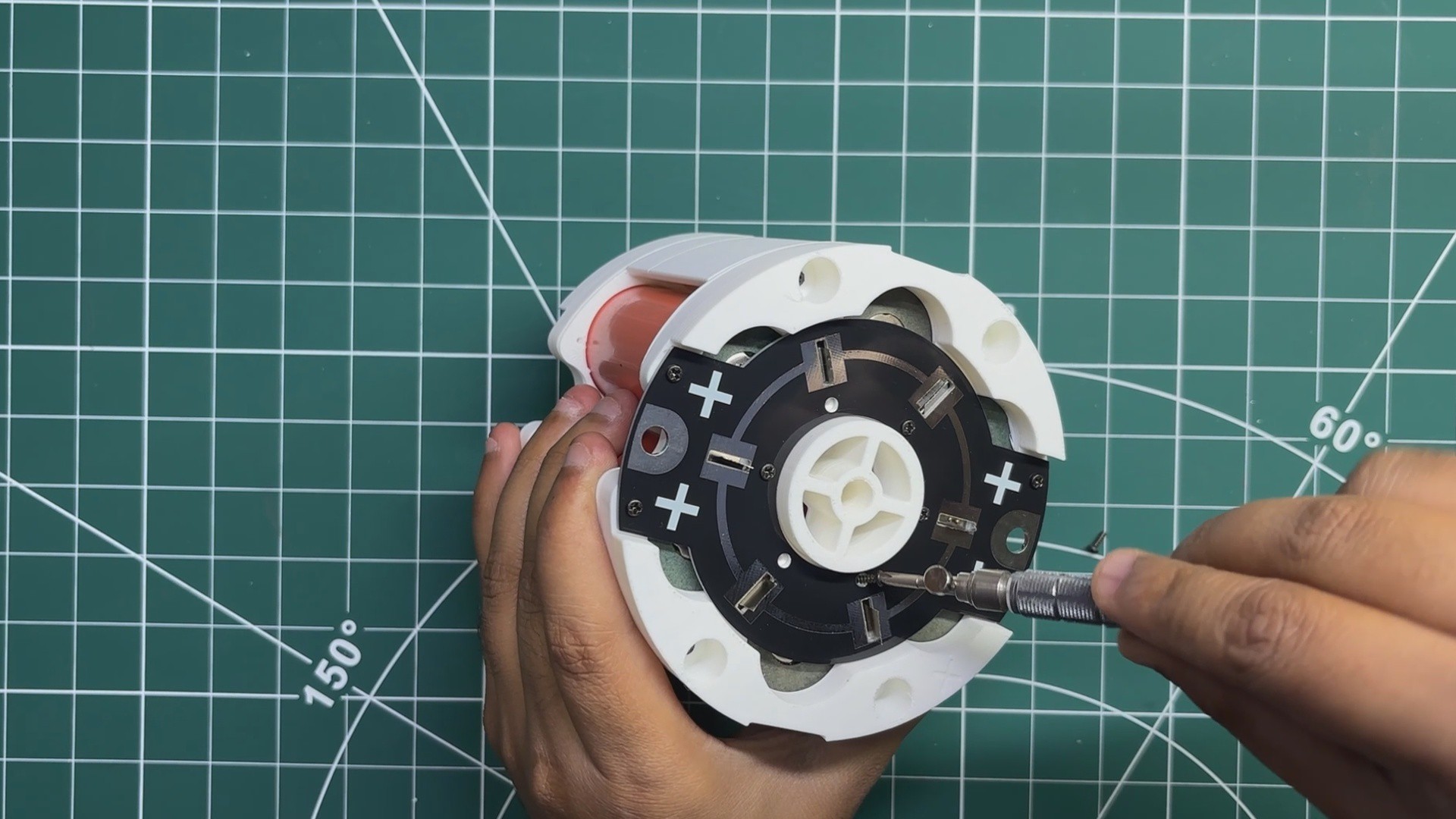
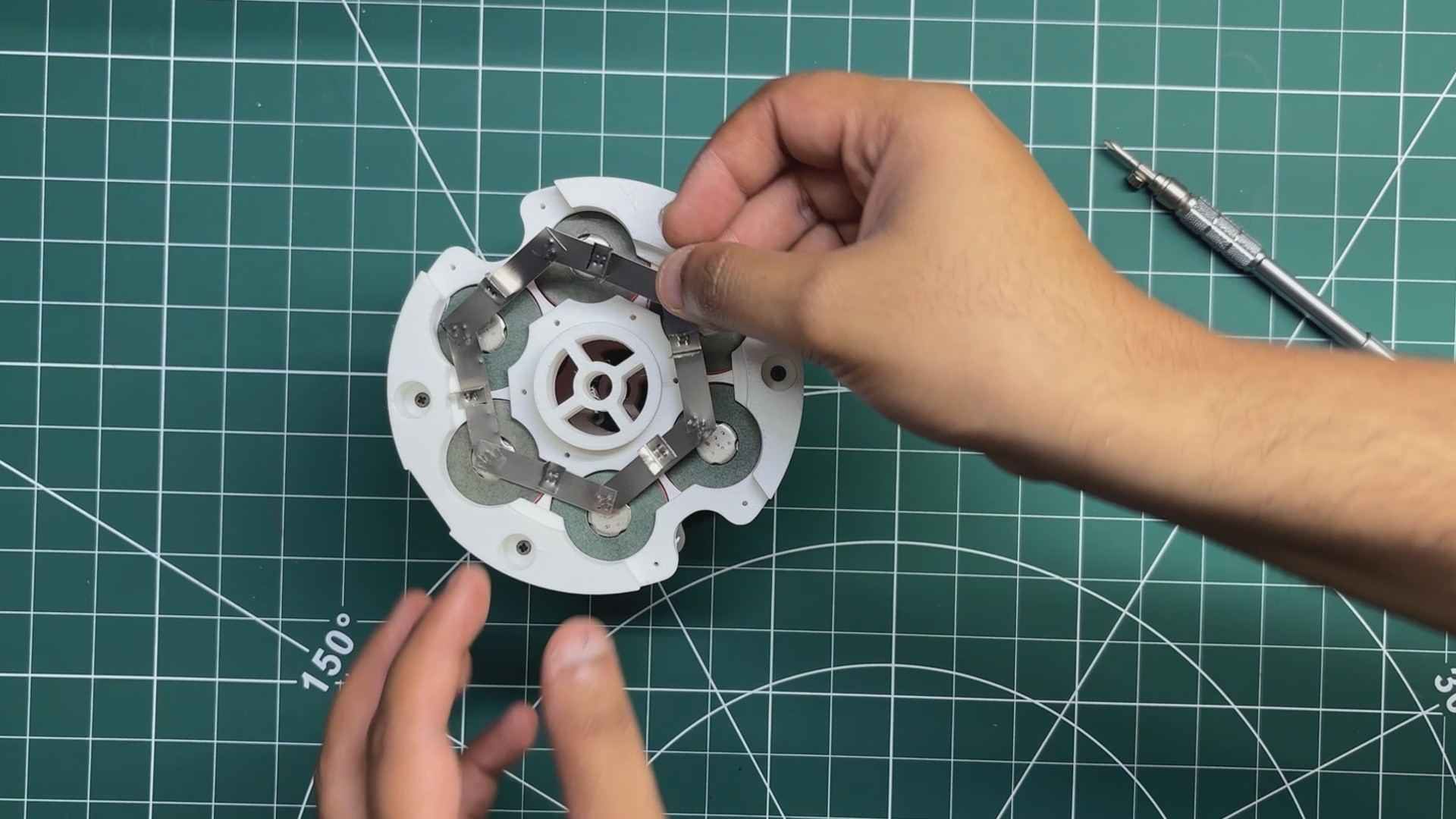
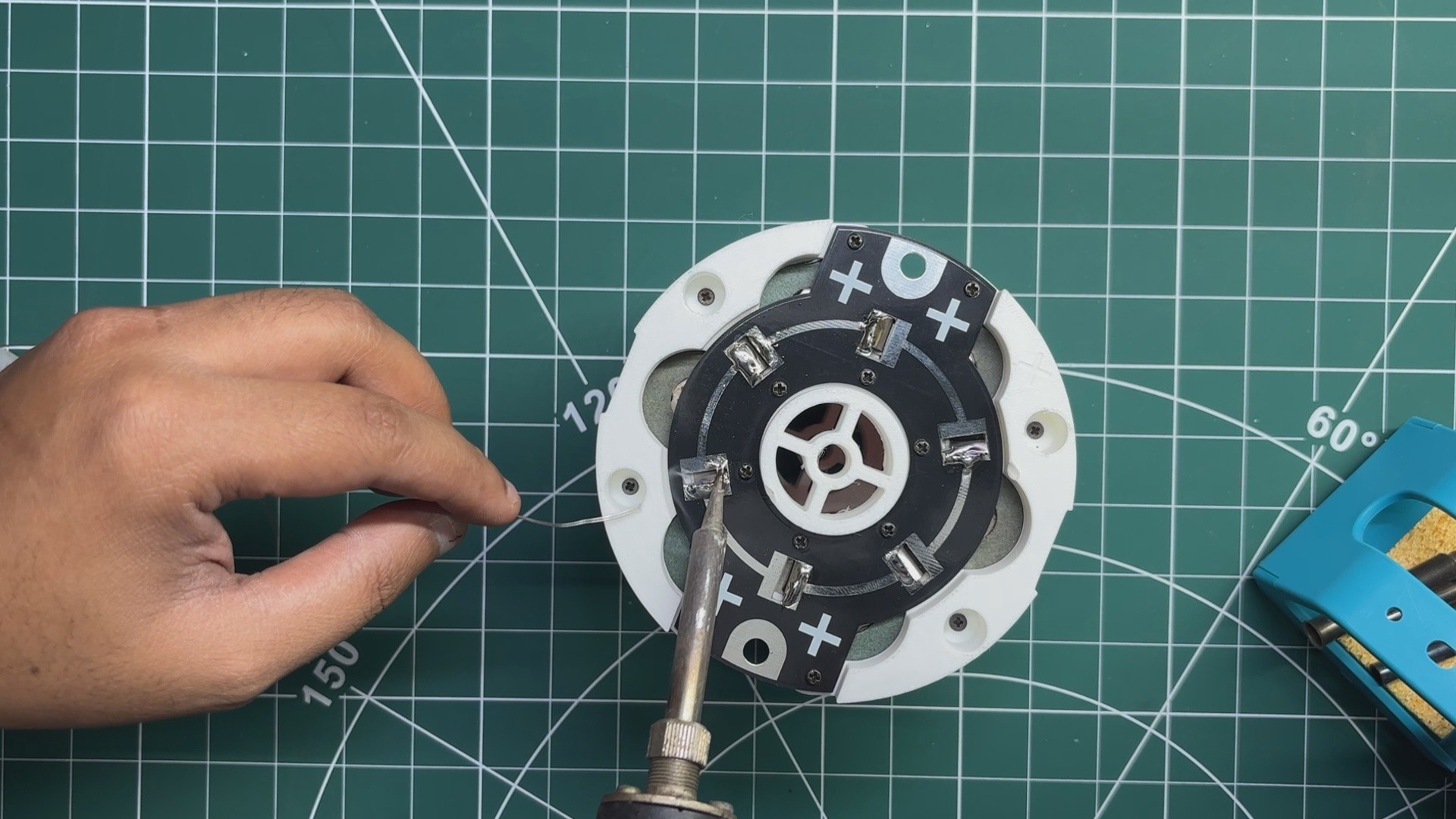
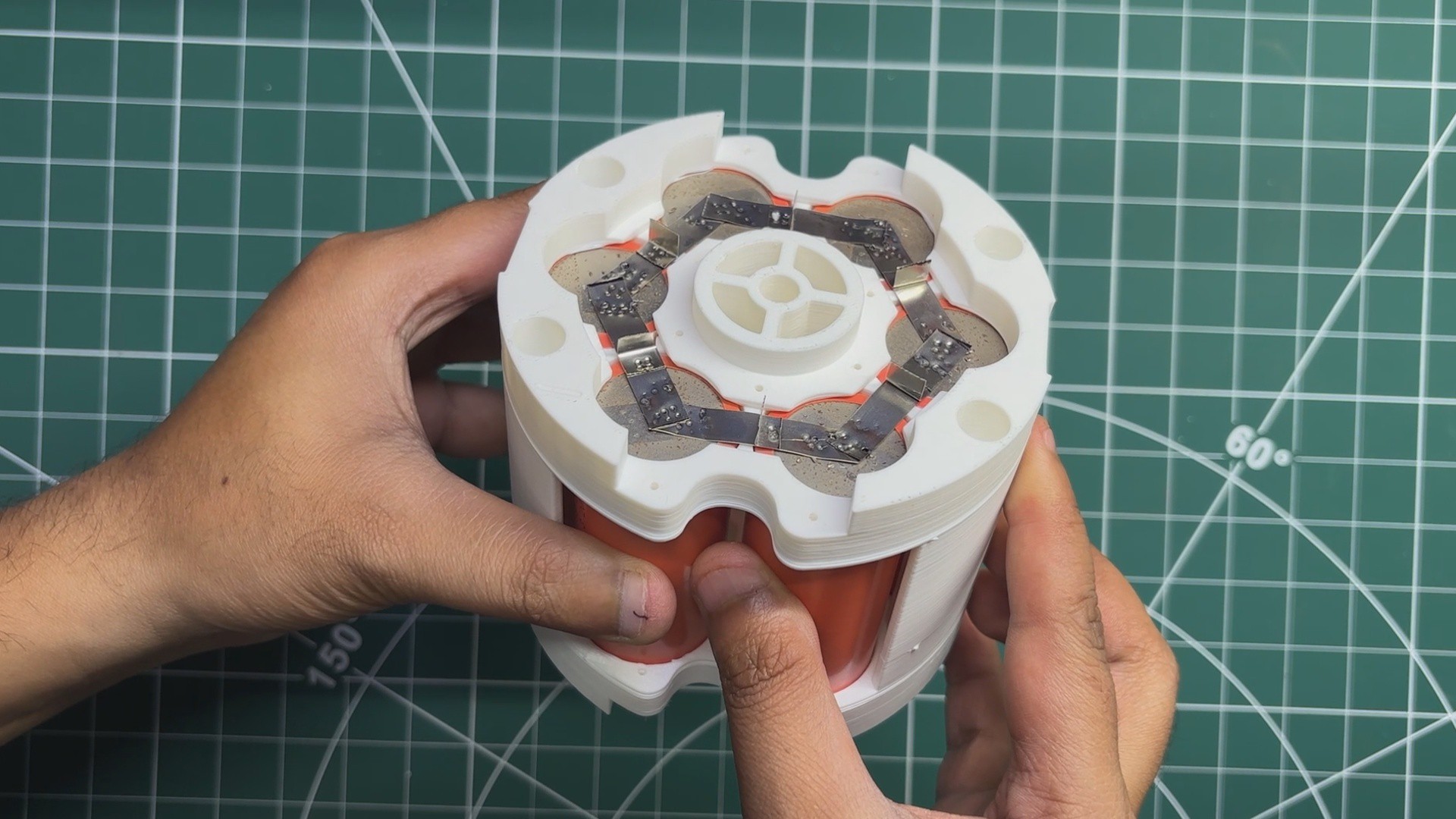
Inside the enclosure is a custom-made battery pack built using LiFePO4 cells arranged in a 4S6P configuration. The completed battery pack has a nominal voltage of approximately 13.3V, a capacity of 36Ah, and stores roughly 470Wh of energy.
HARDWARE- LiFePO4 CELLS
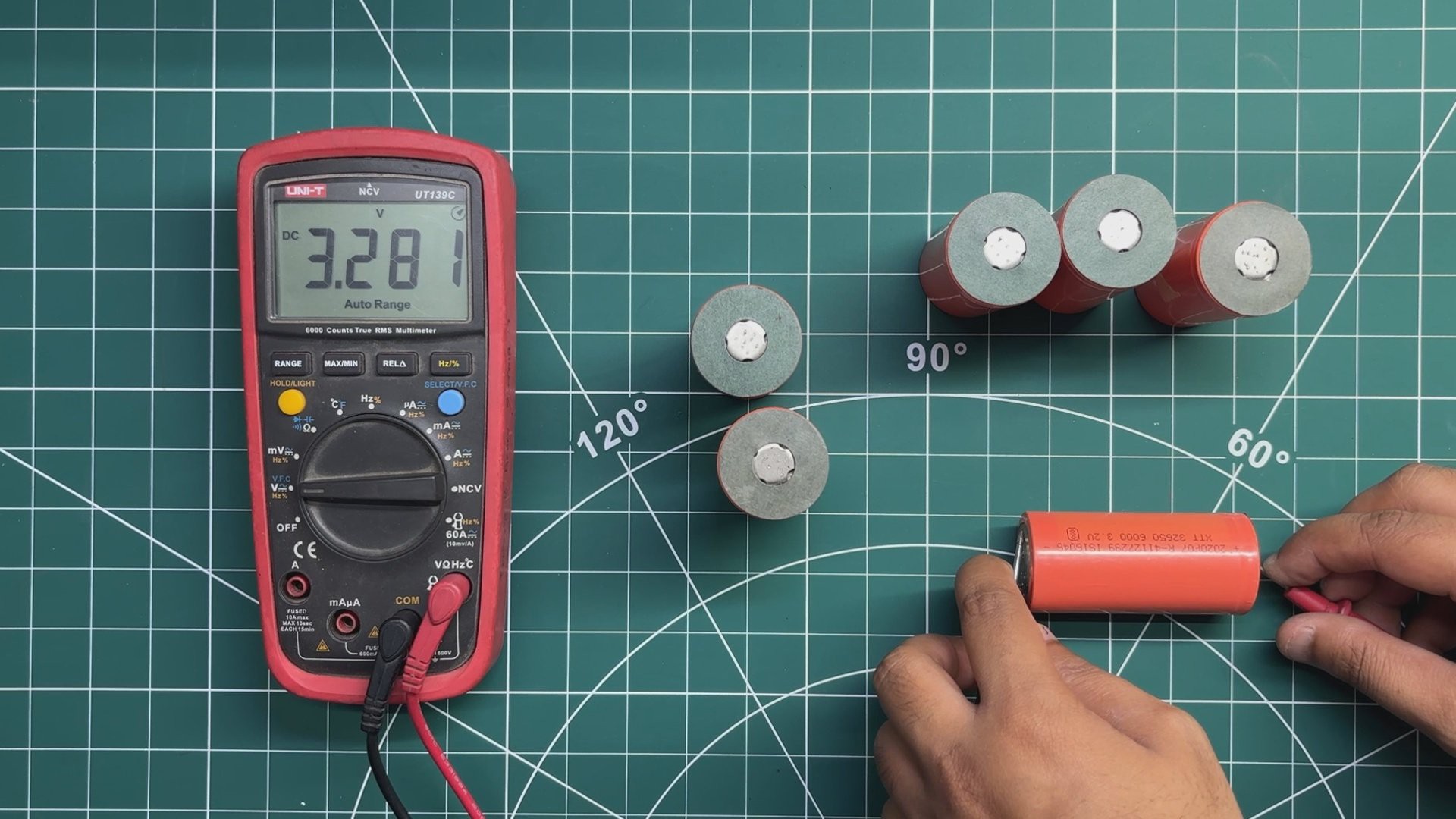
The main power source for this project is a set of LiFePO4 (Lithium Iron Phosphate) cells, each rated at 3.3V and 6000mAh. LiFePO4 cells are a great choice for this type of project because of their long cycle life, good thermal stability, and relatively safe chemistry compared to many other lithium battery types.
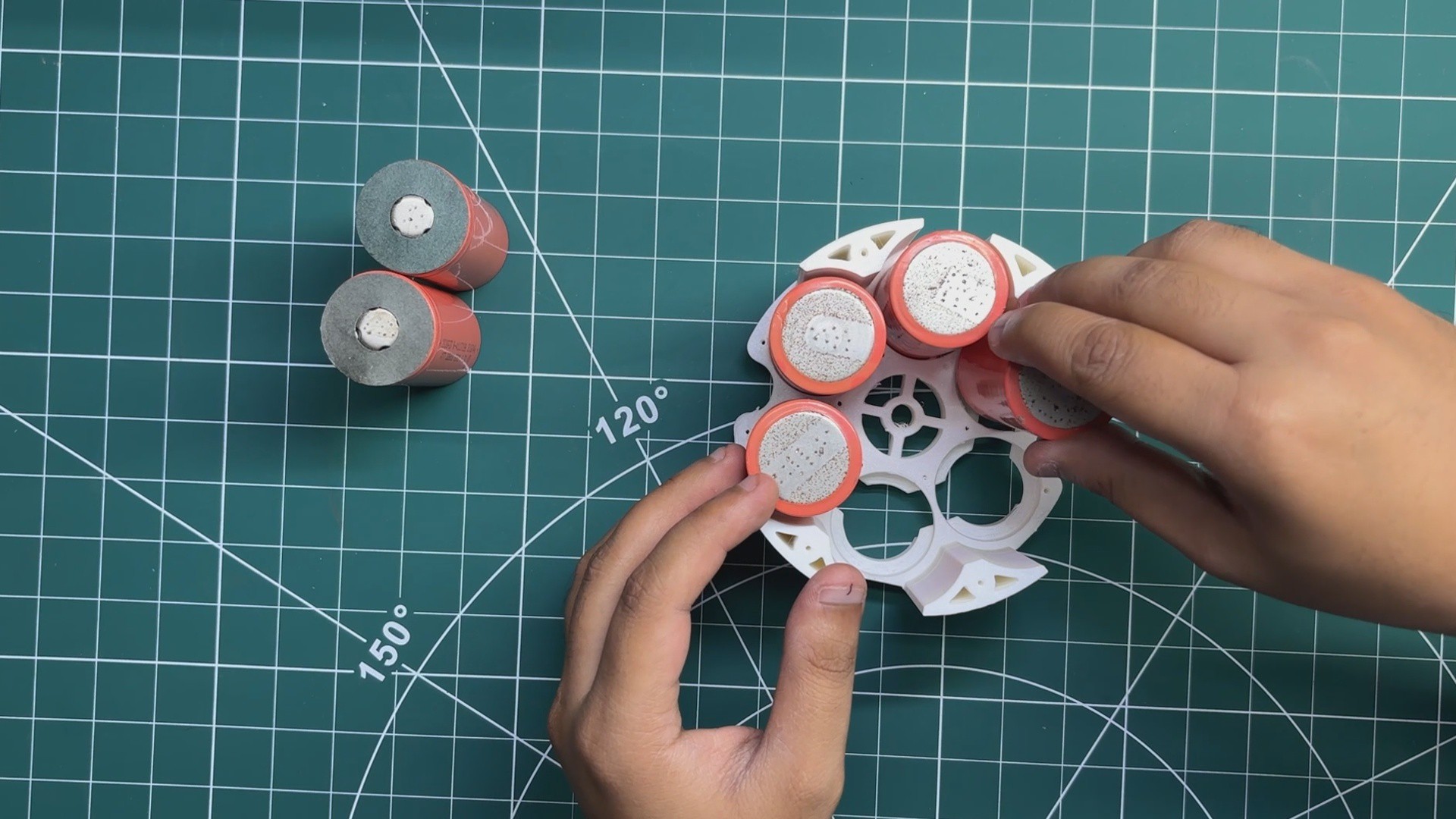
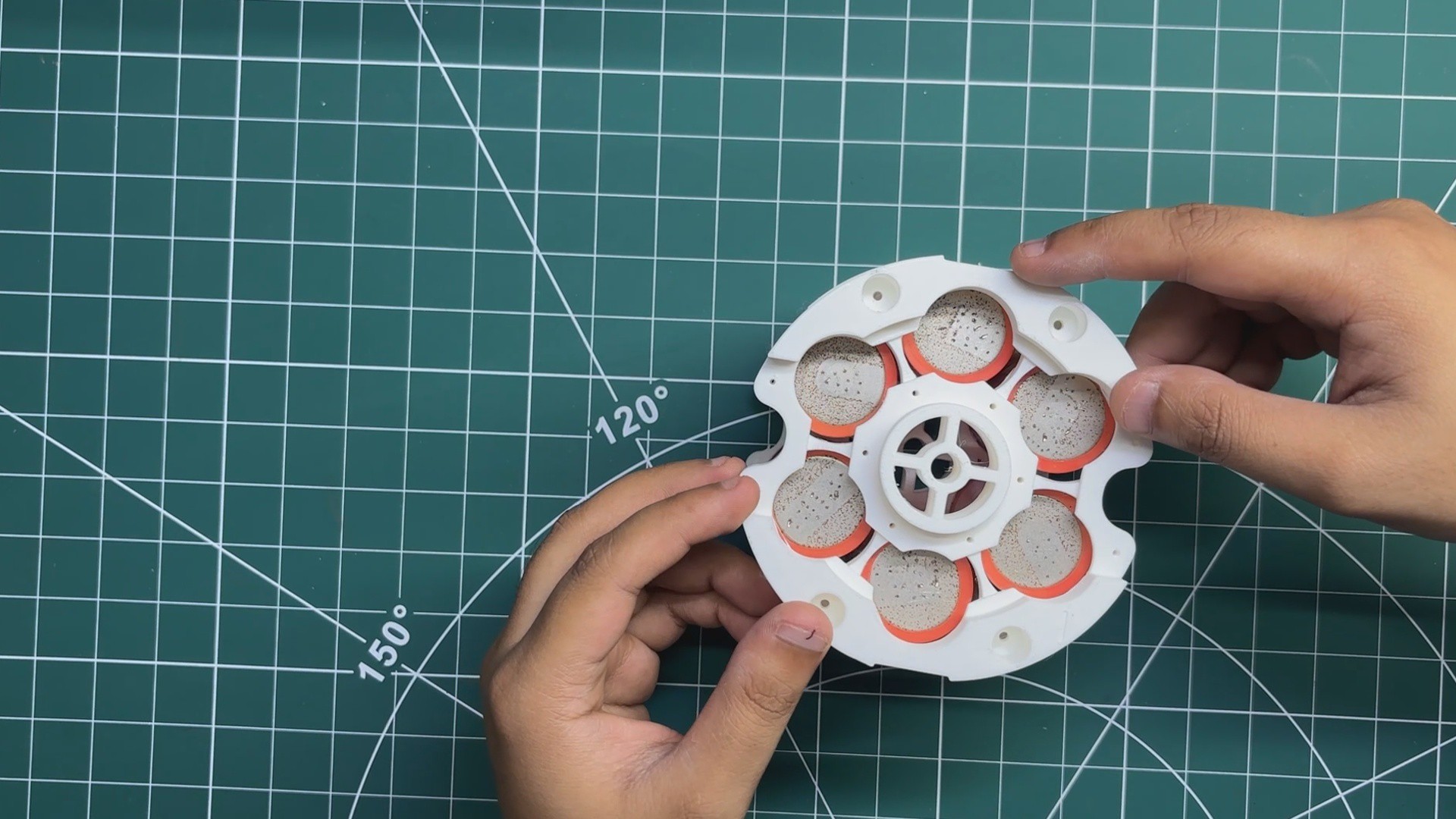
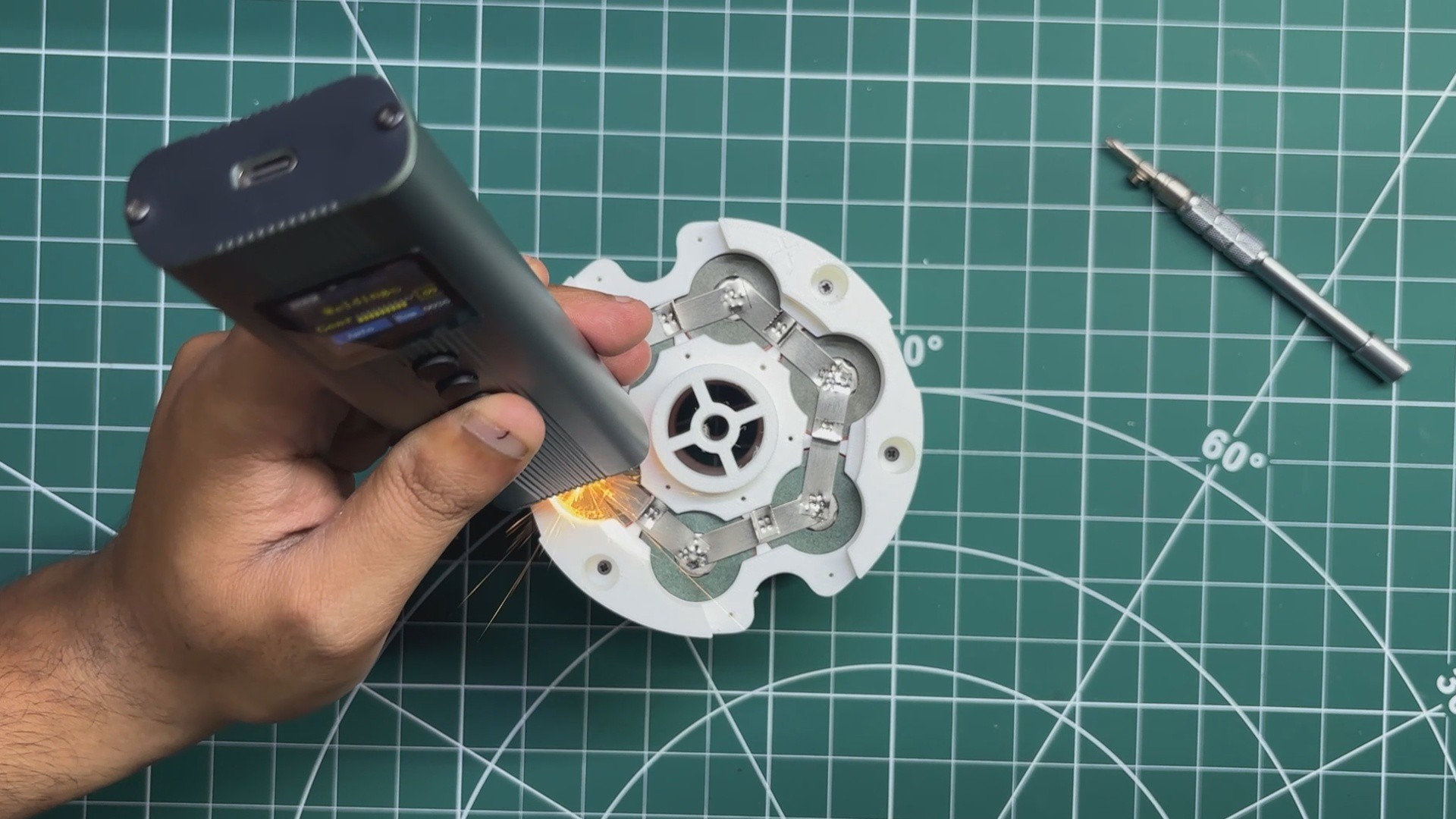
For this project, the idea is to build a 4S6P battery pack. This means six cells are first connected in parallel to increase the overall capacity, and four of these parallel groups are then connected in series to increase the pack voltage. In total, the battery pack uses 24 LiFePO4 cells.
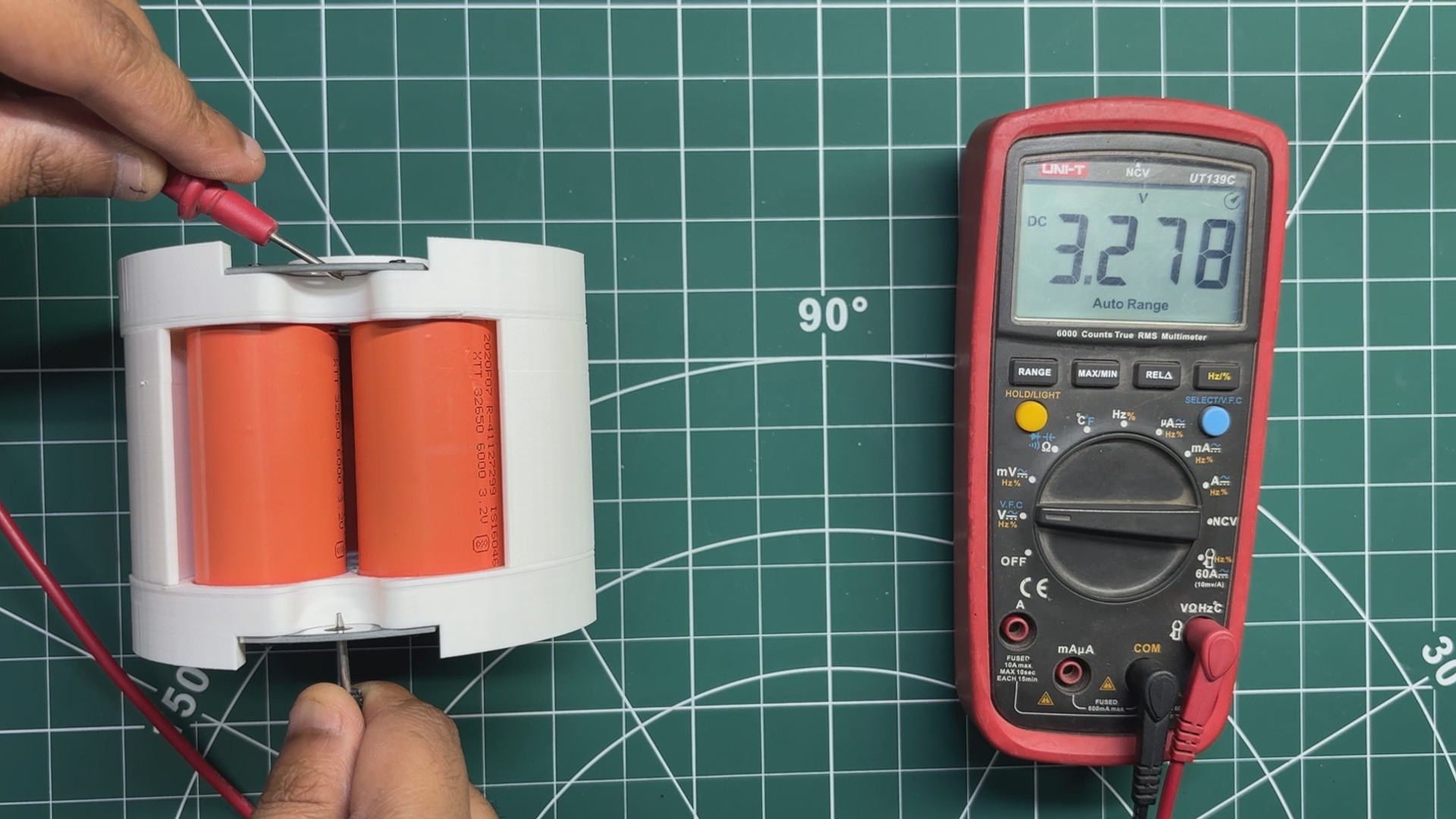
Before assembling the battery pack, I checked the voltage of every individual cell using a multimeter and sorted them into groups with closely matched voltages. The cells used in this project were between approximately 3.270V and 3.280V.
Matching the cell voltages is especially important before connecting cells in parallel. When two cells with different voltages are directly connected in parallel, the higher-voltage cell will immediately start supplying current to the lower-voltage cell. Since lithium cells have very low internal resistance, even a relatively small voltage difference can potentially result in a high equalization current, causing excessive heat and creating a serious safety hazard.
Once cells are permanently connected in parallel, they behave electrically as a single, higher-capacity cell group because all the cells share the same voltage.
Series-connected groups work differently. In our 4S configuration, each parallel group can have a different voltage from the others because the BMS individually monitors the voltage of each series group through its balance connections. During charging, the BMS helps prevent individual series groups from exceeding their safe voltage limits and, if the BMS supports active or passive balancing, helps keep the series groups balanced.
However, the BMS cannot individually monitor or control each cell inside a parallel group. This is why checking and closely matching the voltage of all cells before connecting them in parallel is an important step in building the battery pack safely.
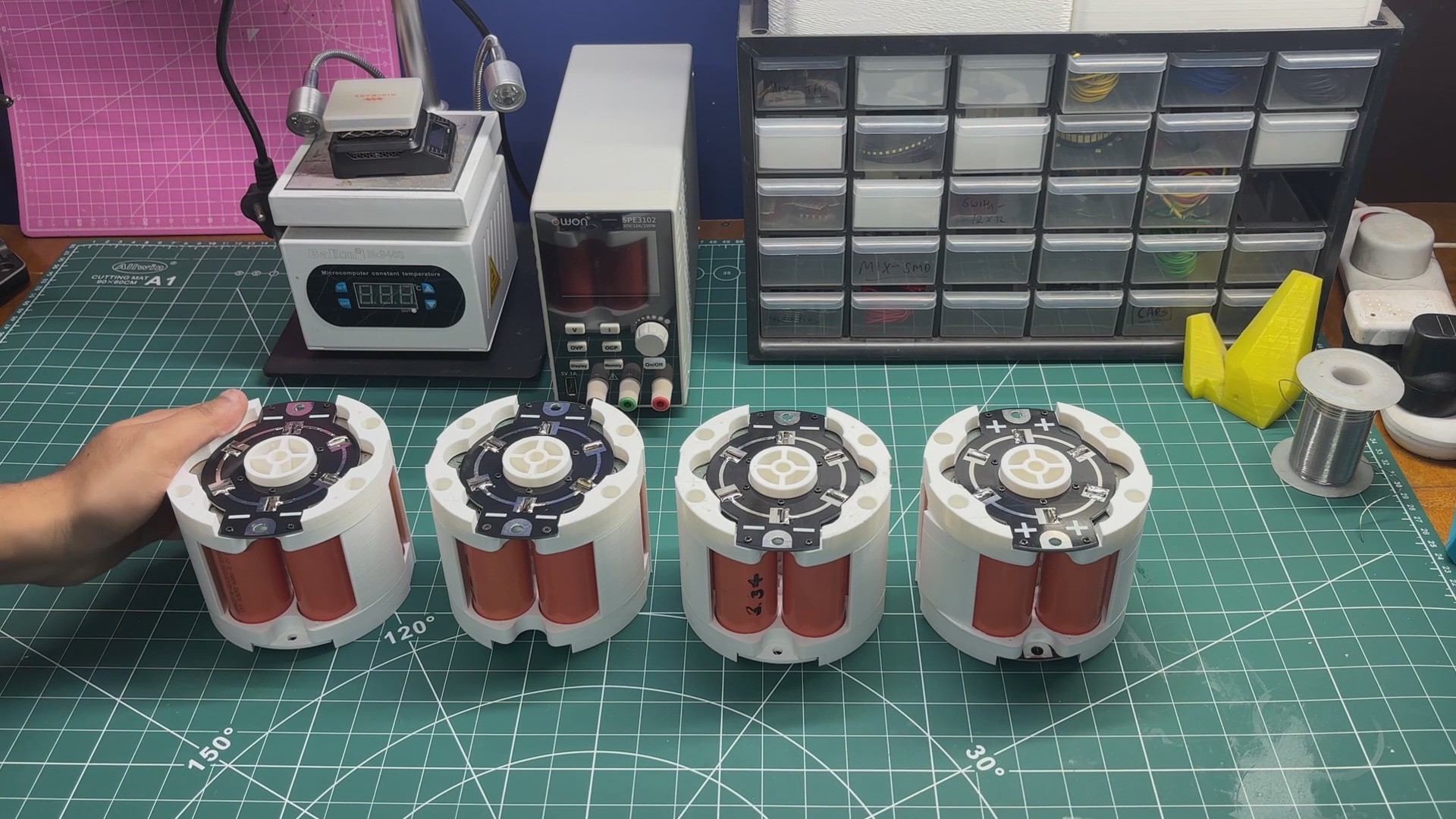
After checking all 24 cells and confirming that their voltages were within the required range, they were ready to be arranged inside the custom battery holders and connected to form the 4S6P battery pack.
HARDWARE- BMS
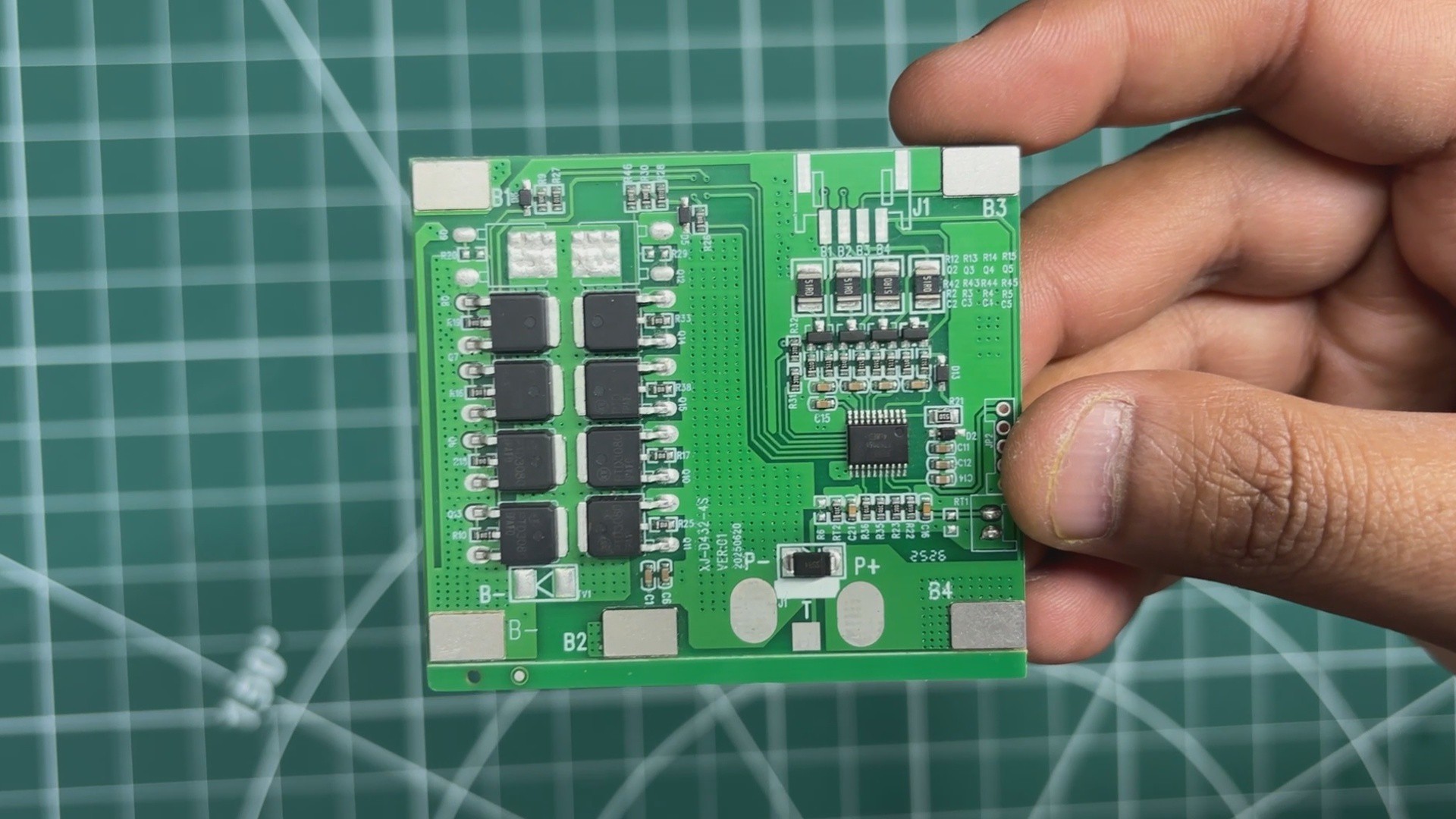
For managing and protecting the battery pack, I am using a 4S 20A BMS specifically designed for LiFePO4 cells. The BMS supports a 4S configuration with a nominal pack voltage of 12.8V and a continuous discharge current of up to 20A.
The main purpose of the BMS is to protect the LiFePO4 cells during charging and discharging. It provides essential safety features, including overcharge, over-discharge, overcurrent, and short-circuit protection.
The BMS continuously monitors the voltage of each series cell group and disconnects the battery pack if the voltage exceeds or drops below the safe operating limits.
With its 20A continuous discharge capability, this BMS is suitable for our 4S6P battery pack and allows us to safely charge the battery and power various devices connected to the output.
HARDWARE- PD MODULE
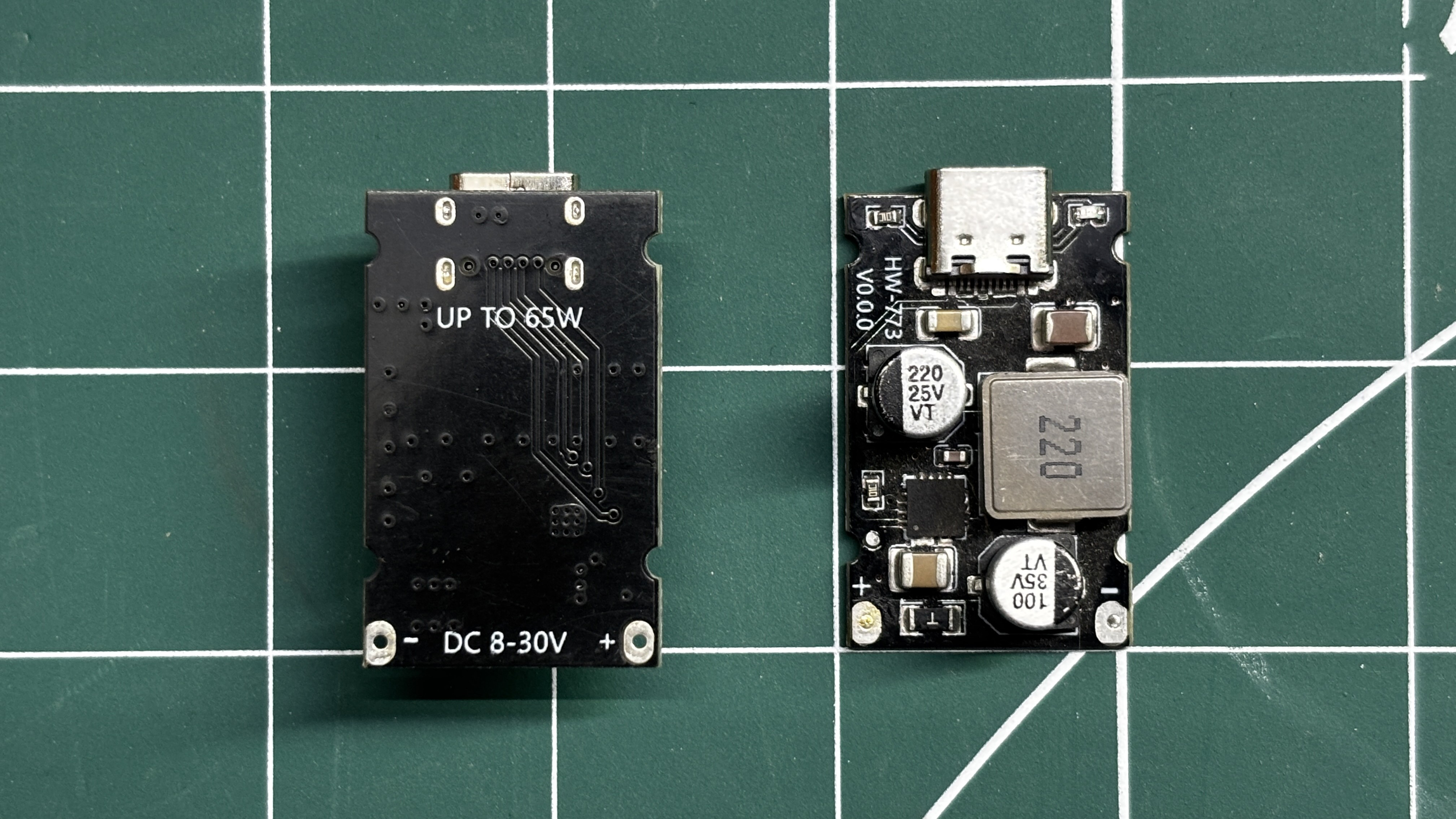
For the USB-C power output, I am using a 65W PD fast-charging module. This is a compact and highly efficient DC-DC step-down converter that supports multiple fast-charging protocols, including PD3.1 (PPS), QC3.0, Huawei SCP/FCP, and Samsung AFC.
The module accepts an input voltage of 8V to 30V and can provide up to 65W...
Read more »

 DIY GUY Chris
 hesam.moshiri
 Electro Dude
 Open Green Energy