Close
0%
0%

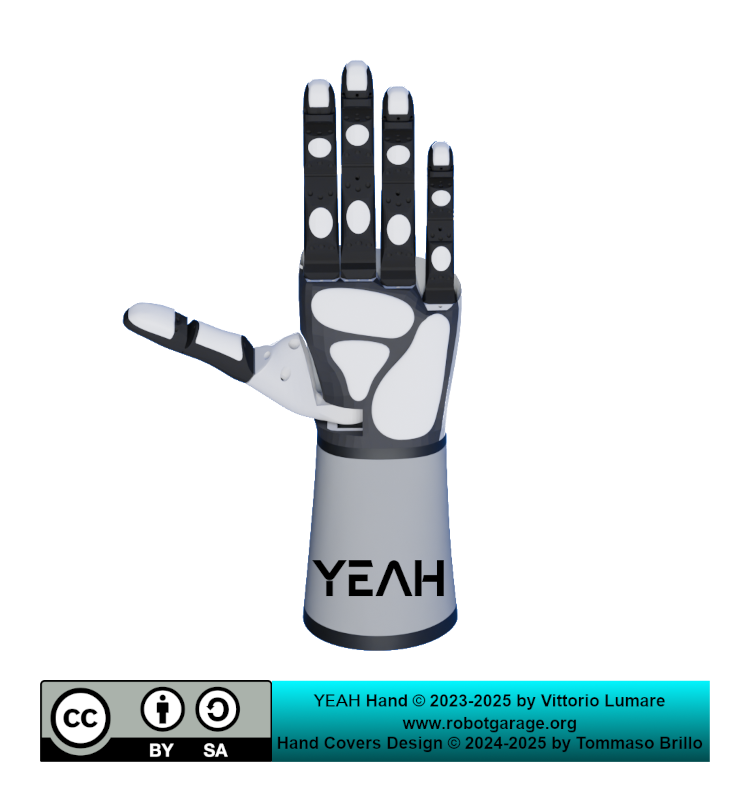
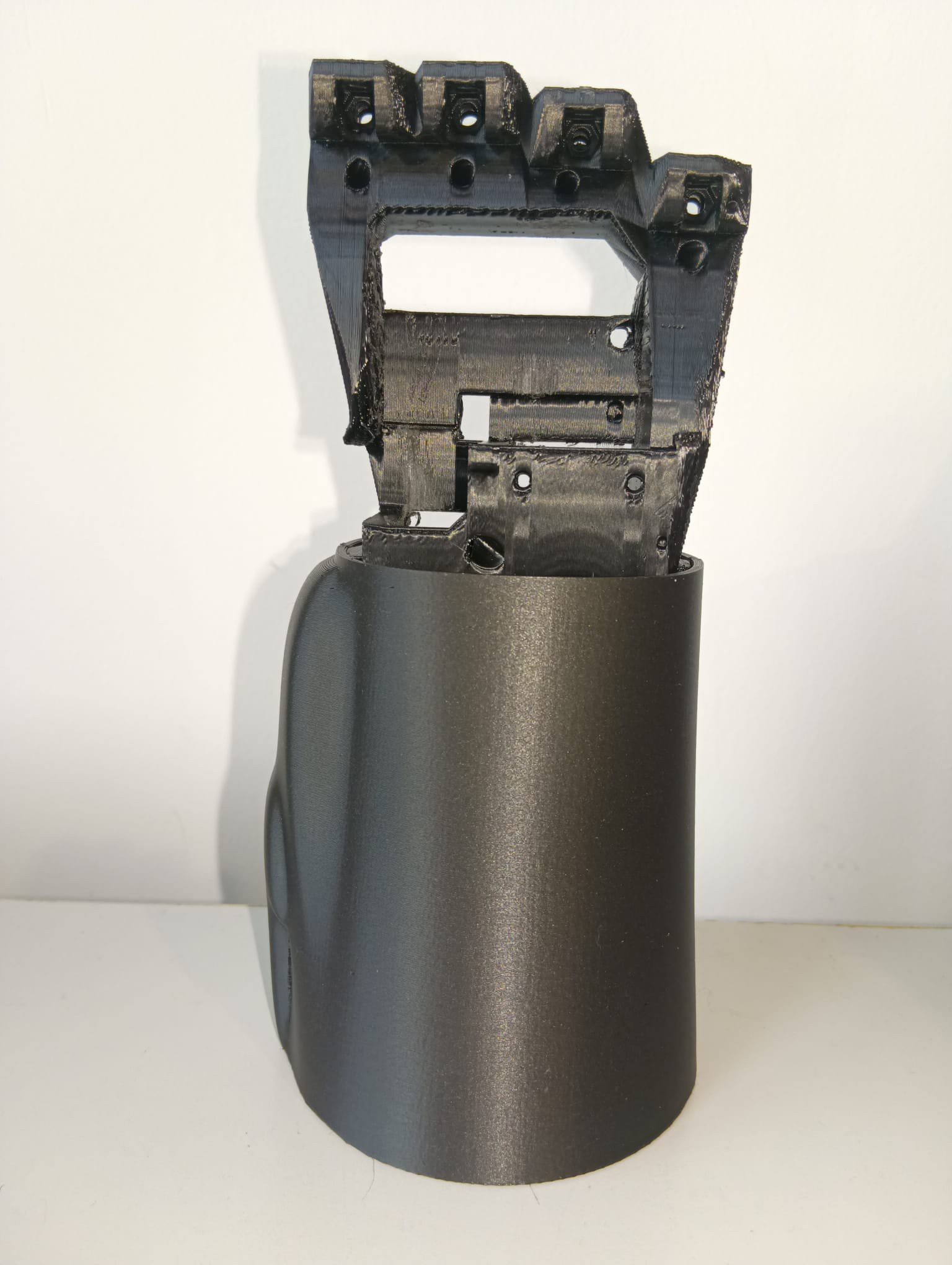
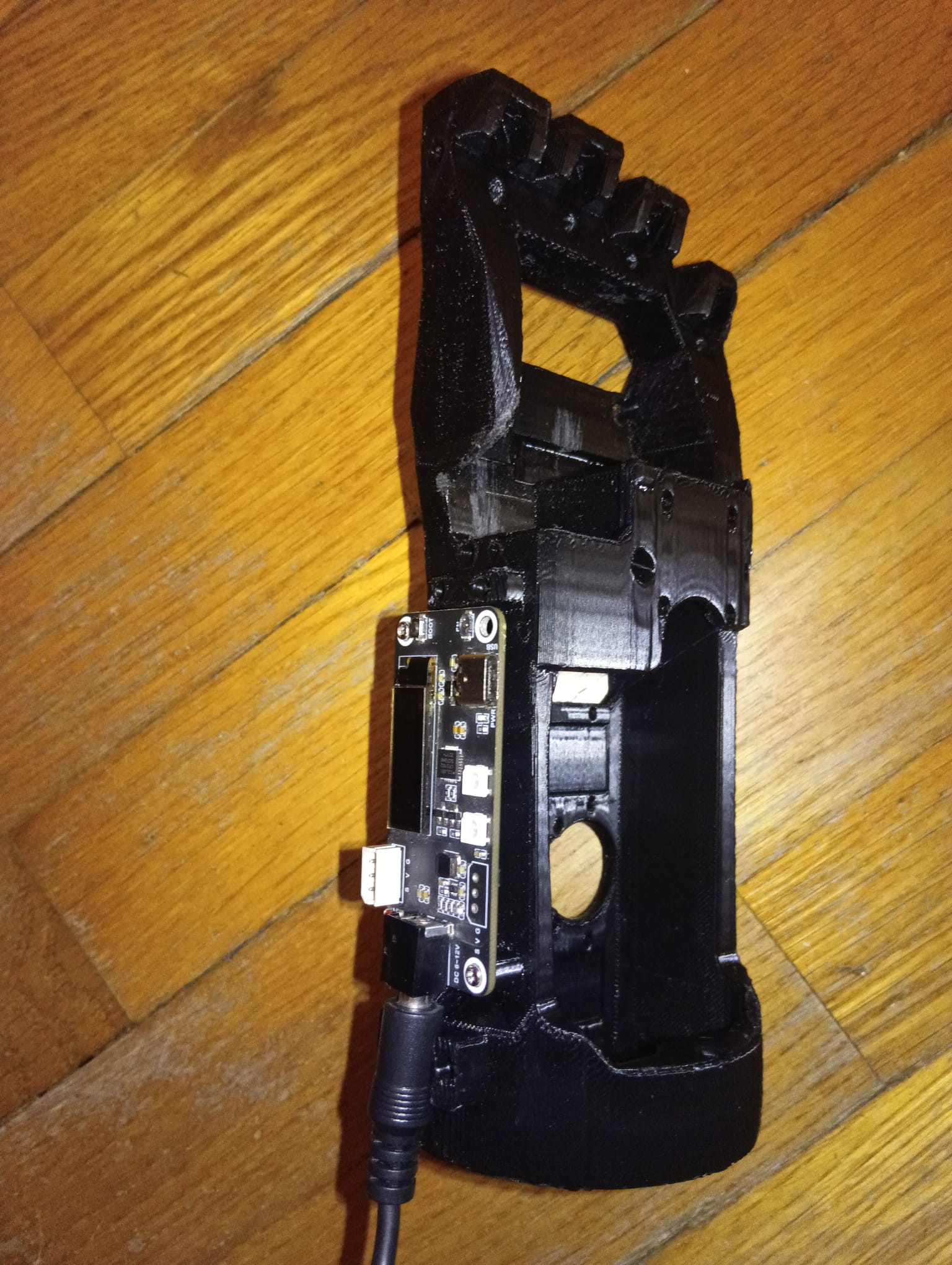
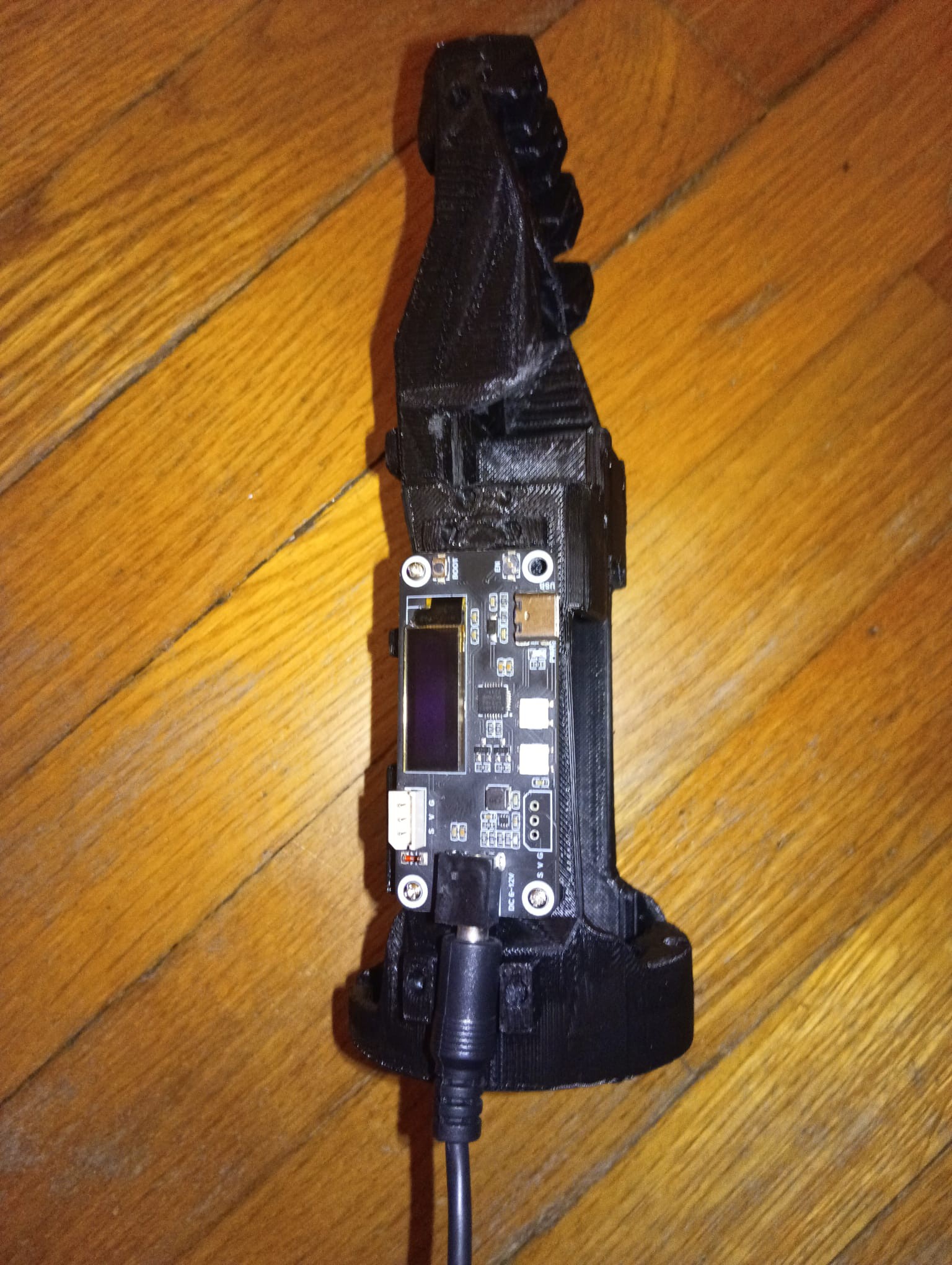
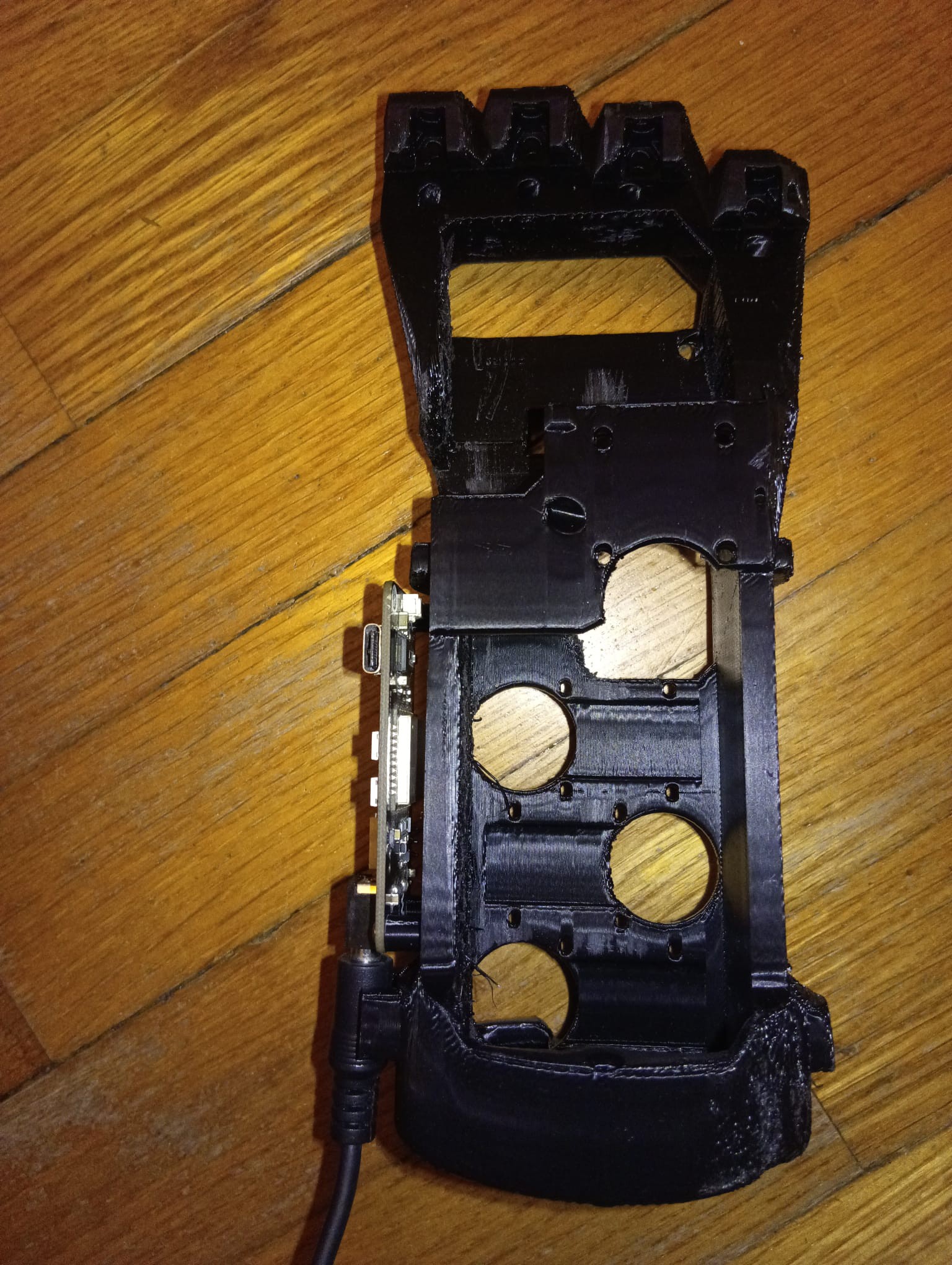
YEAH Robotic Hand (formerly Rebelia)

A low cost robotic hand for robots and humans

Similar projects worth following
Welcome to the project page for the YEAH Hand, which was formerly developed under the name Rebelia.

This project aims to create a powerful, low-cost, and open-source robotic hand for researchers, developers, and enthusiasts.

The hand will be affordable and reliable.


It will be produced in 2 versions: robotic ( for manipulators, humanoid and service robots) and prosthetic (transradial amputees).

We believe that groundbreaking technology shouldn't be locked away in high-cost labs. It should be in the hands of developers, researchers, and makers like you.

Join the rebellion. Let's build the future, affordably.

Project Status: Version 2 (In Development)

This project page documents YEAH Robotic Hand , formerly called Rebelia Robotic Hand V2, the next iteration of our open-source robotic hand.

Our commitment to open-source hardware remains unwavering. 

The previous version, Rebelia V1, is officially certified by OSHWA (Open Source Hardware Association).

The licenses for the project are as follows:

Once Version 2's development is finalized and stable, we will submit it for a new OSHWA certification under the same set of licenses. This ensures that both versions of the project are fully recognized, compliant, and protected open-source hardware.

From Prototype to Product: Forging the Rebelia Robotic Hand

The Rebelia Robotic Hand works. 

We've moved past the concept stage and have a functional prototype that has proven its basic reliability. 

But now comes the hard part: transforming this prototype into a robust, consumer-ready product that can handle real-world tasks, and we need your help to do it.

Proven Durability: It's Not Just a Demo 

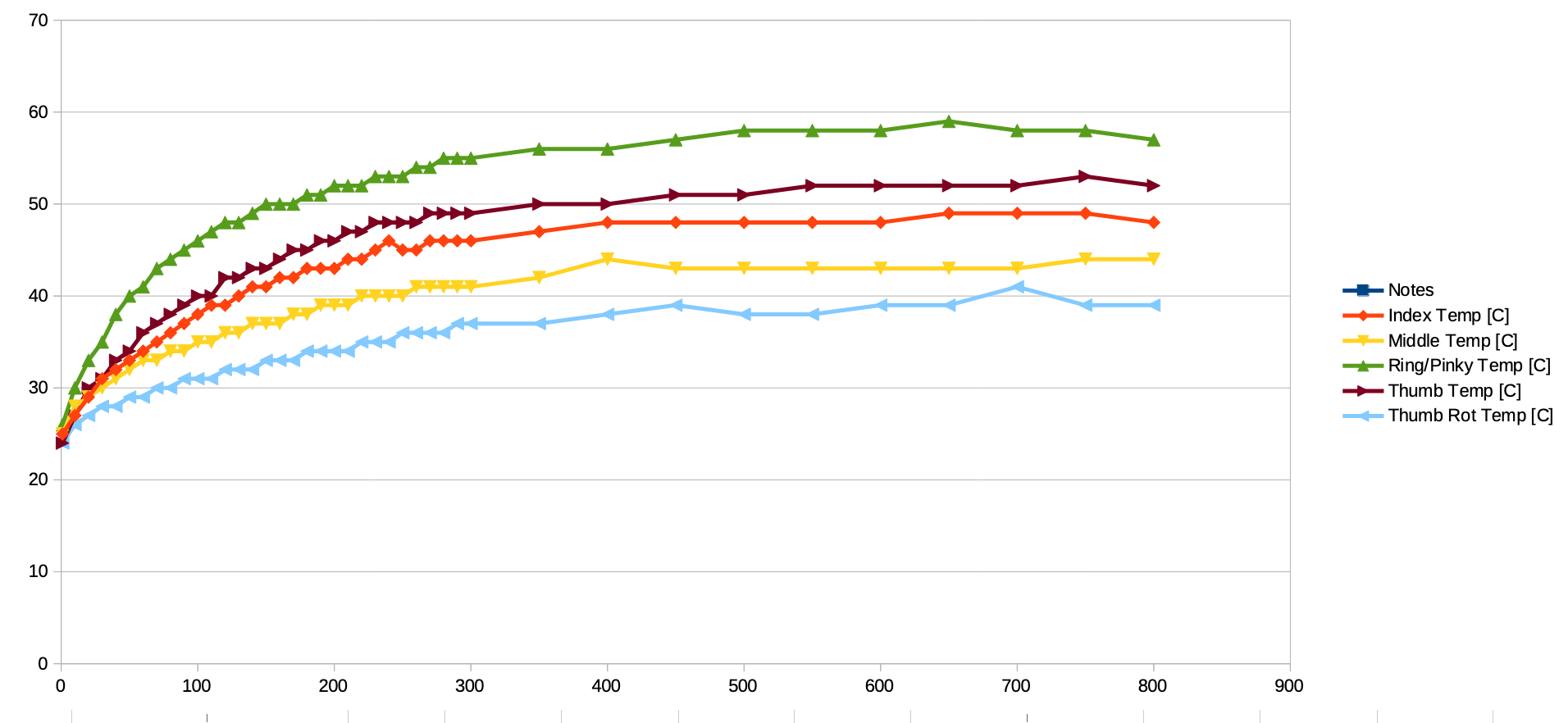
Our latest stress test pushed the hand through 500 open/close cycles of all fingers with a 330 unit force limit. 

The result? 

The hottest motor stabilized at a cool 58°C. Even after 800 cycles, the temperature held steady, proving the design is stable for continuous use. 

This isn't a fragile lab toy: it's a platform ready for refinement.

The Challenge: Beyond the Basics 

A hand that can just open and close is useful, but a great hand can perform a vast range of manipulations

We've identified key use-cases it needs to master:
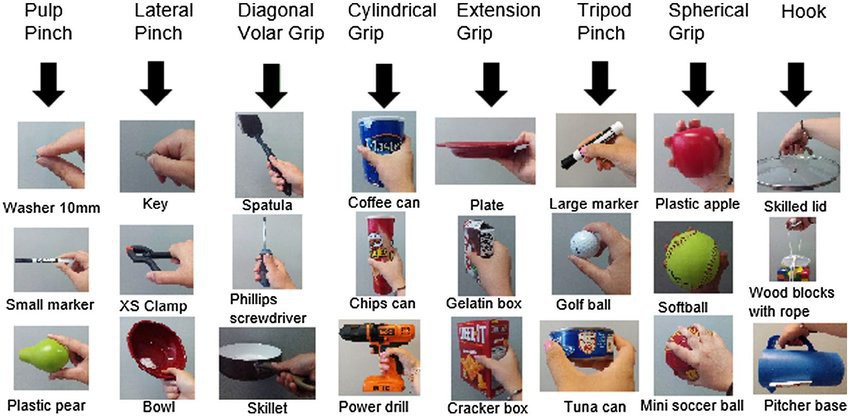
use-cases picture taken from here, under CC-BY-4.0

But our list isn't exhaustive. What are we missing? 

Suggest scenarios we haven't considered. Is it wielding a tool? 

Manipulating a delicate object? 

Performing a specific task in a workshop or kitchen?


Design Files & Licensing

This project is designed using a parametric, modifier-based workflow in Blender. The source .blend files contain the full design history and logic, allowing for powerful non-destructive customization.

  • Source Design Files: The native and preferred source files are the .blend files, which use Blender's modifiers to drive the parametric design.
  • Production Files: The .stl files provided are exported outputs from the source, ready for 3D printing.
  • Open Hardware License: All hardware design files are released under the CERN Open Hardware Licence Version 2 - Strongly Reciprocal (CERN-OHL-S-2.0). You can find the full license text here: Link to CERN-OHL-S-2.0
  • What this means for you: You are free to use, modify, and distribute the designs. However, if you distribute any modified version (a "Adaptation" under the license), you must release the source files for your modifications under the same CERN-OHL-S-2.0 license. This ensures the project remains open and contributions are shared back.

For builders who prefer a ready-to-use solution, fully-tested kits and assembled units are available from my shop.

An Open Invitation to Collaborate 

This is a copy-left, open-source project. It belongs to all of us. 

The potential technological solutions—from novel grip-pattern algorithms and sensor fusion to new materials and actuation methods—are infinite.


We challenge you to propose solutions, and we commit to implementing and testing the best ideas.

This isn't private, closed tech.

It's an open platform, it's affordable by design, and together, we can make it the best it can be.


Let's build the future of accessible robotics, together.
Little Pads Mold.stl

[PLA/ABS] The mold to inject the silicone pads for the little finger.

Standard Tesselated Geometry - 3.87 MB - 11/23/2025 at 22:15

Download

Little Rigid.stl

[PLA/ABS] The rigid part of the little finger. It must be printed together with the 'Little Flex.stl'

Standard Tesselated Geometry - 90.32 kB - 11/23/2025 at 22:14

Download

Little Flex.stl

[TPU] The flexible part of the little finger. It must be printed together with the 'Little Rigid.stl' Postprocessing required: Silicone Injection with 'Little Pads Mold.stl'.

Standard Tesselated Geometry - 13.75 MB - 11/23/2025 at 22:14

Download

Middle Pads Mold.stl

[PLA/ABS] The mold to inject the silicone pads for the middle finger.

Standard Tesselated Geometry - 3.87 MB - 11/23/2025 at 22:13

Download

Middle Rigid.stl

[PLA/ABS] The rigid part of the middle finger. It must be printed together with the 'Middle Flex.stl'

Standard Tesselated Geometry - 90.32 kB - 11/23/2025 at 22:12

Download

View all 19 files

  • 1 × Creality Hyper ABS Filament Spool Skeleton and spools
  • 1 × PolyFlex TPU 95A Filament Spool Fingers and palm
  • 1 × Raise3D Pemium PLA Filament Spool Covers, fingers
  • 5 × WaveShare ST3215HS Servomotor Tendon flexion and extension, Thumb rotation
  • 1 × WaveShare ESP32 Servo Driver Board The brain of the hand

View all 11 components

  • Improving finger joints

    Vittorio Lumare4 hours ago 0 comments

    The finger joints have currently a slight tendency to move laterally when performing pinch grasp on certain objects.

    This modification shall provide more stability, ensuring no lateral movement.

    It consist of 2 rigid guides that allow only circular movement of the joint, around it's virtual axis.

    Virtual since there is no axis in this tpu flexible joint. Also, the virtual axis (the center of rotation) moves slightly during the closure, so the guides cavity has been increased by 0.3mm on each side to ensure smooth movement, using the Solidify modifier in Blender.


  • Improving finger joints

    Vittorio Lumare4 hours ago 0 comments

    The finger joints have currently a slight tendency to move laterally when performing pinch grasp on certain objects.

    This modification shall provide more stability, ensuring no lateral movement.

    It consist of 2 rigid guides that allow only circular movement of the joint, around it's virtual axis.

    Virtual since there is no axis in this tpu flexible joint. Also, the virtual axis (the center of rotation) moves slightly during the closure, so the guides cavity has been increased by 0.3mm on each side to ensure smooth movement, using the Solidify modifier in Blender.


  • Teleop Rig Ready for Hand Testing!

    Vittorio Lumare4 days ago 0 comments

    The teleop rig is now complete and operational. It enables real-time control of the hand's closing factor using a glove, while the arm holder ensures smooth, intuitive movements for the operator.

    This setup is dedicated solely to hand testing—not prosthetic applications. The goal is straightforward: simplify testing procedures and produce clear demo videos showcasing the hand's features.

    Future Potential

    We envision evolving this into an open-source add-on for trajectory recording, allowing replay for robotic tasks. Upcoming upgrades include a all-fingers sensor glove, including thumb rotation, for direct raw control. Currently, predefined grasp types work efficiently with just one sensor.

    Check out this video demo of the rig in action, controlling the middle finger via glove input:

    Community feedback welcome—ideas for grasp tests or rig improvements?

  • Rapid-Prototyping a Testing Rig & Control Glove

    Vittorio Lumare6 days ago 0 comments

    During pinch grasp testing today, I hit a workflow bottleneck: controlling the hand freely while it was unsupported. The solution? Two quick hardware hacks to streamline development.

    1. Stable Testing Platform: I designed and built a simple arm holder to securely mount the hand. This provides a stable base for consistent, repeatable grasp testing without needing a second person to hold it.
    2. Intuitive Control Interface: To move beyond keyboard commands, I prototyped a bend-sensor glove. This allows for direct and intuitive control of the hand's gestures by simply flexing my own fingers, making iterative testing much faster.

    The videos below show both the new stable platform and the glove controller in action. Sometimes the best way to move a project forward is to build better tools!

  • When Software Bugs Create Hardware Failures – A Spool Saga

    Vittorio Lumare6 days ago 0 comments

    We experienced a classic case of software chaos leading to mechanical failure. A runaway motor torque issue caused one of our tendon spools to snap clean in half.

    The Root Cause: A software bug bypassed the safety torque limiter also causing the fingers to open and close at maximum speed in a random pattern. This quickly tangled the fingers multiple times and created extreme tension on the extensor mechanism of the index finger, resulting in a sudden failure of the 30% infill spool.

    The Fix (Two-Pronged Approach):

    1. Software: we started fixing the bug 
    2. Hardware: Increased the spool's 3D printing infill from 30% to 60% for a significant boost in strength and layer adhesion.

    The photos below tell the story:

    • Broken Spool: The result of the extreme, unexpected torque.
    • 30% Infill: The original, lighter-weight design.
    • 60% Infill: The new, more robust iteration.

    This kind of iterative failure is all part of the development process – find a weakness, understand its cause, and design a better solution!

  • Rebelia is now YEAH

    Vittorio Lumare7 days ago 0 comments

    As announced, the name of the robotic hand is now YEAH.

  • What's in a Name? From Rebelia to YEAH

    Vittorio Lumare11/27/2025 at 21:51 0 comments

    Well, folks, it turns out our favorite name, "Rebelia," was already taken in the robotics world. Rather than diving back into a rabbit hole of obscure mythology or Latin dictionaries, we decided to keep it simple.

    We're calling it the YEAH Hand

  • Update: Source Files Now Available on GitHub!

    Vittorio Lumare11/26/2025 at 22:01 0 comments

    Thank you for the incredible response! Several people asked about CAD files, so I've just pushed the complete Blender project files to the GitHub repository.

    What's available:

    • Full parametric .blend source files with modifier-based design

    • All the "living" geometry that I actually use for development

    • Hardware licensed under CERN-OHL-S-2.0

    • Version 1 is OSHWA certified, Version 2 will be certified once stable

    Why Blender files This hand was designed using Blender's procedural workflow - the modifiers act as parametric controls that let you adjust finger lengths, joint spacing, and overall proportions non-destructively. The .blend files are actually more powerful for customization than static exports would be.

    For those who prefer ready-to-use solutions, pre-assembled kits are still available, but for the makers and modifiers out there - hack away! I'm excited to see what you build.

    Github Repo - Yeah Hand ( formerly Rebelia V2 )

  • Challenge: Help Us Make the Rebelia Hand Universal !

    Vittorio Lumare11/25/2025 at 13:41 0 comments

    We want the Rebelia Hand to work with as many servos as possible, but we only have time to test the WaveShare ST3215 and ST3215HS.


    Here's how you can help:

    Find another suitable servomotor model/brand

    Specs:

    • 360 deg rotation
    • min 20kg cm torque
    • daisy chain supported
    • min speed: 0.1 / 60°
    • 12V DC Supply power 

    Steps:

    • Download the selected servomotor STL file.
    • Modify it in blender the project
    • Test it and share a picture/video.
    • Post your modified STL file in the comments!

    We'll feature the best community-designed adapters on our main project page with credit!

  • New Finger Design

    Vittorio Lumare11/24/2025 at 13:23 0 comments

    The new design reduces dramatically the amount of TPU used, in favor of more PLA.

    Previous finger design: 80% TPU, 20% PLA

    New finger design:

    • 95% PLA for Fast Print
    • 5% TPU for Flexible and Durable Joints
    • PLA/TPU Interlocking mad in CAD for fine control 


    At the moment this part is called 'Index Research.stl', you can find it in the FILES section.

    Soon we will apply this to all other fingers, updating the related files.

    TPU Part


    PLA Part

View all 20 project logs

  • 1
    Health and Safety

    The following section explains the meaning of the symbols used throughout the manual. Please make sure you have grasped the meaning of each relevant symbols to prevent dangerous circumstances.

    READ INSTRUCTIONS MANUAL


    MANDATORY USE OF THE VICE


    MANDATORY USE OF THE PLIERS

    DO NOT SPRAY LIQUIDS ON THE GRIPPER


    DANGER OF CUTTING FINGERS BY TENDONS

    DANGER OF FALLING OBJECT FROM ABOVE

    DANGER OF FLYING OBJECT


    DANGER OF FIRE

    DANGER OF HOT SURFACES

    DANGER OF CUTTING BODY PARTS


    DANGER OF CRUSHING BODY PARTS


    DANGER OF HARMFUL SUBSTANCES


    DANGER HIGH VOLTAGE ELECTRICITY

    §

  • 2
    Maintenance

    !! DO NOT PULL TENDONS WITH YOUR BARE HANDS !!


    MANDATORY


    • Use the vice to hold still the part to be worked on


    • Use the pliers to pull the tendons

    POSSIBLE INJURIES:


    • Severe cuts to fingers


    • Severe bleeding requiring immediate surgery

    Put in Service

    BEFORE TO PUT IN SERVICE THE COMPLETE MACHINERY WHICH WILL INTEGRATE THE GRIPPER, THE FOLLOWING SYMBOLS MUST BE APPLIED TO THE FINAL PRODUCT, SO THAT THEY ARE ALWAYS VISIBLE TO THE PEOPLE PRESENT IN THE VICINITY


  • 3
    Normal Functioning

    People near the Gripper

    ATTENTION: the gripper could break while using the machinery!

    POSSIBLE INJURIES: If the gripper breaks, some broken parts may be sharp or pointed and could cut people's skin and cause permanent injuries or bleeding and/or require immediate surgery.

    Gripper holding an object


    ATTENTION: An object could break away from the gripper and hit a person.

    POSSIBLE INJURIES: A thrown object could cause: broken bones, cutting or piercing, or burns if it’s very hot, or contamination if it contains or is made from harmful substances.

    Interaction with people

    ATTENTION: Fingers or human skin can get caught in the machinery mechanisms and get severely injured.

    POSSIBLE INJURIES: A finger can be crushed, causing severe bruising to the skin or nails. A nylon tendon can cut a hand finger, causing bleeding where immediate surgery is required. Sharp edges can cut the skin, causing bleeding or bruising.

View all 9 instructions

Enjoy this project?

Share

Discussions

Similar Projects

Does this project spark your interest?

Become a member to follow this project and never miss any updates